High Density Polyethylene Elastomer
CN → US| HS编码 | 关税税率 | 原产国 | 目的国 | 文档 |
|---|---|---|---|---|
| 3901909000 | 41.5% | CN | US | 官方文档 |
| 3901901000 | 35.0% | CN | US | 官方文档 |
| 4002800000 | 35.0% | CN | US | 官方文档 |
| 3901201000 | 41.5% | CN | US | 官方文档 |
| 3901205000 | 41.5% | CN | US | 官方文档 |
商品图片
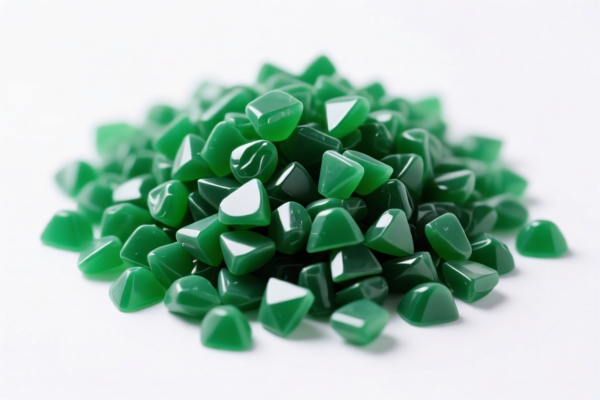
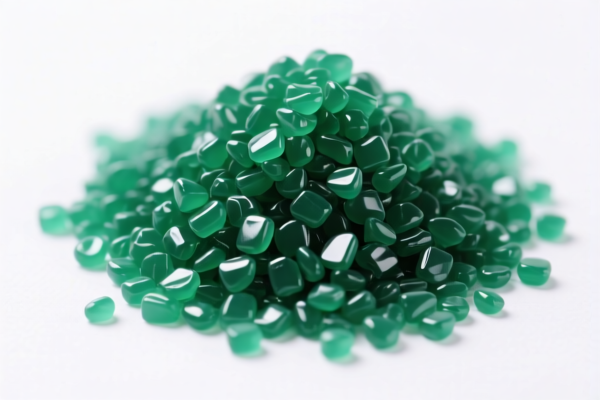
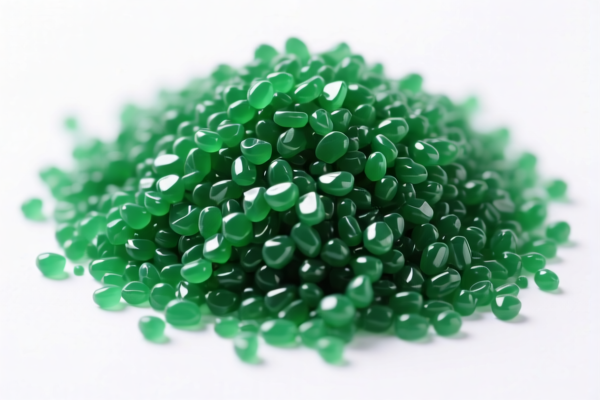
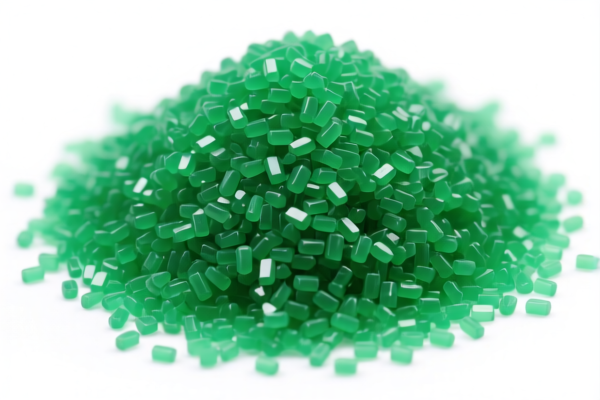
AI分析
🧪 High Density Polyethylene Elastomer (HDPE Elastomer)
🌐 HS Code Reference & Clearance Guide | 2026 Latest Tariff Analysis | Professional Customs Strategy
📌 I. Product Definition & Classification: Do You Really Understand "HDPE Elastomer"?
High-Density Polyethylene (HDPE) Elastomers represent a unique intersection of two material worlds: the rigidity of polyethylene plastics and the flexibility of rubber. In international trade, classification depends heavily on the chemical structure, physical state, and intended use.
Polymer Classification (Chapter 39): If the material is chemically defined as a polymer of ethylene (PE) in primary forms (powder, granules, liquids), it generally falls under HS Code heading 3901.
Rubber Classification (Chapter 40): If the material is explicitly defined as a "synthetic rubber" or "elastomer" with rubber-like properties, it may fall under HS Code heading 4002.
⚠️ Key Distinction Point:
- If the product is primarily an ethylene polymer (even if elastic) →归入 3901.xx.xx
- If the product is explicitly classified as a synthetic rubber/elastomer → 归入 4002.xx.xx
📦 II. HS Code Classification Details (2026 Latest Tariff Authority Comparison)
Based on the provided data, here are the four possible HS Codes for High Density Polyethylene Elastomers:
| HS Code | Product Description | Applicable Scenario | Tax Rate Profile |
|---|---|---|---|
3901.90.90.00 |
Polyethylene elastomers classified as ethylene polymers, in other forms. | General PE elastomers not specifically listed elsewhere in 3901.90. | 41.5% (6.5% Base + 25% Addl. + 10% 122) |
3901.90.10.00 |
Polyethylene elastomers or high-resilience ethylene elastomer resins, explicitly matching ethylene polymers & elastomers. | Specific high-resilience PE elastomer resins. | 35.0% (0.0% Base + 25% Addl. + 10% 122) |
4002.80.00.00 |
Polyethylene elastomers belonging to the category of synthetic rubber/plastics, conforming to the description of Heading 4002. | Classified as synthetic rubber/elastomer. | 35.0% (0.0% Base + 25% Addl. + 10% 122) |
3901.20.10.00 / 3901.20.50.00 |
High-Density Polyethylene Resins classified as ethylene polymers in primary forms / Specific gravity ≥ 0.94. | If the "elastomer" property is minimal and it behaves like standard HDPE resin. | 41.5% (6.5% Base + 25% Addl. + 10% 122) |
🔍 Key Reminder:
-3901.90.10.00and4002.80.00.00offer the lowest base duty (0%), resulting in a lower total tax burden compared to other PE classifications.
-3901.90.90.00,3901.20.10.00, and3901.20.50.00carry a 6.5% base duty, pushing the total tax higher.
- Misclassification Risk: Classifying a standard HDPE resin as an "elastomer" to avoid the 6.5% base duty can lead to customs audits if the product lacks specific rubber-like properties.
💰 III. 2026 Latest Tariff Rate Details (Including Additional Taxes & Policy Surcharges)
✅ Applicable Country: United States (US)
✅ Origin: China (CN)
✅ Effective Time: Ongoing (including imports after 2025/2026)
🎯 1. 3901.90.90.00 —— Polyethylene Elastomers (Other Forms)
| Item | Content |
|---|---|
| Base Duty | 6.5% (ad valorem) |
| Section 301 Additional Duty | +25.0% |
| Section 122 Tariff | +10.0% |
| Total Tax Rate | 41.5% |
| Tax Calculation | CIF Value × 41.5% |
| De Minimis Exemption | ❌ Not Eligible |
| Legal Basis Path | Base: 3901.90.90.00 → 301: +25% → Section 122: +10% |
📌 Explanation:
- This code applies if the product is deemed a general "other" ethylene polymer without a more specific subheading.
- The 6.5% base duty makes this the highest cost option among the PE classifications.
🎯 2. 3901.90.10.00 —— Polyethylene Elastomers / High-Resilience Ethylene Elastomer Resins
| Item | Content |
|---|---|
| Base Duty | 0.0% |
| Section 301 Additional Duty | +25.0% |
| Section 122 Tariff | +10.0% |
| Total Tax Rate | 35.0% |
| Tax Calculation | CIF Value × 35.0% |
| De Minimis Exemption | ❌ Not Eligible |
| Legal Basis Path | Base: 3901.90.10.00 → 301: +25% → Section 122: +10% |
📌 Note:
- This is the preferred classification if the product is explicitly described as a "high-resilience ethylene elastomer resin."
- Savings: $6.50 per $100 of CIF value compared to3901.90.90.00.
🎯 3. 4002.80.00.00 —— Synthetic Rubber / Elastic Plastics
| Item | Content |
|---|---|
| Base Duty | 0.0% |
| Section 301 Additional Duty | +25.0% |
| Section 122 Tariff | +10.0% |
| Total Tax Rate | 35.0% |
| Tax Calculation | CIF Value × 35.0% |
| De Minimis Exemption | ❌ Not Eligible |
| Legal Basis Path | Base: 4002.80.00.00 → 301: +25% → Section 122: +10% |
📌 Note:
- Applicable if the material is classified as a synthetic rubber.
- Identical tax rate to3901.90.10.00.
- Risk: Customs may challenge this if the material is chemically a PE resin rather than a cross-linked rubber.
🎯 4. 3901.20.10.00 / 3901.20.50.00 —— High-Density Polyethylene (HDPE) Resins
| Item | Content |
|---|---|
| Base Duty | 6.5% |
| Section 301 Additional Duty | +25.0% |
| Section 122 Tariff | +10.0% |
| Total Tax Rate | 41.5% |
| Tax Calculation | CIF Value × 41.5% |
| De Minimis Exemption | ❌ Not Eligible |
| Legal Basis Path | Base: 3901.20.xx.xx → 301: +25% → Section 122: +10% |
📌 Note:
- These codes apply if the "elastomer" property is considered negligible, and the product is treated as standard HDPE resin (Specific Gravity ≥ 0.94).
- HDPE 0.94+ (3901.20.50.00) and Other HDPE (3901.20.10.00) both incur the 6.5% base duty.
🛠️ IV. Customs Clearance Practical Advice (Real-World Pitfall Avoidance)
✅ 1. Documentation Checklist (All Required)
| Document | Must Provide | Explanation |
|---|---|---|
| ✅ Product Specification Sheet | ✔️ | Must detail chemical composition (ethylene content), specific gravity, melt index, and tensile strength. |
| ✅ Material Safety Data Sheet (MSDS) | ✔️ | Confirms physical state and safety handling. |
| ✅ Third-Party Test Report | ✔️ | ASTM/ISO tests proving "elastomeric" properties (e.g., elongation at break) if claiming 3901.90.10.00 or 4002.80.00.00. |
| ✅ Commercial Invoice | ✔️ | Must clearly state "Polyethylene Elastomer" or "Ethylene Elastomer Resin." Avoid vague terms like "Plastic Granules." |
| ✅ Certificate of Origin (CO) | ✔️ | Required for origin determination and any potential future exemptions. |
| ✅ Packing List | ✔️ | Detailing weight, volume, and package count. |
✅ 2. Declaration Tips (Key Mnemonic)
🔥 “Clarify the Chemistry: Is it Rubber or Plastic? Base Duty Decides the Cost!”
| Scenario | Correct Declaration | Incorrect Practice |
|---|---|---|
| Product has significant rubber-like elasticity and is marketed as "Elastomer" | 3901.90.10.00 or 4002.80.00.00 (35%) |
Misdeclare as standard HDPE (3901.20...) → 41.5% |
| Product is standard HDPE with minor plasticizer (still rigid) | 3901.20.50.00 (41.5%) |
Misdeclare as "Elastomer" → Risk of audit & penalty |
| Product is a generic PE polymer not meeting specific subheadings | 3901.90.90.00 (41.5%) |
N/A |
| OEM Custom Elastomer | Provide customer PO + Technical Specs | Vague description "Plastic" → Delay & Inspection |
✅ 3. Special Situations
| Situation | Handling Advice |
|---|---|
| Hybrid Materials | If the product is a blend, declare the ** predominant component**. If PE > 50%, Chapter 39 likely applies. |
| Import from Non-China Origins | If sourced from Vietnam/Mexico, Section 301 (25%) and Section 122 (10%) may not apply. Check specific FTAs. |
| Pre-Ruling Request | Highly recommended if the product is on the borderline between 3901.90.10.00 (Elastomer) and 3901.20.50.00 (HDPE). |
| De Minimis (Section 321) | ❌ Not Applicable. All listed codes exceed the $800 threshold value or are restricted items. |
🌍 V. Global Market Comparison (2026 Latest)
| Country/Region | Recommended HS Code | Tariff (China Origin) | Certification | Notes |
|---|---|---|---|---|
| 🇺🇸 USA | 3901.90.10.00 / 4002.80.00.00 |
35.0% (Base 0% + 30% Surcharges) | No specific cert | Highest cost market due to tariffs. |
| 🇨🇳 China | 3901.90.10.00 |
0% - 6.5% (VAT 13% applies) | CCC (if applicable) | No anti-dumping on PE elastomers. |
| 🇪🇺 EU | 3901.90 or 4002.80 |
0% - 6.5% | REACH / RoHS | No Section 301/122 equivalents. |
| 🇯🇵 Japan | 3901.90 or 4002.80 |
0% - 5.5% | JIS | CPTPP benefits may apply. |
📌 Conclusion:
- The USA imposes a heavy burden of 30-36.5% in additional tariffs on top of base duties.
- Optimization Strategy: Aim for3901.90.10.00or4002.80.00.00to eliminate the 6.5% base duty.
- Supply Chain: Consider shifting production to non-China origins to avoid 25% + 10% surcharges.
📌 VI. Common Mistakes & Pitfall Guide (Blood & Tears Lessons)
❌ Mistake 1: Declaring all PE elastomers as 3901.20.50.00 (HDPE Resin) to avoid higher scrutiny.
👉 Consequence: If customs determines the product has elastomeric properties, they may reclassify to 3901.90.10.00 (35%) but penalize for misdeclaration. If it is HDPE, you save 0%, but risk audit.
❌ Mistake 2: Ignoring the Section 122 Tariff (10%).
👉 Consequence: Unexpected 10% surge on top of 25% 301 duty. Total 35-41.5%. Many importers budget for 25% only.
❌ Mistake 3: Using vague descriptions like "Plastic Pellets."
👉 Consequence: Customs flags for inspection, causing 2-4 week delays. Provide specific technical data.
❌ Mistake 4: Assuming "Elastomer" automatically means Chapter 40 (Rubber).
👉 Consequence: Chapter 39 (Plastics) is often more appropriate for polyethylene-based elastomers unless chemically cross-linked as rubber.
✅ Correct Approach:
"Polyethylene Elastomer Resin, Ethylene-Based, High Resilience, Granules, Not Cross-Linked Rubber, Model: XYZ, MSDS Attached."
🎯 VII. Conclusion: Precision in Classification, Efficiency in Clearance!
🎯 Remember the Mnemonic:
🔹 "Base Duty Matters: 0% vs 6.5% = $6.50 Savings per $100!"
🔹 "Section 301 + 122 = 35% Minimum Cost for China Origin."
🔹 "Declare Precisely: Avoid Audits, Save Time!"
📌 Pro Tip:
If your PE Elastomer is imported from Vietnam, Mexico, or Thailand, the 25% Section 301 and 10% Section 122 tariffs do not apply. The total duty may drop to 6.5% or 0% (depending on base rate).
Recommendation: Obtain a Certificate of Origin and apply for Pre-Ruling (PB Ruling) if your product is novel.
📣 Immediate Action:
📞 Contact a Licensed Customs Broker
📎 Provide Product Specs + Technical Data Sheets
🚀 Secure Your HS Code Classification Before Shipment!
✨ Professional Clearance Starts with Accurate Classification!
💼 Every Percent of Duty Saved is Pure Profit!
用户评价
关于 HS 编码归类
协调制度(HS)是由世界海关组织(WCO)制定的国际贸易商品分类标准。全球 200 多个国家采用 HS 系统作为海关关税、贸易统计和进出口监管的基础。
每个 HS 编码遵循以下层级结构:
- 章(2 位)——商品大类(例如:第 84 章:机器和机械设备)
- 品目(4 位)——章内的更具体分类
- 子目(6 位)——国际通用细分,所有 WCO 成员国统一使用
- 本国细分(8-10 位)——各国自行扩展的细分编码,如美国 HTSUS 10 位编码
正确的 HS 编码归类对于顺利通关、准确缴纳关税和遵守贸易法规至关重要。错误归类可能导致海关延误、多缴关税或罚款。
从CN进口到US时,适用的关税税率可能包括:
- 最惠国(MFN)税率——适用于 WTO 成员国的标准关税税率
- 普通税率——适用于无贸易协定国家
- 贸易救济关税——附加关税,如 301 条款(反倾销)、232 条款(国家安全)或反补贴税
本页内容仅供参考。如需正式归类,请咨询当地海关或持牌报关代理。