High Impact Strength SAN Resin
CN → US| HS编码 | 关税税率 | 原产国 | 目的国 | 文档 |
|---|---|---|---|---|
| 3903200000 | 41.5% | CN | US | 官方文档 |
| 3903190000 | 41.5% | CN | US | 官方文档 |
商品图片
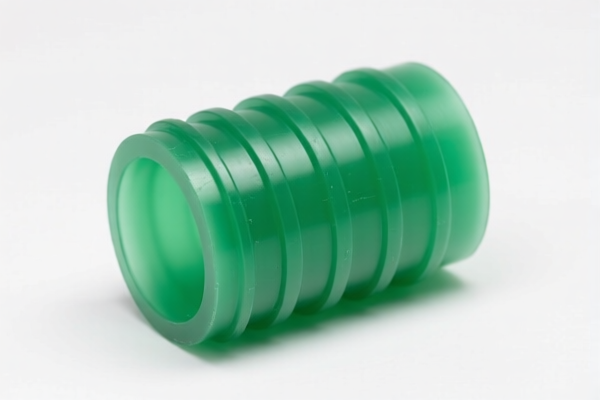
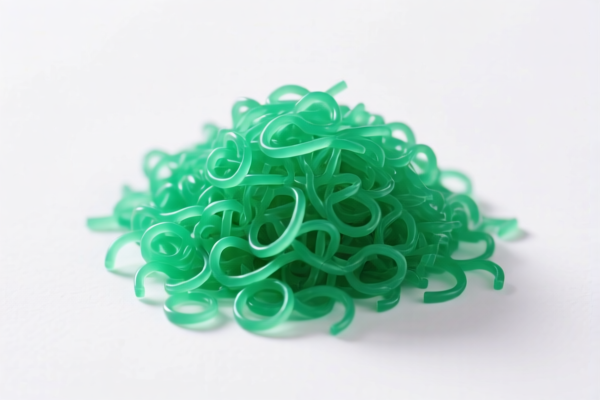
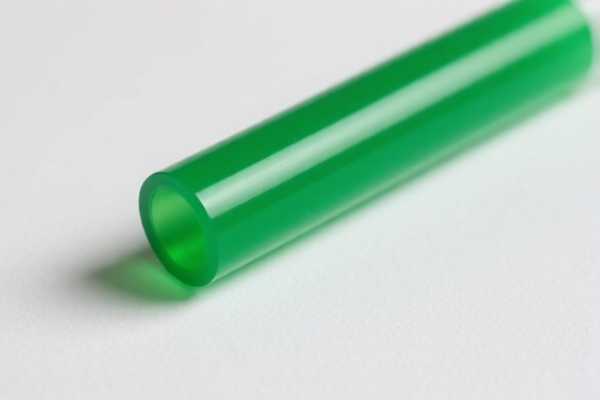
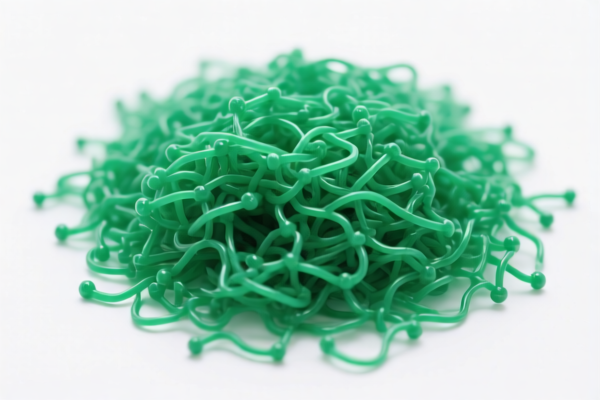
AI分析
🧪 High Impact Strength SAN Resin (Styrene-Acrylonitrile Copolymers)
🌐 HS Code Reference & Customs Clearance Guide | 2026 Latest Tariff Analysis | Professional Entry Strategy
📌 I. Product Definition & Classification: Do You Really Understand "SAN Resin"?
High Impact Strength SAN Resin refers to a specific category of thermoplastic polymer derived from Styrene-Acrylonitrile (SAN) copolymers. In international trade, it is crucial to distinguish between general SAN grades and those specifically engineered for high impact resistance. While chemically similar, the physical properties (impact strength) and industrial applications often dictate the precise HS code classification.
In the context of the provided data, these materials fall under "Polymers of styrene, in primary forms". The classification depends on whether the resin is a specific SAN copolymer or a broader "Other" polystyrene derivative, but given the description "Styrene-acrylonitrile (SAN) copolymers," the primary classification is straightforward.
⚠️ Key Distinction Point:
- If the material is explicitly labeled as Styrene-Acrylonitrile (SAN) Copolymer, regardless of its impact strength modifier, it falls under 3903.20.00.00.
- If the material is technically a modified polystyrene that does not fit the strict definition of SAN copolymer (e.g., certain ABS blends or highly modified PS), it might be argued under 3903.19.00.00, but SAN Resin is almost exclusively classified under 3903.20.
📦 II. HS Code Classification Details (2026 Latest Tariff Authority Comparison)
| HS Code | Product Description | Application Scenario | Key Characteristic |
|---|---|---|---|
3903.20.00.00 |
Styrene-acrylonitrile (SAN) copolymers | High-clarity packaging, automotive parts, kitchenware, medical devices | ✅ SAN Copolymer (Primary Form) |
3903.19.00.00 |
Polymers of styrene: Other (e.g., General Purpose Polystyrene, HIPS) | Disposable cups, insulation, toy boxes, lightweight containers | ❌ Not SAN (Usually PS or HIPS) |
🔍 Critical Reminder:
- High Impact Strength is a physical property of the SAN copolymer. It does not change the HS Code from3903.20to another category unless it is legally redefined as a different polymer family (like ABS, which is 3903.30).
- For SAN Resin, even if it has high impact modifiers, it remains a Styrene-Acrylonitrile Copolymer. Therefore, 3903.20.00.00 is the correct and primary classification.
-3903.19.00.00is a "catch-all" for styrene polymers that are not SAN, ABS, or SBR. Using this for SAN is a common classification error that can lead to customs scrutiny.
💰 III. 2026 Latest Tariff Rate Details (Including Additional Taxes, Policy Surcharges)
✅ Applicable Country: United States (US)
✅ Country of Origin: China (CN)
✅ Effective Date: 2025 November 10 onwards (including subsequent imports)
🎯 1. 3903.20.00.00 —— Styrene-Acrylonitrile (SAN) Copolymers
| Item | Content |
|---|---|
| Base Tariff Rate | 0.0% (ad valorem) |
| Section 301 Additional Tariff | 0.0% |
| IEEPA Additional Tariff | 0.0% |
| Total Tax Rate | 0.0% |
| Tax Calculation | CIF Value × 0.0% = $0 |
| De Minimis Eligibility | ❌ Not Applicable (This code is not typically associated with high-volume de minimis exemptions due to raw material nature, but the tax is zero regardless.) |
| Legal Basis Path | HTSUS:3903.20.00.00 → USITC:3903.20.00.00 |
📌 Explanation:
- Base Tariff: The US Harmonized Tariff Schedule sets the base duty for SAN copolymers at 0%. This is favorable for chemical imports.
- Section 301 & IEEPA: Unlike many consumer electronics or steel products, basic polymer resins like SAN are often exempt from the high additional tariffs (25% Section 301 or 10% IEEPA) applied to downstream manufactured goods.
- Total Cost: The landed cost benefit is significant. However, zero tariff does not mean zero compliance. Customs will strictly verify the chemical composition to prevent misclassification.
🎯 2. 3903.19.00.00 —— Polymers of Styrene: Other (Misclassification Risk)
| Item | Content |
|---|---|
| Base Tariff Rate | 0.0% |
| Section 301 Additional Tariff | 0.0% |
| IEEPA Additional Tariff | 0.0% |
| Total Tax Rate | 0.0% |
| Legal Basis Path | HTSUS:3903.19.00.00 |
📌 Note:
- While the tax rate is also 0.0%, declaring SAN resin under3903.19.00.00is incorrect.
- If customs audits and finds the product is indeed SAN, they may reclassify it to3903.20.00.00(which has the same tax, so no penalty if rates were different) or worse, penalize for misdeclaration of chemical nature, which can lead to audits of your entire chemical supply chain.
- Consistency is key: Ensure your COA (Certificate of Analysis) explicitly states "Styrene-Acrylonitrile Copolymer" to match3903.20.00.00.
🛠️ IV. Customs Clearance Practical Advice (Battle-Tested Pitfall Avoidance Guide)
✅ 1. Required Documentation Checklist (Non-Negotiable)
| Document | Mandatory? | Explanation |
|---|---|---|
| ✅ Certificate of Analysis (COA) | ✔️ | Must explicitly state: "Styrene-Acrylonitrile (SAN) Copolymer" and "Impact Strength: High". |
| ✅ Product Specification Sheet | ✔️ | Include monomer composition, molecular weight, and thermal properties. |
| ✅ Commercial Invoice | ✔️ | Clear description: "High Impact Strength SAN Resin, Polymers of Styrene, Primary Forms." |
| ✅ Packaging List | ✔️ | Indicate weight, volume, and package type (e.g., 25kg bags, pallets). |
| ✅ MSDS / SDS (Section 3 & 15) | ✔️ | Confirm no hazardous chemical classifications that require special handling. |
✅ 2. Declaration Tips (Key Mantra)
🔥 “Name Precisely, Chemically Accurate, Tax Zero, Compliance High!”
| Situation | Correct Declaration | Wrong Practice |
|---|---|---|
| SAN Resin with High Impact Modifiers | 3903.20.00.00 - Styrene-Acrylonitrile Copolymer |
Declaring as "Plastic Pellets" (Too vague) |
| Generic Polystyrene (Non-SAN) | 3903.19.00.00 - Polymers of Styrene: Other |
Mislabeling PS as SAN to avoid scrutiny |
| ABS Resin (Acrylonitrile Butadiene Styrene) | 3903.30.00.00 - ABS |
Declaring as SAN → Major Misclassification |
| SAN Sheets/Blocks (Non-Primary Form) | Different HS Code (e.g., 3903.30 or 3916) | Declaring as Primary Form Resin → Rejection |
✅ 3. Special Case Handling
| Situation | Handling Advice |
|---|---|
| Private Label / OEM Resin | Ensure the supplier provides a Certificate of Composition. Customs may request lab tests to verify SAN ratio. |
| High Impact vs. Standard SAN | Tax is the same (0%), but the description must be precise. "High Impact" is a product grade, not a chemical class. Do not invent a new HS code for it. |
| Mixed Shipment (SAN + PS) | Do not mix under one line item. Declare separately. Mixed declarations can trigger an automatic audit of the entire container. |
| Recycled SAN | If it is recycled, the HS code may differ (e.g., 3902.10 if reprocessed into secondary forms). Primary forms (virgin/resin) are 3903.20.00.00. Clarify "Virgin" or "Primary Form" in invoice. |
🌍 V. Global Market Comparison (2026 Latest)
| Country/Region | Recommended HS Code | Tariff | Certification | Notes |
|---|---|---|---|---|
| 🇺🇸 USA | 3903.20.00.00 |
0.0% | None specific | Zero duty, but strict chemical compliance. |
| 🇨🇳 China | 3903.20.00.00 |
0% - 5% | CCC (if end-product) | No additional surcharges. |
| 🇪🇺 EU | 3903.20.00 |
0% - 1.7% | REACH Registration | REACH compliance is mandatory for chemical imports. |
| 🇬🇧 UK | 3903.20.00 |
0% - 2.5% | UK REACH | Post-Brexit, UK REACH replaces EU REACH. |
| 🇯🇵 Japan | 3903.20.00 |
0% | Chemical Substances Control Law | Prior import notification may be required. |
📌 Conclusion:
- USA and China offer 0% duty for SAN Resin (3903.20.00.00), making it highly competitive.
- EU/UK require REACH/UK REACH registration. Ensure your supplier has provided the necessary chemical data to avoid customs hold.
- Zero tariff does not mean zero paperwork. Chemical imports face higher scrutiny than general consumer goods.
📌 VI. Common Errors & Pitfall Guide (Lessons Learned)
❌ Error 1: Declaring "High Impact SAN" under 3903.19.00.00 (Other PS)
👉 Consequence: Customs may reclassify, leading to delays. While tax is same, it creates a record of inconsistency for future audits.
❌ Error 2: Not providing a COA (Certificate of Analysis)
👉 Consequence: Customs suspects misdeclaration (e.g., is it ABS?). Container held for sampling. Delay of 1-2 weeks.
❌ Error 3: Confusing SAN with ABS (Acrylonitrile Butadiene Styrene)
👉 Consequence: ABS is 3903.30.00.00. If declared as SAN, and found to contain Butadiene, it may be subject to different trade remedy measures or higher scrutiny.
❌ Error 4: Using vague terms like "Plastic Pellets" or "Raw Material" on Invoice
👉 Consequence: Customs cannot determine HTS. Referral to CBP Ruling. Potential fines.
✅ Correct Approach:
"High Impact Strength Styrene-Acrylonitrile (SAN) Copolymer Resin, Primary Form, Virgin, UN 1263 (if hazardous) or General Cargo, HS 3903.20.00.00"
🎯 VII. Conclusion: Precision in Chemical Trade
🎯 Remember the Mantra:
🔹 "SAN is 3903.20, Zero Tax in US, But COA is Key!"
🔹 "Don't Mix PS and SAN, Don't Guess the Name, Get It Right from Day One!"
📌 Pro Tip:
- For REACH-compliant EU exports, ensure your supplier’s REACH registration covers the specific SAN grade.
- For US imports, while tax is 0%, maintain batch traceability. Chemical recalls or compliance issues can lead to immediate border holds.
- Consider applying for a Binding Ruling from US Customs if you import varying grades of SAN, to lock in the 3903.20.00.00 classification for future shipments.
📣 Immediate Action:
📞 Contact your supplier for the latest COA
🚀 Ensure your Commercial Invoice matches the HS Code description exactly
📦 Clear, Compliant, Cost-Effective: Your SAN Resin shipment is ready for zero-duty entry!
✨ Professional Clearance Starts with Precise Classification!
💼 Every Chemical Shipment is a Compliance Opportunity!
用户评价
关于 HS 编码归类
协调制度(HS)是由世界海关组织(WCO)制定的国际贸易商品分类标准。全球 200 多个国家采用 HS 系统作为海关关税、贸易统计和进出口监管的基础。
每个 HS 编码遵循以下层级结构:
- 章(2 位)——商品大类(例如:第 84 章:机器和机械设备)
- 品目(4 位)——章内的更具体分类
- 子目(6 位)——国际通用细分,所有 WCO 成员国统一使用
- 本国细分(8-10 位)——各国自行扩展的细分编码,如美国 HTSUS 10 位编码
正确的 HS 编码归类对于顺利通关、准确缴纳关税和遵守贸易法规至关重要。错误归类可能导致海关延误、多缴关税或罚款。
从CN进口到US时,适用的关税税率可能包括:
- 最惠国(MFN)税率——适用于 WTO 成员国的标准关税税率
- 普通税率——适用于无贸易协定国家
- 贸易救济关税——附加关税,如 301 条款(反倾销)、232 条款(国家安全)或反补贴税
本页内容仅供参考。如需正式归类,请咨询当地海关或持牌报关代理。