High Performance Mortar Curing Agent
CN → US| HS编码 | 关税税率 | 原产国 | 目的国 | 文档 |
|---|---|---|---|---|
| 38089400 | 0.0% | CN | US | 官方文档 |
| 38119000 | 0.0% | CN | US | 官方文档 |
| 3824500050 | 35.0% | CN | US | 官方文档 |
| 3824994900 | 41.5% | CN | US | 官方文档 |
商品图片
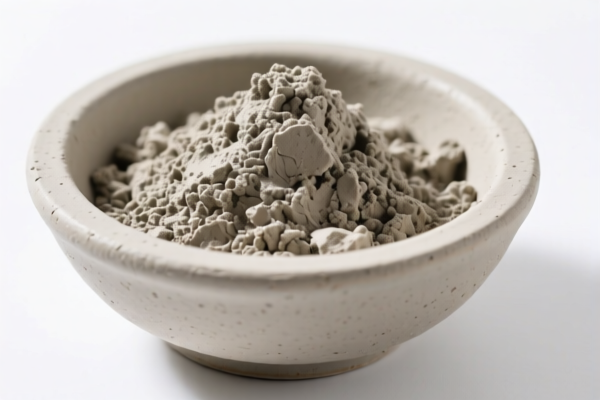
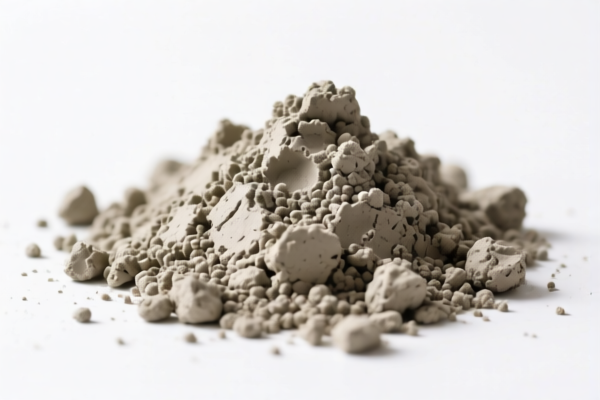
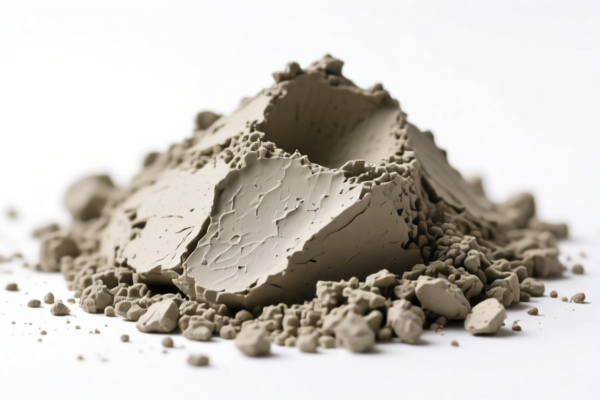
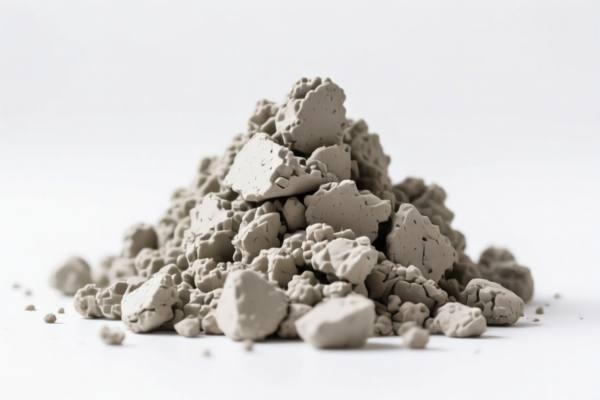
AI分析
🏗️ High Performance Mortar Curing Agent
🌐 HS Code Reference & Customs Clearance Guide | 2026 Latest Tariff Analysis | Professional Clearance Strategy
📌 I. Product Definition & Classification: Do You Really Understand "Mortar Curing Agents"?
High Performance Mortar Curing Agents are specialized chemical additives used in construction to enhance the hydration and strength development of cementitious materials. Their primary functions include controlling moisture loss, preventing plastic shrinkage cracks, and improving curing efficiency. In international trade, these products are often misclassified because they sit at the intersection of "chemical products" and "construction materials."
The Core Distinction:
* Standard Chemical Preparations (Chapters 38): Most curing agents (water-based, solvent-based, or resin-based) are classified here as "Miscellaneous Chemical Products" or "Other Chemical Products."
* Construction Materials/Binders (Chapter 38 Subheadings): Specific preparations for foundry molds or non-refractory mortars may fall under specific subheadings like 3824.50 or 3824.99.
⚠️ Key Classification Point:
- If the product is a general-purpose chemical additive for enhancing cement hydration without being a specific "foundry binder," it often falls under 3808.94 or 3811.90.
- If the product is specifically formulated as a preparation for foundry molds/cores or a specific non-refractory mortar mixture involving hydrocarbons, it may fall under 3824.50 or 3824.99.
- Critical Note: The provided data shows that some items in Chapter 38 attract significant additional tariffs (25% or 31.5%), making precise HS Code selection vital for cost control.
📦 II. HS Code Classification Details (Based on Provided Data)
| HS Code | Product Description | Application Scenario | Tariff Status |
|---|---|---|---|
3808.94.00 |
Other chemical products not elsewhere specified or included, including curing agents for mortars, used in construction for enhancing the hydration and strength development of cementitious materials | General construction mortar additives, cement hydration enhancers | ⚠️ Tax Retrieval Failed |
3811.90.00 |
Miscellaneous chemical products, including additives and agents for construction materials, such as high-performance curing agents for mortars, used to control moisture loss and improve curing efficiency | High-performance curing agents, moisture-control agents | ⚠️ Tax Retrieval Failed |
3824.50.00.50 |
Prepared binders for foundry molds or cores; chemical products...: Nonrefractory mortars and concretes Other | Non-refractory mortars, specific foundry binder preparations | 📉 25.0% Total Tax |
3824.99.49.00 |
Prepared binders... Other: Mixtures that are in whole or in part of hydrocarbons derived in whole or in part from petroleum, shale oil or natural gas | Hydrocarbon-based mixtures, petroleum-derived chemical preparations | 📉 31.5% Total Tax |
🔍 Priority Analysis:
- HS3808.94.00and3811.90.00explicitly mention "curing agents for mortars." These are likely the most accurate classifications for standard chemical curing agents. However, the tax information is unavailable in the source data, which poses a risk of incorrect estimation.
- HS3824.50.00.50and3824.99.49.00carry heavy tariffs (25% and 31.5% respectively). These codes are broader ("Other chemical products," "Hydrocarbon mixtures") and may apply if the curing agent is considered a "preparation for foundry molds" or a specific "hydrocarbon mixture." Misclassification here could lead to a 25-31.5% tariff burden instead of potentially lower rates for standard chemical additives.
💰 III. 2026 Latest Tariff Rate Breakdown
✅ Applicable Countries: Information not explicitly stated, but tax details imply a system with "Basic Tariff" + "Additional Tariff" (likely China-US trade context given the 25% figure, common in US Section 301 tariffs).
✅ Origin: Assume China (CN) based on tariff structure.
✅ Effective Time: 2025/2026 Current Period.
🎯 1. 3808.94.00 & 3811.90.00 —— Chemical Curing Agents (Tax Info Unavailable)
| Item | Content |
|---|---|
| Basic Tariff | ❓ Failed to retrieve |
| Additional Tariff | ❓ Failed to retrieve |
| Total Tariff | ❓ Error |
| Tax Calculation | Pending Verification |
| De Minimis Exemption | ❓ Unknown |
📌 Critical Warning:
- The system failed to retrieve tax information for these specific codes.
- This does not mean the tariff is 0%. It means you must consult official customs databases (e.g., USITC, Chinese Customs) or use a professional broker to verify.
- Risk: If these products are actually classified under3824due to regulatory interpretation, you could face 25%+ in tariffs.
🎯 2. 3824.50.00.50 —— Nonrefractory Mortars / Foundry Binders
| Item | Content |
|---|---|
| Basic Tariff | 0.0% |
| Additional Tariff (Surtax) | 25.0% |
| Total Tariff | 25.0% |
| Tax Calculation | CIF Value × 25.0% |
| De Minimis Exemption | ❓ Unknown |
📌 Explanation:
- This code attracts a 25% surtax. If your curing agent is deemed a "nonrefractory mortar" or "foundry binder," this rate applies.
- Cost Impact: Significant. For a $10,000 shipment, you pay $2,500 in tariffs alone.
🎯 3. 3824.99.49.00 —— Hydrocarbon-Based Mixtures
| Item | Content |
|---|---|
| Basic Tariff | 6.5% |
| Additional Tariff (Surtax) | 25.0% |
| Total Tariff | 31.5% |
| Tax Calculation | CIF Value × 31.5% |
| De Minimis Exemption | ❓ Unknown |
📌 Explanation:
- This is the highest tariff bracket in the provided data.
- Applies if the curing agent is a complex mixture of petroleum/shale oil derivatives.
- Cost Impact: For a $10,000 shipment, you pay $3,150 in tariffs.
🛠️ IV. Customs Clearance Practical Advice (Risk Avoidance Guide)
✅ 1. Required Documentation Checklist
| Document | Mandatory? | Notes |
|---|---|---|
| ✅ Safety Data Sheet (SDS) | ✔️ | Must detail chemical composition, especially hydrocarbon content. |
| ✅ Technical Specification Sheet | ✔️ | Must specify if it's a "curing agent," "mortar additive," or "foundry binder." |
| ✅ Product Photos | ✔️ | Show packaging, labels, and chemical form (liquid/powder). |
| ✅ Commercial Invoice | ✔️ | Clearly describe as "Chemical Curing Agent for Construction" rather than generic "Mortar." |
| ✅ HS Code Pre-ruling | ✔️ | Highly Recommended due to tax retrieval errors for 3808/3811. |
✅ 2. Classification Strategy (The Golden Rule)
🔥 "Chemical Nature Over Function: If it's a chemical additive, use 3808/3811. If it's a pre-mixed mortar or foundry binder, use 3824."
| Scenario | Recommended HS Code | Reasoning |
|---|---|---|
| Liquid/Powder Chemical Additive for mixing into cement on-site | 3808.94.00 or 3811.90.00 |
Explicitly described as "curing agents for mortars" in the description. |
| Pre-mixed Dry Mortar containing curing agents | 3824.50.00.50 |
Falls under "Nonrefractory mortars." |
| Petroleum-Based Solvent/Curing Agent | 3824.99.49.00 |
If primarily composed of hydrocarbon mixtures from shale/petroleum. |
| Foundry Core Binder | 3824.50.00.50 |
Specific "Prepared binders for foundry molds." |
✅ 3. Special Handling Tips
- Verify Tax Info for 3808/3811: Since the data shows "Failed to retrieve," do not assume 0% tariff. Assume a standard MFN rate (e.g., 5-8% in US) + potential Section 301 surtax (25%) until confirmed.
- Avoid "Mortar" Label if Possible: If it's a chemical additive, describe it as "Chemical Curing Agent" rather than "Mortar," to steer away from
3824(which carries known high tariffs). - Hydrocarbon Content: If the product contains significant petroleum derivatives, be prepared for the 31.5% rate under
3824.99.49.00.
🌍 V. Global Market Comparison (2026)
| Market | Recommended HS Code | Est. Tariff (China Origin) | Notes |
|---|---|---|---|
| 🇺🇸 USA | 3808.94.00 / 3811.90.00 |
Varies (Check Officially) | High risk of Section 301 (25%) surtax. 3824 codes are 25-31.5%. |
| 🇨🇳 China | 3808.94.00 / 3811.90.00 |
~1-5% (Import Tariff) | Lower tariffs, but strict chemical registration (MIIT) required. |
| 🇪🇺 EU | 3824.99.90 (Likely) |
4.5% - 6.5% | REACH compliance mandatory. |
| 🇦🇺 Australia | 3824.99.00 |
5% | GSTR filing required. |
📌 Conclusion:
- USA is the highest risk market due to potential 25-31.5% tariffs on Chapter 38 goods, especially if misclassified into3824.
- Classification Accuracy is Critical: A shift from3811(unknown tax) to3824(25-31.5% tax) can destroy profit margins.
📌 VI. Common Errors & Pitfalls (Lessons Learned)
❌ Error 1: Classifying all "Mortar Additives" as 3824.50
👉 Result: Paying 25% tariff when 3808.94 might have been lower or different.
👉 Fix: Check if the product is a "Prepared Binder" or a "Chemical Additive."
❌ Error 2: Ignoring the "Hydrocarbon" clause in 3824.99.49.00
👉 Result: Unexpected 31.5% tariff if petroleum derivatives are present.
👉 Fix: Analyze SDS for petroleum/shale oil content.
❌ Error 3: Assuming "Failed to Retrieve" means 0% Tax
👉 Result: Massive underestimation of costs, leading to budget overruns.
👉 Fix: Contact customs broker for manual verification of 3808.94.00 and 3811.90.00.
✅ Best Practice:
"Use precise chemical descriptions. Avoid generic 'Mortar' terms if possible. Always verify tax status for Chapter 38 chemicals due to frequent trade war surcharges."
🎯 VII. Conclusion: Precision Classification for Cost Control
🎯 Remember the Mantra:
🔹 "Chemical Additive = 3808/3811 (Check Tax!)"
🔹 "Pre-mixed/Foundry Binder = 3824 (25-31.5% Tariff!)"
🔹 "Hydrocarbon Content = 3824.99 (31.5% Tariff!)"
🔹 "Never Assume 'Error' Means 'Zero'!"
📌 Pro Tip:
If your curing agent is water-based and purely chemical, fight for 3808.94.00 or 3811.90.00. If it is solvent-based or pre-mixed, brace for 3824 tariffs.
Recommendation: Apply for an Advance Ruling from US Customs (CBP) if the value is high, to lock in the HS Code and avoid surprise surtaxes.
📣 Immediate Action:
📞 Contact a Certified Customs Broker
📄 Prepare SDS & Technical Data Sheets
🚀 Verify Tax Status for 3808/3811
Ensure smooth clearance and maximize profit!
✨ Professional Clearance Starts with Accurate Classification!
💼 Every Percentage Point of Tariff Counts!
用户评价
关于 HS 编码归类
协调制度(HS)是由世界海关组织(WCO)制定的国际贸易商品分类标准。全球 200 多个国家采用 HS 系统作为海关关税、贸易统计和进出口监管的基础。
每个 HS 编码遵循以下层级结构:
- 章(2 位)——商品大类(例如:第 84 章:机器和机械设备)
- 品目(4 位)——章内的更具体分类
- 子目(6 位)——国际通用细分,所有 WCO 成员国统一使用
- 本国细分(8-10 位)——各国自行扩展的细分编码,如美国 HTSUS 10 位编码
正确的 HS 编码归类对于顺利通关、准确缴纳关税和遵守贸易法规至关重要。错误归类可能导致海关延误、多缴关税或罚款。
从CN进口到US时,适用的关税税率可能包括:
- 最惠国(MFN)税率——适用于 WTO 成员国的标准关税税率
- 普通税率——适用于无贸易协定国家
- 贸易救济关税——附加关税,如 301 条款(反倾销)、232 条款(国家安全)或反补贴税
本页内容仅供参考。如需正式归类,请咨询当地海关或持牌报关代理。