High Precision Solid Rubber Tire
CN → US| HS编码 | 关税税率 | 原产国 | 目的国 | 文档 |
|---|---|---|---|---|
| 4016993000 | 35.0% | CN | US | 官方文档 |
| 4011901050 | 35.0% | CN | US | 官方文档 |
| 4012901000 | 35.0% | CN | US | 官方文档 |
| 4012909000 | 37.7% | CN | US | 官方文档 |
| 4016996010 | 37.5% | CN | US | 官方文档 |
商品图片
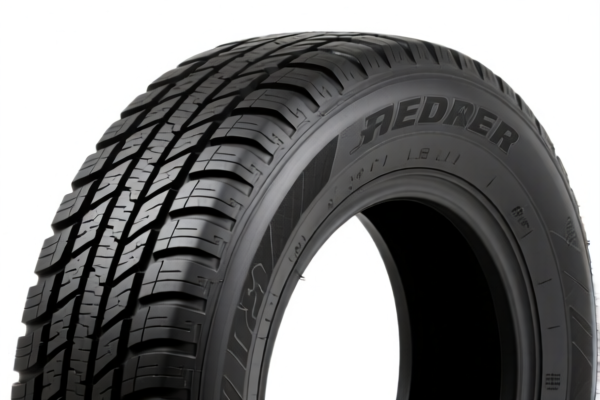
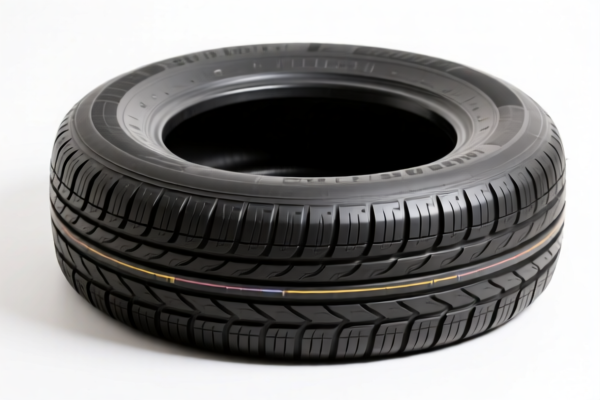
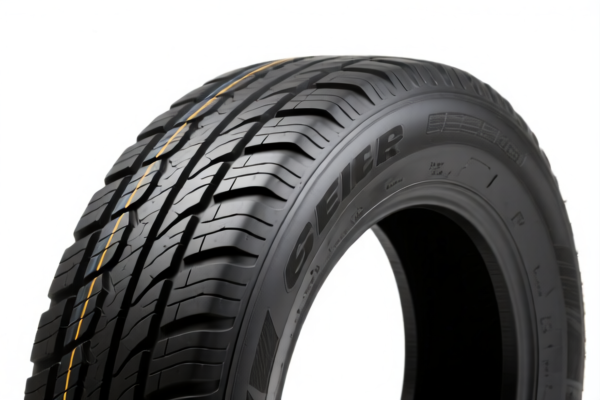
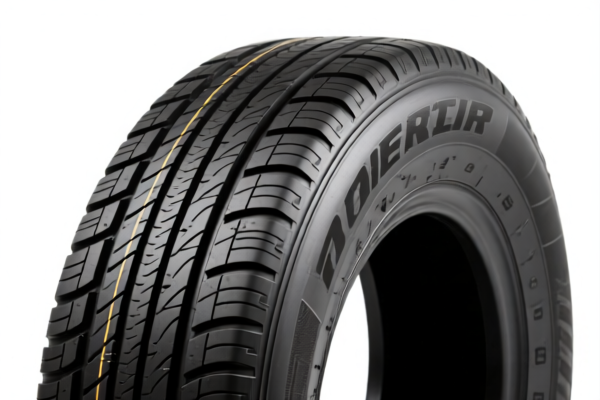
AI分析
🛞 High Precision Solid Rubber Tire (Precision Rubber Components for Vibration Damping)
🌐 HS Code Reference & Customs Clearance Guide | 2026 Latest Tariff Analysis | Professional Entry Strategies
📌 I. Product Definition & Classification: Do You Really Understand "Solid Rubber Tires"?
Solid rubber tires, often referred to as "precision rubber components," are critical industrial parts used primarily for vibration damping, shock absorption, and load-bearing support. Unlike pneumatic tires (which contain air chambers), these are made entirely of vulcanized rubber (natural or synthetic).
In international trade, they are classified not as vehicle parts (like car tires) but as general-purpose rubber articles or specific mechanical components, depending on their exact physical form and intended use.
⚠️ Key Distinction Point:
- If the tire is shaped like a standard vehicle wheel (with a rim hole) → It may fall under Chapter 4011 (Tyres).
- If it is a simple cylindrical, disc-shaped, or custom-molded buffer/damper → It typically falls under Chapter 4016 (Other articles of vulcanized rubber).
- Crucial Note: Misclassification as a "vehicle part" when it’s a "general rubber article" (or vice versa) can lead to significant tariff discrepancies due to Section 301 and IEEPA duties.
📦 II. HS Code Classification Matrix (2026 Latest Authoritative Mapping)
Based on the provided data, here is the precise mapping for High Precision Solid Rubber Tires, categorized by their physical characteristics and logical inference in customs databases.
| HS Code | Product Description & Logic | Application Scenario | Tax Rate (Total) |
|---|---|---|---|
4016.99.30.00 |
Solid Rubber Tire: Vibration/Damping Specific Matched to rubber material for减震/缓冲 (shock absorption) purposes. |
Industrial equipment buffers, forklift cushion wheels, precision machinery mounts. | 35.0% |
4011.90.10.50 |
Solid Rubber Tire: Inferred Component Logic Deduced based on material consistency with other categories and part logic. |
Generic solid tires not explicitly listed in 4011.90.10, often treated as "other tyres of rubber." | 35.0% |
4012.90.10.00 |
Solid Rubber Tire: Exact Material/Form Match Material and physical form fully match the classification explanation for re-treaded or solid tyres. |
Re-treaded solid tyres or specific solid tyres intended for replacement/retreading processes. | 35.0% |
4012.90.90.00 |
Solid Rubber Tire: Form & Material Compliant Material and form comply with classification explanations for "Other rubber articles" in Chapter 4012. |
Specialized solid tyres with complex geometries not covered in 4012.90.10. | 37.7% |
4016.99.60.10 |
Solid Rubber Tire: Part Priority Principle Sulphonated rubber article; material matches requirements; classified based on "parts" priority principle. |
Rubber parts for machinery/equipment, specifically identified as components rather than standalone tyres. | 37.5% |
🔍 Key Insight:
- Codes under 4011 and 4012 generally treat the item as a "Tyre" (vehicle part equivalent).
- Codes under 4016 treat the item as a "Other Rubber Article" (industrial component).
- The 35% vs 37.5-37.7% difference arises from the base tariff (0% vs 2.5-2.7%) before adding US-specific surcharges.
💰 III. 2026 Latest Tariff Rate Breakdown (Including Surcharges & Policy Add-ons)
✅ Applicable Country: United States (US)
✅ Origin: China (CN)
✅ Effective Date: November 10, 2025 onwards
🎯 1. The "35%" Bracket (Codes: 4016.99.30.00, 4011.90.10.50, 4012.90.10.00)
| Item | Detail |
|---|---|
| Base Tariff | 0% (Ad valorem) Note: These specific sub-headings often have 0% MFN rates. |
| Section 301 Surcharge | +25% Under USITC Footnote 9903.88.01 (China-origin goods). |
| 122 Clause / IEEPA Surcharge | +10% International Emergency Economic Powers Act (IEEPA) surcharge for Chinese goods. |
| Total Effective Rate | 35.0% |
| Calculation | CIF Value × 35% |
| De Minimis Exemption? | ❌ NO (deny_de_minimis). Section 321 de minimis ($800) does not apply to these codes due to IEEPA/301 restrictions. |
| Legal Authority Path | USITC:4016.99.30.00 → 301:9903.88.01 → IEEPA:9903.01.25 |
📌 Explanation:
- This is the most common classification for standard industrial solid tires.
- Critical: Even though the base tariff is 0%, the 35% total duty is significant for high-value precision components.
🎯 2. The "37.7%" Bracket (Code: 4012.90.90.00)
| Item | Detail |
|---|---|
| Base Tariff | 2.7% (Ad valorem) |
| Section 301 Surcharge | +25% |
| 122 Clause / IEEPA Surcharge | +10% |
| Total Effective Rate | 37.7% |
| Calculation | CIF Value × 37.7% |
| De Minimis Exemption? | ❌ NO |
| Legal Authority Path | USITC:4012.90.90.00 → 301:9903.88.01 → IEEPA:9903.01.25 |
📌 Note:
- This rate is higher because the base MFN tariff is 2.7%.
- Avoid this code if possible;4016.99.30.00or4011.90.10.50are more favorable (35%).
🎯 3. The "37.5%" Bracket (Code: 4016.99.60.10)
| Item | Detail |
|---|---|
| Base Tariff | 2.5% (Ad valorem) |
| Section 301 Surcharge | +25% |
| 122 Clause / IEEPA Surcharge | +10% |
| Total Effective Rate | 37.5% |
| Calculation | CIF Value × 37.5% |
| De Minimis Exemption? | ❌ NO |
| Legal Authority Path | USITC:4016.99.60.10 → 301:9903.88.01 → IEEPA:9903.01.25 |
📌 Note:
- This code relies on the "Parts Priority" principle. It implies the item is seen as a part of machinery rather than a standalone tyre.
- Use only if the item is clearly identifiable as a replacement part for specific equipment.
🛠️ IV. Customs Clearance Practical Advice (Pitfall Avoidance Guide)
✅ 1. Required Documentation Checklist (Non-Negotiable)
| Document | Must Provide? | Reason |
|---|---|---|
| ✅ Product Specification Sheet | ✔️ | Must specify: Material (Natural/Synthetic Rubber), Hardness (Shore A), Density, and Vibration Damping Coefficient. |
| ✅ Technical Drawing | ✔️ | To prove it is a "Solid" tire (no air cavity) and distinguish from pneumatic tyres. |
| ✅ Commercial Invoice | ✔️ | Must explicitly state: "Solid Rubber Tire, HS Code [Insert Code], Not for Highway Use." |
| ✅ Statement of Function | ✔️ | Declare intended use: "Used for vibration damping in industrial machinery," not "For automotive transportation." |
| ✅ Certificate of Origin (CO) | ✔️ | Required to verify Chinese origin for 301/IEEPA calculation. |
| ✅ Packaging List | ✔️ | Ensure no "vehicle" branding if classifying as industrial rubber article (4016). |
✅ 2. Declaration Strategies (Key Mantras)
🔥 "Solid Not Air, Industrial Not Automotive, Material is Key!"
| Scenario | Correct Declaration | Risk of Error |
|---|---|---|
| Standard Forklift Tire | 4016.99.30.00 (35%) |
Misclassifying as 4011 (Tyre) might seem logical, but 4016 is often preferred for non-road industrial buffers. Check specific shape. |
| Custom Shaped Buffer | 4016.99.60.10 (37.5%) |
If it doesn't look like a "tyre" but is a rubber bushing/mount, use this. Don't force "Tyre" terminology. |
| High-Precision Sensor Mount | 4016.99.30.00 (35%) |
Emphasize "Precision" and "Damping" in description. |
| Retreaded Tyre Core | 4012.90.10.00 (35%) |
Only if used for re-treading. Otherwise, use 4016 or 4011.90. |
⚠️ Critical Warning:
- Do NOT declare as4011.90.90(Other Tyres) if you can use4016.99.30. Some4011codes have different base rates or stricter scrutiny.
- Avoid4012.90.90(37.7%) unless necessary. It is the most expensive due to the 2.7% base rate.
✅ 3. Special Circumstances Handling
| Situation | Handling Advice |
|---|---|
| OEM Custom Parts | Provide client design drawings. Clearly mark as "Rubber Component for [Machine Name]" rather than "Tire" to potentially argue for 4016 (Parts) classification. |
| Mixed Shipment (Tires + Pneumatic) | Separate Declaration! Pneumatic tyres (4011.10) have different rules. Mixing them can lead to full shipment audit. |
| Small Quantity (De Minimis) | Do NOT rely on $800 exemption. As per deny_de_minimis, all Section 301/IEEPA goods are subject to duties even under $800. Plan logistics accordingly. |
| Anti-Dumping Duty (ADD)? | Check if the rubber compound contains specific carbon blacks or natural rubbers subject to ADD. Usually, 4016 is less prone to ADD than 4011, but verify the specific material composition. |
🌍 V. Global Market Comparison (2026)
| Region | Recommended HS Code | Est. Total Duty | Key Certification | Note |
|---|---|---|---|---|
| 🇺🇸 USA | 4016.99.30.00 |
35.0% | None specific for rubber | High due to 301 + IEEPA. |
| 🇨🇳 China | 4016.99.30.00 |
~3-5% | CCC (if for vehicles) | Low entry barrier. |
| 🇪🇺 EU | 4016.99 |
4.5% | REACH / RoHS | No 301 equivalent. |
| 🇨🇦 Canada | 4016.99 |
0-5% | CFIA (if agricultural) | FTA benefits if Canadian origin. |
| 🇲🇽 Mexico | 4016.99 |
0-5% | NOM | Nearshoring advantage. |
📌 Conclusion:
- The USA is the most expensive market for Chinese-made solid rubber tires due to the layered 35% duty.
- Supply Chain Strategy: Consider sourcing from Vietnam or Malaysia if possible, as these countries may not be subject to the full 35% (check specific country exclusions).
📌 VI. Common Mistakes & Pitfalls (Lessons Learned)
❌ Mistake 1: Declaring as "Vehicle Parts" (8708) when it's a rubber article (4016).
👉 Result: Wrong classification, potential penalty, and missed opportunity for lower base rates in 4016.
❌ Mistake 2: Ignoring the IEEPA 10% surcharge in cost calculations.
👉 Result: Profit margin erosion. Many importers only budget for 25% (Section 301) and forget the extra 10%.
❌ Mistake 3: Using "De Minimis" for small samples.
👉 Result: Shipment held at customs, duties assessed retroactively + storage fees. deny_de_minimis applies.
❌ Mistake 4: Confusing "Solid Tire" with "Pneumatic Tyre".
👉 Result: 4011 vs 4016 disputes. Customs may reclassify and apply different surcharges.
✅ Correct Practice:
"Vulcanized Solid Rubber Shock Absorber Tire, Hardness 70 Shore A, Industrial Use Only, No Air Chamber, Model XYZ."
🎯 VII. Conclusion: Precision Classification for Cost Efficiency
🎯 Key Takeaway:
🔹 Choose
4016.99.30.00(35%) whenever possible. It offers the lowest total duty rate among the options provided.
🔹 Avoid4012.90.90.00(37.7%) unless your product shape strictly doesn't fit4016.
🔹 Always declare "Industrial/Non-Road Use" to support classification as4016(Rubber Article) rather than4011(Vehicle Tyre), though both may result in similar 35% rates here.
📌 Pro Tip:
If your solid rubber tires are used in agriculture or aviation, check for specific exemptions or different HS codes (e.g., 4011.60 for aircraft tires), which may have different duty structures.
📣 Immediate Action Plan:
📞 Consult your customs broker to confirm if your specific "High Precision" shape qualifies for
4016.99.30.00.
📄 Prepare technical datasheets highlighting "Vibration Damping" and "Solid Construction".
💰 Budget for 35% duty (25% Section 301 + 10% IEEPA + 0% Base) in your landed cost model.
✨ Professional Clearance Starts with Precise Classification!
💼 Every Percentage Point Matters in High-Precision Trade!
用户评价
关于 HS 编码归类
协调制度(HS)是由世界海关组织(WCO)制定的国际贸易商品分类标准。全球 200 多个国家采用 HS 系统作为海关关税、贸易统计和进出口监管的基础。
每个 HS 编码遵循以下层级结构:
- 章(2 位)——商品大类(例如:第 84 章:机器和机械设备)
- 品目(4 位)——章内的更具体分类
- 子目(6 位)——国际通用细分,所有 WCO 成员国统一使用
- 本国细分(8-10 位)——各国自行扩展的细分编码,如美国 HTSUS 10 位编码
正确的 HS 编码归类对于顺利通关、准确缴纳关税和遵守贸易法规至关重要。错误归类可能导致海关延误、多缴关税或罚款。
从CN进口到US时,适用的关税税率可能包括:
- 最惠国(MFN)税率——适用于 WTO 成员国的标准关税税率
- 普通税率——适用于无贸易协定国家
- 贸易救济关税——附加关税,如 301 条款(反倾销)、232 条款(国家安全)或反补贴税
本页内容仅供参考。如需正式归类,请咨询当地海关或持牌报关代理。