High Purity Cast Crystal
CN → US| HS编码 | 关税税率 | 原产国 | 目的国 | 文档 |
|---|---|---|---|---|
| 3824991100 | 35.0% | CN | US | 官方文档 |
| 8541600010 | 35.0% | CN | US | 官方文档 |
| 8541600080 | 35.0% | CN | US | 官方文档 |
商品图片
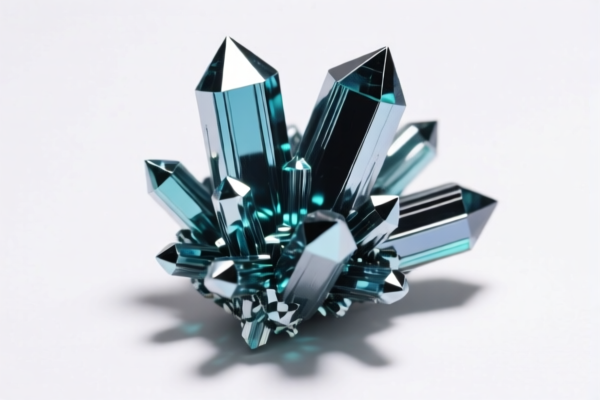
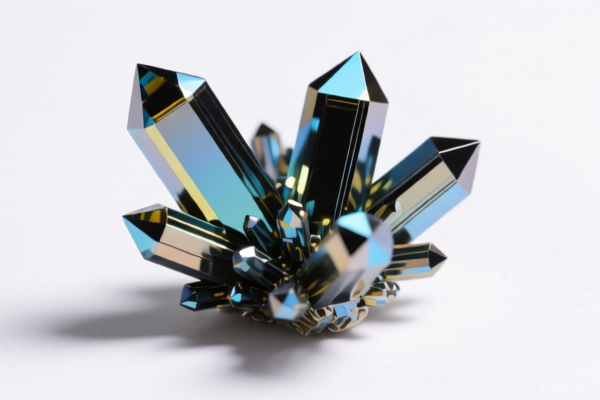
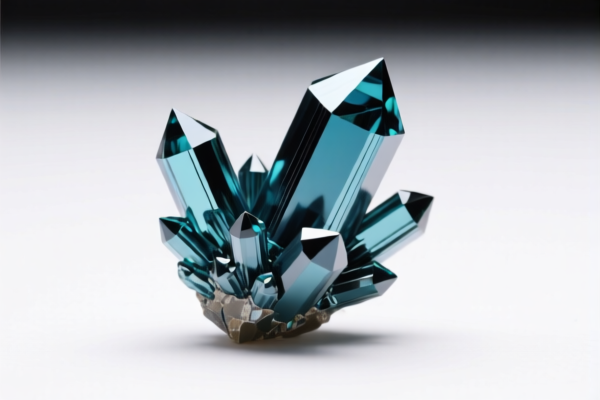
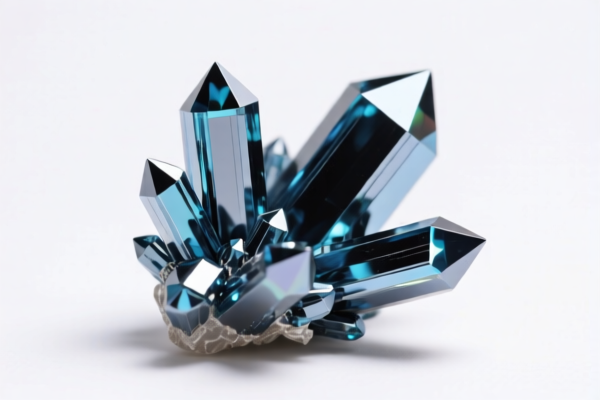
AI分析
💎 High Purity Cast Crystal (High Purity Crystals)
🌐 HS Code Reference & Customs Clearance Guide | 2026 Latest Tariff Analysis | Professional Clearance Strategy
📌 I. Product Definition & Classification: What Exactly is a "High Purity Cast Crystal"?
In international trade, "High Purity Crystals" is a broad term that requires precise classification based on material composition and end-use. Unlike generic industrial crystals, these are often specialized materials used in semiconductors, optics, or chemical processes.
The ambiguity lies in the word "Crystal": * If it is a semiconductor material (Silicon, Germanium, etc.) → It falls under Chapter 85. * If it is a chemical preparation or cultivated crystal for industrial/chemical use → It falls under Chapter 38. * If it is a piezoelectric or photoelectric component → It falls under Chapter 85 specific subheadings.
⚠️ Critical Distinction:
- Semiconductor Base Material (e.g., Silicon ingots, Germanium crystals) → HS 8541.60
- Chemical/Industrial Preparations or Cultivated Crystals not specifically classified elsewhere → HS 3824.99
- Piezoelectric/Photoelectric Devices → HS 8541.60 (Specific variants)
📦 II. HS Code Classification Details (2026 Latest Tariff Authority Comparison)
Based on the provided data, the following HS Codes are matched. Note that all listed codes share the same tax structure due to current US trade policies.
| HS Code | Product Description | Matching Logic & Application Scenario | Material/Function Conflict |
|---|---|---|---|
3824.99.11.00 |
Other Chemical Products (Preparations): Cultivated crystals, chemical industry related | Match Success: The item "High Purity Crystal" aligns with "Cultivated Crystals" in the classification explanation. It is considered a chemical industrial preparation. No material conflict. | ✅ Low (Assumed non-semiconductor specific or general chemical prep) |
8541.60.00.10 |
Semiconductor Devices: Other semiconductor devices (e.g., Photosensitive, Piezoelectric crystals as components) | Inferred Match: Based on the name "High Purity Crystal," it is reasonably inferred to be made of Silicon, Germanium, or other semiconductor materials. It fits the material attributes of semiconductor devices and basic crystal forms in the semiconductor field. No obvious conflict. | ✅ Low (Assumed Si/Ge material) |
8541.60.00.80 |
Semiconductor Devices: Other semiconductor devices (Catch-all/Residual category) | Inferred Match: The term "Crystal" matches "Piezoelectric Crystals" in material attributes. Since this is a residual "Other" category, and "High Purity" does not conflict with crystal material, it is deemed potentially compliant. | ✅ Low (Catch-all for unspecified semiconductor crystals) |
🔍 Key Insight:
- HS 3824.99.11.00 is suitable if the crystal is treated as a chemical intermediate or cultivated material for general industrial/chemical use. - HS 8541.60.x0 codes are suitable if the crystal is a functional semiconductor component (like a bare die, wafer, or piezoelectric element) made of Si, Ge, etc. - The Tax Rate is IDENTICAL for all three options under current US tariffs against China.
💰 III. 2026 Latest Tariff Rate Breakdown (Including Surcharges & Policy Add-ons)
✅ Applicable Country: United States (US)
✅ Origin: China (CN)
✅ Effective Date: November 10, 2025 (and subsequent imports)
🎯 1. 3824.99.11.00 – Chemical Preparations / Cultivated Crystals
| Item | Content |
|---|---|
| Base Tariff Rate | 0.0% (ad valorem) |
| USITC Surcharge (Section 301) | +25.0% |
| IEEPA Surcharge (Section 122/China Specific) | +10.0% |
| Total Tax Rate | 35.0% |
| Tax Calculation | CIF Value × 35% |
| De Minimis Eligibility | ❌ Not Eligible (deny_de_minimis applies) |
| Legal Authority Path | IEEPA:9903.01.25 → IEEPA:9903.01.24 → USITC:3824.99.11.00 → FOOTNOTE:9903.88.01 |
📌 Explanation:
- The 25% USITC surcharge is the standard Section 301 tariff on Chinese goods. - The 10% IEEPA surcharge is the additional tariff specifically targeting Chinese/Chinese-origin products under the International Emergency Economic Powers Act. - Total 35%: This is a significant duty burden. Proper classification is vital to avoid misdeclaration penalties.
🎯 2. 8541.60.00.10 – Semiconductor Devices (Specific)
| Item | Content |
|---|---|
| Base Tariff Rate | 0.0% |
| USITC Surcharge (Section 301) | +25.0% |
| IEEPA Surcharge (Section 122/China Specific) | +10.0% |
| Total Tax Rate | 35.0% |
| Tax Calculation | CIF × 35% |
| De Minimis Eligibility | ❌ Not Eligible |
| Legal Authority Path | IEEPA:9903.01.25 → IEEPA:9903.01.24 → USITC:8541.60.00.10 → FOOTNOTE:9903.88.01 |
📌 Note:
- Even though semiconductors are high-tech, they are not exempt from the current surcharges on Chinese origin goods. - If the crystal is Silicon/Germanium, this is the most technically accurate functional classification, but the tax cost is the same as the chemical route.
🎯 3. 8541.60.00.80 – Semiconductor Devices (Other/Catch-all)
| Item | Content |
|---|---|
| Base Tariff Rate | 0.0% |
| USITC Surcharge (Section 301) | +25.0% |
| IEEPA Surcharge (Section 122/China Specific) | +10.0% |
| Total Tax Rate | 35.0% |
| Tax Calculation | CIF × 35% |
| De Minimis Eligibility | ❌ Not Eligible |
| Legal Authority Path | IEEPA:9903.01.25 → IEEPA:9903.01.24 → USITC:8541.60.00.80 → FOOTNOTE:9903.88.01 |
📌 Caution:
- Use this only if the crystal does not fit specific subheadings (.10) but is still a semiconductor device. - Customs may challenge this if documentation doesn't prove it's a "semiconductor device" vs. a "raw material."
🛠️ IV. Customs Clearance Practical Advice (Real-World Pitfall Avoidance)
✅ 1. Required Documentation Checklist (Non-negotiable)
| Document | Must Provide | Explanation |
|---|---|---|
| ✅ Product Specification Sheet | ✔️ | Must explicitly state: Material (e.g., Si, Ge, Sapphire), Purity Level (e.g., 99.999%), Form (Ingots, Wafers, Rods), and Use. |
| ✅ Certificate of Origin (CO) | ✔️ | Essential for proving CN origin to apply the correct 35% rate (and avoid penalties for hiding origin). |
| ✅ Technical Data Sheet / MSDS | ✔️ | To distinguish between "Chemical Preparation" (HS 3824) and "Semiconductor Device" (HS 8541). |
| ✅ Commercial Invoice | ✔️ | Clearly describe as "High Purity Crystal" + Material + HS Code. Avoid vague terms like "Raw Material" alone. |
| ✅ Packing List | ✔️ | Detail the weight and dimensions. Ensure packaging is secure (crystals are fragile). |
✅ 2. Declaration Strategy (Key Mnemonic)
🔥 "Material Dictates Code, Purity Dictates Price, Origin Dictates Tax!"
| Scenario | Correct Declaration Approach | Incorrect Approach |
|---|---|---|
| Silicon/Germanium Crystal | Declare as Semiconductor Material (8541.60) |
Declare as "General Crystal" → Risk of reclassification & penalty |
| Cultivated Optical/Chemical Crystal | Declare as Chemical Preparation (3824.99.11) |
Declare as "Electronic Component" → Misclassification |
| Mixed Shipment | Split shipment or clear by separate HS codes | Combine different materials into one line item → Customs Audit Trigger |
| Vague Name "Crystal" | Use specific name: "High Purity Silicon Crystal" | Use "Crystal" only → Delays in Customs |
✅ 3. Special Handling Tips
| Situation | Handling Advice |
|---|---|
| OEM Custom Crystals | Provide the end-user's specification sheet. If it's for a specific semiconductor application, lean towards HS 8541. |
| High Purity (>99.99%) | Emphasize purity in documentation. This justifies the "High Purity" designation and supports the classification as a specialized material. |
| Raw Ingots vs. Wafers | Ingots may be considered "raw material" (possibly HS 3824 if not yet processed into device form), while wafers are definitely semiconductor components (HS 8541). Clarify this distinction! |
| US Origin or Third-Country Origin | If the crystal is NOT from China (e.g., USA, Japan), the 0% Base + 0% Surcharge may apply (check specific IEEPA exclusions). This is a major cost saver! |
🌍 V. Global Market Comparison (2026 Latest)
| Country/Region | Recommended HS Code | Tariff Rate (CN Origin) | Certification Requirements | Remarks |
|---|---|---|---|---|
| 🇺🇸 USA | 3824.99.11.00 or 8541.60.00.x0 |
35% (0% Base + 25% 301 + 10% IEEPA) | None specific for clearance, but FCC/UL may be needed for end-use | High Tariff: Costly clearance. |
| 🇨🇳 China | 3824.99.11.00 or 8541.60.00.x0 |
~6% - 10% (Import Duty) | CCC (if electronic component) | Lower duty, but check export controls. |
| 🇪🇺 EU | 3824.99.11.00 or 8541.60.00.x0 |
~2.7% - 4.5% (MFN) | REACH, RoHS | No Section 301 equivalent. Lower tariff. |
| 🇯🇵 Japan | 3824.99.11.00 or 8541.60.00.x0 |
~0% - 3.5% | PSE (if electronic) | Free Trade Agreement benefits may apply. |
📌 Conclusion:
- The US market is the most expensive due to the 35% combined tariff. - If possible, consider supply chain diversification (e.g., sourcing from Vietnam, Mexico, or Japan) to avoid the 35% surcharge. - Pre-classification is highly recommended to avoid post-audit penalties.
📌 VI. Common Mistakes & Pitfall Guide (Lessons Learned)
❌ Mistake 1: Classifying Semiconductor Crystals as "General Chemicals" (3824) to avoid scrutiny
👉 Consequence: Customs may detect the semiconductor nature → Reclassification + Penalties.
✅ Fix: If it's Si/Ge, use 8541. If it's optical/chemical, use 3824. Be honest and precise.
❌ Mistake 2: Omitting "High Purity" or Material Specification in Invoice
👉 Consequence: Customs cannot determine the correct HS Code → Delay, Examination, or Seizure.
✅ Fix: Always include Material (e.g., Silicon), Purity (e.g., 6N), and Form (e.g., Ingot).
❌ Mistake 3: Assuming "De Minimis" ($800) applies
👉 Consequence: High Purity Crystals are often restricted or excluded from de minimis, especially under IEEPA.
✅ Fix: Plan for full duty payment. Do not rely on parcel delivery for high-value crystals.
❌ Mistake 4: Confusing "Cultivated Crystal" with "Jewelry Crystal"
👉 Consequence: Jewelry crystals (7104) have different tariffs. Industrial crystals are NOT jewelry.
✅ Fix: Clearly state Industrial/Scientific Use in description.
🎯 VII. Conclusion: Precision in Classification Saves Money!
🎯 Remember the Mantra:
🔹 "Material Determines Code, Origin Determines Tax, Purity Determines Value!"
🔹 "35% US Tariff is Real: Classify Correctly or Pay the Price!"
📌 Pro Tip:
If your high purity crystals are originating from non-China countries (e.g., USA, Germany, Japan), you may escape the 35% surcharge.
Action:
📞 Contact a Professional Customs Broker
📄 Prepare Detailed Technical Data Sheets
🚀 Apply for Advance Ruling (if uncertain)
✨ Professional Clearance Starts with Accurate Classification!
💼 Your Profit Margin Depends on Precision!
用户评价
关于 HS 编码归类
协调制度(HS)是由世界海关组织(WCO)制定的国际贸易商品分类标准。全球 200 多个国家采用 HS 系统作为海关关税、贸易统计和进出口监管的基础。
每个 HS 编码遵循以下层级结构:
- 章(2 位)——商品大类(例如:第 84 章:机器和机械设备)
- 品目(4 位)——章内的更具体分类
- 子目(6 位)——国际通用细分,所有 WCO 成员国统一使用
- 本国细分(8-10 位)——各国自行扩展的细分编码,如美国 HTSUS 10 位编码
正确的 HS 编码归类对于顺利通关、准确缴纳关税和遵守贸易法规至关重要。错误归类可能导致海关延误、多缴关税或罚款。
从CN进口到US时,适用的关税税率可能包括:
- 最惠国(MFN)税率——适用于 WTO 成员国的标准关税税率
- 普通税率——适用于无贸易协定国家
- 贸易救济关税——附加关税,如 301 条款(反倾销)、232 条款(国家安全)或反补贴税
本页内容仅供参考。如需正式归类,请咨询当地海关或持牌报关代理。