High Purity Chemical Mixture
CN → US| HS编码 | 关税税率 | 原产国 | 目的国 | 文档 |
|---|---|---|---|---|
| 2903998001 | 15.5% | CN | US | 官方文档 |
| 2903897090 | 38.7% | CN | US | 官方文档 |
| 3817002000 | 41.5% | CN | US | 官方文档 |
| 2902909000 | 35.0% | CN | US | 官方文档 |
| 2710124560 | 0.0% | CN | US | 官方文档 |
商品图片
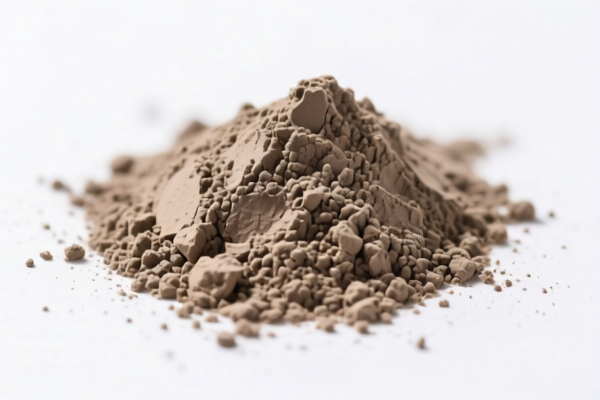
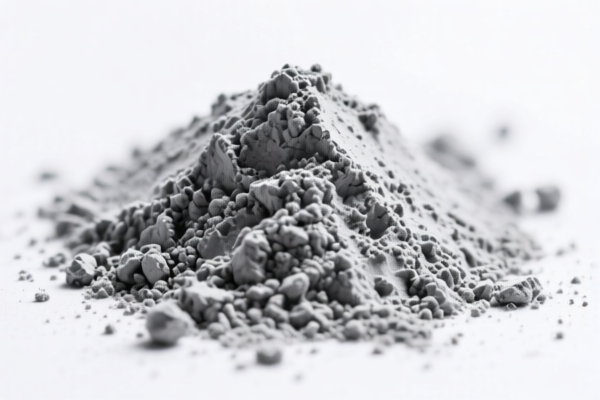
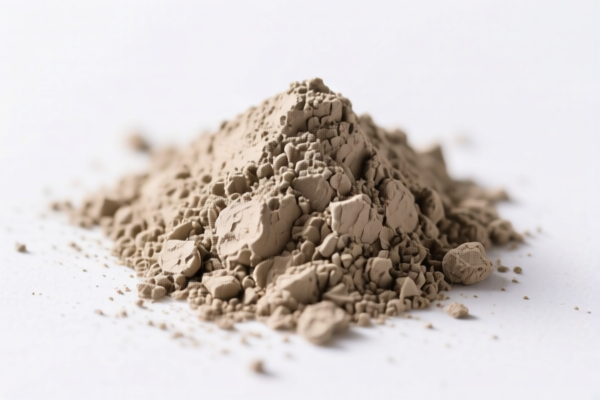
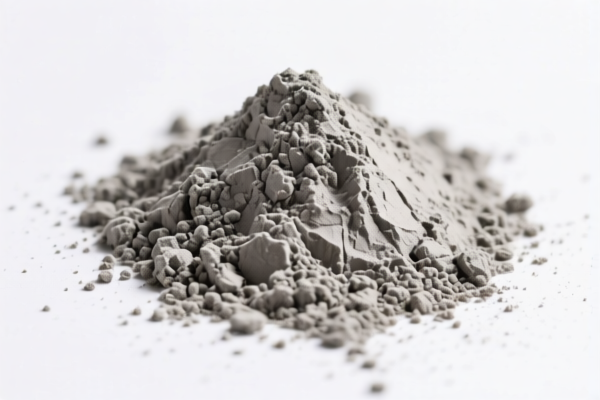
AI分析
🧪 High Purity Chemical Mixture: HS Code Classification & 2026 Customs Clearance Strategy
🌐 HS Code Reference & Customs Clearance Guide | 2026 Latest Tariff Analysis | Professional-Level Clearance Strategy
📌 I. Product Definition & Classification: What Exactly is "High Purity Chemical Mixture"?
In international trade, "High Purity Chemical Mixture" is a broad term that requires precise classification based on chemical composition, molecular structure, and application. Because it is a "mixture," it cannot automatically fall under specific single-element HS codes. Instead, it must be categorized under the "Other" or "Mixture" subheadings of Chapter 29 (Organic Chemicals), Chapter 27 (Mineral Fuels), or Chapter 38 (Miscellaneous Chemical Products).
The critical distinction lies in what the mixture consists of: 1. Halogenated Hydrocarbons: Mixtures primarily composed of hydrocarbons where hydrogen atoms are replaced by halogens (Cl, Br, I, F). 2. Alkylated Naphthalenes: Mixtures based on naphthalene rings with alkyl side chains. 3. General Hydrocarbon Mixtures: Complex blends of various hydrocarbons.
⚠️ Key Classification Logic:
- If the mixture is halogenated and fits specific definitions → Chapter 29.03.
- If the mixture is naphthalene-based → Chapter 38.17 (Industrial Chemicals) or Chapter 29.02 (Aromatic Hydrocarbons).
- If it is a general hydrocarbon mix without specific chemical function → Chapter 27.10 (Petroleum Products) or Chapter 29.02 (Catch-all for other aromatic hydrocarbons).
📦 II. HS Code Classification Details (2026 Latest Tariff Reference)
Based on the provided data, here are the 5 possible HS Codes for "High Purity Chemical Mixture," categorized by material type and tax implications.
| HS Code | Product Description (Summary) | Material Attribute | Classification Basis | Total Tax Rate |
|---|---|---|---|---|
2903.99.80.01 |
High-purity halogenated hydrocarbon mixture | Halogenated derivative of hydrocarbons | Matches mixture form & specific halogenated category | 15.5% |
2903.89.70.90 |
High-purity halogenated hydrocarbon mixture | Halogenated derivative (Other) | Falls under "Other" halogenated hydrocarbons | 38.7% |
3817.00.20.00 |
High-purity mixed alkyl naphthalene | Mixed alkyl naphthalene | Matches specific category for industrial chemical mixtures | 41.5% |
2902.90.90.00 |
High-purity mixed alkyl naphthalene | Cyclic hydrocarbon property | Catch-all for other aromatic hydrocarbons | 35.0% |
2710.12.45.60 |
High-purity mixed alkyl naphthalene | Hydrocarbon mixture | Reasonable inference as petroleum/hydrocarbon product | 10.5¢/bbl + 35.0% |
🔍 Critical Distinction:
- Halogenated vs. Non-Halogenated: Codes starting with2903are for halogenated compounds. Codes starting with2902,3817, or2710are for non-halogenated (e.g., alkyl naphthalenes or general hydrocarbons).
- Specific vs. General:2903.99.80.01has the lowest tax (15.5%) but requires strict proof that it fits the "halogenated derivative mixture" definition precisely.3817.00.20.00is higher (41.5%) but clearly matches "alkyl naphthalene."
💰 III. 2026 Latest Tariff Rate Breakdown (Including Surtaxes & Policy Add-ons)
✅ Applicable Country: United States (US)
✅ Origin: China (CN) (Implied by "122 Clause" and high surtaxes)
✅ Effective Date: 2025–2026 (Current Trade War Policies)
🎯 1. 2903.99.80.01 – High-Purity Halogenated Hydrocarbon Mixture (Best Case Scenario)
| Item | Content |
|---|---|
| Base Tariff | 5.5% (Ad Valorem) |
| Section 301 Surtax | 0.0% (Exempt or not applicable to this specific sub-code in current list) |
| 122 Clause Tariff | 10.0% (Specific policy addition for certain chemicals) |
| Total Tariff | 15.5% |
| Tax Calculation | CIF Value × 15.5% |
| De Minimis Eligibility | ❌ No (Commercial shipment, high value) |
| Legal Basis Path | USITC:2903.99.80.01 → 122 Clause:10% |
📌 Explanation:
- This is the most cost-effective classification if your product is indeed a halogenated hydrocarbon mixture.
- Why only 15.5%? It appears to have a 0% Section 301 surtax, which is rare for Chinese-origin goods. Ensure the product does not fall under other restricted lists.
- 122 Clause: Adds 10%. This is a specific regulatory levy.
🎯 2. 2903.89.70.90 – Other Halogenated Hydrocarbon Mixtures
| Item | Content |
|---|---|
| Base Tariff | 3.7% |
| Section 301 Surtax | +25.0% (Standard USITC Footnote for most chemicals) |
| 122 Clause Tariff | +10.0% |
| Total Tariff | 38.7% |
| Tax Calculation | CIF Value × 38.7% |
| De Minimis Eligibility | ❌ No |
| Legal Basis Path | USITC:2903.89.70.90 → 301 Clause:25% → 122 Clause:10% |
📌 Note:
- This code is for halogenated mixtures that do not fit the specific2903.99.80.01criteria.
- High Cost: The 25% Section 301 surtax makes this significantly more expensive than2903.99.80.01.
🎯 3. 3817.00.20.00 – High-Purity Mixed Alkyl Naphthalene
| Item | Content |
|---|---|
| Base Tariff | 6.5% |
| Section 301 Surtax | +25.0% |
| 122 Clause Tariff | +10.0% |
| Total Tariff | 41.5% |
| Tax Calculation | CIF Value × 41.5% |
| De Minimis Eligibility | ❌ No |
| Legal Basis Path | USITC:3817.00.20.00 → 301 Clause:25% → 122 Clause:10% |
📌 Note:
- If your product is Alkyl Naphthalene, this is the most accurate classification.
- Highest Ad Valorem Rate: 41.5% is very high. Consider if2902or2710offers a better path.
🎯 4. 2902.90.90.00 – Other Aromatic Hydrocarbons (Catch-all)
| Item | Content |
|---|---|
| Base Tariff | 0.0% |
| Section 301 Surtax | +25.0% |
| 122 Clause Tariff | +10.0% |
| Total Tariff | 35.0% |
| Tax Calculation | CIF Value × 35.0% |
| De Minimis Eligibility | ❌ No |
| Legal Basis Path | USITC:2902.90.90.00 → 301 Clause:25% → 122 Clause:10% |
📌 Note:
- Even with a 0% base tariff, the 25% + 10% surtaxes bring the total to 35.0%.
- Useful if the product is considered an "aromatic hydrocarbon" but not specifically naphthalene.
🎯 5. 2710.12.45.60 – Petroleum Products (Hydrocarbon Mixtures)
| Item | Content |
|---|---|
| Base Tariff | 10.5¢ per Barrel (Specific Duty) |
| Section 301 Surtax | +25.0% (Ad Valorem) |
| 122 Clause Tariff | +10.0% |
| Total Tariff | 10.5¢/bbl + 35.0% (Ad Valorem) |
| Tax Calculation | (Volume × 10.5¢) + (CIF Value × 35.0%) |
| De Minimis Eligibility | ❌ No |
| Legal Basis Path | USITC:2710.12.45.60 → 301 Clause:25% → 122 Clause:10% |
📌 Note:
- This is a complex calculation. If the volume is small, the 10.5¢/bbl is negligible.
- However, the 35.0% ad valorem component is high.
- Only use this if the product is legally classified as a petroleum/hydrocarbon mixture rather than a specific chemical.
🛠️ IV. Customs Clearance Practical Advice (Avoiding Pitfalls)
✅ 1. Required Documentation Checklist (Mandatory)
| Document | Must Provide? | Description |
|---|---|---|
| ✅ Product Specifications Sheet | ✔️ | Must detail chemical composition, purity levels, and exact mixture ratios. |
| ✅ Certificate of Analysis (COA) | ✔️ | Third-party lab report proving "High Purity" and halogenation status (if claiming 2903). |
| ✅ Material Safety Data Sheet (MSDS/SDS) | ✔️ | Required for hazardous material classification. Must list all components. |
| ✅ Commercial Invoice | ✔️ | Must clearly state "High Purity Chemical Mixture" and HS Code. |
| ✅ Packing List | ✔️ | Detail net/gross weight, volume (in liters/barrels for 2710). |
| ✅ Origin Certificate | ✔️ | If claiming preferential treatment (unlikely for China-US currently). |
✅ 2. Declaration Strategy (Key Mnemonic)
🔥 "Specify the Chemical, Not Just the Mix! Halogen vs. Hydrocarbon Defines the Tax!"
| Scenario | Correct HS Code | Incorrect Declaration | Risk |
|---|---|---|---|
| Halogenated Mixture fits specific definition | 2903.99.80.01 |
Declared as "Other Halogenated" (2903.89) |
Penalty for under-declaration (5.5% vs 38.7%) |
| Alkyl Naphthalene | 3817.00.20.00 |
Declared as "Petroleum Product" (2710) |
Misclassification → Seizure or re-classification penalty |
| General Hydrocarbon Mix | 2710.12.45.60 or 2902.90.90.00 |
Declared as "Halogenated" (2903) |
Higher Tax if not halogenated, or False Declaration if it is |
| Unknown Composition | Pre-Ruling Required | Guessing HS Code | Delay, Inspection, or Rejection |
📌 Critical Tip:
- Do NOT use generic terms like "Chemical Mixture" in the declaration.
- Use the exact technical name (e.g., "High-Purity Chlorinated Hydrocarbon Mixture" or "Mixed Alkyl Naphthalene").
- If claiming2903.99.80.01, you MUST prove it matches the specific "halogenated derivative mixture" criteria to avoid the 35%+ surtaxes.
✅ 3. Special Handling for "122 Clause" Tariffs
⚠️ What is the 122 Clause?
The "122 Clause" refers to specific U.S. Trade Act provisions or executive orders that impose additional tariffs on certain Chinese-origin goods, often targeting chemicals, electronics, or materials deemed strategically sensitive.
- Impact: Every HS Code in your list includes a 10% 122 Clause Tariff.
- Mitigation:
- Pre-Ruling: Apply for an HTSUS Pre-Ruling from U.S. Customs (CBP) to confirm if your specific product is exempt from certain surtaxes.
- Supply Chain Diversification: If possible, source or process materials in a third country (e.g., Vietnam, Mexico) to change the "Country of Origin" and potentially avoid Section 301 and 122 Clause tariffs.
🌍 V. Global Market Comparison (2026)
| Country/Region | Recommended HS Code | Estimated Total Tax (China Origin) | Key Certification | Notes |
|---|---|---|---|---|
| 🇺🇸 USA | 2903.99.80.01 (Best Case) |
15.5% – 41.5% | EPA, TSCA | High surtaxes; strict chemical reporting (TSCA) |
| 🇪🇺 EU | Varies by Composition | 0% – 6.5% (Base) + VAT | REACH, CLP | No Section 301/122 tariffs, but REACH registration is critical |
| 🇨🇳 China | Varies | 5.5% – 8.0% (Import Tariff) | None | Low import tariffs for raw materials |
| 🇮🇳 India | Varies | 7.5% – 15% | BIS, CPCB | Moderate tariffs, strict environmental norms |
📌 Conclusion:
- The USA is the most expensive market due to Section 301 and 122 Clause tariffs.
- European Union offers lower base tariffs but has higher regulatory hurdles (REACH registration for chemicals).
- Strategy: If targeting the US, optimize for2903.99.80.01(15.5% total) through precise chemical documentation.
📌 VI. Common Errors & Pitfalls (Lessons Learned)
❌ Error 1: Declaring "Halogenated Mixture" when it is actually "Alkyl Naphthalene"
👉 Result: Classification under 2903 (38.7% tax) instead of 3817 (41.5%) or vice versa → Discrepancy notice, delays, potential fines.
❌ Error 2: Ignoring the "122 Clause" in cost calculations
👉 Result: Budgeting for 5.5% base tax only, but facing 15.5% total → Profit margin erosion.
❌ Error 3: Failing to provide a detailed COA (Certificate of Analysis)
👉 Result: CBP cannot verify the "High Purity" or "Halogenated" status → 100% physical inspection → Shipment delayed for weeks.
❌ Error 4: Misclassifying 2710.12.45.60 as a simple petroleum product
👉 Result: If the product is a chemical mixture rather than a petroleum fraction, CBP may reclassify it to Chapter 29 (higher tax or different regulatory requirements).
✅ Correct Approach:
"High Purity Chlorinated Hydrocarbon Mixture (HSC 2903.99.80.01), Purity >99%, No Halogen-Free Impurities."
🎯 VII. Conclusion: Precision is Profit
🎯 Remember the Mnemonic:
🔹 "Halogenated? Check 2903. Naphthalene? Check 3817. Mixture? Prove it. 122 Clause adds 10%, 301 adds 25%."
🔹 "Base Tax is only half the story. Surtaxes kill margins. Pre-Ruling saves lives."
📌 Pro Tip:
If your product is not exclusively halogenated or not exclusively naphthalene, consult a customs broker to determine the principal component. The principal component often dictates the HS Code. For "mixtures," the rule of essential character applies.
📣 Immediate Action Items:
📞 Step 1: Get a COA from your lab confirming chemical structure.
📞 Step 2: Compare COA against HS Code definitions in the Harmonized Tariff Schedule (HTS).
📞 Step 3: Submit an Advance Ruling to U.S. CBP if the classification is ambiguous.
🚀 Your goal: Achieve the 15.5% rate on2903.99.80.01through perfect documentation.
✨ Professional Clearance Starts with Accurate Classification!
💼 Every percentage point saved is pure profit.
用户评价
关于 HS 编码归类
协调制度(HS)是由世界海关组织(WCO)制定的国际贸易商品分类标准。全球 200 多个国家采用 HS 系统作为海关关税、贸易统计和进出口监管的基础。
每个 HS 编码遵循以下层级结构:
- 章(2 位)——商品大类(例如:第 84 章:机器和机械设备)
- 品目(4 位)——章内的更具体分类
- 子目(6 位)——国际通用细分,所有 WCO 成员国统一使用
- 本国细分(8-10 位)——各国自行扩展的细分编码,如美国 HTSUS 10 位编码
正确的 HS 编码归类对于顺利通关、准确缴纳关税和遵守贸易法规至关重要。错误归类可能导致海关延误、多缴关税或罚款。
从CN进口到US时,适用的关税税率可能包括:
- 最惠国(MFN)税率——适用于 WTO 成员国的标准关税税率
- 普通税率——适用于无贸易协定国家
- 贸易救济关税——附加关税,如 301 条款(反倾销)、232 条款(国家安全)或反补贴税
本页内容仅供参考。如需正式归类,请咨询当地海关或持牌报关代理。