High Strength Conveyor Belting Textile Reinforced
CN → US| HS编码 | 关税税率 | 原产国 | 目的国 | 文档 |
|---|---|---|---|---|
| 5910009000 | 37.6% | CN | US | 官方文档 |
| 5910001070 | 39.0% | CN | US | 官方文档 |
| 8431390010 | 35.0% | CN | US | 官方文档 |
| 5911310080 | 38.8% | CN | US | 官方文档 |
| 5911320080 | 38.8% | CN | US | 官方文档 |
商品图片
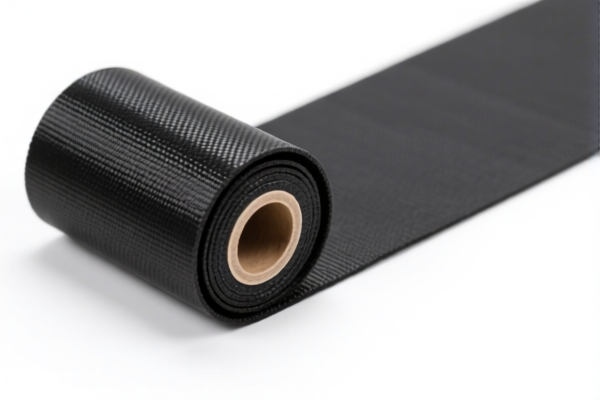

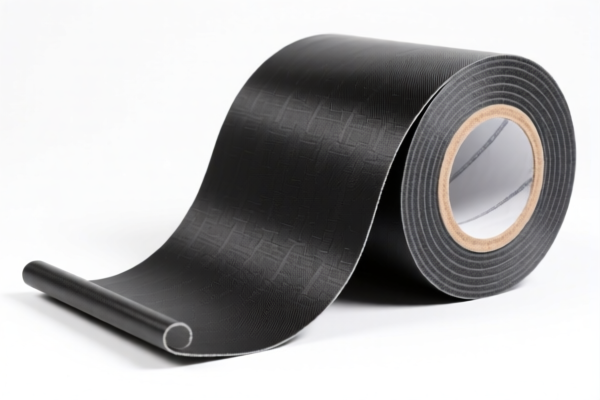
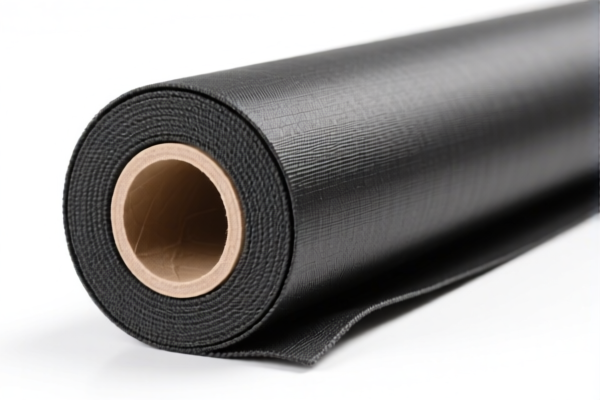
AI分析
🏭 High Strength Conveyor Belting (Textile Reinforced)
🌐 HS Code Reference & Customs Clearance Guide | 2026 Latest Tariff Analysis | Professional Clearance Strategy 📌 I. Product Definition & Classification: Understanding "Textile Reinforced Conveyor Belts"
High Strength Conveyor Belting (Textile Reinforced) refers to industrial flexible belts used for transporting bulk materials or units. The key characteristic here is "Textile Reinforced", meaning the internal tensile carcass is made of natural or man-made fibers (such as nylon, polyester, cotton, or aramid) rather than steel cords.
In international trade, these belts are classified based on their material composition and specific application:
1. General Purpose Textile Belts: Used for general conveying in mining, agriculture, and logistics. 2. Specialized Application Belts: Designed for specific industries like Paper Mills or integrated into larger Conveyor Systems.
⚠️ Key Distinction Point: - If the belt is simply identified as a textile conveyor belt without specifying a machine-specific use or sub-type, it often falls under 5910.00.90.00. - If the belt is explicitly described as having a non-chain structure and made of man-made fibers/textile materials, it may fall under 5910.00.10.70. - If the belt is declared strictly as a part/component of a larger conveyor machine (industrial component attribute), it may shift to 8431.39.00.10. - If the belt is high-strength and specifically designated for use in conveying/transport machinery (general industrial use), it may be classified under 5911.31.00.80. - If the belt is high-strength and specifically designated for use in paper-making or similar machinery, it may be classified under 5911.32.00.80.
📦 II. HS Code Classification Details (2026 Latest Tariff Authority对照)
| HS Code | Product Description | Application Scenario | Material Structure |
|--------|--------------------------|--------------------------|
| 5910.00.90.00 | Textile reinforced conveyor belts, material is textile, for conveying | General industrial conveying, bulk materials | ✅ Textile Material |
| 5910.00.10.70 | Textile reinforced conveyor belts, form is conveyor belt, material is man-made fiber or textile, non-chain structure | Specific textile/man-made fiber belts, non-chain | ✅ Non-chain, Man-made/Textile |
| 8431.39.00.10 | Conveyor belts as parts for conveyor machines, textile reinforced structure conforms to industrial component attributes | Sold as replacement parts for conveyor systems | ✅ Industrial Component |
| 5911.31.00.80 | High-strength textile fiber belting, material is textile fiber, used for conveying or transport machinery | General high-strength industrial transmission | ✅ Textile Fiber, Conveying Machinery |
| 5911.32.00.80 | High-strength textile fiber belting, material is textile fiber, used for paper or similar machinery | Paper mills, specific industrial processing | ✅ Textile Fiber, Paper Machinery |
🔍 Important Reminder: - 5910 vs. 5911: Chapter 59 covers "Textile products impregnated, coated, covered or laminated." Chapter 59 also contains specific headings for belting. However, 5911 is often used for "Textile fabrics and other textile articles, for technical uses." The classification depends heavily on the customs interpretation of "belting" vs. "technical textile." In this specific dataset, both 5910 and 5911 are presented as valid options depending on the detailed summary provided in the declaration. - 8431 Risk: Classifying as a "part" (8431) might seem logical, but if the belt can function independently as a conveyor, customs often prefer 5910. The dataset explicitly links 8431 to "industrial component attribute," so use this if the belt is sold exclusively as a spare part for a specific machine model.
💰 III. 2026 Latest Tariff Rate Details (Including Surtaxes, Policy Add-ons)
✅ Applicable Country: USA (US) ✅ Origin: China (CN) ✅ Effective Time: 2025/2026 (Including subsequent imports)
🎯 1. 5910.00.90.00 —— General Textile Reinforced Conveyor Belt
| Item | Content |
|---|---|
| Base Rate | 2.6% (ad valorem) |
| Additional Tariff (301) | +25.0% |
| Section 122 Tariff | +10.0% |
| Total Rate | 37.6% |
| Tax Calculation | CIF Value × 37.6% |
| De Minimis Eligibility | ❌ No (deny_de_minimis) |
| Legal Basis Path | Base Tariff → USITC:301 Section → Section 122 Provision |
📌 Explanation: - The 2.6% is the standard MFN (Most Favored Nation) duty. - The 25% is the standard Section 301 tariff for Chinese goods. - The 10% is an additional "Section 122" tariff (often related to specific trade policy adjustments or national security grounds in recent years). - Total 37.6% is a high-cost burden for general textile belts.
🎯 2. 5910.00.10.70 —— Non-Chain Textile/Man-Made Fiber Belt
| Item | Content |
|---|---|
| Base Rate | 4.0% |
| Additional Tariff (301) | +25.0% |
| Section 122 Tariff | +10.0% |
| Total Rate | 39.0% |
| Tax Calculation | CIF Value × 39.0% |
| De Minimis Eligibility | ❌ No |
| Legal Basis Path | Base Tariff → USITC:301 Section → Section 122 Provision |
📌 Note: - Slightly higher base rate (4.0% vs 2.6%) due to specific subheading classification for non-chain structures. - Same surtaxes apply. Total 39.0% is the highest base rate in this set.
🎯 3. 8431.39.00.10 —— Conveyor Belt as Industrial Part
| Item | Content |
|---|---|
| Base Rate | 0.0% |
| Additional Tariff (301) | +25.0% |
| Section 122 Tariff | +10.0% |
| Total Rate | 35.0% |
| Tax Calculation | CIF Value × 35.0% |
| De Minimis Eligibility | ❌ No |
| Legal Basis Path | Base Tariff → USITC:301 Section → Section 122 Provision |
📌 Advantage: - The 0% base rate makes this the cheapest option in terms of pure tariff percentage (35.0% total). - Risk: Customs may challenge this if the belt is not clearly identified as a "part" of a machine. If imported as a standalone product, this classification carries a high risk of misdeclaration penalties. Use only if the belt is clearly a spare part for a specific conveyor system.
🎯 4. 5911.31.00.80 —— High-Strength Textile Fiber Belt (Conveying Machinery)
| Item | Content |
|---|---|
| Base Rate | 3.8% |
| Additional Tariff (301) | +25.0% |
| Section 122 Tariff | +10.0% |
| Total Rate | 38.8% |
| Tax Calculation | CIF Value × 38.8% |
| De Minimis Eligibility | ❌ No |
| Legal Basis Path | Base Tariff → USITC:301 Section → Section 122 Provision |
📌 Note: - Specifically for "conveying or transport machinery." - Total 38.8% is slightly lower than the 5910.00.10.70 but higher than 5910.00.90.00.
🎯 5. 5911.32.00.80 —— High-Strength Textile Fiber Belt (Paper Machinery)
| Item | Content |
|---|---|
| Base Rate | 3.8% |
| Additional Tariff (301) | +25.0% |
| Section 122 Tariff | +10.0% |
| Total Rate | 38.8% |
| Tax Calculation | CIF Value × 38.8% |
| De Minimis Eligibility | ❌ No |
| Legal Basis Path | Base Tariff → USITC:301 Section → Section 122 Provision |
📌 Note: - Specifically for "paper or similar machinery." - Same rate as 5911.31.00.80. Ensure the end-use is genuinely paper manufacturing to justify this classification.
🛠️ IV. Customs Clearance Practical Advice (Avoid Pitfalls Guide)
✅ 1. Document Checklist (Essential)
| Document | Must Provide | Description |
|---|---|---|
| ✅ Product Specification Sheet | ✔️ | Include tensile strength, ply count, material type (nylon/polyester/cotton), width, thickness. |
| ✅ Usage Declaration Letter | ✔️ | Explicitly state whether it is for general conveying, paper mills, or as a spare part. |
| ✅ Product Photos (Labeled) | ✔️ | Clear images showing the belt, splices, and any identifying marks. |
| ✅ Commercial Invoice | ✔️ | Must match the HS Code description exactly. Do not just write "Conveyor Belt." Use "High Strength Textile Reinforced Conveyor Belt for [Specific Use]." |
| ✅ Packing List | ✔️ | Detail rolls, cores, and accessories. |
✅ 2. Declaration Strategy (Key Mantras)
🔥 "Be Specific, Match the Use, Avoid Ambiguity!"
| Scenario | Correct Declaration Approach | Wrong Approach |
|---|---|---|
| General Industrial Belt | 5910.00.90.00 | Vague description "Textile Belt" |
| Non-Chain Man-Made Fiber | 5910.00.10.70 | Calling it "Steel Cord" (if it's textile) |
| Spare Part for Machine | 8431.39.00.10 | Declaring as "Finished Goods" when sold as parts |
| Paper Mill Use | 5911.32.00.80 | Generalizing as "Conveyor Belt" |
| High-Strength General | 5911.31.00.80 | Ignoring "High Strength" feature |
💡 Pro Tip: If you are importing high-strength belts, declaring them under 5911 (Technical Textiles) rather than 5910 (General Belting) might offer better alignment with customs' technical classifications, provided the "High Strength" and "Textile Fiber" attributes are highlighted.
✅ 3. Special Circumstances Handling
| Situation | Recommendation |
|---|---|
| OEM Custom Belts | Provide design drawings showing the textile ply structure. |
| Mixed Shipments | Clearly separate "General Conveyor Belts" (5910) from "Paper Machine Belts" (5911.32) in the invoice. Do not lump them under one HS Code. |
| Steel Cord Belts | Note: This data set only covers Textile Reinforced belts. Steel cord belts fall under 5910.00.50.90 (not listed here) and may have different rates. Do not misdeclare steel belts as textile. |
🌍 V. Global Market Comparison (2026 Latest)
| Country/Region | Recommended HS Code | Tariff (China Origin) | Certification | Notes |
|---|---|---|---|---|
| 🇺🇸 USA | 5910.00.90.00 / 5911.31.00.80 |
37.6% - 38.8% (Total) | CE (if EU origin), RoHS | High surtaxes apply. 8431 is lower risk for parts. |
| 🇨🇳 China | 5910.00.90.00 |
5% - 8% | CCC (if applicable) | Lower base rates. |
| 🇪🇺 EU | 5910.00.90.00 |
0% - 4% | CE | No Section 301/122 equivalents. |
| 🇲🇽 Mexico | 5910.00.90.00 |
0% (under USMCA if qualified) | NOM | Check USMCA rules of origin. |
📌 Conclusion: - USA is the most challenging market due to 301 + 122 surtaxes, pushing total rates to ~37-39%. - 8431.39.00.10 offers the lowest rate (35%) but carries higher classification risk. - Always verify the exact material (man-made vs. natural textile) and end-use (paper vs. general) to choose the most accurate HS Code.
📌 VI. Common Mistakes & Pitfalls (Lessons Learned)
❌ Mistake 1: Declaring all conveyor belts under one generic HS Code regardless of material or use. 👉 Consequence: Customs may reclassify, leading to higher duties (e.g., from 37.6% to 39.0%) or penalties.
❌ Mistake 2: Using 8431 for standalone belts to save 2.6% base duty.
👉 Consequence: High risk of audit. If customs determines it's not a "part" but a "product," you face back taxes + fines.
❌ Mistake 3: Ignoring the "Section 122" 10% tariff. 👉 Consequence: Unexpected cost increase. Many traders only account for the 25% 301 tariff.
❌ Mistake 4: Confusing "Textile Reinforced" with "Steel Cord." 👉 Consequence: Steel cord belts have different HS Codes (usually 5910.00.50). Misclassification can lead to severe penalties.
✅ Correct Approach:
"High Strength Textile Reinforced Conveyor Belt, Polyester Core, for General Bulk Material Conveying, 1200mm Width, 6mm Thickness"
🎯 VII. Conclusion: Precise Classification, Cost Efficiency!
🎯 Remember the Mantras:
🔹 "Textile Reinforced = 5910 or 5911" 🔹 "Part of Machine = 8431 (Lower Duty, Higher Risk)" 🔹 "Paper Mill Use = 5911.32" 🔹 "General Conveying = 5910.90" 🔹 "Total Duty ≈ 37-39% for USA"
📌 Pro Tip: If your belt is originating from Vietnam, Mexico, or Thailand, you may be eligible for preferential tariffs (e.g., USMCA for Mexico) and potentially avoid Section 301/122 tariffs. Recommend Applying for an Advance Ruling with U.S. Customs (CBP) if the shipment is large, to secure the correct HS Code and duty rate.
📣 Immediate Action:
📞 Contact a licensed Customs Broker + Provide Product Specs + Request Advance Ruling if necessary 🚀 Let your conveyor belts clear smoothly, reduce costs, and boost efficiency!
✨ Professional Clearance Starts with Accurate Classification! 💼 Every Percent of Duty Counts!
用户评价
关于 HS 编码归类
协调制度(HS)是由世界海关组织(WCO)制定的国际贸易商品分类标准。全球 200 多个国家采用 HS 系统作为海关关税、贸易统计和进出口监管的基础。
每个 HS 编码遵循以下层级结构:
- 章(2 位)——商品大类(例如:第 84 章:机器和机械设备)
- 品目(4 位)——章内的更具体分类
- 子目(6 位)——国际通用细分,所有 WCO 成员国统一使用
- 本国细分(8-10 位)——各国自行扩展的细分编码,如美国 HTSUS 10 位编码
正确的 HS 编码归类对于顺利通关、准确缴纳关税和遵守贸易法规至关重要。错误归类可能导致海关延误、多缴关税或罚款。
从CN进口到US时,适用的关税税率可能包括:
- 最惠国(MFN)税率——适用于 WTO 成员国的标准关税税率
- 普通税率——适用于无贸易协定国家
- 贸易救济关税——附加关税,如 301 条款(反倾销)、232 条款(国家安全)或反补贴税
本页内容仅供参考。如需正式归类,请咨询当地海关或持牌报关代理。