High Strength Modified Plastic
CN → US| HS编码 | 关税税率 | 原产国 | 目的国 | 文档 |
|---|---|---|---|---|
| 3907300000 | 41.1% | CN | US | 官方文档 |
| 3824992900 | 41.5% | CN | US | 官方文档 |
| 3824999397 | 40.0% | CN | US | 官方文档 |
| 3812399000 | 40.0% | CN | US | 官方文档 |
| 3812205000 | 40.0% | CN | US | 官方文档 |
商品图片
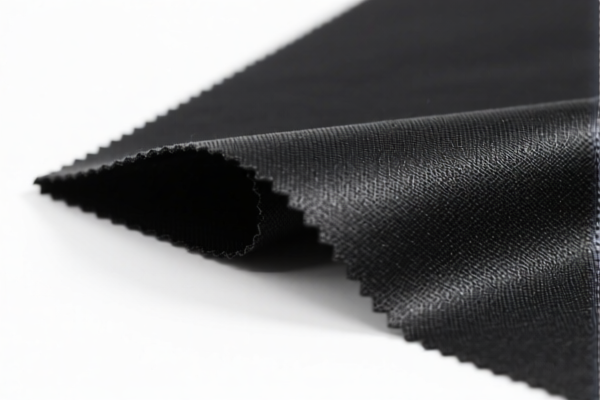
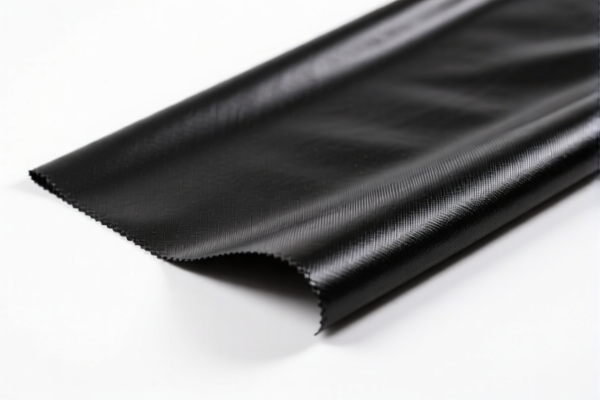
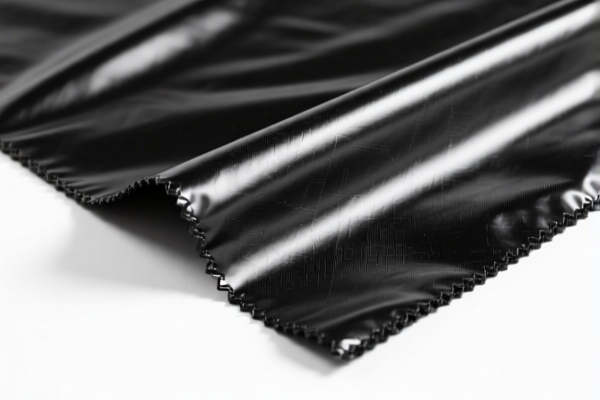
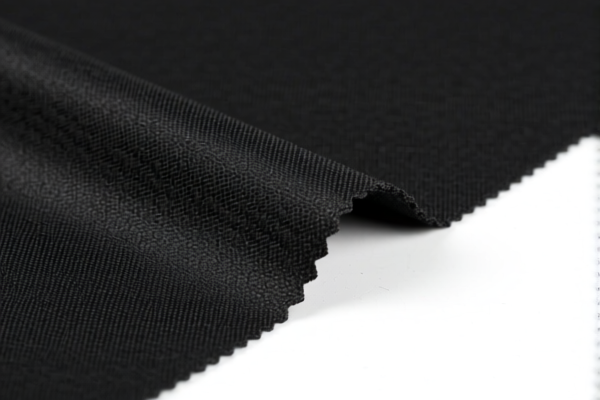
AI分析
🧪 High Strength Modified Plastic (Resin Modifiers)
🌐 HS Code Reference & Customs Clearance Guide | 2026 Latest Tariff Full Analysis | Professional-Level Clearance Strategy
📌 1. Product Definition and Classification: Do You Really Understand "High Strength Modified Plastic"?
High Strength Modified Plastic typically refers to chemical additives or compounds used to enhance the physical properties (such as toughness, heat resistance, or tensile strength) of base resins. In international trade, these are generally classified as chemical intermediates or plastic additives, not as finished plastic products.
Key Distinction:
- If the product is a finished plastic component (e.g., a molded part) → It may fall under Chapter 39 (Plastics).
- If the product is a chemical modifier/additive (liquid, powder, or granule used in the manufacturing process) → It falls under Chapter 38 (Chemical Products).
⚠️ Critical Logic:
- The term "Modified Plastic" often implies the result of modification, but customs classification depends on the state of the goods at import.
- "Resin Modifier" (树脂改性剂) is explicitly identified in the data as a chemical preparation, leading to Chapter 38 classifications.
- Misclassifying a chemical additive as a finished plastic product (or vice versa) can lead to significant tariff differences and customs delays.
📦 2. HS Code Classification Details (2026 Latest Tariff Authoritative Comparison)
Based on the provided data, the product "High Strength Modified Plastic" (interpreted as Resin Modifiers/Chemical Additives) is matched to five specific HS Codes. Note that the total tax rates vary significantly due to different base tariff rates.
| HS Code | Product Description & Logic | Total Tax Rate | Tax Detail Breakdown |
|---|---|---|---|
| 3907.30.00.00 | Epoxide Resins in Primary Forms • Logic: "Resin" defines the material; "Modifier" is inferred as a primary chemical in resin processing. • Risk: High base tariff. |
41.1% | Base: 6.1% Add-on: 25.0% Section 122: 10% |
| 3824.99.29.00 | Other Chemical Products/Preparations (Not Elsewhere Specified) • Logic: Fits "Chemical Preparations" category; inferred as chemical industry use. • Fit: Strong match for generic chemical additives. |
41.5% | Base: 6.5% Add-on: 25.0% Section 122: 10% |
| 3824.99.93.97 | Other Chemical Products/Preparations (Miscellaneous) • Logic: Chemical industry product, not excluded, falls under "Other." • Advantage: Lowest base tariff among matches. |
40.0% | Base: 5.0% Add-on: 25.0% Section 122: 10% |
| 3812.39.90.00 | Antioxidants & Other Composite Stabilizers for Rubber/Plastics • Logic: "Modifier" is a functional additive; aligns with "Composite Stabilizers." • Fit: Specific functional category for plastics. |
40.0% | Base: 5.0% Add-on: 25.0% Section 122: 10% |
| 3812.20.50.00 | Composite Plasticizers for Rubber/Plastics • Logic: Functional consistency with "Composite Plasticizers"; resin-based material. • Fit: Good for plasticizing modifiers. |
40.0% | Base: 5.0% Add-on: 25.0% Section 122: 10% |
🔍 Key Insight:
- Codes under 3812 and 3824 (Base 5.0%) offer a 1.5% lower total tax compared to 3907 (Base 6.1%).
- 3824.99.29.00 has the highest tax (41.5%) due to the highest base rate (6.5%).
- The "25% Add-on" and "10% Section 122" are consistent across all matches, reflecting current US trade policy on Chinese-origin chemical goods.
💰 3. 2026 Latest Tariff Rate Breakdown (Including Add-ons & Policy Surcharges)
✅ Applicable Country: United States (US)
✅ Country of Origin: China (CN)
✅ Effective Time: Post-2025 Policies (Current Framework)
🎯 1. 3907.30.00.00 —— Epoxide Resins in Primary Forms
| Item | Content |
|---|---|
| Base Tariff | 6.1% |
| Section 301 Tariff | +25.0% |
| Section 122 Tariff | +10.0% |
| Total Tax Rate | 41.1% |
| Calculation | CIF Value × 41.1% |
| De Minimis Exemption | ❌ Not Eligible (High-risk category for bulk chemicals) |
| Legal Basis | USITC:3907.30.00.00 → Section 301 Footnote → Section 122 |
📌 Explanation:
- Epoxide resins are heavily monitored. The high base rate (6.1%) makes this the second-highest tax bracket here.
- Suitable only if the product is unequivocally raw epoxide resin used as a primary material, not a generic modifier.
🎯 2. 3824.99.29.00 —— Other Chemical Preparations
| Item | Content |
|---|---|
| Base Tariff | 6.5% |
| Section 301 Tariff | +25.0% |
| Section 122 Tariff | +10.0% |
| Total Tax Rate | 41.5% |
| Calculation | CIF Value × 41.5% |
| De Minimis Exemption | ❌ Not Eligible |
| Legal Basis | USITC:3824.99.29.00 → Section 301 → Section 122 |
📌 Explanation:
- This is a "catch-all" category. The highest base rate (6.5%) results in the highest total tax (41.5%).
- Use this only if no more specific functional category (like stabilizers or plasticizers) applies.
🎯 3. 3824.99.93.97 —— Other Chemical Preparations (Miscellaneous)
| Item | Content |
|---|---|
| Base Tariff | 5.0% |
| Section 301 Tariff | +25.0% |
| Section 122 Tariff | +10.0% |
| Total Tax Rate | 40.0% |
| Calculation | CIF Value × 40.0% |
| De Minimis Exemption | ❌ Not Eligible |
| Legal Basis | USITC:3824.99.93.97 → Section 301 → Section 122 |
📌 Explanation:
- A "catch-all" but with a lower base rate (5.0%).
- Suitable for general chemical intermediates that don't fit specific functional descriptions.
🎯 4. 3812.39.90.00 —— Composite Stabilizers for Rubber/Plastics
| Item | Content |
|---|---|
| Base Tariff | 5.0% |
| Section 301 Tariff | +25.0% |
| Section 122 Tariff | +10.0% |
| Total Tax Rate | 40.0% |
| Calculation | CIF Value × 40.0% |
| De Minimis Exemption | ❌ Not Eligible |
| Legal Basis | USITC:3812.39.90.00 → Section 301 → Section 122 |
📌 Explanation:
- Function-Specific: If the "modifier" acts as a stabilizer, antioxidant, or hardener, this is the most accurate functional classification.
- Recommended for products explicitly labeled as "stabilizers" or "hardening agents."
🎯 5. 3812.20.50.00 —— Composite Plasticizers for Rubber/Plastics
| Item | Content |
|---|---|
| Base Tariff | 5.0% |
| Section 301 Tariff | +25.0% |
| Section 122 Tariff | +10.0% |
| Total Tax Rate | 40.0% |
| Calculation | CIF Value × 40.0% |
| De Minimis Exemption | ❌ Not Eligible |
| Legal Basis | USITC:3812.20.50.00 → Section 301 → Section 122 |
📌 Explanation:
- Function-Specific: If the "modifier" primarily increases flexibility or workability (plasticizing effect), this is the best fit.
- Ideal for "toughening agents" or "impact modifiers."
🛠️ 4. Customs Clearance Practical Advice (Battle-Tested Pitfall Avoidance)
✅ 1. Required Documentation Checklist (Missing Items = Delay)
| Document | Mandatory? | Description |
|---|---|---|
| ✅ Technical Data Sheet (TDS) | ✔️ | Must specify chemical composition, CAS numbers, and function (e.g., "Stabilizer" vs. "Plasticizer"). |
| ✅ MSDS (Safety Data Sheet) | ✔️ | Critical for chemical imports. Must match the HS code's hazard profile. |
| ✅ Product Photographs | ✔️ | Show packaging, labels, and physical state (powder/liquid/granule). |
| ✅ Commercial Invoice | ✔️ | Clearly state "Chemical Additive for Plastic Modification," not just "Plastic." |
| ✅ Customs Ruling (Optional but Recommended) | ✔️ | Apply for an Advance Ruling if the classification is ambiguous. |
| ✅ Certificate of Origin | ✔️ | Mandatory for Section 301 and 122 applicability confirmation. |
✅ 2. Declaration Tips (Key Mantras)
🔥 "Don't Say Plastic, Say Chemical. Function Defines the Code."
| Scenario | Correct Declaration | Error to Avoid |
|---|---|---|
| Product is a resin additive | 3812.39.90.00 (Stabilizer) or 3812.20.50.00 (Plasticizer) |
❌ Misclassifying as 3907 (Resin) → Higher tax |
| Product is a generic modifier | 3824.99.93.97 (Other Chemicals) |
❌ Using 3824.99.29.00 → 0.5% higher tax |
| Product is raw epoxy resin | 3907.30.00.00 |
❌ Calling it "modifer" if it's pure resin |
✅ 3. Special Case Handling
| Situation | Handling Advice |
|---|---|
| Mixed Chemicals | If the product is a blend of stabilizers and plasticizers, choose the primary function or the higher duty rate if uncertain. |
| UN Number & Hazard Class | Ensure the MSDS matches the declared chemical hazard. Mismatches cause immediate holds. |
| EPA TSCA Compliance | Chemical imports require EPA TSCA certification. Verify your supplier has valid EPA registration. |
🌍 5. Global Customs Comparison (2026 Latest)
| Country/Region | Recommended HS Code | Tariff Rate | Certification | Notes |
|---|---|---|---|---|
| 🇺🇸 USA | 3812.39.90.00 / 3824.99.93.97 |
40.0% | EPA TSCA, OSHA | High base + 301 + 122. Avoid 3907 if possible. |
| 🇨🇳 China | 3824.99.99.90 |
~5-6% | GB Standards | No 301/122 tariffs. |
| 🇪🇺 EU | 3824.99.99 |
~0-2.5% | REACH, CLP | Strict REACH compliance required. |
| 🇯🇵 Japan | 3824.99.90 |
~0-4.0% | JIS | No special add-ons. |
📌 Conclusion:
- The US market is the most expensive due to the combination of base tariffs + 25% Section 301 + 10% Section 122.
- Optimization Strategy: Aim for Chapter 38, Heading 3812 (Stabilizers/Plasticizers) with a 5.0% base rate rather than Chapter 39 (6.1%) or generic 3824 (6.5% in some cases).
📌 6. Common Mistakes & Pitfalls (Lessons Learned)
❌ Mistake 1: Declaring "High Strength Modified Plastic" as a finished plastic product (3926.90)
👉 Consequence: If it's an additive, customs will reclassify it to 38xx, potentially applying higher or different penalty rates and delaying shipment.
❌ Mistake 2: Ignoring the "Section 122" 10% tariff
👉 Consequence: Underestimating landed cost. This 10% is non-negotiable for many Chinese chemical imports under current policies.
❌ Mistake 3: Using vague terms like "Chemical Additive" without specifying function
👉 Consequence: Customs may choose 3824.99.29.00 (41.5%) instead of 3812 (40.0%) due to lack of functional clarity.
✅ Correct Approach:
"Composite Plasticizer for PVC Modification, CAS No: XXXXX, Function: Improve Flexibility"
🎯 7. Conclusion: Precision in Classification Saves Money
🎯 Key Takeaway:
🔹 "Function Over Form": A "modifier" is a chemical, not a plastic.
🔹 "Specificity Pays":3812(Stabilizers/Plasticizers) is often better than3824(General) or3907(Resins).
🔹 "Mind the Surcharges": 25% + 10% = 35% add-on is fixed. Reduce the Base Tariff to lower total cost.📌 Pro Tip:
If your product can be classified as a Composite Stabilizer (3812) or Composite Plasticizer (3812), you save 1.1% - 1.5% compared to other options. On a $100,000 shipment, that’s $1,100–$1,500 saved.
📣 Immediate Action:
📞 Consult a Customs Broker to verify if your product fits
3812(Stabilizer/Plasticizer).
📄 Prepare MSDS & TDS highlighting the chemical function.
🚀 Apply for Advance Ruling if high volume, to lock in the correct HS Code and tax rate.
✨ Professional Clearance Starts with Accurate Classification!
💼 Every percentage point of tax savings counts!
用户评价
关于 HS 编码归类
协调制度(HS)是由世界海关组织(WCO)制定的国际贸易商品分类标准。全球 200 多个国家采用 HS 系统作为海关关税、贸易统计和进出口监管的基础。
每个 HS 编码遵循以下层级结构:
- 章(2 位)——商品大类(例如:第 84 章:机器和机械设备)
- 品目(4 位)——章内的更具体分类
- 子目(6 位)——国际通用细分,所有 WCO 成员国统一使用
- 本国细分(8-10 位)——各国自行扩展的细分编码,如美国 HTSUS 10 位编码
正确的 HS 编码归类对于顺利通关、准确缴纳关税和遵守贸易法规至关重要。错误归类可能导致海关延误、多缴关税或罚款。
从CN进口到US时,适用的关税税率可能包括:
- 最惠国(MFN)税率——适用于 WTO 成员国的标准关税税率
- 普通税率——适用于无贸易协定国家
- 贸易救济关税——附加关税,如 301 条款(反倾销)、232 条款(国家安全)或反补贴税
本页内容仅供参考。如需正式归类,请咨询当地海关或持牌报关代理。