High Strength Mortar for Refractory Bricks
CN → US| HS编码 | 关税税率 | 原产国 | 目的国 | 文档 |
|---|---|---|---|---|
| 3816002010 | 38.0% | CN | US | 官方文档 |
| 2522200000 | 35.0% | CN | US | 官方文档 |
| 6902905020 | 35.0% | CN | US | 官方文档 |
| 6902205020 | 35.0% | CN | US | 官方文档 |
| 3816002050 | 38.0% | CN | US | 官方文档 |
商品图片
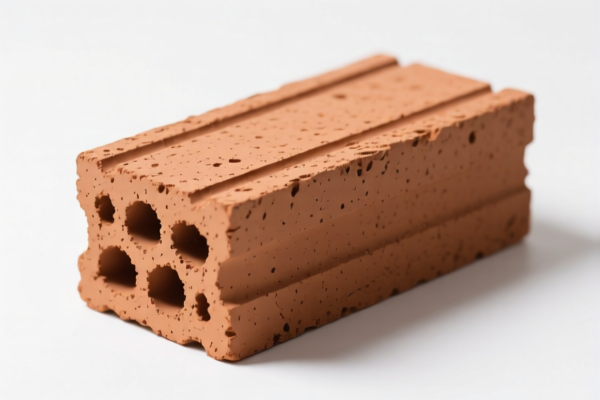
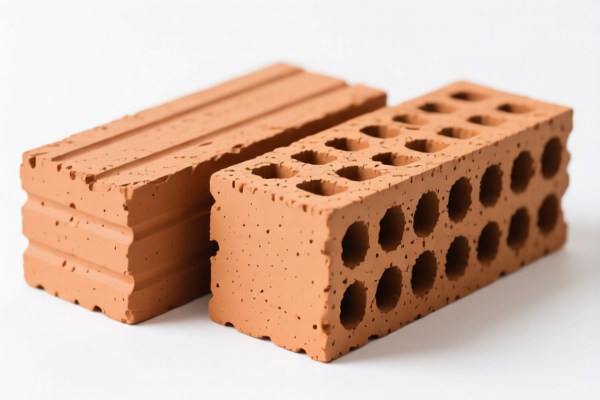
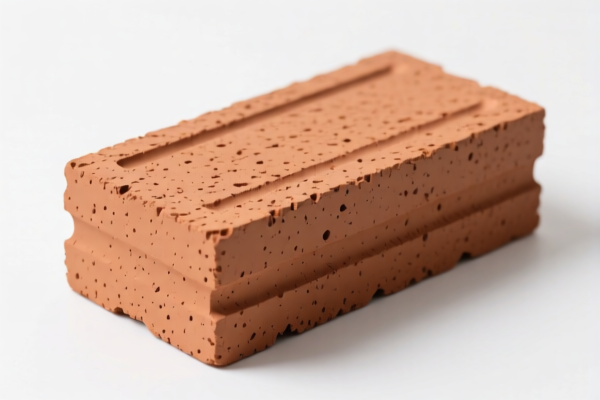
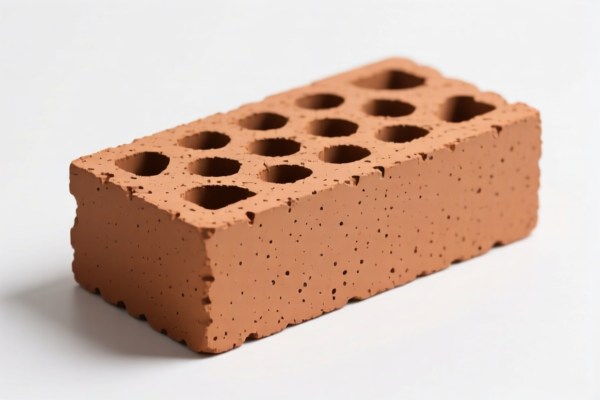
AI分析
🧱 High Strength Mortar for Refractory Bricks (Refractory Cement/Mortar)
🌐 HS Code Reference & Customs Clearance Guide | 2026 Latest Tariff Analysis | Specialized Clearance Strategy
📌 I. Product Definition & Classification: What Exactly Is This?
High Strength Mortar for Refractory Bricks is a specialized building material used primarily in industrial kilns, furnaces, and high-temperature environments. It serves as the binding agent for assembling refractory bricks (firebricks).
In international trade, this product is often ambiguous because it straddles the line between "Chemical Products" (if viewed as a cementitious mixture) and "Ceramic Materials" (if viewed as a component of refractory structures).
⚠️ Key Distinction Point: - If the product is primarily defined by its chemical composition (e.g., lime-based, calcium aluminate) and used as a general binding agent → It may fall under Chapter 38 (Miscellaneous Chemical Products) or Chapter 25 (Salt; Sulphur; Earths and Stone). - If the product is explicitly defined as a refractory ceramic accessory matching the bricks it binds → It may fall under Chapter 69 (Ceramic Products).
📦 II. HS Code Classification Details (2026 Latest Tariff Authority Comparison)
Based on the specific product nature ("Refractory," "Mortar," "High Strength"), here are the five most probable HS Codes with matching rationale from the provided data.
| HS Code | Product Description | Matching Rationale (Based on Provided Data) | Material/Category Logic |
|---|---|---|---|
| 3816.00.20.10 | Refractory Mortar & Cement | "Mortar" matches the material/category requirement perfectly. The name "Mortar" fully complies with the classification explanation for "Mortar" material/category. |
Primary: Mortar/Chemical binder |
| 2522.20.00.00 | Burnt Lime & Hydraulic Lime | Contains Lime Components. Refractory brick mortar is a building material with lime components. Its material characteristics (containing calcium oxide/hydroxide) align with the chemical attributes of burnt lime (2522.20) with no obvious material conflict. |
Primary: Lime-based binder |
| 6902.90.50.20 | Other Refractory Ceramic Materials | "Refractory" matches material; "Mortar" is a配套 (supporting) product. While not a brick itself, "Brick Mortar" is a supporting building material similar to refractory bricks/tiles. It fits a reasonable inference based on common sense, with no material conflict with "Other" categories. |
Primary: Ceramic Accessory |
| 6902.20.50.20 | Refractory Ceramic Building Materials | Falls under Refractory Materials Scope. Composition (Alumina/Silica) matches 6902.20.50.20. Mortar is treated as a consistent classification with refractory bricks in form and material logic, with no conflict. |
Primary: Refractory Ceramic Consistent |
| 3816.00.20.50 | Refractory Cement, Mortar & Similar Putties (Other) | "Mortar" is refractory cement/mortar. Although material is not explicitly stated, common sense infers it is "Other" type (non-clay). Fits the "Other" category definition for refractory mortars not elsewhere specified. |
Primary: Other Refractory Mortar |
🔍 Critical Analysis: - 3816 vs 6902: The biggest debate is between Chapter 38 (Chemical/Cement) and Chapter 69 (Ceramics). - If it’s Lime-based (2522): The presence of Calcium Oxide/Hydroxide pushes it to Chapter 25. - Risk: Misclassification can lead to different tax burdens and regulatory requirements (e.g., FDA/USDA vs. no specific chemical regulation).
💰 III. 2026 Latest Tariff Rate Breakdown (Including Surtaxes & Policy Add-ons)
✅ Applicable Country: United States (US) ✅ Origin: China (CN) ✅ Effective Time: Post-November 2025 (Includes subsequent imports)
🎯 1. 3816.00.20.10 & 3816.00.20.50 —— Refractory Mortar (Chemical Chapter)
| Item | Content |
|---|---|
| Base Tariff | 3.0% (Ad valorem) |
| Section 301 Surtax | +25.0% (From USITC Footnote regarding Chinese goods) |
| IEEPA Surtax | +10.0% (122 Section Tariff for Chinese/HSK products, effective Nov 2025) |
| Total Tariff Rate | 38.0% |
| Tax Calculation | CIF Value × 38.0% |
| De Minimis Eligibility | ❌ No (Denied de minimis due to high surtaxes) |
| Legal Basis Path | IEEPA:9903.01.25 → USITC:3816.00.20.10 → FOOTNOTE:301 |
📌 Explanation: - These codes fall under Chapter 38, which attracts the full base tariff plus both surtaxes. - Total 38% is a significant cost driver. Ensure your supply chain margin can absorb this.
🎯 2. 2522.20.00.00 —— Burnt Lime / Hydraulic Lime
| Item | Content |
|---|---|
| Base Tariff | 0.0% |
| Section 301 Surtax | +25.0% |
| IEEPA Surtax | +10.0% |
| Total Tariff Rate | 35.0% |
| Tax Calculation | CIF Value × 35.0% |
| De Minimis Eligibility | ❌ No |
| Legal Basis Path | IEEPA:9903.01.24 → USITC:2522.20.00.00 → FOOTNOTE:301 |
📌 Explanation: - Lower base rate (0%) makes this 3% cheaper than Chapter 38 options. - Crucial: You must prove the product is "Lime-based" via technical data sheets. If customs suspects it's a complex chemical mix, they may reclassify to 3816.
🎯 3. 6902.90.50.20 & 6902.20.50.20 —— Refractory Ceramic Materials
| Item | Content |
|---|---|
| Base Tariff | 0.0% |
| Section 301 Surtax | +25.0% |
| IEEPA Surtax | +10.0% |
| Total Tariff Rate | 35.0% |
| Tax Calculation | CIF Value × 35.0% |
| De Minimis Eligibility | ❌ No |
| Legal Basis Path | IEEPA:9903.01.24 → USITC:6902.20/90 → FOOTNOTE:301 |
📌 Explanation: - Also 35% total. - Requires strong argument that the mortar is a "Ceramic Product" accessory, not just a chemical binder. - Risk: Customs may argue that "mortar" is not a finished ceramic good but a raw material, pushing it back to 3816 or 2522.
🛠️ IV. Customs Clearance Practical Advice (Battle-Tested Pitfall Avoidance)
✅ 1. Essential Documentation Checklist (Non-Negotiable)
| Document | Required? | Purpose |
|---|---|---|
| ✅ Technical Data Sheet (TDS) | ✔️ Critical | Must list chemical composition (e.g., % CaO, % Al2O3) to justify 2522 or 6902. |
| ✅ Product Specification | ✔️ | Confirm "Refractory" grade (e.g., operating temp > 1000°C). |
| ✅ Commercial Invoice | ✔️ | Clearly state: "High Strength Mortar for Refractory Bricks, Chemical/Ceramic Nature" |
| ✅ Manufacturer’s Certificate | ✔️ | Confirm origin and production process (Kiln-fired? Chemical mix?). |
| ✅ HS Code Pre-Ruling Request | ✔️ Highly Recommended | Given the ambiguity, apply for an Advance Ruling to lock in the 35% rate (2522/6902) vs 38%. |
✅ 2. Declaration Strategy (Key Mantra)
🔥 "Prove the Lime, Prove the Brick, Avoid the Chemical Trap!"
| Scenario | Correct Declaration Strategy | Wrong Approach |
|---|---|---|
| Lime-Based Mortar | Declare under 2522.20.00.00 with TDS showing high CaO content. | Calling it "Refractory Mortar" without chemical proof → Risk of 3816 (38%). |
| Ceramic Accessory | Declare under 6902.xx.xx as "Component for Refractory Structures." | Calling it "Chemical Bonding Agent" → Risk of 3816. |
| Generic "Mortar" | Declare under 3816.00.20.10 if composition is unclear. | Ambiguous description → Seizure or reclassification penalty. |
✅ 3. Special Circumstances Handling
| Situation | Handling Advice |
|---|---|
| OEM/Contract Manufacturing | Provide the client’s specification sheet that explicitly demands "Refractory Compliance" to support Chapter 69 classification. |
| Mixed Containers | If mixed with other goods, ensure the mortar is clearly separated in packing list. Mixed declarations can trigger full container inspection. |
| High Volume Imports | Apply for Section 301 Exclusions (if applicable for specific chemical products) or negotiate duty drawbacks if re-exported. |
🌍 V. Global Market Customs Comparison (2026 Latest)
| Country/Region | Recommended HS Code | Tariff (China Origin) | Key Certification/Requirement | Remarks |
|---|---|---|---|---|
| 🇺🇸 USA | 2522.20.00.00 or 3816.00.20.10 |
35% or 38% | None specific, but TDS essential for defense | Highest tariff risk; 301 + IEEPA apply. |
| 🇨🇳 China | 2522.20.00.00 or 6902.xx.xx |
0% - 5% | Standard GB standards | No additional surtaxes. |
| 🇪🇺 EU | 2522.20.00 or 6902.xx.xx |
0% - 6.5% | REACH Registration for chemicals | Refractory mortars may need REACH compliance if chemical. |
| 🇬🇧 UK | 2522.20.00 or 3816.00 |
0% - 6% | UK REACH | Post-Brexit rules apply. |
| 🇦🇺 Australia | 2522.20.00 |
5% | None specific | Competitive rate. |
📌 Conclusion: - USA is the most challenging market due to layered tariffs (301 + IEEPA). - Aim for 35% (2522/6902) rather than 38% (3816) to save 3% on CIF value. - Documentation is your best defense. Vague descriptions like "Industrial Mortar" will trigger audits.
📌 VI. Common Mistakes & Pitfall Guide (Blood-Tested Lessons)
❌ Mistake 1: Calling it "Building Adhesive" or "Glue" 👉 Consequence: Customs may classify it under Chapter 35 (Protein Substances) or Chapter 39 (Plastics), leading to complex regulatory checks or higher duties.
❌ Mistake 2: Omitting "Refractory" in the description 👉 Consequence: Treated as general construction mortar (usually higher duty or stricter environmental controls), losing the "Refractory" benefit.
❌ Mistake 3: Assuming 0% base rate means 0% total tax 👉 Consequence: Forgetting the +25% (301) +10% (IEEPA) surtaxes. The real cost is 35%.
❌ Mistake 4: Using "Cement" without specifying "Refractory" 👉 Consequence: Classified under Chapter 30 (Pharmaceuticals) or 38 (Misc) incorrectly, causing declaration delays.
✅ Correct Action:
"Refractory High-Strength Mortar for Firebricks, Lime-Based, Chemical Analysis Attached, HS 2522.20.00"
🎯 VII. Conclusion: Precision Classification Saves Money!
🎯 Remember the Mantra:
🔹 "Lime Base = 2522 (35%) | Ceramic Fit = 6902 (35%) | Chemical Mix = 3816 (38%)"
🔹 "3% Savings per CIF Value is significant on large volumes!"
🔹 "TDS is Key. Without it, you risk the 38% penalty."
📌 Pro Tip:
If your mortar contains high percentages of Alumina (Al2O3), push for 6902 classification. If it is primarily Calcium Oxide (CaO), push for 2522. Both are 35% vs 38%.
Apply for an Advance Ruling from CBP before shipment to lock in the lower rate and avoid post-import audits.
📣 Immediate Action:
📞 Contact your freight forwarder with the Technical Data Sheet (TDS).
🚀 Secure the 35% Tariff, avoid the 38% trap, and ensure smooth US Customs clearance.
✨ Professional Clearance Starts with Precise Classification!
💼 Every Percent Counts in High-Volume Industrial Imports!
用户评价
关于 HS 编码归类
协调制度(HS)是由世界海关组织(WCO)制定的国际贸易商品分类标准。全球 200 多个国家采用 HS 系统作为海关关税、贸易统计和进出口监管的基础。
每个 HS 编码遵循以下层级结构:
- 章(2 位)——商品大类(例如:第 84 章:机器和机械设备)
- 品目(4 位)——章内的更具体分类
- 子目(6 位)——国际通用细分,所有 WCO 成员国统一使用
- 本国细分(8-10 位)——各国自行扩展的细分编码,如美国 HTSUS 10 位编码
正确的 HS 编码归类对于顺利通关、准确缴纳关税和遵守贸易法规至关重要。错误归类可能导致海关延误、多缴关税或罚款。
从CN进口到US时,适用的关税税率可能包括:
- 最惠国(MFN)税率——适用于 WTO 成员国的标准关税税率
- 普通税率——适用于无贸易协定国家
- 贸易救济关税——附加关税,如 301 条款(反倾销)、232 条款(国家安全)或反补贴税
本页内容仅供参考。如需正式归类,请咨询当地海关或持牌报关代理。