High Strength Synthetic Staple Fiber Yarn
CN → US| HS编码 | 关税税率 | 原产国 | 目的国 | 文档 |
|---|---|---|---|---|
| 5509210000 | 44.7% | CN | US | 官方文档 |
| 5509110000 | 44.4% | CN | US | 官方文档 |
| 5511100060 | 42.5% | CN | US | 官方文档 |
| 5508200000 | 46.0% | CN | US | 官方文档 |
商品图片
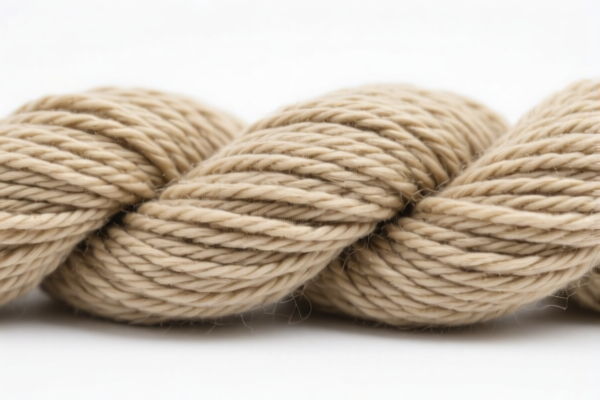
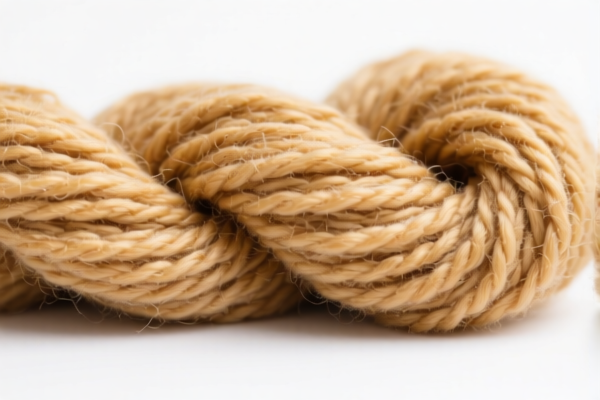
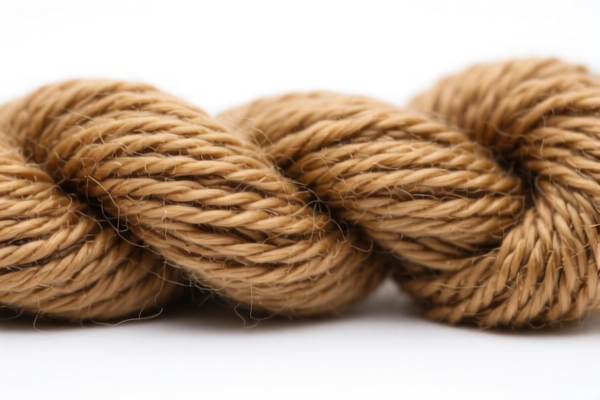
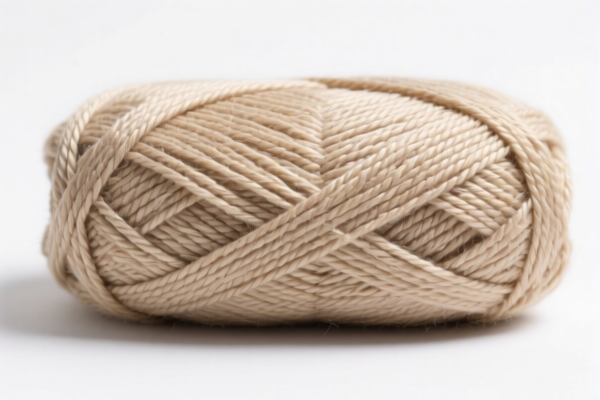
AI分析
🧵 High Strength Synthetic Staple Fiber Yarn
🌐 HS Code Reference & Customs Clearance Guide | 2026 Latest Tariff Analysis | Professional Clearance Strategy
📌 I. Product Definition & Classification: Do You Really Understand "High Strength Synthetic Staple Fiber Yarn"?
High-strength synthetic staple fiber yarn is a specialized textile raw material primarily used in industrial applications such as conveyor belts, safety ropes, tire cord, geotextiles, and reinforced plastics. Unlike ordinary textile yarns, its defining characteristic is high tensile strength.
In international trade, it is strictly differentiated based on the material type (Nylon/Polyamide vs. Other Synthetics) and the specific classification rules regarding staple vs. filament forms. Misclassification can lead to significant tariff penalties, especially under current U.S. trade policies.
⚠️ Key Distinction Points:
- If the material is Nylon (Polyamide) → Classify under 5509.11.00.00
- If the material is Other Synthetic (e.g., Polyester, Polypropylene) → Classify under 5509.21.00.00
- Note on 5511: Although labeled "staple fiber," if it is essentially continuous filament (non-sewing), it may be misclassified under 5511.10.00.60. Be cautious!
- Note on 5508: If it has high sewing line characteristics, it might be grouped under 5508.20.00.00, though less common for "high strength industrial" use.
📦 II. HS Code Classification Details (2026 Latest Tariff Authority Comparison)
| HS Code | Product Description | Application Scenario | Material Type | Key Clarification |
|---|---|---|---|---|
5509.21.00.00 |
Synthetic staple fiber yarn, other than nylon/polyamide (e.g., Polyester) | Conveyor belts, industrial webbing, geotextiles | Other Synthetics | Most common for general high-strength staple yarns. |
5509.11.00.00 |
Synthetic staple fiber yarn, of Nylon or other Polyamides | Tire cord, high-performance ropes, safety nets | Nylon/Polyamide | Specific to polyamides. |
5511.10.00.60 |
Synthetic filament yarn (not sewing thread) | Misclassified as staple but actually continuous filament | Synthetic | Caution: If it’s continuous filament, not staple, use this. |
5508.20.00.00 |
Man-made staple fiber yarn (sewing thread related) | Sewing threads with high strength | Man-made Staple | High relevance only if it’s specifically for sewing applications. |
🔍 Critical Reminder:
- "Staple Fiber" vs. "Filament": Ensure the product is truly staple (short fibers spun together) and not filament (continuous long fibers). Misclassification here leads to wrong HS codes.
- "High Strength": This is a performance feature, not a classification criterion. The material (Nylon vs. Other) determines the HS Code.
💰 III. 2026 Latest Tariff Rate Breakdown (Including Surcharges & Policy Add-ons)
✅ Applicable Country: United States (US)
✅ Origin: China (CN)
✅ Effective Time: Current (Subject to Section 301 & IEEPA)
🎯 1. 5509.21.00.00 —— Synthetic Staple Fiber Yarn (Other Than Nylon)
| Item | Detail |
|---|---|
| Base Tariff | 9.7% (ad valorem) |
| Section 301 Surcharge | +25.0% |
| 122 Section Surcharge | +10.0% |
| Total Tariff Rate | 44.7% |
| Tax Calculation | CIF Value × 44.7% |
| De Minimis Eligibility | ❌ No (Deny De Minimis) |
| Legal Basis Path | Base Tariff 9.7% → Section 301: 25% → 122 Clause: 10% |
📌 Explanation:
- Base Tariff 9.7%: Standard MFN rate for synthetic staple fiber yarn.
- Section 301 25%: Retaliatory tariff under U.S. Trade Act Section 301 for Chinese goods.
- 122 Clause 10%: Additional surcharge under Section 122 of the Trade Expansion Act (specific to certain textile/yarn categories).
- Total: 44.7% is extremely high. Pre-impact cost analysis is mandatory.
🎯 2. 5509.11.00.00 —— Synthetic Staple Fiber Yarn (Nylon/Polyamide)
| Item | Detail |
|---|---|
| Base Tariff | 9.4% (ad valorem) |
| Section 301 Surcharge | +25.0% |
| 122 Section Surcharge | +10.0% |
| Total Tariff Rate | 44.4% |
| Tax Calculation | CIF Value × 44.4% |
| De Minimis Eligibility | ❌ No (Deny De Minimis) |
| Legal Basis Path | Base Tariff 9.4% → Section 301: 25% → 122 Clause: 10% |
📌 Note:
- Slightly lower base rate (9.4%) compared to "other synthetics" (9.7%), resulting in a 0.3% difference in total tariff.
- Applies to all Nylon/Polyamide staple fiber yarns, regardless of "high strength" designation.
🎯 3. 5511.10.00.60 —— Synthetic Filament Yarn (Non-Sewing)
| Item | Detail |
|---|---|
| Base Tariff | 7.5% (ad valorem) |
| Section 301 Surcharge | +25.0% |
| 122 Section Surcharge | +10.0% |
| Total Tariff Rate | 42.5% |
| Tax Calculation | CIF Value × 42.5% |
| De Minimis Eligibility | ❌ No (Deny De Minimis) |
| Legal Basis Path | Base Tariff 7.5% → Section 301: 25% → 122 Clause: 10% |
📌 Warning:
- This code is for filament, not staple. If your product is staple fiber, using this code is misclassification and risks audits.
- However, if the yarn is technically continuous filament (e.g., drawn filament), this is the correct code and saves 2.2% in tariffs.
🎯 4. 5508.20.00.00 —— Man-Made Staple Fiber Yarn (Sewing Thread Related)
| Item | Detail |
|---|---|
| Base Tariff | 11.0% (ad valorem) |
| Section 301 Surcharge | +25.0% |
| 122 Section Surcharge | +10.0% |
| Total Tariff Rate | 46.0% |
| Tax Calculation | CIF Value × 46.0% |
| De Minimis Eligibility | ❌ No (Deny De Minimis) |
| Legal Basis Path | Base Tariff 11.0% → Section 301: 25% → 122 Clause: 10% |
📌 Note:
- Highest base tariff (11.0%) among the options.
- Only apply if the yarn is primarily for sewing applications (sewing thread). High-strength industrial yarns should not be classified here unless specifically marketed as sewing thread.
🛠️ IV. Customs Clearance Practical Advice (Avoid Pitfalls)
✅ 1. Required Documentation Checklist (All Must-Haves)
| Document | Required | Explanation |
|---|---|---|
| ✅ Product Specification Sheet | ✔️ | Must specify: Material (Nylon/Polyester), Fiber Type (Staple/Filament), Denier, Strength (e.g., 500 cN/tex) |
| ✅ Technical Data Sheet (TDS) | ✔️ | Prove "High Strength" characteristic (tensile strength tests) |
| ✅ Commercial Invoice | ✔️ | Clearly state "Synthetic Staple Fiber Yarn" + Material Type |
| ✅ Bill of Lading | ✔️ | Match invoice details exactly |
| ✅ Certificate of Origin (CO) | ✔️ | Critical for proving Chinese origin (triggers tariffs) |
| ✅ Packing List | ✔️ | Detail roll weight, dimensions, and quantity |
✅ 2. Declaration Tips (Key Keywords)
🔥 "Material First, Staple vs Filament, No Sewing unless True!"
| Scenario | Correct Declaration | Incorrect Practice |
|---|---|---|
| Polyester Staple Yarn (Industrial) | 5509.21.00.00 "Polyester Staple Fiber Yarn, High Strength" |
Mislabel as "Cotton Yarn" → Audit |
| Nylon Staple Yarn (Tire Cord) | 5509.11.00.00 "Nylon Staple Fiber Yarn" |
Mislabel as "Filament" → Penalty |
| Continuous Filament Yarn | 5511.10.00.60 "Synthetic Filament Yarn, Not Sewing" |
Call it "Staple" → Misclassification |
| High-Strength Sewing Thread | 5508.20.00.00 "Man-Made Staple Fiber Sewing Thread" |
Call it "Industrial Yarn" → Higher Tax |
✅ 3. Special Cases Handling
| Case | Handling Advice |
|---|---|
| Mixed Material | If blend, classify based on principal material by weight. If equal, use "other" (5509.21). |
| OEM/Private Label | Provide client agreement + specs to prove no brand value impact on tariff. |
| High-Value Specialty Yarn | Consider Advance Ruling from CBP to lock in HS Code and tariff. |
| Transshipment via Vietnam/Mexico | Risky. Substantial transformation must be proven. Avoid simple repackaging. |
🌍 V. Global Market Comparison (2026 Latest)
| Country/Region | Recommended HS Code | Tariff (China Origin) | Certification | Notes |
|---|---|---|---|---|
| 🇺🇸 USA | 5509.21.00.00 |
44.7% | No special | Highest due to Section 301 + 122 |
| 🇨🇳 China | 5509.21.00.00 |
~5-7% | GB Standard | Low import tax on finished goods |
| 🇪🇺 EU | 5509.21.00.00 |
~6.5% | REACH | No Section 301 surcharge |
| 🇬🇧 UK | 5509.21.00.00 |
~6.5% | UKCA | Post-Brexit alignment with EU |
| 🇯🇵 Japan | 5509.21.00.00 |
~5.0% | JIS | Competitive market |
📌 Conclusion:
- USA is the most expensive market for high-strength synthetic yarn due to multiple surcharges.
- EU, UK, Japan offer significantly lower tariffs (~5-7%).
- Strategy: If exporting to US, consider cost-benefit analysis or explore third-country assembly (only if substantial transformation occurs).
📌 VI. Common Mistakes & Pitfalls (Lessons Learned)
❌ Mistake 1: Calling "Filament Yarn" "Staple Fiber Yarn"
👉 Consequence: Misclassification → 42.5% vs 44.7% (loss of savings) or Audit if detected.
❌ Mistake 2: Ignoring Section 122 Surcharge
👉 Consequence: Underpaying taxes → Penalty + Interest + Back Taxes. Always include 10% 122 Clause.
❌ Mistake 3: Using "Sewing Thread" Code for Industrial Yarn
👉 Consequence: Higher base tariff (11.0% vs 9.4%/9.7%) → Extra 1.3-1.6% cost.
❌ Mistake 4: Not Providing Technical Specs
👉 Consequence: CBP doubts "High Strength" claim → Delayed Release for testing.
✅ Correct Approach:
“High-Strength Polyester Staple Fiber Yarn, 1000 Denier, Industrial Use, Not for Sewing, Model XYZ, Certified to ASTM D1113”
🎯 VII. Conclusion: Precision Classification, Cost Control, Efficient Clearance!
🎯 Remember the Key Takeaways:
🔹 "Nylon vs Other: Check Material First"
🔹 "Staple vs Filament: Check Fiber Structure"
🔹 "USA Tariff: 42.5%~46.0%: Budget Accordingly"
🔹 "No De Minimis: Full Tax Declaration Required"
📌 Pro Tip:
If your yarn is exported from Vietnam, Mexico, or Thailand (with substantial transformation), you may avoid US surcharges. However, ensure rules of origin are strictly met.
Consider Apply for an Advance Ruling from US CBP to confirm HS Code and tariff rate before shipment.
📣 Immediate Action:
📞 Consult with a licensed customs broker + Provide Product Specs + Apply for HS Code Advance Ruling
🚀 Ensure your high-strength synthetic yarn clears smoothly, avoids penalties, and protects margins!
✨ Professional Customs Clearance Starts with Accurate Classification!
💼 Every Percentage Point of Tariff Matters!
用户评价
关于 HS 编码归类
协调制度(HS)是由世界海关组织(WCO)制定的国际贸易商品分类标准。全球 200 多个国家采用 HS 系统作为海关关税、贸易统计和进出口监管的基础。
每个 HS 编码遵循以下层级结构:
- 章(2 位)——商品大类(例如:第 84 章:机器和机械设备)
- 品目(4 位)——章内的更具体分类
- 子目(6 位)——国际通用细分,所有 WCO 成员国统一使用
- 本国细分(8-10 位)——各国自行扩展的细分编码,如美国 HTSUS 10 位编码
正确的 HS 编码归类对于顺利通关、准确缴纳关税和遵守贸易法规至关重要。错误归类可能导致海关延误、多缴关税或罚款。
从CN进口到US时,适用的关税税率可能包括:
- 最惠国(MFN)税率——适用于 WTO 成员国的标准关税税率
- 普通税率——适用于无贸易协定国家
- 贸易救济关税——附加关税,如 301 条款(反倾销)、232 条款(国家安全)或反补贴税
本页内容仅供参考。如需正式归类,请咨询当地海关或持牌报关代理。