Home Charge
CN → US| HS编码 | 关税税率 | 原产国 | 目的国 | 文档 |
|---|---|---|---|---|
| 8507600020 | 0.0% | CN | US | 官方文档 |
| 8507208091 | 38.5% | CN | US | 官方文档 |
| 8543709860 | 37.6% | CN | US | 官方文档 |
| 8543706000 | 35.0% | CN | US | 官方文档 |
| 8504409510 | 35.0% | CN | US | 官方文档 |
| 8504409520 | 35.0% | CN | US | 官方文档 |
商品图片
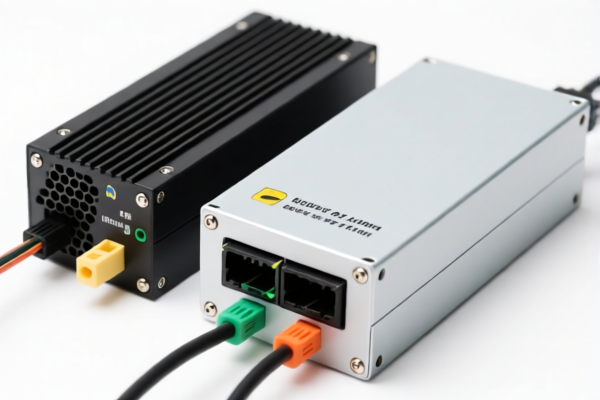
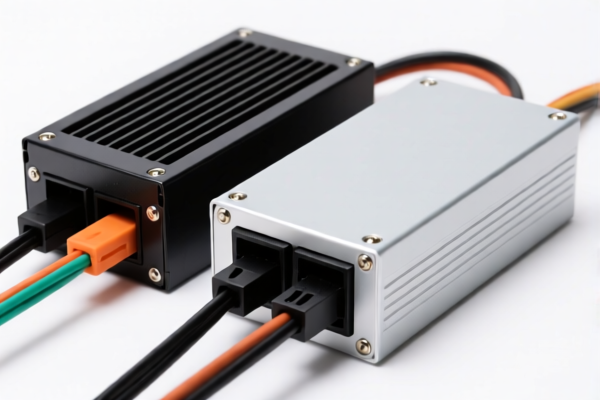
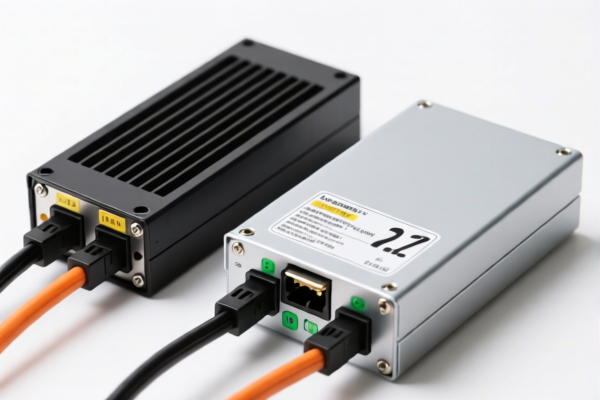
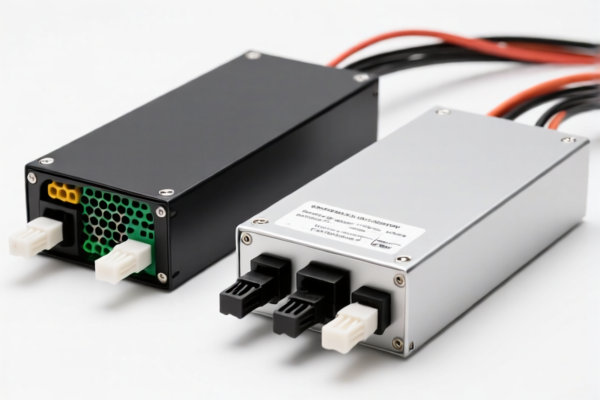
AI分析
🔋 Home Charge Stations (EV & Battery Storage)
🌐 HS Code Reference & Customs Clearance Guide | 2024/2025 Latest Tariff Analysis | Professional Level Clearance Strategy
📌 I. Product Definition & Classification: Do You Really Understand "Home Charge"?
"Home Charge" generally refers to equipment used for charging Electric Vehicles (EVs) or storing electrical energy in residential settings. In international trade, the classification depends strictly on whether the item is a battery storage system or an electrical conversion device. Misclassification can lead to severe penalties due to the high tariff rates on these specific categories.
1. Electric Storage Batteries (Li-ion or Lead-acid): If the "Home Charge" unit includes or is a battery pack (e.g., home energy storage systems like Tesla Powerwall alternatives, or EV battery packs themselves), it falls under Chapter 85.07.
⚠️ Key Distinction:
- If the primary function is storing chemical energy to be released as electricity → HS Code 8507.xx
- If the primary function is converting AC to DC or regulating power without significant storage capacity → HS Code 8504.xx or 8543.xx
📦 II. HS Code Classification Details (Based on Provided Data)
| HS Code | Product Description | Applicable Scenario | Tax Rate (Total) | Base Tariff | Additional Tariff |
|---|---|---|---|---|---|
8507.60.00.20 |
Lithium-ion batteries (Other), including separators, whether or not rectangular | Home Energy Storage Systems (HESS), Portable Power Stations, EV Battery Packs | Error / Failed to Retrieve | N/A | N/A |
8507.20.80.91 |
Other lead-acid storage batteries (Other) | Old-school UPS systems, Lead-acid backup power for home use | 28.5% | 3.5% | 25.0% |
8543.70.98.60 |
Other electrical machines and apparatus having individual functions, not specified elsewhere | Smart chargers, IoT-enabled power controllers, specialized charging controllers | 27.6% | 2.6% | 25.0% |
8543.70.60.00 |
Articles designed for connection to telegraphic/telephonic apparatus | Charging devices integrated with communication networks (e.g., smart home energy hubs) | 25.0% | 0.0% | 25.0% |
8504.40.95.10 |
Static converters (Rectifiers/Power supplies): Power output ≤ 50 W | Small home chargers, USB-C hubs, low-power smart plug adapters | 25.0% | 0.0% | 25.0% |
8504.40.95.20 |
Static converters (Rectifiers/Power supplies): Power output > 50 W but ≤ 150 W | Medium-power home chargers, high-speed laptop chargers, small inverter units | 25.0% | 0.0% | 25.0% |
🔍 Key Takeaway:
- Batteries are classified under 8507. Li-ion batteries have retrieval issues in this dataset, while Lead-acid batteries face a 28.5% total tariff. - Charging Converters/Adapters are classified under 8504 (Static Converters). All listed converter HS codes carry a flat 25.0% total tariff (Base 0% + Additional 25%). - Smart/Control Units without storage are classified under 8543 (Electrical Machines/Apparatus). These face 27.6% or 25.0% depending on their specific function (telegraphic connection vs. other).
💰 III. Detailed Tariff Rate Analysis
🎯 1. 8507.60.00.20 —— Lithium-ion Batteries (Home Storage/EV)
| Item | Content |
|---|---|
| Status | Tax Retrieval Failed |
| Total Tax | Error |
| Implication | The database could not retrieve specific tax details for this HS Code. |
| Action Required | CRITICAL: Do not assume a rate. You must verify with the latest customs broker or official tariff database. Li-ion batteries are often subject to high additional tariffs due to trade restrictions. |
📌 Explanation:
- Since the tax detail is unavailable, you cannot calculate the exact landed cost.
- Risk: High probability of significant additional tariffs (similar to other tech/battery categories, potentially 25% or higher).
- Recommendation: Consult a professional customs broker immediately for a Pre-Submission Tariff Inquiry.
🎯 2. 8507.20.80.91 —— Other Lead-Acid Storage Batteries
| Item | Content |
|---|---|
| Base Tariff | 3.5% |
| Additional Tariff | 25.0% |
| Total Tariff | 28.5% |
| Calculation Basis | CIF Value × 28.5% |
📌 Explanation:
- Lead-acid batteries are less common in modern "Home Charge" stations but may appear in older UPS or backup systems.
- The 28.5% rate is fixed and retrievable.
- Note: Environmental disposal fees may apply in addition to customs duties in some jurisdictions.
🎯 3. 8543.70.98.60 —— Other Electrical Machines & Apparatus (Smart Chargers/Controllers)
| Item | Content |
|---|---|
| Base Tariff | 2.6% |
| Additional Tariff | 25.0% |
| Total Tariff | 27.6% |
| Calculation Basis | CIF Value × 27.6% |
📌 Explanation:
- This code is for smart charging devices that have individual functions (e.g., load balancing, WiFi control) but do not fit into other specific categories.
- The additional 25% tariff suggests these are subject to trade restrictions (likely Section 301 duties for Chinese goods).
🎯 4. 8543.70.60.00 —— Articles for Telegraphic/Telephonic Connection
| Item | Content |
|---|---|
| Base Tariff | 0.0% |
| Additional Tariff | 25.0% |
| Total Tariff | 25.0% |
| Calculation Basis | CIF Value × 25.0% |
📌 Explanation:
- If your "Home Charge" system is designed to connect to telegraphic/telephonic networks (e.g., smart home energy management systems communicating via phone lines or specific network protocols), it may fall here.
- Low Base, High Additional: The base tariff is 0%, but the additional 25% makes the total rate significant.
🎯 5. 8504.40.95.10 & 8504.40.95.20 —— Power Supplies (Static Converters)
| Item | Content |
|---|---|
| Base Tariff | 0.0% |
| Additional Tariff | 25.0% |
| Total Tariff | 25.0% |
| Distinction | ...10: Output ≤ 50 W; ...20: Output > 50 W & ≤ 150 W |
📌 Explanation:
- These codes apply to simple charging adapters or rectifiers that convert AC to DC.
- Crucial: If the device is just a "brick" that plugs into the wall and charges a battery, it is likely a Power Supply (8504), not a Battery (8507).
- Rate: Flat 25.0% regardless of power output (within the 150W limit).
- Note: Devices exceeding 150W may fall under different, potentially higher-tariff categories not listed here.
🛠️ IV. Customs Clearance Practical Advice (Battle-Tested Tips)
✅ 1. Documentation Checklist (Non-Negotiable)
| Document | Must Provide | Notes |
|---|---|---|
| ✅ Technical Specification Sheet | ✔️ | Must clearly state: Input/Output Power (Watts), Battery Type (Li-ion/Lead-acid), Voltage, Current. |
| ✅ Circuit Diagram | ✔️ | Critical for distinguishing between a Battery (8507) and a Converter (8504). |
| ✅ Product Photos | ✔️ | Show labels, ports, and any battery cells inside if removable. |
| ✅ Certificate of Origin (CO) | ✔️ | Essential for proving origin to apply for any potential exemptions (though unlikely for these HS codes). |
| ✅ Safety Certifications | ✔️ | UL, CE, FCC, or UN38.3 (for batteries) are often required for clearance. |
✅ 2. Classification Strategy (Key Mantra)
🔥 "Battery is Storage, Converter is Power. Name it Right, Avoid the Fire!"
| Scenario | Correct HS Code | Wrong Code | Consequence |
|---|---|---|---|
| Home Wallbox with Battery Backup | 8507.60.00.20 (Battery) + 8504.40.95.20 (Charger) |
Declaring as just a Charger | Under-declaration: Penalty for missing battery value. |
| Simple 50W USB Charger | 8504.40.95.10 |
8504.40.95.20 |
Minor Error: May cause delay, but rate is same (25%). |
| Simple 200W Charger | Not Listed Here | 8504.40.95.20 |
Major Error: Exceeds 150W limit, may need higher HS code with different rate. |
| Smart Home Hub (WiFi Charger) | 8543.70.98.60 |
8504.40.95.20 |
Classification Error: May be rejected if function is deemed "telegraphic/network". |
✅ 3. Special Case Handling
| Situation | Handling Advice |
|---|---|
| Lithium-ion Batteries | High Risk: Due to "Failed to retrieve tax," ensure UN38.3 and MSDS are attached. Customs may inspect physically. |
| Lead-Acid Batteries | Heavy Tariff (28.5%): Consider if alternative classification (e.g., as part of a larger machine) is possible, but difficult for standalone units. |
| High Power (>150W) | Check Other Codes: If your charger exceeds 150W, it does not fit 8504.40.95.20. You must find the correct HS for "Static Converters > 150W" which may have different rates. |
| Integrated Systems | Split Declaration: If a unit contains both a battery and a charger, declare them separately if possible. This ensures accurate tax calculation for each component. |
🌍 V. Global Market Comparison (Snapshot)
| Country/Region | Recommended HS Code (Example) | Estimated Tariff (CN Origin) | Key Certification | Note |
|---|---|---|---|---|
| 🇺🇸 USA | 8504.40.95.20 (Charger) |
25.0% (2.6% Base + 25% Add.) | FCC, UL | High scrutiny on Li-ion (8507). |
| 🇺🇸 USA | 8507.20.80.91 (Lead-Acid) |
28.5% (3.5% Base + 25% Add.) | UL | Lead-acid faces higher total rate. |
| 🇪🇺 EU | Varies | 0% - 4% | CE, RoHS, REACH | No "Additional Tariff" like US, but VAT applies. |
| 🇨🇳 China | Varies | 5% - 10% | CCC | Import duties may be lower, but VAT 13% applies. |
📌 Conclusion for US Importers:
- All listed HS codes except the Li-ion battery (unavailable) have a clear 25% Additional Tariff.
- Li-ion Batteries (8507.60.00.20) are the highest risk due to data uncertainty and potential environmental/regulatory hurdles.
- Converters (8504) are simpler but still carry the 25% additional tariff.
📌 VI. Common Mistakes & Pitfalls (Lessons Learned)
❌ Mistake 1: Declaring a Li-ion Battery Pack as a Power Supply.
👉 Consequence: Smuggling/Evasion Charges. Customs can detect battery chemistry. Heavy fines.
❌ Mistake 2: Using 8504.40.95.20 for a 200W Charger.
👉 Consequence: Customs Hold. The HS code explicitly limits to ≤150W. Goods will be seized or returned until correct code is found.
❌ Mistake 3: Ignoring the "Failed to Retrieve" for Li-ion batteries.
👉 Consequence: Budget Failure. Assuming a 0% or 5% rate could lead to a surprise bill of 25%+ and cash flow crisis.
❌ Mistake 4: Packing Lead-Acid Batteries without DOT/UN Packaging.
👉 Consequence: Shipping Rejection. Carriers will not accept improperly packaged batteries.
✅ Correct Approach:
"Smart Home EV Charger, 7.2kW, AC/DC Converter, No Battery, Model XYZ, FCC Certified" →
8504.40.95.20(if ≤150W) or other appropriate 8504 code.
"Portable Power Station, 500Wh Li-ion Battery, 100W Output" →8507.60.00.20(Verify Tax First).
🎯 VII. Conclusion: Precision Saves Money!
🎯 Key Takeaway:
🔹 "Battery or Converter? Know the Difference."
🔹 "Li-ion is Unknown, Lead-Acid is 28.5%, Converters are 25%."
🔹 "Power Under 150W is Easy, Over 150W is Tricky."
📌 Pro Tip:
For Lithium-ion Batteries, DO NOT GUESS. Contact your customs broker to obtain a binding ruling before shipment. The "Failed to Retrieve" status is a red flag that requires manual intervention.
📣 Immediate Action:
📞 Confirm HS Code for Li-ion Components
📦 Ensure UN38.3 for Batteries
📄 Prepare Technical Specs for Converters
✨ Professional Customs Clearance Starts with Accurate Classification!
💼 Every Percentage Point of Tariff Matters in Home Charge Logistics!
用户评价
关于 HS 编码归类
协调制度(HS)是由世界海关组织(WCO)制定的国际贸易商品分类标准。全球 200 多个国家采用 HS 系统作为海关关税、贸易统计和进出口监管的基础。
每个 HS 编码遵循以下层级结构:
- 章(2 位)——商品大类(例如:第 84 章:机器和机械设备)
- 品目(4 位)——章内的更具体分类
- 子目(6 位)——国际通用细分,所有 WCO 成员国统一使用
- 本国细分(8-10 位)——各国自行扩展的细分编码,如美国 HTSUS 10 位编码
正确的 HS 编码归类对于顺利通关、准确缴纳关税和遵守贸易法规至关重要。错误归类可能导致海关延误、多缴关税或罚款。
从CN进口到US时,适用的关税税率可能包括:
- 最惠国(MFN)税率——适用于 WTO 成员国的标准关税税率
- 普通税率——适用于无贸易协定国家
- 贸易救济关税——附加关税,如 301 条款(反倾销)、232 条款(国家安全)或反补贴税
本页内容仅供参考。如需正式归类,请咨询当地海关或持牌报关代理。