Home Solar Inverter
CN → US| HS编码 | 关税税率 | 原产国 | 目的国 | 文档 |
|---|---|---|---|---|
| 8504409570 | 35.0% | CN | US | 官方文档 |
| 8504408500 | 35.0% | CN | US | 官方文档 |
商品图片
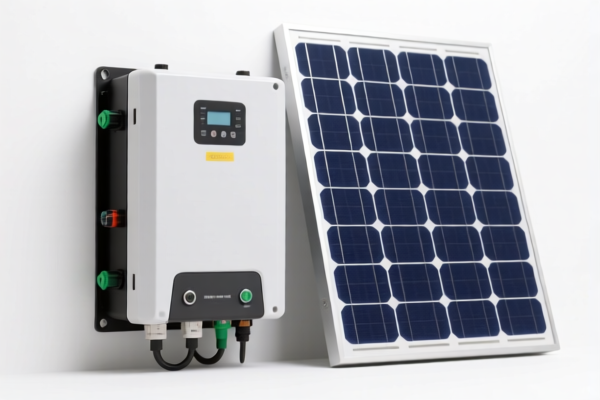
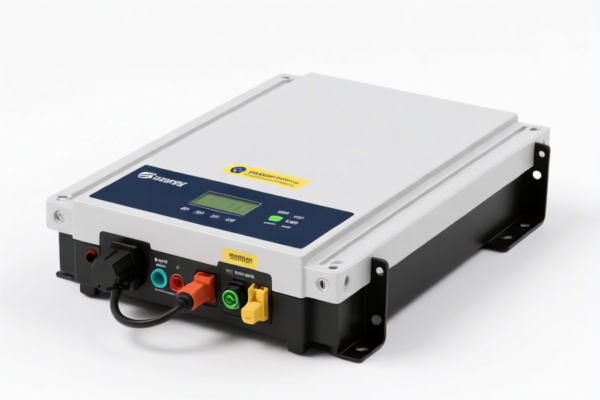
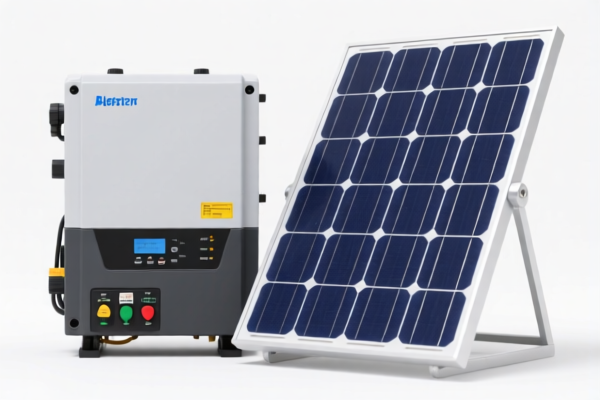
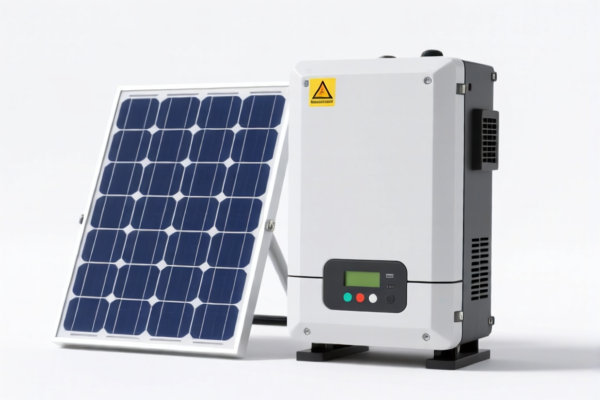
AI分析
🔋 Home Solar Inverter (Residential Energy Systems)
🌐 HS Code Reference & Customs Clearance Guide | 2026 Latest Tariff Analysis | Professional Strategy
📌 I. Product Definition & Classification: Do You Really Understand "Solar Inverters"?
A Home Solar Inverter is the critical heart of a residential photovoltaic (PV) system. Its primary function is to convert Direct Current (DC) generated by solar panels into Alternating Current (AC) usable by household appliances and the grid.
In international trade, these are classified strictly as Static Converters. It is crucial to distinguish them from general-purpose inverters or battery chargers. The key factor for classification lies in its end-use application: * General/Telecom Inverters: Used in telecommunications or industrial settings. * Specific Application Inverters: Tailored for specific machinery or consumer goods. * Other Inverters: This is the catch-all for specialized applications like Solar Power Generation.
⚠️ Key Distinction Point:
- If the device is specifically designed to convert solar DC to AC for residential use and is not primarily for telecommunications, it falls under "Other Inverters" within Static Converters.
- It is NOT classified under batteries, solar panels (8711/9034), or general household electrical appliances (9405).
📦 II. HS Code Classification Details (2026 Latest Tariff Authority Comparison)
Based on the provided data, the relevant classifications for Home Solar Inverters (which do not fall under "Telecommunication apparatus") are as follows:
| HS Code | Product Description | Applicable Scenario | Tax Rate (China Origin to US) |
|---|---|---|---|
8504.40.95.70 |
Electrical transformers, static converters... Static converters: Other Inverters | Residential Solar PV Inverters, Stand-alone Solar Systems | 25.0% |
8504.40.85.00 |
Electrical transformers, static converters... Static converters: For telecommunication apparatus | Telecom Power Supplies, Base Station Inverters | 25.0% |
🔍 Critical Note for Solar Inverters:
- Home Solar Inverters are NOT for telecommunications. Therefore,8504.40.85.00is incorrect unless the inverter is explicitly part of a telecom backup power system.
- The correct classification for most home solar inverters is8504.40.95.70("Other Inverters").
- Both codes carry the same total tax rate of 25.0%, but misclassification can lead to customs delays, audits, or penalties.
💰 III. 2026 Latest Tariff Rate Details (Including Surcharge & Policy Add-ons)
✅ Applicable Country: United States (US)
✅ Origin: China (CN)
✅ Effective Time: Current tariffs apply (Section 301)
🎯 1. 8504.40.95.70 —— Other Inverters (Solar PV)
| Item | Content |
|---|---|
| Base Tariff | 0.0% |
| Section 301 Surcharge | +25.0% |
| Total Tax Rate | 25.0% |
| Tax Calculation | CIF Value × 25% |
| De Minimis Exemption | ❌ Not Applicable (Section 301 tariffs apply to de minimis shipments < $800 if specifically enumerated, but generally, high-volume B2B shipments face full duty. Note: Recent enforcement trends suggest stricter scrutiny on low-value solar components.) |
| Legal Basis Path | USITC:8504.40.95.70 → Section 301: Footnote 9903.88.01 |
📌 Explanation:
- The 0.0% base rate indicates that inverters are not subject to the standard Most Favored Nation (MFN) duty.
- The 25.0% is a Section 301 additional tariff imposed on goods from China.
- Total Cost Impact: For every $10,000 of goods, you pay $2,500 in duties.
- Warning: This rate is fixed and does not offer preferential treatment unless the country of origin is changed (e.g., via substantial transformation in Vietnam or Mexico, though rules of origin are strict).
🎯 2. 8504.40.85.00 —— For Telecommunication Apparatus
| Item | Content |
|---|---|
| Base Tariff | 0.0% |
| Section 301 Surcharge | +25.0% |
| Total Tax Rate | 25.0% |
| Tax Calculation | CIF Value × 25% |
| De Minimis Exemption | ❌ Not Applicable |
| Legal Basis Path | USITC:8504.40.85.00 → Section 301: Footnote 9903.88.01 |
📌 Note:
- While the tax rate is identical to "Other Inverters," this code is only for telecom applications.
- Using this code for solar inverters is a misclassification error. Customs may audit and penalize based on intent to evade higher scrutiny or specific anti-dumping duties (though none are listed in the provided data for this specific code, solar inverters are heavily scrutinized).
🛠️ IV. Customs Clearance Practical Advice (Battle-Tested Pitfall Avoidance)
✅ 1. Document Checklist (Non-negotiable)
| Document | Required | Explanation |
|---|---|---|
| ✅ Product Datasheet | ✔️ | Must clearly state: Input DC Voltage, Output AC Voltage/Frequency, Efficiency, and Intended Use (Residential Solar). |
| ✅ Circuit Diagram / Block Diagram | ✔️ | To prove it is a Static Converter (Inverter) and not a Battery or Panel. |
| ✅ Product Photos | ✔️ | Clear label showing Model, Brand, Input/Output specs, and UL/CE Certification marks. |
| ✅ Commercial Invoice | ✔️ | Description must read: "Solar Inverter, Home Use, DC to AC Converter, Model XYZ, FCC/UL Certified". Avoid vague terms like "Power Adapter". |
| ✅ Country of Origin Certificate | ✔️ | To confirm origin for Section 301 applicability. |
| ✅ FCC ID / UL Report | ✔️ | Mandatory for electrical safety and compliance in the US market. |
✅ 2. Declaration Tips (Key Mantra)
🔥 "Specify Solar, Not Telecom; Clarify DC-AC, Avoid Vague Terms!"
| Scenario | Correct Declaration | Incorrect Action |
|---|---|---|
| Standard Home Solar Inverter | 8504.40.95.70 - "Solar Power Inverter" |
Misclassify as Telecom (8504.40.85.00) → Risk of Audit |
| Hybrid Inverter (with Battery Management) | 8504.40.95.70 |
Split into Battery + Inverter → Complex Duty Calculation |
| Off-Grid Inverter for RV/Camper | 8504.40.95.70 |
Classify under Automotive Parts → Wrong Chapter |
| Microinverters (Small Unit per Panel) | 8504.40.95.70 |
Classify under Solar Panels → Wrong Classification |
✅ 3. Special Circumstances Handling
| Situation | Handling Advice |
|---|---|
| Hybrid Inverter (Grid-Tie + Battery Backup) | Declare as Inverter (8504.40.95.70). Do not declare the battery separately unless shipped in a different box and not part of the same assembly. If integrated, the inverter classification usually dominates if it’s the primary function. |
| OEM Branded Products | Provide client authorization letters. The HS Code remains 8504.40.95.70 regardless of branding. |
| Smart Inverters with Wi-Fi/4G | Still classified as Inverters, not Telecom equipment, unless the primary function is signal transmission (which it is not). |
| Transshipment via Third Country | Caution: US Customs aggressively investigates transshipment from Vietnam/Mexia to evade Section 301. If the substantial transformation is not proven, the 25% surcharge still applies, plus potential penalties. |
🌍 V. Global Market Comparison (2026 Latest)
| Country/Region | Recommended HS Code | Tariff Rate (China Origin) | Certification Requirements | Notes |
|---|---|---|---|---|
| 🇺🇸 USA | 8504.40.95.70 |
25.0% (Total) | FCC, UL/ETL, CEC (CA) | High scrutiny on solar imports. |
| 🇨🇳 China | 8504.40.95.70 |
0% (Imported) | CCC, CNCA | Domestic production is heavily subsidized. |
| 🇪🇺 EU | 8504.40.95 |
0% (General) | CE, VDE, EN 50549 | No Section 301 equivalent, but anti-dumping cases may apply in specific regions. |
| 🇦🇺 Australia | 8504.40.95 |
5% | SAA, AS/NZS 4777 | Mandatory grid compliance for inverters. |
| 🇯🇵 Japan | 8504.40.95 |
0-2% | JIS, PSE | Strict technical standards for grid connection. |
📌 Conclusion:
- The USA is the most expensive market for Chinese-made solar inverters due to the 25% Section 301 tariff.
- No preferential duties are available for standard solar inverters from China under current FTAs.
- Compliance is key: FCC and UL certifications are non-negotiable for clearance in the US.
📌 VI. Common Errors & Pitfall Guide (Blood & Tears Lessons)
❌ Error 1: Classifying Solar Inverters under Telecom Codes (8504.40.85.00)
👉 Consequence: If Customs determines it's not for telecom, they will reclassify it to 8504.40.95.70. While the tax is the same, the administrative cost, delay, and potential penalty for false declaration are high.
❌ Error 2: Declaring "Solar Parts" or "Electrical Component" without specificity
👉 Consequence: Customs may detain the shipment to determine the proper HS code, causing weeks of delay and demurrage fees.
❌ Error 3: Ignoring the "Section 301" surcharge in cost calculations
👉 Consequence: Profit margins vanish if the 25% duty is not factored into the landed cost.
❌ Error 4: Misdeclaring Hybrid Inverters as "Batteries"
👉 Consequence: Batteries have different safety and duty requirements. Misclassification leads to safety compliance failures.
✅ Correct Practice:
"Residential Solar PV Inverter, DC to AC Converter, 5kW, Grid-Tie, with Smart Monitoring, Model XYZ, UL Listed, FCC Certified"
🎯 VII. Conclusion: Precise Classification, Cost Control, Smooth Clearance!
🎯 Remember the Mantra:
🔹 "Solar Inverter goes to .95.70, Not Telecom. Tax is 25%, No Loopholes. Declare 'Solar', Not 'Adapter'."
🔹 "HS Code Dictates Duty, 25% is the Wall. Compliance Saves Time and Money."
📌 Pro Tip:
If you are importing large volumes, consider:
1. Advance Ruling: Apply for a binding ruling from US Customs to confirm HS Code and duty liability.
2. Supply Chain Diversification: Explore sourcing from countries not subject to Section 301 (e.g., Thailand, Vietnam, Malaysia) provided the substantial transformation rules are strictly met to avoid anti-circumvention penalties.
3. Duty Drawback: If you export the assembled solar system or equipment, you may recover some duties under the Duty Drawback program.
📣 Immediate Action:
📞 Engage a Licensed Customs Broker + Provide UL/FCC Certificates + Apply for Pre-Ruling
🚀 Ensure your Home Solar Inverters clear customs efficiently, legally, and profitably!
✨ Professional Clearance Starts with Accurate Classification!
💼 Every Dollar Saved is Pure Profit!
用户评价
关于 HS 编码归类
协调制度(HS)是由世界海关组织(WCO)制定的国际贸易商品分类标准。全球 200 多个国家采用 HS 系统作为海关关税、贸易统计和进出口监管的基础。
每个 HS 编码遵循以下层级结构:
- 章(2 位)——商品大类(例如:第 84 章:机器和机械设备)
- 品目(4 位)——章内的更具体分类
- 子目(6 位)——国际通用细分,所有 WCO 成员国统一使用
- 本国细分(8-10 位)——各国自行扩展的细分编码,如美国 HTSUS 10 位编码
正确的 HS 编码归类对于顺利通关、准确缴纳关税和遵守贸易法规至关重要。错误归类可能导致海关延误、多缴关税或罚款。
从CN进口到US时,适用的关税税率可能包括:
- 最惠国(MFN)税率——适用于 WTO 成员国的标准关税税率
- 普通税率——适用于无贸易协定国家
- 贸易救济关税——附加关税,如 301 条款(反倾销)、232 条款(国家安全)或反补贴税
本页内容仅供参考。如需正式归类,请咨询当地海关或持牌报关代理。