Hydroxyethyl Cellulose
CN → US| HS编码 | 关税税率 | 原产国 | 目的国 | 文档 |
|---|---|---|---|---|
| 3912900090 | 40.2% | CN | US | 官方文档 |
| 3912390000 | 39.2% | CN | US | 官方文档 |
| 1302390010 | 20.7% | CN | US | 官方文档 |
| 1302390090 | 20.7% | CN | US | 官方文档 |
| 2942000500 | 41.5% | CN | US | 官方文档 |
商品图片
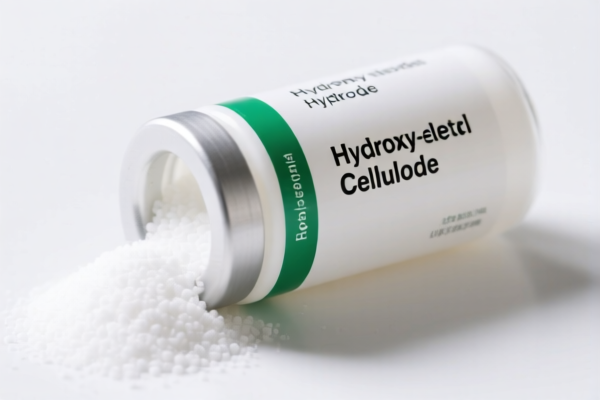
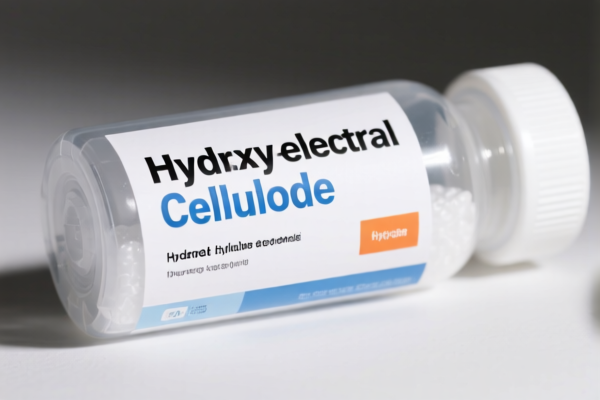
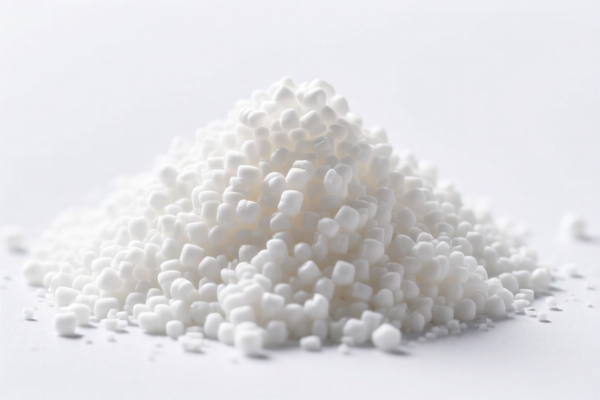
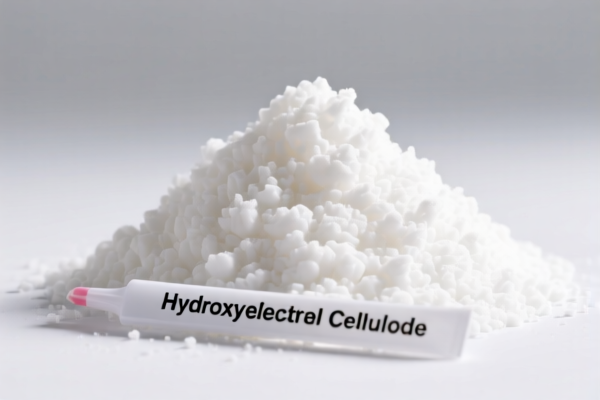
AI分析
🧪 Hydroxyethyl Cellulose (HEC) & Hydroxypropyl Cellulose (HPC) Classification Guide
🌐 HS Code Reference & Customs Clearance Guide | 2026 Latest Tariff Analysis | Professional Compliance Strategy
📌 One: Product Definition & Classification: Do You Truly Understand HEC/HPC?
Hydroxyethyl Cellulose (HEC) and Hydroxypropyl Cellulose (HPC) are non-ionic, water-soluble derivatives of cellulose. In international trade, they are primarily classified under Chapter 39 (Plastics and Articles Thereof) or Chapter 13 (Vegetable Saps and Extracts), depending on their origin, chemical structure, and specific application.
Key Distinction:
- Cellulose Derivatives (Chapter 39): Synthetic or semi-synthetic polymers derived from cellulose, often used as thickeners, binders, or film-forming agents in industrial applications.
- Vegetable Extracts/Thickeners (Chapter 13): Natural or semi-natural substances extracted from plants, often used in food, cosmetics, or pharmaceuticals for thickening or gelling.
⚠️ Critical Classification Point:
- If the product is a cellulose ether (e.g., HPC, HEC) with a defined polymer structure → Chapter 39
- If the product is marketed as a plant-based thickener or natural extract → Chapter 13
- If the product is pharmaceutical-grade and used exclusively as a drug excipient → Chapter 29 (less common but possible for specific medicinal uses)
📦 Two: HS Code Classification Details (2026 Latest Tariff Reference)
| HS Code | Product Description | Application Scenario | Tax Rate Summary |
|---|---|---|---|
3912.90.00.90 |
Other cellulose derivatives and chemical derivatives thereof | Industrial thickeners, paints, adhesives, cement additives | 40.2% |
3912.39.00.00 |
Other cellulose ethers (including HEC, HPC) | Water-soluble polymers, drug coatings, personal care | 39.2% |
1302.39.00.10 |
Vegetable mucilages and thickeners, extracted or refined | Food thickeners, cosmetic gels, natural binders | 20.7% |
1302.39.00.90 |
Other vegetable mucilages and thickeners | Modified plant-based thickeners, eco-friendly formulations | 20.7% |
2942.00.05.00 |
Pharmaceutical substances (including excipients like HPC) | Drug formulations, tablet binders, capsule coatings | 41.5% |
🔍 Key Reminder:
- Chapter 39 codes apply to synthetic/semi-synthetic cellulose derivatives with polymer characteristics.
- Chapter 13 codes apply to plant-derived or natural thickeners, often marketed as "eco-friendly" or "natural."
- Chapter 29 code is rare and only applies if the product is explicitly classified as a pharmaceutical substance (not just an excipient).
💰 Three: 2026 Latest Tariff Rate Breakdown (Including Additional Taxes & Policy Surcharges)
✅ Applicable Country: United States (US)
✅ Country of Origin: China (CN)
✅ Effective Date: From November 10, 2025 (for all subsequent imports)
🎯 1. 3912.90.00.90 — Other Cellulose Derivatives
| Item | Details |
|---|---|
| Base Duty Rate | 5.2% (ad valorem) |
| USITC Additional Duty | +25% (under USITC Footnote 9903.88.01) |
| IEEPA Additional Duty | +10% (for Chinese/HK products, effective Nov 10, 2025) |
| Total Duty Rate | 40.2% |
| Tax Calculation | CIF Value × 40.2% |
| De Minimis Eligibility | ❌ No (deny_de_minimis) |
| Legal Path | IEEPA:9903.01.25 → IEEPA:9903.01.24 → USITC:3912.90.00.90 → FOOTNOTE:9903.88.01 |
📌 Explanation:
- Base Duty (5.2%): Standard USITC rate for cellulose derivatives.
- USITC 25% Surcharge: Part of Section 301 tariffs on Chinese goods.
- IEEPA 10% Surcharge: Under International Emergency Economic Powers Act for Chinese imports.
- Total 40.2%: High tariff burden; pre-planning is essential.
🎯 2. 3912.39.00.00 — Other Cellulose Ethers (e.g., HEC, HPC)
| Item | Details |
|---|---|
| Base Duty Rate | 4.2% (ad valorem) |
| USITC Additional Duty | +25% |
| IEEPA Additional Duty | +10% |
| Total Duty Rate | 39.2% |
| Tax Calculation | CIF Value × 39.2% |
| De Minimis Eligibility | ❌ No |
| Legal Path | IEEPA:9903.01.25 → IEEPA:9903.01.24 → USITC:3912.39.00.00 → FOOTNOTE:9903.88.01 |
📌 Note:
- Cellulose ethers like HEC and HPC are explicitly covered under this code.
- Tariff structure is nearly identical to3912.90.00.90, with only a 1% difference in base duty.
🎯 3. 1302.39.00.10 & 1302.39.00.90 — Vegetable Mucilages & Thickeners
| Item | Details |
|---|---|
| Base Duty Rate | 3.2% (ad valorem) |
| USITC Additional Duty | +7.5% |
| IEEPA Additional Duty | +10% |
| Total Duty Rate | 20.7% |
| Tax Calculation | CIF Value × 20.7% |
| De Minimis Eligibility | ❌ No |
| Legal Path | IEEPA:9901.25 → IEEPA:9903.01.24 → USITC:1302.39.00.10/90 → FOOTNOTE:9903.01.25 |
📌 Strategic Advantage:
- Lower tariff (20.7%) compared to Chapter 39 codes.
- Applicable if the product is marketed as a natural/thickener from vegetable sources.
- Requires proof of plant-based origin and thickener function.
🎯 4. 2942.00.05.00 — Pharmaceutical Substances (Excipients)
| Item | Details |
|---|---|
| Base Duty Rate | 6.5% (ad valorem) |
| USITC Additional Duty | +25% |
| IEEPA Additional Duty | +10% |
| Total Duty Rate | 41.5% |
| Tax Calculation | CIF Value × 41.5% |
| De Minimis Eligibility | ❌ No |
| Legal Path | IEEPA:9903.01.25 → IEEPA:9903.01.24 → USITC:2942.00.05.00 → FOOTNOTE:9903.88.01 |
📌 Caution:
- Only applicable if HEC/HPC is explicitly classified as a pharmaceutical substance (not just an excipient).
- Highest tariff (41.5%); avoid unless legally required.
🛠️ Four: Customs Clearance Practical Advice (Real-World Pitfall Avoidance)
✅ 1. Document Checklist (Non-Negotiable)
| Document | Required | Notes |
|---|---|---|
| ✅ Product Specification Sheet | ✔️ | Must include chemical structure, solubility, viscosity, application |
| ✅ MSDS/SDS | ✔️ | Safety Data Sheet for chemical handling |
| ✅ Certificate of Analysis (COA) | ✔️ | Confirms purity, grade (industrial, cosmetic, pharmaceutical) |
| ✅ Commercial Invoice | ✔️ | Must clearly state "Hydroxyethyl Cellulose" or "Hydroxypropyl Cellulose" |
| ✅ Packing List | ✔️ | Details net/gross weight, dimensions, packaging type |
| ✅ Origin Certificate (if applicable) | ✔️ | For potential tariff exemptions under FTAs |
| ✅ Third-Party Test Report | ✔️ | FCC, RoHS, REACH, FDA (if for food/pharma use) |
✅ 2. Declaration Strategy (Key Mnemonics)
🔥 "Function Defines Code: Industrial → Ch39, Natural → Ch13, Pharma → Ch29!"
| Scenario | Correct HS Code | Incorrect Code | Consequence |
|---|---|---|---|
| Industrial thickener (paints, cement) | 3912.90.00.90 or 3912.39.00.00 |
1302.39.00.10 |
Overpayment or underpayment |
| Natural/vegetable-based thickener | 1302.39.00.10 or 1302.39.00.90 |
3912.90.00.90 |
Unnecessary 19.5% extra tax |
| Pharmaceutical excipient | 2942.00.05.00 |
3912.39.00.00 |
Regulatory compliance risk |
| Mixed-grade product | Declare highest grade + lowest tariff | Ignore grade distinction | Audit penalty + back taxes |
✅ 3. Special Case Handling
| Scenario | Recommended Action |
|---|---|
| OEM Custom HEC/HPC | Provide client specs + material safety data sheet (MSDS) |
| Pharmaceutical-Grade HPC | Submit FDA correspondence + drug master file (DMF) if available |
| "Eco-Friendly" Marketing Claim | Provide proof of plant-based origin to qualify for Chapter 13 |
| Bulk Industrial Shipment | Use 3912.39.00.00 for standard cellulose ethers |
| Small Quantity Samples | Still subject to full tariff; no de minimis exemption |
🌍 Five: Global Market Clearance Comparison (2026 Latest)
| Country/Region | Recommended HS Code | Tariff Rate | Certification Required | Notes |
|---|---|---|---|---|
| 🇺🇸 USA | 3912.39.00.00 |
39.2% (China) | RoHS, REACH | High tariff; consider Chapter 13 if eligible |
| 🇨🇳 China | 3912.39.00.00 |
5.2% | GB/T Standards | No additional surcharges |
| 🇪🇺 EU | 3912.39.00.00 |
0% (if REACH compliant) | REACH, CLP | No additional duties |
| 🇯🇵 Japan | 3912.39.00.00 |
0% | JIS Standards | Free trade advantage |
| 🇮🇳 India | 3912.39.00.00 |
7.5% | BIS Certification | Moderate tariff |
📌 Conclusion:
- USA imposes the highest tariff burden on Chinese-origin HEC/HPC.
- EU, Japan, and India offer more favorable conditions with lower or no additional duties.
- Strategic Option: If HEC/HPC qualifies as a vegetable-derived thickener, classify under Chapter 13 to reduce US tariff from ~40% to 20.7%.
📌 Six: Common Mistakes & Pitfall Avoidance (Lessons Learned)
❌ Mistake 1: Declaring HEC as "natural thickener" without plant-origin proof
👉 Consequence: Customs reclassifies to Chapter 39 → Extra 19.5% tax
❌ Mistake 2: Using generic "cellulose derivative" on invoice
👉 Consequence: Customs inspection delay + possible misclassification
❌ Mistake 3: Ignoring IEEPA surcharges in cost calculation
👉 Consequence: Underestimating landed cost → Profit erosion
❌ Mistake 4: Assuming de minimis exemption applies
👉 Consequence: Small shipments still taxed → Unexpected compliance cost
✅ Correct Approach:
"Hydroxypropyl Cellulose (HPC), Pharmaceutical Grade, USP, CAS 9004-64-2, for Tablet Binding"
🎯 Seven: Conclusion: Professional Declaration Saves Time, Money, and Stress!
🎯 Key Takeaways:
🔹 "Function Defines Code: Industrial → Ch39, Natural → Ch13, Pharma → Ch29!"
🔹 "Tariff Gap: 40% vs 20% — One Line of Description Makes the Difference!"
🔹 "No De Minimis for HEC/HPC — Every Shipment Must Be Declared Properly!"
📌 Pro Tip:
If your HEC/HPC is sourced from non-Chinese countries (e.g., Vietnam, India, EU), you may qualify for IEEPA exemption or lower duty rates.
Recommendation: Apply for an Advance Ruling with US Customs to lock in favorable classification.
📣 Immediate Action:
📞 Consult a licensed customs broker + Provide product specs + Request HS Code Advance Ruling
🚀 Ensure smooth clearance, optimize tax liability, and maximize profit margins!
✨ Precision in Classification Starts with Clarity in Description!
💼 Every percentage point saved is pure profit earned!
用户评价
关于 HS 编码归类
协调制度(HS)是由世界海关组织(WCO)制定的国际贸易商品分类标准。全球 200 多个国家采用 HS 系统作为海关关税、贸易统计和进出口监管的基础。
每个 HS 编码遵循以下层级结构:
- 章(2 位)——商品大类(例如:第 84 章:机器和机械设备)
- 品目(4 位)——章内的更具体分类
- 子目(6 位)——国际通用细分,所有 WCO 成员国统一使用
- 本国细分(8-10 位)——各国自行扩展的细分编码,如美国 HTSUS 10 位编码
正确的 HS 编码归类对于顺利通关、准确缴纳关税和遵守贸易法规至关重要。错误归类可能导致海关延误、多缴关税或罚款。
从CN进口到US时,适用的关税税率可能包括:
- 最惠国(MFN)税率——适用于 WTO 成员国的标准关税税率
- 普通税率——适用于无贸易协定国家
- 贸易救济关税——附加关税,如 301 条款(反倾销)、232 条款(国家安全)或反补贴税
本页内容仅供参考。如需正式归类,请咨询当地海关或持牌报关代理。