Impact resistant woven board
CN → US| HS编码 | 关税税率 | 原产国 | 目的国 | 文档 |
|---|---|---|---|---|
| 4602198000 | 37.3% | CN | US | 官方文档 |
| 7314190100 | 85.0% | CN | US | 官方文档 |
| 4602900000 | 38.5% | CN | US | 官方文档 |
| 7314129000 | 85.0% | CN | US | 官方文档 |
商品图片
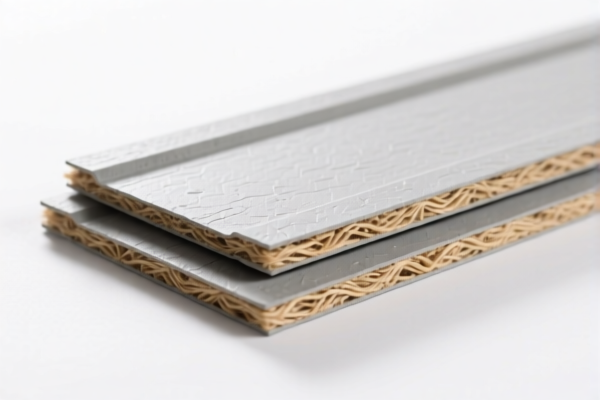
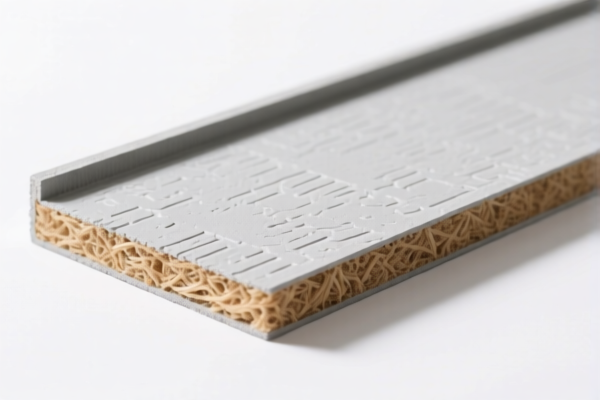
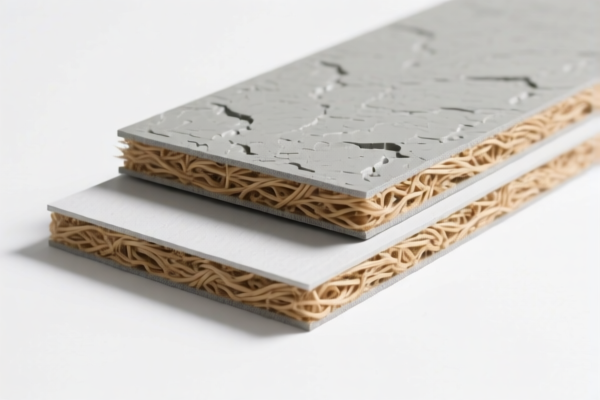
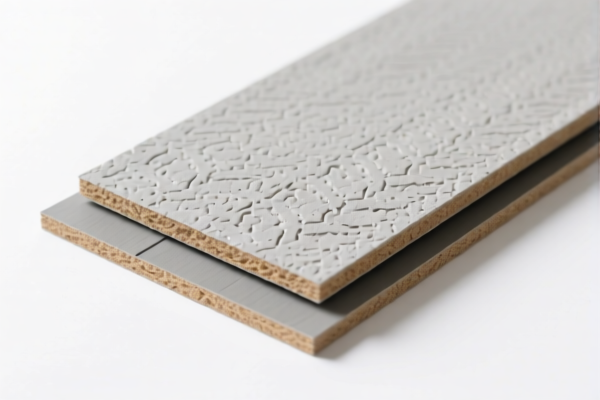
AI分析
🛡️ Impact Resistant Woven Board: HS Code Classification & US Customs Clearance Guide (2026 Update)
🌐 HS Code Reference & Customs Clearance Guide | 2026 Latest Tariff Analysis | Professional Clearance Strategy
📌 I. Product Definition & Classification: What is an "Impact Resistant Woven Board"?
"Impact Resistant Woven Board" is a generic term that describes a rigid or semi-rigid product with a woven structure and high durability. However, in international trade and US Customs (CBP) classification, the material composition is the single most critical factor determining the Harmonized Tariff Schedule (HTSUS) code.
Because the product name does not specify the material (e.g., plastic, metal, natural fiber), it falls under "Deduction/Default Rules" for ambiguous goods. This leads to significant variations in classification and, consequently, massive differences in tax liability.
⚠️ Key Classification Distinction:
- Non-Metallic/Plant Fiber: If made of rattan, bamboo, or synthetic plastics (non-wire mesh) → Classified under Chapter 46 (Woven Vegetables) or similar.
- Metallic: If made of steel, iron, aluminum, or copper wires/mesh → Classified under Chapter 73 (Iron/Steel) or Chapter 74 (Copper).
- The "Fallback" Rule: If the material is truly unknown or mixed, Customs may apply "fallback" logic, often defaulting to the most commercially common or restrictive category based on the "woven" description.
📦 II. HS Code Classification Details (2026 Latest Tariff Authority Comparison)
Based on the provided data, here are the four most likely classifications for "Impact Resistant Woven Board" depending on the inferred material:
| HS Code | Product Description | Inferred Material/Logic | Key Characteristics |
|---|---|---|---|
4602.19.80.00 |
Woven Articles of Vegetables (Other) | Plant-Based/General Woven | Matches "Woven" form. Since material is unspecified, it defaults to the "fallback" assumption of plant-based woven goods (e.g., rattan, bamboo, reed). |
4602.90.00.00 |
Woven Articles of Vegetables (Other, Other) | Plant-Based Board/Shape | Matches "Woven" form + "Board" shape. The "board" form is accepted as a woven article category. |
7314.19.01.00 |
Wire Cloth and Grill, of Iron or Steel (Other) | Iron/Steel Wire Mesh | Based on the "Woven" characteristic of metal wires. Defaults to "Other" metal wire mesh. Assumes steel/iron construction. |
7314.12.90.00 |
Woven Wire Cloth of Stainless Steel | Stainless Steel/Iron | Matches "Woven" mesh form. Inferentially assumes metal construction (common for "impact resistant" industrial boards). |
🔍 Critical Reminder:
- "Woven" is a Process, Not a Material: It does not automatically mean plastic or plant. In industrial contexts, "woven board" often refers to metal mesh panels (for filtration, shielding, or fencing).
- Material Declaration is Mandatory: You MUST specify the material on the commercial invoice. If you fail to declare, CBP may assess duties based on the highest possible tariff rate found in the relevant chapters.
- Misclassification Risk: Declaring a steel mesh board as a plant-woven item (4602.x.x) will result in severe penalties if discovered during inspection.
💰 III. 2026 Latest Tariff Rate Breakdown (Including Surcharges & Policy Add-ons)
✅ Applicable Country: United States (US)
✅ Origin: China (CN)
✅ Effective Date: From November 10, 2025 (and subsequent imports)
🎯 1. 4602.19.80.00 & 4602.90.00.00 —— Woven Vegetable Articles
These codes apply if the board is made of rattan, bamboo, reed, or similar plant fibers.
| Item | Details |
|---|---|
| Base Tariff Rate | 2.3% (for 4602.19.80.00) / 3.5% (for 4602.90.00.00) |
| Section 301 Surcharge (USITC) | +25.0% (High tariffs on Chinese goods) |
| Section 122 Surcharge (IEEPA) | +10.0% (Additional levy on Chinese products) |
| Total Tariff Rate | 37.3% (for 4602.19.80.00) 38.5% (for 4602.90.00.00) |
| De Minimis Exemption? | ❌ NO (Not eligible for $800 de minimis exemption if subject to Section 301/122) |
| Legal Authority Path | USITC:4602.19.80.00 → FOOTNOTE:301 → IEEPA:9903 |
📌 Explanation:
- Although the base tariff is low (2-3%), the additive surcharges (35%) make the total cost very high.
- These codes are generally for crafts, furniture, or packaging, not industrial structural boards.
🎯 2. 7314.19.01.00 & 7314.12.90.00 —— Wire Cloth/Grill (Iron/Steel/Stainless Steel)
These codes apply if the board is made of metal wires (steel, iron, stainless steel). This is the most likely scenario for "Impact Resistant" industrial boards.
| Item | Details |
|---|---|
| Base Tariff Rate | 0.0% (Free) for both codes |
| Section 301 Surcharge (USITC) | +25.0% |
| Section 122 Surcharge (IEEPA) | +10.0% |
| Additional Steel/Aluminum/Copper Surcharge | +50.0% (Specific to Section 232 on Steel/Aluminum) |
| Total Tariff Rate | 85.0% (For both codes) |
| De Minimis Exemption? | ❌ NO (Highly restricted for steel/aluminum products) |
| Legal Authority Path | USITC:7314.19.01.00 → SECTION 232 → SECTION 301 → IEEPA:9903 |
📌 Explanation:
- Base Tariff is 0%, but the additive surcharges are massive.
- Section 232 (50%): Applied to steel and aluminum products from China due to national security concerns.
- Section 301 (25%): Standard trade war tariff.
- Section 122 (10%): Additional levy on Chinese goods.
- Total: 85% is a catastrophic cost for any importer. This makes importing steel mesh boards from China to the US extremely expensive.
🛠️ IV. Customs Clearance Practical Advice (Avoiding Pitfalls)
✅ 1. Preparation Checklist (Must-Haves)
| Document | Required? | Notes |
|---|---|---|
| ✅ Commercial Invoice | ✔️ | Must clearly state Material (e.g., "Stainless Steel 304 Wire Mesh Board") |
| ✅ Product Specifications | ✔️ | Include dimensions, wire diameter, mesh count, and impact resistance rating |
| ✅ Material Declaration | ✔️ | Critical: Explicitly state if it is Metal or Non-Metal. Do not use vague terms like "Woven Board" |
| ✅ Photos of Product | ✔️ | Show the weave pattern, edge finishing, and any branding |
| ✅ Certificate of Origin | ✔️ | Required to prove origin for Section 301/232 calculations |
| ✅ HTSUS Classification Report | ✔️ | Internal document justifying the chosen HS Code based on material and use |
✅ 2. Declaration Strategy (Key Rules)
🔥 "Declare Material, Not Just Form!"
| Scenario | Correct Declaration | Wrong Declaration | Consequence |
|---|---|---|---|
| Steel Mesh Board | 7314.19.01.00 "Stainless Steel Woven Wire Mesh Board, Impact Resistant" |
"Woven Board" | ❌ 85% Tax + Potential Penalty for misdeclaration |
| Rattan/Bamboo Board | 4602.19.80.00 "Rattan Woven Board, Furniture Component" |
"Woven Board" | ❌ 37-38% Tax + Risk of being classified as metal if no proof |
| Plastic/Mixed Material | 3926.90 or 4602.x.x |
"Woven Board" | ❌ Uncertainty leads to CBP refusal or audit |
✅ 3. Special Case Handling
| Situation | Handling Advice |
|---|---|
| OEM Custom Mesh | Provide customer design specs. If the mesh is for industrial use (filtration, shielding), it may still fall under 7314. |
| Import from Vietnam/Mexico | Check Rules of Origin. If processed substantially in Vietnam, you may avoid Section 301/232 tariffs. However, Section 232 steel tariffs may still apply depending on final origin rules. |
| Sample vs. Commercial | Even samples of steel mesh are subject to 85% tariffs if not shipped under proper diplomatic or non-commercial exemptions. |
| "Impact Resistant" Claim | This is a performance characteristic, not a classification criterion. It does not change the HS Code. It may be relevant for product safety certifications (e.g., UL, ISO), but not for tariffs. |
🌍 V. Global Market Comparison (2026 Update)
| Country/Region | Recommended HS Code | Tariff Rate (China Origin) | Key Certification | Notes |
|---|---|---|---|---|
| 🇺🇸 USA | 7314.19.01.00 (Steel) |
85.0% | FCC/UL (if electronic) | Highest tariffs globally. Avoid importing steel mesh from China to US. |
| 🇺🇸 USA | 4602.19.80.00 (Plant) |
37.3% | None | Only if genuinely plant-based. |
| 🇨🇳 China | 7314.19.01.00 |
0% - 5% | CCC (if applicable) | Low import duty, but check local environmental standards. |
| 🇪🇺 EU | 7314.19.00 |
0% - 6% | CE | No Section 301/232 equivalents. Much lower cost. |
| 🇯🇵 Japan | 7314.19.00 |
0% - 5% | PSE (if applicable) | Low tariffs. No major surcharges for Chinese steel mesh. |
📌 Conclusion:
- USA is the only major market with 85% tariffs on steel mesh from China.
- If your "Woven Board" is metal, do NOT import it from China to the US. Consider sourcing from Vietnam, India, or Mexico (verify origin rules).
- If it is plant-based, the 37-38% tariff is still high, but manageable. Ensure it is genuinely plant-based to avoid penalties.
📌 VI. Common Mistakes & Pitfalls (Blood Lessons)
❌ Mistake 1: Declaring "Woven Board" without specifying material.
👉 Result: CBP assigns the highest possible duty rate (85%) based on default assumptions.
❌ Mistake 2: Assuming "Impact Resistant" means a different HS Code.
👉 Result: It doesn’t. It’s still a woven wire cloth or plant fiber product. Misclassification leads to audits.
❌ Mistake 3: Ignoring Section 232 Steel/Aluminum tariffs.
👉 Result: Even if base tariff is 0%, the 50% Section 232 surcharge applies to steel mesh. Total 85%.
❌ Mistake 4: Using "De Minimis" ($800) for steel mesh samples.
👉 Result: Denied. Steel/aluminum products from China are excluded from de minimis exemptions.
✅ Correct Approach:
"Stainless Steel 304 Woven Wire Mesh Panel, 2mm Thickness, Impact Resistant, Model XYZ, Made in China"
HS Code:7314.12.90.00
Total Duty: 85%
🎯 VII. Conclusion: Professional Clearance Saves Costs!
🎯 Remember the Mantra:
🔹 "Material First, Form Second."
🔹 "Steel Mesh to USA = 85% Tax."
🔹 "Plant Woven to USA = 37% Tax."
🔹 "Vague Declaration = Max Penalty."
📌 Pro Tip:
If you are importing steel mesh for industrial use, consider:
1. Sourcing from Non-China Origins (e.g., Vietnam, Thailand) to avoid Section 301/232.
2. Applying for a Tariff Engineering Solution: Can the product be modified to fall under a different HTSUS code? (Consult a customs broker).
3. Seeking an Advance Ruling: Submit a request to CBP for a binding classification opinion before shipment.
📣 Immediate Action:
📞 Contact a Licensed Customs Broker
📄 Provide Full Product Specs (Material, Use, Dimensions)
🚀 Avoid Surprises: 85% Tariffs Can Destroy Profit Margins!
✨ Professional Customs Clearance Starts with Accurate Classification!
💼 Every Percent of Tariff Saved is Pure Profit!
用户评价
关于 HS 编码归类
协调制度(HS)是由世界海关组织(WCO)制定的国际贸易商品分类标准。全球 200 多个国家采用 HS 系统作为海关关税、贸易统计和进出口监管的基础。
每个 HS 编码遵循以下层级结构:
- 章(2 位)——商品大类(例如:第 84 章:机器和机械设备)
- 品目(4 位)——章内的更具体分类
- 子目(6 位)——国际通用细分,所有 WCO 成员国统一使用
- 本国细分(8-10 位)——各国自行扩展的细分编码,如美国 HTSUS 10 位编码
正确的 HS 编码归类对于顺利通关、准确缴纳关税和遵守贸易法规至关重要。错误归类可能导致海关延误、多缴关税或罚款。
从CN进口到US时,适用的关税税率可能包括:
- 最惠国(MFN)税率——适用于 WTO 成员国的标准关税税率
- 普通税率——适用于无贸易协定国家
- 贸易救济关税——附加关税,如 301 条款(反倾销)、232 条款(国家安全)或反补贴税
本页内容仅供参考。如需正式归类,请咨询当地海关或持牌报关代理。