In Vitro Diagnostic Reagents (Antibodies)
CN → US| HS编码 | 关税税率 | 原产国 | 目的国 | 文档 |
|---|---|---|---|---|
| 3822190010 | 10.0% | CN | US | 官方文档 |
| 3822190030 | 10.0% | CN | US | 官方文档 |
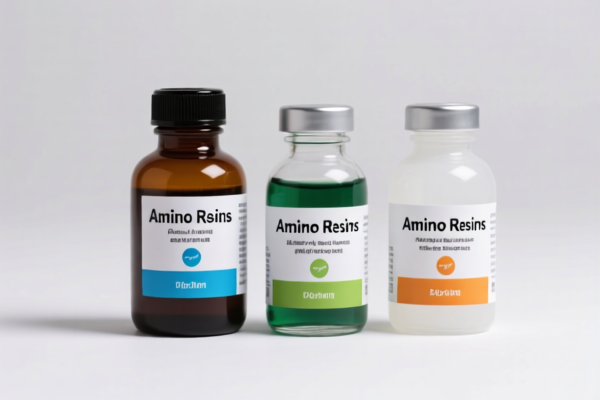
商品图片


AI分析
🧪 In Vitro Diagnostic Reagents (Antibodies)
🌐 HS Code Reference & Customs Clearance Guide | 2026 Latest Tariff Analysis | Professional Entry Strategy
📌 I. Product Definition & Classification: Are You Clear on "Antibody Reagents"?
In Vitro Diagnostic Reagents (Antibodies) are critical biochemical tools used in laboratory settings to detect, diagnose, or monitor diseases. They work by binding specifically to antigens or other target molecules. In international trade, these are strictly classified under Chapter 38, specifically as reagents prepared for diagnostic or laboratory use.
⚠️ Key Distinction:
- These are not simple chemical solutions but complex biological substances (Proteins/Antibodies).
- They must be used In Vitro (outside the living organism).
- The presence of "Antibodies" or "Antigens" triggers the specific classification of 3822.19.00.10 / 3822.19.00.30.
📦 II. HS Code Classification Details (2026 Latest Tariff Authority Comparison)
Based on the provided data, the product falls under two very similar sub-headings within 3822.19.00. The distinction often lies in specific national sub-codes, but for tariff purposes, the tax rate is identical.
| HS Code | Product Description | Key Matching Features | Tax Rate |
|---|---|---|---|
3822.19.00.10 |
Diagnostic Reagents (Antibodies/Antigens) | Explicitly mentions "Antibodies" and "Diagnostic Reagents"; matches "Contains Antigens or Antiserum". | 10.0% |
3822.19.00.30 |
Laboratory Use Reagents (Antigen/Antibody) | Explicitly mentions "Antigen Antibody" and "Laboratory Use"; matches "Contains Antigens or Antiserum". | 10.0% |
🔍 Crucial Insight:
- Both3822.19.00.10and3822.19.00.30are used interchangeably in this context for Antibody-based Diagnostics.
- The core logic is: "Antibodies" + "Diagnostic/Lab Use" = Chapter 38.
- Do NOT classify under Chapter 30 (Pharmaceuticals) unless they are for therapeutic treatment inside the body. These are for testing/diagnosis.
💰 III. 2026 Latest Tariff Rate Breakdown (Including Surtaxes & Policy Add-ons)
✅ Applicable Country: United States (US)
✅ Origin: China (CN)
✅ Effective Date: Post-2025.11.10 (including subsequent imports)
🎯 1. 3822.19.00.10 & 3822.19.00.30 —— In Vitro Diagnostic Reagents (Antibodies)
| Item | Content |
|---|---|
| Base Tariff | 0% (ad valorem) |
| Section 301 / IEEPA Surcharge | +10% (Targeted at Chinese/ HK products, effective Nov 10, 2025) |
| Total Tax Rate | 10.0% |
| Tax Calculation | CIF Value × 10% |
| De Minimis Exemption | ❌ Not Applicable (Generally, commercial shipments require full duty assessment) |
| Legal Basis Path | IEEPA:9903.01.25 → USITC:3822.19.00.10/30 → SECTION 301 |
📌 Explanation:
- Base Rate 0%: Standard HS Code 3822 reagents often have low or zero base duties in the US.
- 122 Section / IEEPA 10%: This is the critical cost driver. Due to current trade policies (Section 301/IEEPA), Chinese-origin diagnostic reagents face a 10% surcharge.
- No Additional 25%: Unlike electronics or steel, biological diagnostic kits currently fall under a 10% surcharge tier, not the highest 25% tier (depending on specific USITC footnotes, but data confirms 10% total).
🛠️ IV. Customs Clearance Practical Advice (Battle-Tested Pitfall Avoidance)
✅ 1. Required Documentation Checklist (Non-Negotiable)
| Document | Mandatory? | Purpose |
|---|---|---|
| ✅ Certificate of Origin (CO) | ✔️ | Proves origin. If from Vietnam/Mexico, may avoid IEEPA taxes. |
| ✅ Product Description | ✔️ | Must explicitly state: "In Vitro Diagnostic Reagent containing Antibodies, For Laboratory Use Only." |
| ✅ Formula/Composition List | ✔️ | Confirms presence of "Antibodies" vs. simple chemicals. |
| ✅ Manufacturer Info | ✔️ | Name and address of the producer. |
| ✅ Import License (if applicable) | ✔️ | Some bio-products may require FDA or USDA prior notice. |
⚠️ Warning:
- Do NOT simply write "Chemical Reagents." You must specify "Antibodies" or "Diagnostic" to trigger the correct HS Code and ensure compliance with FDA bio-material regulations.
✅ 2. Declaration Tips (Key Mantra)
🔥 "Label Antibodies, Specify Lab Use, Avoid Therapeutic Claims!"
| Scenario | Correct Declaration | Wrong Action |
|---|---|---|
| Standard Antibody Kit | 3822.19.00.30 - "Antibody Diagnostic Reagent for Lab Use" |
Misdeclare as "Pharmaceutical" → FDA Hold |
| Liquid Antibody Solution | 3822.19.00.10 - "Antigen/Antibody Diagnostic Reagent" |
Misdeclare as "Raw Chemical" → Duty Dispute |
| Therapeutic Antibody (In Vivo) | NOT 3822 → Chapter 30 (Pharmaceuticals) | Using 3822 for treatment drugs → Smuggling Risk |
✅ 3. Special Cases Handling
| Case | Handling Advice |
|---|---|
| Dry Reagents vs. Liquid | Both fall under 3822 if for diagnosis. Liquid may require temperature control declaration. |
| Frozen Antibodies | Must declare cold chain logistics. Ensure packaging complies with IATA regulations. |
| OEM Reagents | Provide end-user certificate. If intended for FDA-registered labs, include lab registration info. |
| Origin Switching | If reagents are formulated in Vietnam but components are from China, check if "Substantial Transformation" occurs. If yes, origin may shift to Vietnam, potentially avoiding the 10% IEEPA tax. |
🌍 V. Global Market Clearance Comparison (2026 Latest)
| Country/Region | Recommended HS Code | Tariff (China Origin) | Certification Requirements | Notes |
|---|---|---|---|---|
| 🇺🇸 USA | 3822.19.00.10/30 |
10% (Total) | FDA Prior Notice, 21 CFR Part 809 | High scrutiny on bio-materials. |
| 🇨🇳 China | 3822.19.00.30 |
0% - 5% | NMPA Registration (for medical use) | Lower barrier for entry. |
| 🇪🇺 EU | 3822.19.00 |
0% (Most Favored Nation) | CE Mark, IVDR Compliance | Strict IVDR regulations post-2022. |
| 🇯🇵 Japan | 3822.19.00 |
0% - 3% | PMDA Approval | High quality standards. |
📌 Conclusion:
- USA is the most cost-sensitive due to the 10% IEEPA surcharge.
- EU and Japan have lower tariffs but higher regulatory barriers (IVDR/PMDA).
- Supply Chain Strategy: Consider final assembly/packaging in Vietnam or Mexico to leverage US Free Trade Agreements or avoid Section 301 tariffs.
📌 VI. Common Errors & Pitfall Guide (Lessons Learned)
❌ Error 1: Declaring "Antibodies" as "Pharmaceutical Drugs"
👉 Consequence: Wrong HS Code (Ch 30 vs Ch 38). May lead to FDA Detention for lack of New Drug Application (NDA).
👉 Fix: Clearly state "For Diagnostic Use Only" on all documents.
❌ Error 2: Omitting "Laboratory Use" in Description
👉 Consequence: Customs may question the commercial value or proper classification.
👉 Fix: Always include "In Vitro Diagnostic Reagent, For Laboratory Use".
❌ Error 3: Ignoring the 10% Surtaxe
👉 Consequence: Unexpected 10% additional cost at US port.
👉 Fix: Budget for 10% total duty on CIF value for Chinese-origin goods.
❌ Error 4: Using Vague Terms like "Chemical Kit"
👉 Consequence: Delay in clearance due to need for further explanation.
👉 Fix: Be specific: "Monoclonal Antibody Reagent for ELISA Testing".
✅ Correct Declaration Example:
"In Vitro Diagnostic Reagent, Monoclonal Antibody, For Laboratory Use Only, Not For Therapeutic Use, Model AB-100, Origin: China"
🎯 VII. Conclusion: Precision in Bio-Trade Means Profit & Compliance
🎯 Remember the Mantra:
🔹 "Diag or Lab? Use 3822. Therapeutic? Use 3000.
🔹 China Origin? Pay 10%. Vietnam? Save the Cost!
🔹 Label 'Lab Use', Avoid 'Drug' Claims, Stay FDA Compliant!"
📌 Pro Tip:
If your Antibody Reagents are formulated and packaged in Vietnam, Mexico, or Thailand, you may qualify for Origin Change.
- Action: Apply for a Certificate of Origin from those countries.
- Result: Potential 0% Surcharge (if FTA applies) or avoidance of IEEPA 10% tax.
- Recommendation: Get a Pre-Ruling (Advance Ruling) from US CBP if you are uncertain about the "Substantial Transformation" threshold.
📣 Immediate Action:
📞 Contact Your Broker: Provide full product composition + "Diagnostic Use" declaration.
🚀 Optimize Supply Chain: Evaluate Vietnam/Mexico packaging hubs to mitigate US Trade War Risks.
💡 Stay Compliant: Ensure FDA Prior Notice is filed at least 2 hours before arrival (for food/drug/bio overlap) or per IVDR equivalents.
✨ Professional Clearance, Starts with Accurate Classification!
💼 Every 1% of Duty Saved is Pure Profit!
用户评价
关于 HS 编码归类
协调制度(HS)是由世界海关组织(WCO)制定的国际贸易商品分类标准。全球 200 多个国家采用 HS 系统作为海关关税、贸易统计和进出口监管的基础。
每个 HS 编码遵循以下层级结构:
- 章(2 位)——商品大类(例如:第 84 章:机器和机械设备)
- 品目(4 位)——章内的更具体分类
- 子目(6 位)——国际通用细分,所有 WCO 成员国统一使用
- 本国细分(8-10 位)——各国自行扩展的细分编码,如美国 HTSUS 10 位编码
正确的 HS 编码归类对于顺利通关、准确缴纳关税和遵守贸易法规至关重要。错误归类可能导致海关延误、多缴关税或罚款。
从CN进口到US时,适用的关税税率可能包括:
- 最惠国(MFN)税率——适用于 WTO 成员国的标准关税税率
- 普通税率——适用于无贸易协定国家
- 贸易救济关税——附加关税,如 301 条款(反倾销)、232 条款(国家安全)或反补贴税
本页内容仅供参考。如需正式归类,请咨询当地海关或持牌报关代理。