Inbound Receipt Carbonless Copy Book
CN → US| HS编码 | 关税税率 | 原产国 | 目的国 | 文档 |
|---|---|---|---|---|
| 4819200040 | 35.0% | CN | US | 官方文档 |
| 4820104000 | 35.0% | CN | US | 官方文档 |
| 4820400000 | 35.0% | CN | US | 官方文档 |
| 4811908050 | 35.0% | CN | US | 官方文档 |
商品图片
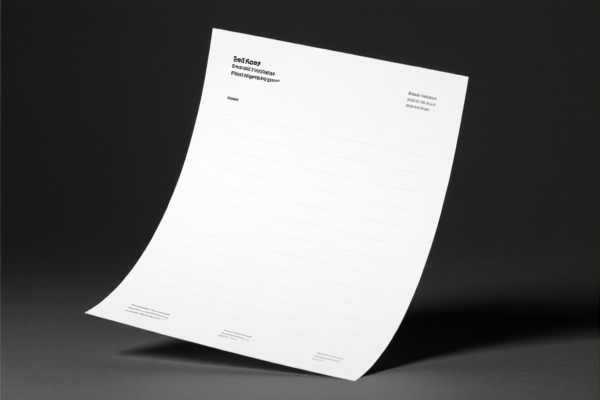
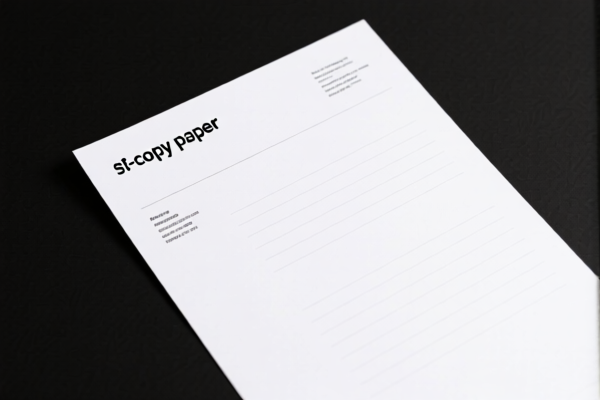
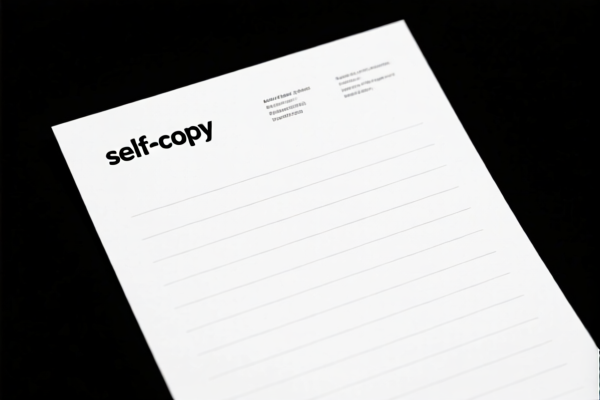
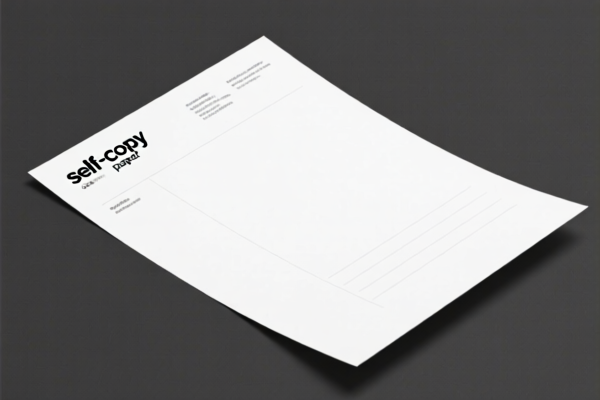
AI分析
📓 Inbound Receipt Carbonless Copy Book (Multi-part Stationery)
🌐 HS Code Reference & Customs Clearance Guide | 2026 Latest Tariff Analysis | Professional Clearance Strategy
📌 1. Product Definition & Classification: Do You Understand "Carbonless Copy Books"?
Inbound receipt carbonless copy books are essential office supplies used for creating simultaneous duplicates of documents without the need for carbon paper. In international trade, they are categorized based on their physical form (folded/bound) and functional purpose (notebooks/business forms).
Core Characteristics: - Material: Paper-based (Non-corrugated). - Technology: Chemical coating for multi-part impression (Multipart forms). - Format: Folded, stapled, or spiral-bound sheets. - Usage: Business transactions, inventory logs, shipping receipts.
⚠️ Key Classification Distinction: - If the product is primarily a blank notebook or ledger (mostly lined/grid paper for writing) →归类 to 4820 (Notebooks, Account Books). - If the product is primarily a printed business form or receipt booklet with pre-printed fields →归类 to 4820 (Forms) or 4819 (Packing/Stationery).
📦 2. HS Code Classification Details (2026 Latest Tariff Alignment)
Based on the provided data, the Inbound Receipt Carbonless Copy Book can be classified under four potential HS Codes, all carrying the same total tax rate.
| HS Code | Product Description & Logic | Applicable Scenario | Key Feature |
|---|---|---|---|
4819.20.00.40 |
Paper Stationery: Folded or bound office articles. | General office stationery, blank or lightly printed copy books. | Format Focus: Classified as folded/bound paper goods. |
4820.10.40.00 |
Notebooks & Account Books: Paper-based, for writing/logging. | Receipt books, logbooks, journals where users fill in data. | Function Focus: Classified as a "notebook" or "ledger". |
4820.40.00.00 |
Multi-part Business Forms: Clipped/printed forms. | Specific inbound receipts, pre-printed invoices, carbonless copies. | Usage Focus: Matches the function of "carbonless forms" or business documents. |
4811.90.80.50 |
Other Paper Products: Coated or printed paper articles. | Specialized paper products not fitting standard stationery/book definitions. | Material Focus: Classified by paper treatment/coating. |
🔍 Key Reminder: - All four HS Codes share the same tax structure for China-origin goods entering the US. - The choice depends on customs inspector interpretation: Is it a "book" (4820) or "stationery/paper product" (4819/4811)? - Recommendation:
4820.10.40.00or4820.40.00.00are the most common for "Receipt Books" as they directly describe the use case (writing/logging or business forms).
💰 3. 2026 Latest Tariff Rate Breakdown (Including Surtaxes & Policy Add-ons)
✅ Applicable Country: United States (US)
✅ Origin: China (CN)
✅ Effective Time: 2025/2026 Tariff Period
🎯 Universal Tariff Structure for All 4 HS Codes
| HS Code | Basic Duty | Section 301 Surcharge | Section 122 Surcharge | Total Tax Rate |
|---|---|---|---|---|
4819.20.00.40 |
0.0% | +25.0% | +10.0% | 35.0% |
4820.10.40.00 |
0.0% | +25.0% | +10.0% | 35.0% |
4820.40.00.00 |
0.0% | +25.0% | +10.0% | 35.0% |
4811.90.80.50 |
0.0% | +25.0% | +10.0% | 35.0% |
📌 Detailed Explanation: - Basic Duty (0%): Under normal Most Favored Nation (MFN) rates, paper products often have low or zero basic tariffs. - Section 301 Surcharge (+25%): Imposed under the US Trade Act of 1974, Section 301, targeting Chinese goods. This is the largest component of the tax. - Section 122 Surcharge (+10%): A specific additional duty applied to certain Chinese imports, often tied to recent trade policy updates. - Total Tax: 35% of the CIF (Cost, Insurance, and Freight) value. - De Minimis Exemption: ❌ NOT ELIGIBLE. Items valued over $800 may face scrutiny, but for commercial shipments, this tax applies fully. There is no $800 de minimis exemption for these HS codes in a B2B context.
🛠️ 4. Customs Clearance Practical Advice (Risk Avoidance Guide)
✅ 1. Required Documentation Checklist (Non-negotiable)
| Document | Required | Purpose |
|---|---|---|
| Commercial Invoice | ✔️ | Must clearly state "Carbonless Copy Book" or "Multi-part Receipt". Avoid vague terms like "Paper". |
| Packing List | ✔️ | Detail the number of sheets per book, number of books per carton. |
| Product Photo | ✔️ | Show the cover, inside pages (to prove it's carbonless/multi-part), and binding style. |
| HS Code Justification | ✔️ | Brief note explaining why it fits 4820 (e.g., "Used for logging inbound inventory receipts"). |
| Country of Origin Certificate | ✔️ | To prove Chinese origin and confirm applicability of 35% tax. |
✅ 2. Declaration Tips (Key Mantra)
🔥 "Be Specific: 'Carbonless Receipt Book' not just 'Notebook'!"
| Scenario | Correct Declaration | Incorrect Declaration | Consequence |
|---|---|---|---|
| Multi-part Receipts | 4820.40.00.00 - "Carbonless Multi-part Receipt Book" |
"Stationery" or "Paper" | Risk of misclassification, audit delay. |
| Blank Logbooks | 4820.10.40.00 - "Paper Notebook for Records" |
"Note" | Ambiguous, may trigger additional questions. |
| Pre-printed Forms | 4820.40.00.00 - "Business Forms, Carbonless" |
"Forms" (too broad) | May be re-classified to 4811, but same tax. |
✅ 3. Special Considerations
- Content Visibility: Ensure the sample submitted to customs shows the carbonless layer (if possible) or the multi-part structure. This justifies the "business form" classification (4820.40) over simple stationery.
- Brand & Labeling: If the book has a pre-printed logo or company name, declare it as "Printed Business Forms". If it's blank, it's a "Notebook".
- Packaging: Keep packaging intact. Custom inspectors may open boxes to verify the product type.
🌍 5. Global Market Comparison (2026)
| Country/Region | Recommended HS Code | Estimated Duty (China Origin) | Notes |
|---|---|---|---|
| 🇺🇸 USA | 4820.40.00.00 |
35% | High due to Section 301 + 122. |
| 🇨🇳 China | 4820.10.00.00 |
0% - 13% | Depends on exact subheading; no US surcharges. |
| 🇪🇺 EU | 4820.10.00.00 |
0% - 6.5% | Standard EU duty for stationery; no 301/122 equivalents. |
| 🇬🇧 UK | 4820.10.00.00 |
0% - 4.5% | Post-Brexit tariff schedule; generally lower than US. |
| 🇯🇵 Japan | 4820.10.00.00 |
0% - 6% | Free trade agreements may apply with ASEAN countries. |
📌 Conclusion: - The US market is the most expensive for these goods due to the 35% total tax rate. - For other markets, the duty is significantly lower, making it competitive. - Strategy: For US imports, ensure accurate classification to avoid penalties, but accept the 35% cost as a fixed business expense.
📌 6. Common Mistakes & Pitfalls (Lessons Learned)
❌ Mistake 1: Declaring as "Stationery" without specifying "Carbonless" or "Multi-part"
👉 Result: Customs may suspect undervaluation or misclassification.
✅ Fix: Use precise description: "Carbonless Multi-part Receipt Book, 3-ply, 100 sheets per book."
❌ Mistake 2: Confusing with "Notebooks" (4820.10) vs "Forms" (4820.40)
👉 Result: While tax is the same, inconsistency in documentation can cause delays.
✅ Fix: If it's a book with blank pages for writing → 4820.10. If it's a receipt/invoice form → 4820.40.
❌ Mistake 3: Ignoring the 10% Section 122 Surcharge
👉 Result: Underestimating landed cost by 10%.
✅ Fix: Include all surcharges in your profit margin calculation.
🎯 7. Conclusion: Precision in Classification Saves Time and Money
🎯 Key Takeaway:
🔹 "35% is the floor, not the ceiling."
🔹 Accurate HS Code selection (4820 vs 4819) matters for consistency, even if tax is identical.
🔹 Detail your description to avoid customs holds.
📌 Pro Tip:
If you are importing large volumes, consider Advance Rulings from US Customs to lock in the HS Code classification and avoid future disputes.
📣 Immediate Action:
📞 Contact your freight forwarder with a sample photo and precise description.
📝 Prepare your commercial invoice with the exact HS Code (4820.40.00.00recommended for receipts).
🚀 Plan for the 35% tax cost in your pricing strategy.
✨ Professional Clearance Starts with Accurate Classification!
💼 Your bottom line depends on every decimal point.
用户评价
关于 HS 编码归类
协调制度(HS)是由世界海关组织(WCO)制定的国际贸易商品分类标准。全球 200 多个国家采用 HS 系统作为海关关税、贸易统计和进出口监管的基础。
每个 HS 编码遵循以下层级结构:
- 章(2 位)——商品大类(例如:第 84 章:机器和机械设备)
- 品目(4 位)——章内的更具体分类
- 子目(6 位)——国际通用细分,所有 WCO 成员国统一使用
- 本国细分(8-10 位)——各国自行扩展的细分编码,如美国 HTSUS 10 位编码
正确的 HS 编码归类对于顺利通关、准确缴纳关税和遵守贸易法规至关重要。错误归类可能导致海关延误、多缴关税或罚款。
从CN进口到US时,适用的关税税率可能包括:
- 最惠国(MFN)税率——适用于 WTO 成员国的标准关税税率
- 普通税率——适用于无贸易协定国家
- 贸易救济关税——附加关税,如 301 条款(反倾销)、232 条款(国家安全)或反补贴税
本页内容仅供参考。如需正式归类,请咨询当地海关或持牌报关代理。