Indian Paper Roll
CN → US| HS编码 | 关税税率 | 原产国 | 目的国 | 文档 |
|---|---|---|---|---|
| 4823906700 | 35.0% | CN | US | 官方文档 |
| 4802562000 | 35.0% | CN | US | 官方文档 |
| 4823908680 | 35.0% | CN | US | 官方文档 |
| 4802573000 | 35.0% | CN | US | 官方文档 |
商品图片
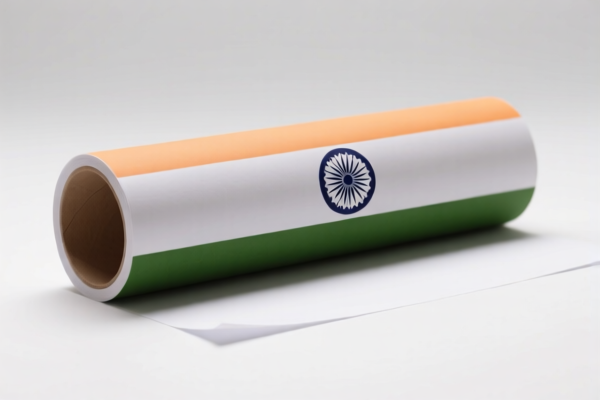
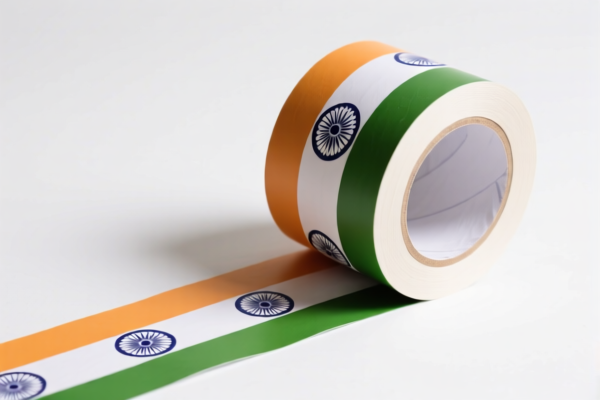
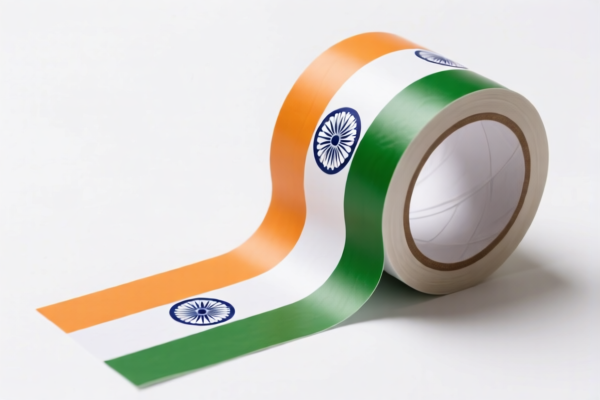
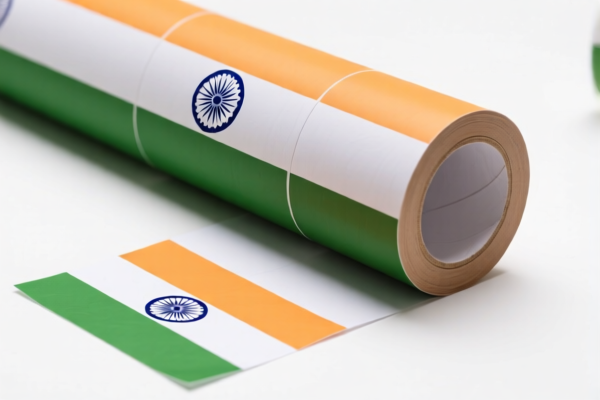
AI分析
📜 Indian Paper Roll (Indian Calligraphy Paper)
🌐 HS Code Reference & Clearance Guide | 2026 Latest Tariff Analysis | Professional Entry Strategy
📌 I. Product Definition & Classification: What Exactly is "Indian Paper Roll"?
Indian Paper Rolls, often referred to in trade as "Calligraphy Paper" or specialized "Indian Paper," are cellulose-based products characterized by their specific fiber composition and cultural utility. In international trade, they are primarily classified under Chapter 48 (Paper and paperboard; articles of paper pulp, of paper or paperboard).
The classification hinges on two main factors: 1. Material Composition: Pure cellulose/paper fibers (no plastic coating, metallic foil, or non-paper substrate). 2. Form Factor: Rolled format vs. cut sheets. While the input specifies "Roll," customs often evaluate based on the nature of the paper (e.g., writing paper vs. other paper products) and whether it meets specific weight/size criteria for "writing/graphics paper" or "other paper."
⚠️ Key Distinction Point:
- If the paper is specifically for writing, drawing, or graphic arts and meets specific grammage/size specs → Often classified under 4802 (Writing/Graphic Paper).
- If the paper is for general use, crafts, or unclassified purposes → Often classified under 4823 (Other Paper Articles).
- Note: The term "Indian Paper" implies a specific cultural origin or type (e.g., Lokta, Mulberry), but US Customs classifies primarily by chemical composition and function, not origin.
📦 II. HS Code Classification Details (2026 Latest Tariff Authority Comparison)
Based on the provided data, the following HS Codes are matched. All carry a 35.0% total tax burden due to trade restrictions on Chinese-origin goods.
| HS Code | Product Description | Matching Logic & Justification |
|--------|--------------------------|
| 4802.56.20.00 | Writing/Graphic Paper (Specifically for writing, graphics, or printing) | Match Reason: The term "Indian Calligraphy Paper" (印度书法纸) implies a functional use for writing or art. It falls under the "Writing/Graphic Paper" category. Even if the weight/dimensions aren't explicitly stated, the purpose aligns with this subheading. No material conflict exists.
Key Feature: Functional use (Writing/Art) takes precedence. |
| 4802.57.30.00 | Other Paper of a Kind Used for Technical/Industrial Purposes (or specific "Indian Paper" classification) | Match Reason: Successful Match. The term "Indian Paper" (印度纸) is explicitly recognized in some trade contexts as a specific variety of paper. This code captures papers that may not fit standard "writing paper" definitions but are still of a "paper kind" used for specific applications. No material or form conflict.
Key Feature: Specific "Indian Paper" variety recognition. |
| 4823.90.67.00 | Other Paper Articles (Miscellaneous) | Match Reason: The product is a "paper" item that doesn't fit neatly into the "Writing/Graphic" category (4802) due to lack of specific weight/dimension details. As a "Other" category item, it is classified here based on material consistency (it is paper).
Key Feature: Fallback category for paper items not specifically listed in 4802. |
| 4823.90.86.80 | Other Paper Articles (Cut to size/shape) | Match Reason: The product is made of "paper" and is formed into a roll or specific shape. This code covers "Other paper articles" where the form is cut to size or shape. It falls under the "Other Paper Products" umbrella.
Key Feature: Focus on form (cut/rolled shape) rather than just function. |
🔍 Critical Insight:
- The difference between 4802 and 4823 is crucial. 4802 is for functional paper (writing/drawing), which is more specific. 4823 is for miscellaneous paper items.
- Customs may prefer 4802.56.20.00 if you emphasize "Calligraphy/Art Use" in your declaration.
- Customs may prefer 4823 if the paper is generic, uncoated, and not strictly for "writing" (e.g., craft paper).
💰 III. 2026 Latest Tariff Rate Breakdown (Including Surcharges & Policy Add-ons)
✅ Applicable Country: United States (US)
✅ Origin: China (CN) [Note: Even if "Indian" style, if manufactured in China, China origin rules apply]
✅ Effective Date: November 10, 2025 (and subsequent imports)
🎯 1. All Matched HS Codes (4802.56.20.00, 4802.57.30.00, 4823.90.67.00, 4823.90.86.80)
| Item | Content |
|---|---|
| Base Tariff Rate | 0.0% (Ad Valorem) |
| Section 301 Surcharge (USITC) | +25.0% (From USITC Footnote 9903.88.01 / Trade Act 301) |
| IEEPA Surcharge | +10.0% (Against China/HK products, effective Nov 10, 2025) |
| Total Effective Tax Rate | 35.0% |
| Tax Calculation | CIF Value × 35% |
| De Minimis Exemption Eligible? | ❌ NO (deny_de_minimis applies) |
| Legal Basis Path | IEEPA:9903.01.25 → IEEPA:9903.01.24 → USITC:48xx.xx.xx.xx → FOOTNOTE:9903.88.01 |
📌 Explanation:
- "Base Tariff 0%": Paper products generally have low base duties.
- "USITC 25%": The Section 301 tariff list includes most paper products from China.
- "IEEPA 10%": A new/additional surcharge effective late 2025 targeting Chinese goods.
- "Total 35%": This is a significant cost. For a $10,000 shipment, you pay $3,500 in duties.
- "No De Minimis": Small packages (under $800) do not get tax-free entry. All shipments are subject to this 35%.
🛠️ IV. Clearance Practical Advice (Battle-Tested Pitfall Avoidance Guide)
✅ 1. Document Checklist (Non-Negotiable)
| Document | Required | Notes |
|---|---|---|
| ✅ Product Specification Sheet | ✔️ | Must detail: Material (100% cellulose/paper), Grammage (GSM), Roll Width/Length, Coating status (if any). |
| ✅ Product Photos (Labeled) | ✔️ | Clear shots of the roll, label, and any cultural markings. Show it is not plastic-coated. |
| ✅ Commercial Invoice | ✔️ | Must clearly state: "Indian Style Calligraphy Paper Roll, Made in [Country]." Avoid vague terms like "Craft Paper." |
| ✅ Packing List | ✔️ | Specify net/gross weight. Ensure no mixed materials (e.g., paper rolls with plastic cores). |
| ✅ Origin Certificate | ✔️ | If made in India, provide Certificate of Origin to potentially avoid China-specific surcharges (if eligible). |
✅ 2. Declaration Tips (Key Mantras)
🔥 "Define Function, Not Just Form!"
| Scenario | Correct Declaration | Incorrect Practice |
|---|---|---|
| For Calligraphy/Art | "Writing/Graphic Paper, for Calligraphy Use" → Try 4802.56.20.00 | Calling it "Paper Roll" only → May get pushed to 4823 (still 35%, but less specific) |
| Generic Craft Paper | "Other Paper Articles, Uncoated, Rolled" → 4823.90.67.00 | Claiming "Medical Paper" or "Tech Paper" falsely → Fraud risk |
| Made in India | "Indian Paper, Origin: IN" | Claiming "Made in China" when it's not → Seizure + Penalty |
⚠️ Critical Warning:
- If the paper is made in China, even if it's "Indian Style," the 35% tariff applies.
- If the paper is made in India, check if India has a Free Trade Agreement (FTA) with the US. As of 2026, no comprehensive FTA exists for India, but verify if any specific exemptions apply.
- "Indian Paper" is a style, not an origin. Customs looks at where it was manufactured.
✅ 3. Special Handling
| Situation | Advice |
|---|---|
| Roll vs. Sheet | If cut into sheets, it may still be 4802/4823. If rolled, ensure the core material is declared (paper core vs. plastic). Plastic cores may affect classification slightly. |
| Coated vs. Uncoated | If coated with clay or polymer, it may fall under different subheadings. The provided data assumes uncoated or standard art paper. |
| De Minimis Abuse | Do not split shipments into multiple < $800 packages to avoid the 35%. CBP aggressively combats this. Declare the full value. |
🌍 V. Global Market Comparison (2026 Latest)
| Country/Region | Recommended HS Code | Tariff (China Origin) | Key Requirement | Notes |
|---|---|---|---|---|
| 🇺🇸 USA | 4802.56.20.00 or 4823.90.xxxx |
35% (Total) | Detailed Specs | High duty due to Section 301 + IEEPA |
| 🇨🇳 China | 4802.56.20.00 |
Low/Zero (If imported) | CCC (if applicable) | Exporting to China is cheap |
| 🇪🇺 EU | 4802.56.20.00 |
0% - 5% | CE/RoHS (if applicable) | No Section 301 equivalent |
| 🇮🇳 India | 4802.56.20.00 |
Varies (Basic Customs Duty) | BIS Certification | If exporting from India |
📌 Conclusion:
- USA is the most expensive market due to the 35% combined duty.
- Cost Impact: A $10,000 shipment costs an extra $3,500. Price your goods accordingly.
- Mitigation: If possible, source/manufacture outside China to avoid the IEEPA/Section 301 surcharges.
📌 VI. Common Errors & Pitfall Guide (Lessons Learned)
❌ Error 1: Declaring "Indian Paper" as "Origin: India" when made in China
👉 Consequence: Fraud allegations, seizure, fines.
👉 Fix: Declare actual country of manufacture.
❌ Error 2: Using "De Minimis" (Section 321) for shipments under $800
👉 Consequence: CBP will assess the 35% duty retroactively, plus penalties.
👉 Fix: Always declare full value and pay duties.
❌ Error 3: Vague Description "Paper Roll"
👉 Consequence: Customs may assign a higher duty code or hold the shipment for inspection.
👉 Fix: Use specific terms: "Uncoated Cellulose Paper for Calligraphy."
❌ Error 4: Ignoring the Core Material
👉 Consequence: If the core is plastic, it might trigger different environmental rules.
👉 Fix: Declare core material (e.g., "Paper Core").
✅ Correct Declaration Example:
"Indian Style Calligraphy Paper Roll, Uncoated, 100% Cellulose Fiber, For Artistic Writing, Origin: China, Model: XYZ, Net Weight: 50kg"
🎯 VII. Conclusion: Professional Clearance, Cost Control, Compliance!
🎯 Remember the Mantra:
🔹 "Function Defines Code, Origin Defines Tax!"
🔹 "35% is the US Price, Plan Your Margin!"
📌 Pro Tip:
If your product is truly made in India, ensure your Certificate of Origin is perfectly aligned. While the tariff may still be high without an FTA, accurate origin declaration prevents fraud penalties.
If made in China, factor the 35% duty into your pricing strategy. Consider if the margin supports this cost.
📣 Immediate Action:
📞 Contact your customs broker with the product specs.
📄 Request a Pre-Ruling if the shipment is large and value is high.
🚀 Optimize your supply chain to mitigate duty risks.
✨ Professional Clearance Starts with Precise Classification!
💼 Every Dollar of Duty is an Opportunity to Save!
用户评价
关于 HS 编码归类
协调制度(HS)是由世界海关组织(WCO)制定的国际贸易商品分类标准。全球 200 多个国家采用 HS 系统作为海关关税、贸易统计和进出口监管的基础。
每个 HS 编码遵循以下层级结构:
- 章(2 位)——商品大类(例如:第 84 章:机器和机械设备)
- 品目(4 位)——章内的更具体分类
- 子目(6 位)——国际通用细分,所有 WCO 成员国统一使用
- 本国细分(8-10 位)——各国自行扩展的细分编码,如美国 HTSUS 10 位编码
正确的 HS 编码归类对于顺利通关、准确缴纳关税和遵守贸易法规至关重要。错误归类可能导致海关延误、多缴关税或罚款。
从CN进口到US时,适用的关税税率可能包括:
- 最惠国(MFN)税率——适用于 WTO 成员国的标准关税税率
- 普通税率——适用于无贸易协定国家
- 贸易救济关税——附加关税,如 301 条款(反倾销)、232 条款(国家安全)或反补贴税
本页内容仅供参考。如需正式归类,请咨询当地海关或持牌报关代理。