Indoor Natural Grass Woven Screen
CN → US| HS编码 | 关税税率 | 原产国 | 目的国 | 文档 |
|---|---|---|---|---|
| 4602193500 | 35.0% | CN | US | 官方文档 |
| 9403893020 | 35.0% | CN | US | 官方文档 |
| 9403893010 | 35.0% | CN | US | 官方文档 |
| 4602198000 | 37.3% | CN | US | 官方文档 |
商品图片
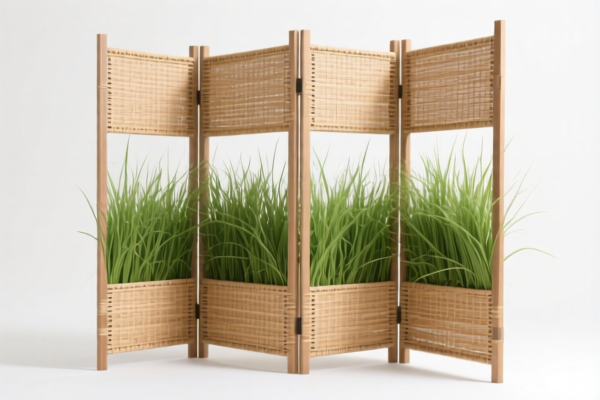
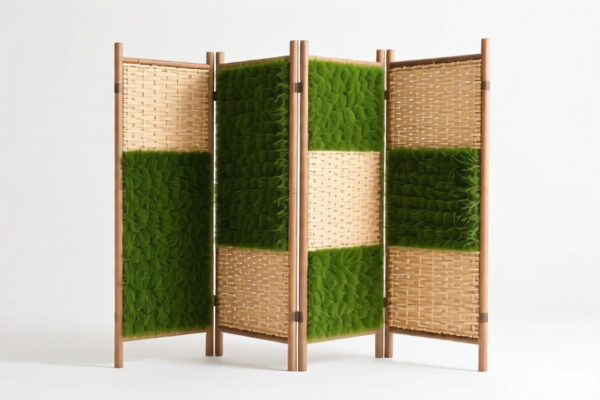
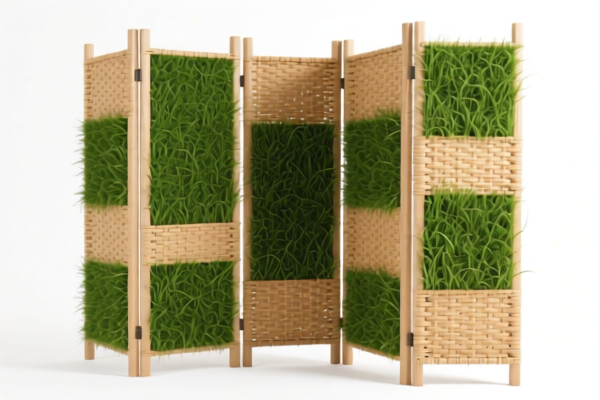
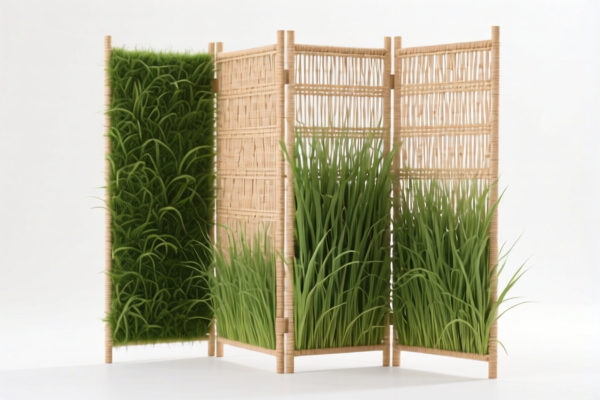
AI分析
🌿 Indoor Natural Grass Woven Screen (Interior Decor & Furniture)
🌐 HS Code Reference & Customs Clearance Guide | 2026 Latest Tariff Analysis | Professional Entry Strategy 📌 Part 1: Product Definition & Classification: What Exactly Is This?
An Indoor Natural Grass Woven Screen is a versatile decorative and functional item used for room division, privacy, or aesthetic enhancement. In international trade, its classification depends heavily on whether it is viewed as a woven craft or as furniture. This distinction drastically affects the tariff burden.
Category A: Woven Plant Material (Craft/Art) * Nature: The screen is primarily valued as a handcrafted item made from processed plant materials (grass, reed, rattan). * Key Feature: The weaving technique and material constitute the primary value. * Typical HS Heading: Chapter 46 (Woven Plant Materials).
Category B: Furniture (Wood/Plant-based) * Nature: The screen is viewed as a standalone piece of interior furniture designed for support or partitioning within a household setting. * Key Feature: It has a distinct structural form (legs, frame, panels) and is used as "other furniture." * Typical HS Heading: Chapter 94 (Furniture).
⚠️ Key Distinction Point: * If the item is a simple weaved mat/panel without a complex structural frame (like legs or heavy wood frames), it leans towards Chapter 46. * If the item includes a structural frame, legs, or is marketed specifically as "interior furniture" (like a room divider table/screen combo), it leans towards Chapter 94.
📦 Part 2: HS Code Classification Details (2026 Latest Tariff Authority Match)
Based on the provided data, here are the four possible HS Codes and their corresponding logic. Note that all options below carry significant tariffs due to trade policies (likely US-China trade tensions).
| HS Code | Product Description & Logic | Application Scenario | Primary Classification Basis |
|---|---|---|---|
4602.19.35.00 |
Natural Grass Woven Material: Classified as a woven plant product. The screen is viewed as a specific shaped woven article. | Artistic screens, decorative woven panels. | Chapter 46: Woven materials of vegetable products. |
9403.89.30.20 |
Rattan/Reed-like Furniture: Classified as "Other Furniture." The grass material is treated similarly to rattan or willow. | Furniture-grade room dividers, high-end rattan-style screens. | Chapter 94: Furniture; bedding, etc. |
9403.89.30.10 |
Household Furniture: Classified as "Other Household Furniture." Specifically for indoor use as home decor/furniture. | Indoor decorative screens used in homes/offices as furniture. | Chapter 94: Furniture; Household use. |
4602.19.80.00 |
General Woven Plant Article: A catch-all for woven plant materials that don't fit specific sub-categories like baskets. | Standard woven screens without specific furniture features. | Chapter 46: Woven materials of vegetable products (General). |
🔍 Critical Reminder: *
9403Codes (Furniture) generally have 0% Base Duty but are hit with 25% Section 301 Duty and 10% IEEPA Duty, totaling 35%. *4602Codes (Woven Goods) may have a 2.3% Base Duty (in some cases like4602.19.80.00) PLUS the same trade tariffs, totaling 37.3%. * Incorrect Classification Risk: Misclassifying furniture as "woven goods" to avoid Section 301 duties can lead to severe penalties. You must classify based on the essential character of the good.
💰 Part 3: 2026 Latest Tariff Rate Breakdown (Including Additional Taxes & Policies)
✅ Applicable Country: United States (US) ✅ Origin: China (CN) (Implied by the specific 122/IEEPA clauses) ✅ Effective Time: 2025/2026 (Current Trade Policy Era)
🎯 1. Codes 4602.19.35.00, 9403.89.30.20, 9403.89.30.10 (The 35% Tier)
These codes share an identical tax structure. They are the most common for high-end rattan/grass screens.
| Item | Content |
|---|---|
| Base Tariff | 0.0% (Ad Valorem) |
| Section 301 Additional Duty | +25.0% (USITC Footnote 9903.88.01 / 9903.03.01) |
| IEEPA Additional Duty (122 Clause) | +10.0% (Targeting Chinese products under Executive Order) |
| Total Tariff Rate | 35.0% |
| Tax Calculation | CIF Value × 35% |
| De Minimis Exemption | ❌ Not Applicable (Section 301 duties apply regardless of value) |
| Legal Basis Path | HTSUS:9403.89 → Section 301: Footnote 9903.88.01 → IEEPA: EO 13813/13936 |
📌 Explanation: * Base 0%: These are considered furniture or specific woven goods that do not have a standard MFN duty. * 25% Section 301: This is the "Trump/Biden era" tariff on Chinese imports. It applies broadly to furniture and woven goods from China. * 10% IEEPA (122 Clause): This is a specific additional levy on Chinese goods, often applied in conjunction with Section 301 for strategic sectors or broad categories. * Total 35%: This is a high-cost entry. Profit margins must account for this.
🎯 2. Code 4602.19.80.00 (The 37.3% Tier)
This code applies if the screen is classified strictly as a generic woven plant article and incurs a small base duty.
| Item | Content |
|---|---|
| Base Tariff | 2.3% (Ad Valorem) |
| Section 301 Additional Duty | +25.0% |
| IEEPA Additional Duty (122 Clause) | +10.0% |
| Total Tariff Rate | 37.3% |
| Tax Calculation | CIF Value × 37.3% |
| De Minimis Exemption | ❌ Not Applicable |
| Legal Basis Path | HTSUS:4602.19 → Section 301: Footnote 9903.88.01 → IEEPA |
📌 Note: * Why is this more expensive? Because the base tariff is 2.3%, whereas the furniture codes (
9403) are 0%. * However, the additional tariffs (35%) are the same. * Strategy: If your product is clearly "Furniture," stick to9403to save the 2.3% base duty. If it's clearly just a "woven mat," you might be stuck with4602and the higher total rate.
🛠️ Part 4: Customs Clearance Practical Advice (Battle-Tested Pitfall Guide)
✅ 1. Documentation Checklist (Must-Haves)
| Document | Required? | Description |
|---|---|---|
| ✅ Product Specifications | ✔️ | Material composition (e.g., 100% Natural Grass, Rattan, Reed). Must specify "Natural." |
| ✅ Product Photos | ✔️ | Clear shots showing the item's structure. Does it have legs? Is it just a panel? This determines Ch 46 vs Ch 94. |
| ✅ Commercial Invoice | ✔️ | Must clearly state: "Indoor Natural Grass Woven Screen, Model XXX, Material: Plant Fiber." |
| ✅ Packing List | ✔️ | Details of dimensions, weight, and quantity. |
| ✅ Country of Origin Certificate | ✔️ | Essential for proving CN origin (and thus triggering 301/IEEPA duties). |
| ✅ Material Safety Data Sheet (MSDS) | ⚠️ Optional | If the screen has treated paints or glues, customs may ask for this to verify it's not hazardous. |
✅ 2. Declaration Tips (Crucial Keywords)
🔥 "Structure Defines Code, Material Defines Chapter!"
| Scenario | Correct Declaration | Wrong Declaration | Consequence |
|---|---|---|---|
| Screen with wooden legs/frame | 9403.89.30.10 or .20Desc: "Furniture, Natural Grass Panel with Wood Frame" |
"Woven Basket" or "Decorative Mat" | Misclassification Penalty. Treated as furniture (Ch 94). |
| Flat Woven Panel (No Legs) | 4602.19.35.00 or .80.00Desc: "Woven Plant Material Screen, No Structural Frame" |
"Indoor Furniture" | Risk of Audit. If it's just a panel, calling it furniture may be challenged, but Ch 46 is safer if no frame exists. |
| Mixed Material (Metal Legs + Grass) | 9403.89.30.20Desc: "Furniture, Grass Weave on Metal Frame" |
"Woven Goods" | Wrong Code. Metal frame makes it furniture/metal composite, likely Ch 94. |
✅ 3. Special Handling for High Tariffs
| Situation | Recommended Action |
|---|---|
| High Cost Impact (35-37%) | Consider Value Engineering: Reduce material cost or negotiate FOB price with suppliers to absorb some duty. |
| Supply Chain Diversification | Avoid Chinese Origin: If possible, source from Vietnam, India, or Thailand. Many woven goods from these countries may be exempt from Section 301 (check current rules). |
| Pre-Ruling Application | Submit an HTSUS Pre-Ruling Request to US CBP. If your screen is ambiguous between Ch 46 and Ch 94, a pre-ruling gives you certainty and protects you from retroactive duties. |
| Direct-to-Consumer (DTC) | Remember, Section 301 and IEEPA duties DO NOT apply to De Minimis (under $800) if you are importing under the current $800 exemption BUT note: Recent legislative changes and enforcement trends are scrutinizing "fake drop-shipping." If you are a business importer, these duties apply. If you are sending personal gifts, it might be different, but commercial screens are not exempt. |
🌍 Part 5: Global Market Comparison (2026 Outlook)
| Market | Recommended HS Code | Total Tariff (China Origin) | Key Requirement |
|---|---|---|---|
| 🇺🇸 USA | 9403.89.30.10 or 4602.19.80.00 |
35% - 37.3% | Strict Section 301 + IEEPA enforcement. |
| 🇨🇳 China (Import) | 4602.19 or 9403.89 |
0% - 5% (Low) | CB Certificate of Conformity. |
| 🇪🇺 EU | 4602.19 or 9403.89 |
0% - 6.5% | CE Marking (if applicable), EPR packaging registration. |
| 🇬🇧 UK | 4602.19 or 9403.89 |
0% - 6.5% | UKCA Marking, Post-Brexit tariffs. |
| 🇦🇺 Australia | 4602.19 or 9403.89 |
0% - 5% | Biosecurity quarantine (strict for natural grass). |
📌 Conclusion for US Market: * The US is the most expensive market due to the 35%+ tariff wall. * Strategy: If targeting the US, ensure the product is marketed as Furniture (
9403) to avoid the 2.3% base duty, but accept the 35% total. * Alternative: Look into Third-Country Routing (Vietnam/India) if the product can be substantially transformed there to claim a non-China origin.
📌 Part 6: Common Errors & Pitfalls (Lessons Learned)
❌ Error 1: Declaring a furniture screen as "Woven Basket" (4602) to avoid scrutiny.
👉 Result: CBP may reclassify it as Furniture (9403) later, but the 2.3% vs 0% difference is minor. The real risk is if they determine it's not woven plant material (e.g., synthetic grass), leading to different duties.
❌ Error 2: Ignoring the IEEPA 10% Clause. 👉 Result: Many brokers forget the 10% IEEPA tariff. If missing, you face 10% unpaid duty + penalties. Always include it in your landed cost calculation.
❌ Error 3: Mislabeling Material. 👉 Result: If you declare "Natural Grass" but it contains 30% PVC synthetic fibers, the HS code changes (to Chapter 39 or 63), and the duty rate might change. Be precise.
❌ Error 4: Assuming De Minimis applies to business shipments. 👉 Result: For commercial screens, the $800 exemption is often challenged if done frequently. Section 301 duties apply even under de minimis if the importer is the US entity.
✅ Correct Practice:
"Indoor Room Divider Screen, Frame: Natural Rattan, Panel: Woven Grass, No Engineered Wood. HS: 9403.89.30.10."
🎯 Part 7: Conclusion: Precision Classification Saves Money!
🎯 Remember the Rules:
🔹 "Furniture gets 0% Base, but 35% Total." 🔹 "Woven Goods get 2.3% Base, but 37.3% Total." 🔹 "Always add the 25% Section 301 + 10% IEEPA." 🔹 "Check for Third-Country Alternatives!"
📌 Pro Tip: If your profit margin is thin, do not import from China directly to the US without a duty mitigation strategy. Consider: 1. Pre-Ruling: Get CBP confirmation on your HS Code. 2. Supply Chain Shift: Move assembly/weaving to Vietnam or India. 3. Direct Filing: Use a licensed customs broker who specializes in Ch 94 vs Ch 46 disputes.
📣 Immediate Action:
📞 Consult a Customs Broker with your product samples. 📄 Prepare High-Res Photos showing the "Furniture" or "Woven" nature. 🚀 Calculate Landed Cost using 35% or 37.3% to ensure profitability.
✨ Smart Customs, Smarter Business! 💼 Every percent of duty saved is pure profit!
用户评价
关于 HS 编码归类
协调制度(HS)是由世界海关组织(WCO)制定的国际贸易商品分类标准。全球 200 多个国家采用 HS 系统作为海关关税、贸易统计和进出口监管的基础。
每个 HS 编码遵循以下层级结构:
- 章(2 位)——商品大类(例如:第 84 章:机器和机械设备)
- 品目(4 位)——章内的更具体分类
- 子目(6 位)——国际通用细分,所有 WCO 成员国统一使用
- 本国细分(8-10 位)——各国自行扩展的细分编码,如美国 HTSUS 10 位编码
正确的 HS 编码归类对于顺利通关、准确缴纳关税和遵守贸易法规至关重要。错误归类可能导致海关延误、多缴关税或罚款。
从CN进口到US时,适用的关税税率可能包括:
- 最惠国(MFN)税率——适用于 WTO 成员国的标准关税税率
- 普通税率——适用于无贸易协定国家
- 贸易救济关税——附加关税,如 301 条款(反倾销)、232 条款(国家安全)或反补贴税
本页内容仅供参考。如需正式归类,请咨询当地海关或持牌报关代理。