Indoor Woven Screen
CN → US| HS编码 | 关税税率 | 原产国 | 目的国 | 文档 |
|---|---|---|---|---|
| 6304993500 | 28.8% | CN | US | 官方文档 |
| 4823908680 | 35.0% | CN | US | 官方文档 |
| 6304996040 | 20.7% | CN | US | 官方文档 |
| 4602193500 | 35.0% | CN | US | 官方文档 |
| 9403893020 | 35.0% | CN | US | 官方文档 |
商品图片
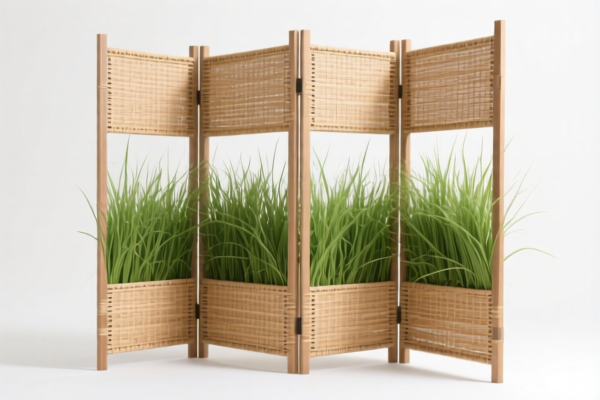
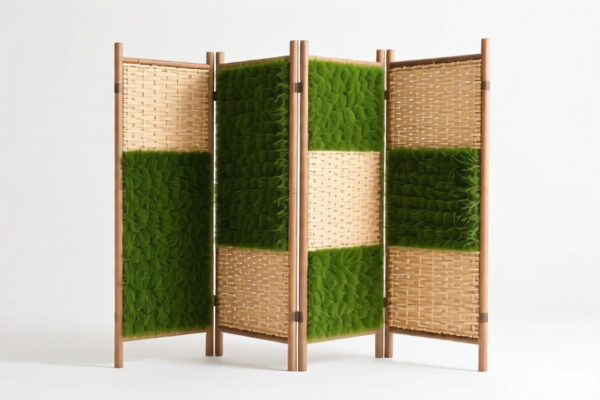
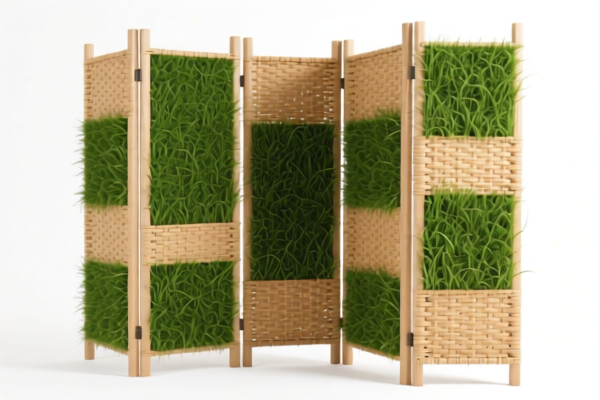
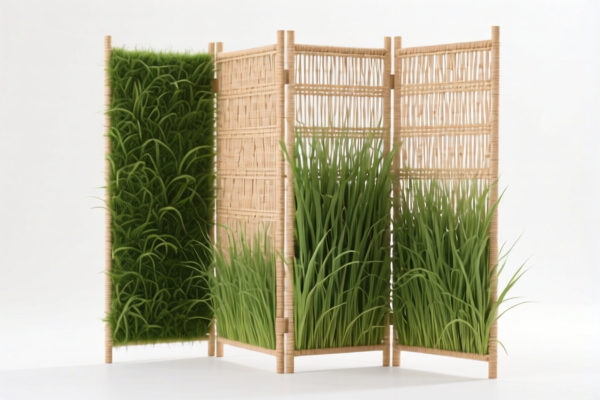
AI分析
🏠 Indoor Woven Screen (室内编织屏风/装饰)
🌐 HS Code Reference & Customs Clearance Guide | 2026 Latest Tariff Analysis | Professional Clearance Strategy 📌 I. Product Definition & Classification: What is an "Indoor Woven Screen"?
An Indoor Woven Screen is a decorative or functional partition, wall hanging, or accent piece made from natural fibers, grasses, rattan, bamboo, or paper pulp. In international trade, it is classified based on its material composition and primary function (Decor vs. Furniture).
Key Distinction: * Decorative Textiles/Art: If the item is primarily for aesthetic purposes (e.g., wall hangings, light screens) and made of textile/natural fiber materials, it falls under Chapter 63 (Other Made-Up Textile Articles) or Chapter 46 (Basketwork & Matting). * Furniture: If the item is rigid, stands on the floor, and serves as a structural partition or screen in a room, it may be classified as Furniture under Chapter 94.
⚠️ Critical Classification Point: - If it is a textile-based decorative screen (soft, flexible, woven fabric/natural fiber) → 6304.99 or 4602.19. - If it is a paper-based woven screen → 4823.90. - If it is a rigid wooden/rattan furniture piece (structural) → 9403.89.
📦 II. HS Code Classification Details (2026 Latest Tariff Authority)
Based on the provided data, here are the specific HS Codes and their rationales:
| HS Code | Product Description | Rationale / Classification Logic |
|---|---|---|
| 6304.99.35.00 | Indoor Woven Decoration (Plant Fiber) | Summary: Classified as "Indoor Decoration." It is inferred to be made of plant fiber materials (e.g., straw, reed, soft rattan). Fits the category of decorative textile-like items. |
| 4823.90.86.80 | Indoor Woven Decoration (Fiber/Pulp) | Summary: Inferred material is fiber or pulp-based weaving. Classified as "Other Paper Products" because the base material is treated as paper/vegetable fiber pulp rather than traditional textile. |
| 6304.99.60.40 | Indoor Woven Decoration (Home Textile) | Summary: Classified as a Household Textile Article. Specifically, non-knitted or non-crocheted textile materials. It is considered a general home textile accessory. |
| 4602.19.35.00 | Indoor Natural Grass Woven Screen | Summary: Material is plant weaving material (grass/straw). The form fits "Basketwork, Wickerwork, and Other Plaits Articles." It is treated as a woven craft item, not furniture. |
| 9403.89.30.20 | Indoor Natural Grass Woven Screen (Furniture) | Summary: Material fits rattan, willow, or similar materials. The use is classified as Other Furniture because it serves as a rigid screen/partition in the home. |
🔍 Key Insight: - Textiles vs. Furniture: The biggest risk is misclassifying a rigid rattan screen as "Textile" (low tax) when it should be "Furniture" (high tax), or vice versa. - Material Matters: "Paper/Pulp" (Ch 48), "Textile" (Ch 63), "Basketwork/Plant Fiber" (Ch 46), and "Wood/Rattan Furniture" (Ch 94) have vastly different tariff structures.
💰 III. 2026 Latest Tariff Rate Breakdown (Including Surcharges)
✅ Applicable Country: United States (US)
✅ Origin: China (CN)
✅ Effective Date: Current rates include Section 301 and IEEPA surcharges.
🎯 1. 6304.99.35.00 —— Indoor Woven Decoration (Plant Fiber)
| Item | Content |
|---|---|
| Base Duty | 11.3% |
| Section 301 Surcharge | +7.5% |
| IEEPA Surcharge | +10% |
| Total Duty Rate | 28.8% |
| Tax Calculation | CIF Value × 28.8% |
| De Minimis Eligibility | ❌ No (De minimis does not apply to goods subject to Section 301/IEEPA surcharges from China) |
📌 Explanation: - This is the lowest tax option among the valid classifications provided. - Suitable for lightweight, decorative plant-fiber screens.
🎯 2. 4823.90.86.80 —— Indoor Woven Decoration (Paper/Pulp)
| Item | Content |
|---|---|
| Base Duty | 0.0% |
| Section 301 Surcharge | +25.0% |
| IEEPA Surcharge | +10% |
| Total Duty Rate | 35.0% |
| Tax Calculation | CIF Value × 35.0% |
| De Minimis Eligibility | ❌ No |
📌 Explanation: - Although the base duty is 0%, the Section 301 surcharge is higher (25%) compared to textile items (7.5%). - Do not assume "0% base" means low total tax.
🎯 3. 6304.99.60.40 —— Indoor Woven Decoration (Home Textile)
| Item | Content |
|---|---|
| Base Duty | 3.2% |
| Section 301 Surcharge | +7.5% |
| IEEPA Surcharge | +10% |
| Total Duty Rate | 20.7% |
| Tax Calculation | CIF Value × 20.7% |
| De Minimis Eligibility | ❌ No |
📌 Explanation: - This is the MOST COST-EFFECTIVE classification if the product qualifies as a "non-knitted textile article." - Total duty is only 20.7%, significantly lower than others. - Requirement: Must be clearly defined as a textile product, not a rigid furniture piece.
🎯 4. 4602.19.35.00 —— Indoor Natural Grass Woven Screen (Basketwork)
| Item | Content |
|---|---|
| Base Duty | 0.0% |
| Section 301 Surcharge | +25.0% |
| IEEPA Surcharge | +10% |
| Total Duty Rate | 35.0% |
| Tax Calculation | CIF Value × 35.0% |
| De Minimis Eligibility | ❌ No |
📌 Explanation: - Classified under Chapter 46 (Basketwork). - High surcharge (25%) applies to basketwork/plaits from China.
🎯 5. 9403.89.30.20 —— Indoor Natural Grass Woven Screen (Furniture)
| Item | Content |
|---|---|
| Base Duty | 0.0% |
| Section 301 Surcharge | +25.0% |
| IEEPA Surcharge | +10% |
| Total Duty Rate | 35.0% |
| Tax Calculation | CIF Value × 35.0% |
| De Minimis Eligibility | ❌ No |
📌 Explanation: - Classified as Furniture. - Same high tax rate as basketwork and paper products due to the 25% Section 301 surcharge on furniture/basketwork categories.
🛠️ IV. Customs Clearance Practical Advice (Real-World Pitfalls Guide)
✅ 1. Material & Construction Verification
| Factor | Recommendation |
|---|---|
| Material Declaration | Clearly specify: "100% Rattan," "Natural Grass," "Paper Pulp," or "Cotton Blend." Ambiguity leads to reclassification. |
| Structure | Is it rigid (stands alone)? → Likely Furniture (9403) or Basketwork (4602). Is it flexible/hanging? → Likely Textile (6304) or Paper (4823). |
| Function | Is it primarily for decoration (wall art, light screen)? → Lean towards 6304 or 4602. Is it for partitioning space as a permanent fixture? → Risk of being classified as Furniture (9403). |
✅ 2. Declaration Strategy (Crucial for Cost Saving)
🔥 "Textile Wins! 20.7% vs 35%. Prove it's Fabric, not Basket!"
| Scenario | Recommended HS Code | Duty Rate | Why? |
|---|---|---|---|
| Soft, flexible, textile-like | 6304.99.60.40 |
20.7% | Lowest tax. Classifies as non-knitted textile. |
| Plant fiber, decorative, non-rigid | 6304.99.35.00 |
28.8% | Good alternative if not strictly textile. |
| Rigid grass screen (furniture-like) | 4602.19.35.00 or 9403.89.30.20 |
35.0% | Higher tax due to 25% surcharge on basket/furniture. |
| Paper-based screen | 4823.90.86.80 |
35.0% | High surcharge. Avoid if possible. |
📌 Strategic Advice: - If your product can be reasonably interpreted as a textile decoration (e.g., woven cotton, fabric blends, or even certain plant fibers treated like textiles), use
6304.99.60.40to save 14.3% in duty compared to furniture/basketwork. - Ensure the product is not described as "Furniture," "Room Divider," or "Partition" in the commercial invoice if claiming textile classification. Use terms like "Woven Wall Hanging," "Decorative Screen," or "Artisan Decoration."
✅ 3. Special Situations & Documentation
| Situation | Action |
|---|---|
| Rattan Screen | If rigid, it may fall under 4602 (Basket) or 9403 (Furniture). Both are 35%. Consider if it can be classified as a textile accessory if it has a fabric backing. |
| Mixed Materials | If woven grass + wooden frame → Likely Furniture (9403). No exemption. |
| De Minimis (Section 321) | ❌ Do NOT rely on De Minimis ($800 exemption) for China-origin goods. The 25% Section 301 and 10% IEEPA surcharges are not exempt under de minimis for China. You must pay duties upfront. |
| Pre-Ruling | Request an International Trade Commission (USITC) Pre-Ruling if the classification is borderline (e.g., is it a textile or basket?). Saves legal costs later. |
🌍 V. Global Market Comparison (2026 Outlook)
| Market | Recommended HS Code | Est. Total Duty (CN Origin) | Key Requirement |
|---|---|---|---|
| 🇺🇸 USA | 6304.99.60.40 |
20.7% | Proven textile nature. Avoid "Furniture" label. |
| 🇺🇸 USA | 9403.89.30.20 |
35.0% | Standard furniture declaration. |
| 🇪🇺 EU | 4602.19 |
~0-5% (No US-style surcharges) | CE marking not required, but safety standards apply. |
| 🇨🇳 China | 6304.99 |
~10-15% | Import duties are lower; no Section 301. |
📌 Conclusion for US Importers: - The US is the most expensive market due to Section 301 and IEEPA surcharges. - Classifying as Textile (6304) saves you 14.3% to 14.3% in duty compared to Furniture/Basketwork. - Documentation is Key: Your invoice must NOT say "Furniture." Use "Decorative Woven Panel" or "Textile Art Screen."
📌 VI. Common Errors & Pitfalls (Lessons Learned)
❌ Error 1: Declaring a rigid rattan screen as "Textile" to save tax.
👉 Risk: Customs may inspect and reclassify as Furniture (9403) or Basket (4602), imposing the 35% rate + penalties.
✅ Fix: Only claim 6304 if the product is genuinely flexible or textile-based.
❌ Error 2: Assuming "0% Base Duty" means no tax.
👉 Risk: 4823, 4602, and 9403 all have 0% base, but 35% total due to surcharges.
✅ Fix: Always calculate Total Duty Rate, not just base.
❌ Error 3: Using De Minimis ($800) for China-origin screens.
👉 Risk: Customs will seize the package and charge 35% + storage fees. China goods are excluded from de minimis surcharge exemptions.
✅ Fix: Pay duties at entry. Do not split shipments to evade.
🎯 VII. Conclusion: Smart Classification for Maximum Profit
🎯 Remember the Strategy:
🔹 "Textile Wins: 20.7%. Furniture Burns: 35.0%."
🔹 "No De Minimis for China. Always Pay Duty."
🔹 "Describe as Decoration, Not Furniture, if Possible."
📌 Pro Tip: If your product is made of plant fibers (grass, reed), consult a customs broker to see if it can be classified under 6304.99.35.00 (28.8%) or ideally 6304.99.60.40 (20.7%) by emphasizing its decorative, non-structural nature. Avoid "Furniture" terminology in marketing and invoices.
📣 Action Items:
📞 Engage a Customs Broker: Request a classification opinion for your specific product design.
📄 Revise Invoices: Change "Room Divider/Furniture" to "Indoor Woven Decoration/Textile Art."
📦 Prepare for Duty: Budget for 20.7% - 35% duty on CIF value. No exemptions for China.
✨ Professional Clearance Starts with Precise Classification!
💼 Every percentage point saved is pure profit!
用户评价
关于 HS 编码归类
协调制度(HS)是由世界海关组织(WCO)制定的国际贸易商品分类标准。全球 200 多个国家采用 HS 系统作为海关关税、贸易统计和进出口监管的基础。
每个 HS 编码遵循以下层级结构:
- 章(2 位)——商品大类(例如:第 84 章:机器和机械设备)
- 品目(4 位)——章内的更具体分类
- 子目(6 位)——国际通用细分,所有 WCO 成员国统一使用
- 本国细分(8-10 位)——各国自行扩展的细分编码,如美国 HTSUS 10 位编码
正确的 HS 编码归类对于顺利通关、准确缴纳关税和遵守贸易法规至关重要。错误归类可能导致海关延误、多缴关税或罚款。
从CN进口到US时,适用的关税税率可能包括:
- 最惠国(MFN)税率——适用于 WTO 成员国的标准关税税率
- 普通税率——适用于无贸易协定国家
- 贸易救济关税——附加关税,如 301 条款(反倾销)、232 条款(国家安全)或反补贴税
本页内容仅供参考。如需正式归类,请咨询当地海关或持牌报关代理。