Industrial Grade Cowhide Leather
CN → US| HS编码 | 关税税率 | 原产国 | 目的国 | 文档 |
|---|---|---|---|---|
| 4101201010 | 17.5% | CN | US | 官方文档 |
| 4101501010 | 17.5% | CN | US | 官方文档 |
| 4107111020 | 35.0% | CN | US | 官方文档 |
| 4107115000 | 12.8% | CN | US | 官方文档 |
| 4107127090 | 15.0% | CN | US | 官方文档 |
商品图片
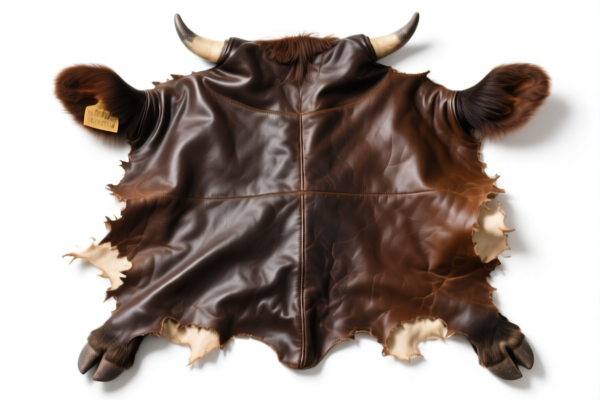
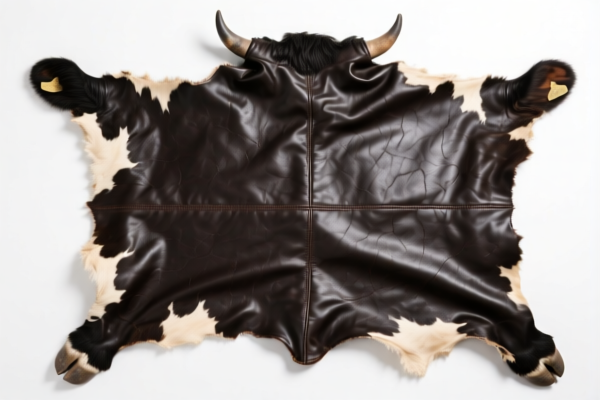
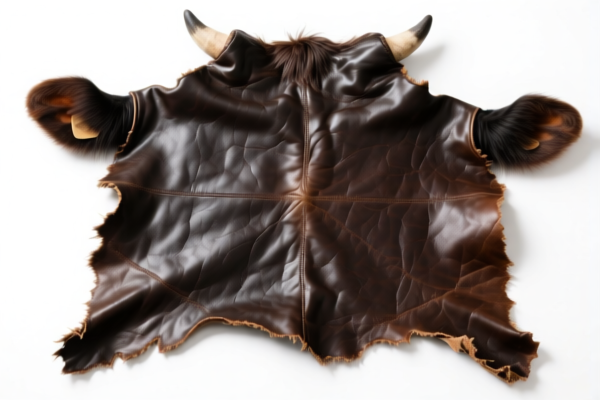
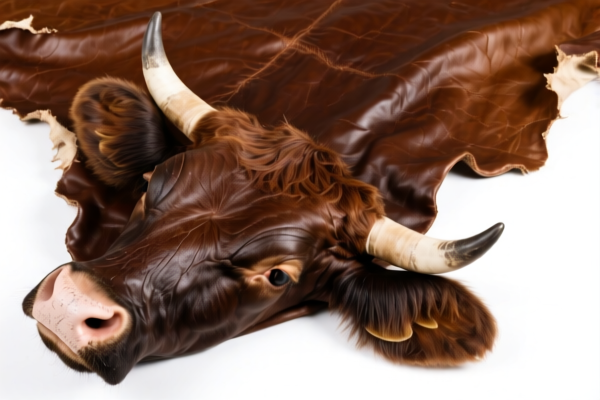
AI分析
🐂 Industrial Grade Cowhide Leather: The Ultimate HS Code & Tariff Breakdown (2026 Edition)
🌐 HS Code Reference & Customs Clearance Guide | Latest Tariff Analysis for US Imports | Professional Strategy for Tanners & Manufacturers
📌 I. Product Definition: What Exactly is "Industrial Grade Cowhide"?
In international trade, "Industrial Grade Cowhide Leather" is not a single entity but a spectrum of processed hides, ranging from raw, untreated skins to fully finished, split leather. The distinction is critical because the degree of processing determines the HS Code, which directly dictates the tariff burden.
Key Distinctions: * Raw/Hides (Chromium-free or Vegetable-tanned initial stage): Often classified under Chapter 41 (Hides and Skins). These are less processed and often attract different duty structures. * Leather (Tanned/Finished): Classified as "Leather" after the tanning process. This includes full-grain, top-grain, and split leathers. * Split/Coro Leather: The lower layers of the hide after splitting the top grain. Often used for industrial applications, upholstery, and lower-tier goods.
⚠️ Critical Classification Point:
- If the product is NOT tanned (even if dried/salted) → It is a Hide/Skin (Heading 4101-4103).
- If the product IS TANNED (Chrome, Vegetable, or Synthetic) → It is Leather (Heading 4104-4107).
- Industrial Grade usually implies standard quality for manufacturing, but the physical state (raw vs. tanned, full vs. split) is what the Customs Officer looks at, not the marketing term "Industrial."
📦 II. HS Code Classification Matrix (Based on Provided Data)
Below is the authoritative mapping for Industrial Grade Cowhide Leather based on the provided dataset. Please note that the Total Tax Rate includes Base Duty, Additional Duty, and Section 301/122 Clause tariffs.
| HS Code | Product Description (Summary) | Physical State | Total Tax Rate | Key Components of Tax |
|---|---|---|---|---|
4101.20.10.10 |
Industrial Raw Cowhide | Un-tanned Original Skin | 17.5% | Base: 0%, Add: 7.5%, Sec 122: 10% |
4101.50.10.10 |
Industrial Un-pre-tanned Full Hide | Un-tanned Full Grain | 17.5% | Base: 0%, Add: 7.5%, Sec 122: 10% |
4107.11.10.20 |
Industrial Full-Grain Leather | Chrome/Tanned Full Grain | 35.0% | Base: 0%, Add: 25.0%, Sec 122: 10% |
4107.11.50.00 |
Industrial Full-Grain (Top-Grain) | Tanned Full Grain (Specific Type) | 12.8% | Base: 2.8%, Add: 0%, Sec 122: 10% |
4107.12.70.90 |
Industrial Split Leather | Chrome Split Corosol | 15.0% | Base: 5.0%, Add: 0%, Sec 122: 10% |
4107.92.70.90 |
Industrial Split Leather (Layer) | Top Layer Split | 15.0% | Base: 5.0%, Add: 0%, Sec 122: 10% |
🔍 Key Insight:
- Raw Hides (4101 series) have a low base duty (0%) but carry a 7.5% Additional Duty.
- Tanned Full-Grain Leather (4107.11) is highly sensitive to classification.4107.11.10.20is taxed at 35%, while4107.11.50.00is only 12.8%. The difference lies in the specific "definition" of full-grain leather (e.g., whether it meets specific technical criteria for "Full Grain" vs. general "Leather").
- Split Leathers (4107.12 & 4107.92) are generally cheaper to import (15%) because they are lower-value byproducts of the tanning process.
💰 III. Detailed Tariff Breakdown & Legal Basis
✅ Applicable Country: United States (US)
✅ Origin: China (CN) (Implied by the specific "Section 122" and "Add Duty" structure typical of US-China trade tensions)
✅ 生效时间: Current US Trade Regulations (2025-2026 Cycle)
🎯 1. Raw Cowhides (Un-tanned)
Codes: 4101.20.10.10 & 4101.50.10.10
Total Rate: 17.5%
| Component | Rate | Explanation |
|---|---|---|
| Base Duty | 0.0% | Standard MFN rate for raw hides is often 0% or very low to support domestic tanneries' raw material access. |
| Additional Duty | 7.5% | Part of the retaliatory tariffs imposed on Chinese agricultural/animal products. |
| Section 122 Duty | 10.0% | Specific duty under Section 301/122 clauses targeting specific Chinese exports. |
| Total | 17.5% | CIF Value × 17.5% |
📌 Warning:
Even though it's "raw," the 7.5% Additional Duty is significant. Do not assume "Raw = Zero Tax."
🎯 2. Tanned Full-Grain Leather (High-Value)
Code A: 4107.11.10.20 (General Industrial Full Grain)
Total Rate: 35.0%
| Component | Rate | Explanation |
|---|---|---|
| Base Duty | 0.0% | Standard rate for certain tanned leathers. |
| Additional Duty | 25.0% | High Retaliatory Tariff. This is the standard 25% Section 301 tariff applied to many Chinese manufactured goods, including high-grade leather. |
| Section 122 Duty | 10.0% | Additional targeted levy. |
| Total | 35.0% | Highest Cost Item in Dataset |
Code B: 4107.11.50.00 (Specific Full-Grain Definition)
Total Rate: 12.8%
| Component | Rate | Explanation |
|---|---|---|
| Base Duty | 2.8% | Standard MFN rate applies here. |
| Additional Duty | 0.0% | Exempt from 25% Section 301. This specific subheading likely falls under an exclusion or a different trade category that avoided the high retaliatory tariff. |
| Section 122 Duty | 10.0% | Still subject to the 10% levy. |
| Total | 12.8% | Significant Savings vs. Code A |
💡 Strategic Insight:
If your leather qualifies for4107.11.50.00(e.g., specific grain structure, thickness, or finish), you save 22.2% in duties! You must provide technical data to prove it fits this "specific definition."
🎯 3. Tanned Split Leather (Industrial By-product)
Codes: 4107.12.70.90 & 4107.92.70.90
Total Rate: 15.0%
| Component | Rate | Explanation |
|---|---|---|
| Base Duty | 5.0% | Standard rate for split leather. |
| Additional Duty | 0.0% | Exempt from 25% Section 301. Split leathers are often considered lower-value and may not be subject to the highest tier of retaliatory tariffs. |
| Section 122 Duty | 10.0% | Targeted levy. |
| Total | 15.0% | Competitive Rate |
🛠️ IV. Customs Clearance Strategy & Pitfalls
✅ 1. Documentation Checklist (Essential for Audit)
| Document | Required For | Why It Matters |
|---|---|---|
| Technical Data Sheet (TDS) | All Codes | Proves the leather type (Raw vs. Tanned, Split vs. Full Grain). |
| Tanning Method Certificate | 4107 Codes | Must specify Chrome, Vegetable, or Synthetic tanning. |
| Physical Sample | All Codes | Customs may request a sample to verify "Industrial Grade" claims. |
| Commercial Invoice | All Codes | Must clearly state: "Cowhide Leather," "Tanned/Un-tanned," "Full Grain/Split." |
| Packing List | All Codes | Weight and dimensions for duty calculation (CIF). |
| Exclusion Letter (if applicable) | 4107.11.50.00 |
If claiming the 12.8% rate, prove it matches the specific HS definition. |
✅ 2. Declaration Tips (Avoid Misclassification)
🔥 Golden Rule: "State the Processing, Not Just the Name!"
| Scenario | Correct Declaration | Incorrect Declaration | Risk |
|---|---|---|---|
| Raw Hide | "Raw Cowhide, Un-tanned, Salted" | "Leather" | Classified as Tanned Leather → 35% Tax! |
| Split Leather | "Chrome Tanned Cowhide Split, Industrial Grade" | "Full Grain Leather" | Classified as Full Grain → 35% Tax! |
| Specific Full Grain | "Full Grain Leather, [Specific Spec], Fits HS 4107.11.50" | Generic "Leather" | Classified as 4107.11.10 → 35% Tax! |
| Mixed Shipment | Separate Line Items for Raw vs. Tanned | "Mixed Leather" | Highest Rate Applied to Whole Shipment |
✅ 3. Special Handling: The "Industrial Grade" Trap
- "Industrial Grade" is not an HS Code.
Customs officers do not recognize "Industrial Grade" as a classification criterion. They look for: - State: Raw (4101) vs. Tanned (4107).
- Structure: Full Grain (4107.11) vs. Split (4107.12/92).
-
Finish: Chrome vs. Vegetable.
-
Mitigation Strategy:
If you are importing Tanned Full-Grain Leather, work with your supplier to ensure the product specifications (grain integrity, thickness, finish) align with the criteria for4107.11.50.00(12.8% tax) rather than the generic4107.11.10.20(35% tax). This requires precise technical documentation.
🌍 V. Global Market Comparison (Contextual)
| Region | Typical HS Code (Tanned Leather) | Est. Total Duty (China Origin) | Notes |
|---|---|---|---|
| 🇺🇸 USA | 4107.11 / 4107.12 |
12.8% - 35% | High Section 301 + Sec 122 tariffs. |
| 🇨🇳 China | 4107 |
Low (0-5%) | China imports raw hides and tans them. |
| 🇪🇺 EU | 4107 |
~4.5% | No Section 301 equivalent, but anti-dumping may apply. |
| 🇬🇧 UK | 4107 |
~4.5% | Post-Brexit, similar to EU but with own tariffs. |
📌 Conclusion:
The US market is the most challenging for Chinese leather imports due to the combination of base duties, Section 301 retaliatory tariffs, and Section 122 levies. Precision in HS Code selection is the single most important factor in reducing landed cost.
📌 VI. Common Mistakes & Lessons Learned
❌ Mistake 1: Declaring Raw Hides as Tanned Leather to avoid "Additional Duties" on raw hides?
👉 Consequence: Heavy Penalty. Raw hides are subject to 7.5% Add. Duty, but if caught misdeclaring tanned leather as raw (or vice versa), it's fraud. However, the bigger risk is misclassifying Tanned Full Grain as Split to get 15% instead of 35%. This leads to audits and seizures.
❌ Mistake 2: Ignoring the Section 122 10% Levy.
👉 Consequence: All codes in the dataset include this 10%. It is unavoidable for Chinese-origin goods. Do not negotiate this away; plan for it in your margin.
❌ Mistake 3: Assuming "Industrial" means "Cheaper Tax."
👉 Consequence: "Industrial" is a quality/marketing term. Full Grain Industrial is taxed at 35%, while Split Industrial is 15%. If your product is full grain, you pay the high rate regardless of its "industrial" use.
✅ Correct Action:
Step 1: Determine if Raw (4101) or Tanned (4107).
Step 2: If Tanned, determine if Full Grain (4107.11) or Split (4107.12/92).
Step 3: If Full Grain, check technical specs to see if4107.11.50.00(12.8%) is applicable.
Step 4: Declare precisely with technical specs.
🎯 VII. Conclusion: Maximize Profit, Minimize Duty
🎯 Key Takeaway:
🔹 Raw Hides: 17.5% (Predictable)
🔹 Split Leather: 15.0% (Lowest Tanned Rate)
🔹 Full Grain Leather: Either 12.8% or 35% → The Difference is 22.2%!🔹 Action Item:
If you are importing Tanned Full-Grain Cowhide, consult a customs broker to verify if your product qualifies for4107.11.50.00. The documentation required is strict, but the savings are substantial.
📌 Pro Tip:
📞 Always Request a Pre-Ruling (Binding Tariff Information) from CBP before shipping high-value leather shipments.
🚀 Keep Technical Specs Ready: Thickness, Tanning Method, Grain Integrity, and Finish. These are the keys to unlocking the lower tax brackets.
✨ Smart Classification, Smarter Profits!
💼 Don't let 22% duty erase your margin. Classify correctly.
用户评价
关于 HS 编码归类
协调制度(HS)是由世界海关组织(WCO)制定的国际贸易商品分类标准。全球 200 多个国家采用 HS 系统作为海关关税、贸易统计和进出口监管的基础。
每个 HS 编码遵循以下层级结构:
- 章(2 位)——商品大类(例如:第 84 章:机器和机械设备)
- 品目(4 位)——章内的更具体分类
- 子目(6 位)——国际通用细分,所有 WCO 成员国统一使用
- 本国细分(8-10 位)——各国自行扩展的细分编码,如美国 HTSUS 10 位编码
正确的 HS 编码归类对于顺利通关、准确缴纳关税和遵守贸易法规至关重要。错误归类可能导致海关延误、多缴关税或罚款。
从CN进口到US时,适用的关税税率可能包括:
- 最惠国(MFN)税率——适用于 WTO 成员国的标准关税税率
- 普通税率——适用于无贸易协定国家
- 贸易救济关税——附加关税,如 301 条款(反倾销)、232 条款(国家安全)或反补贴税
本页内容仅供参考。如需正式归类,请咨询当地海关或持牌报关代理。