Industrial Grade Rosin Acid
CN → US| HS编码 | 关税税率 | 原产国 | 目的国 | 文档 |
|---|---|---|---|---|
| 1301904000 | 18.8% | CN | US | 官方文档 |
| 3805100000 | 40.0% | CN | US | 官方文档 |
| 2902190050 | 35.0% | CN | US | 官方文档 |
| 3805901000 | 35.0% | CN | US | 官方文档 |
| 1301909190 | 17.5% | CN | US | 官方文档 |
商品图片
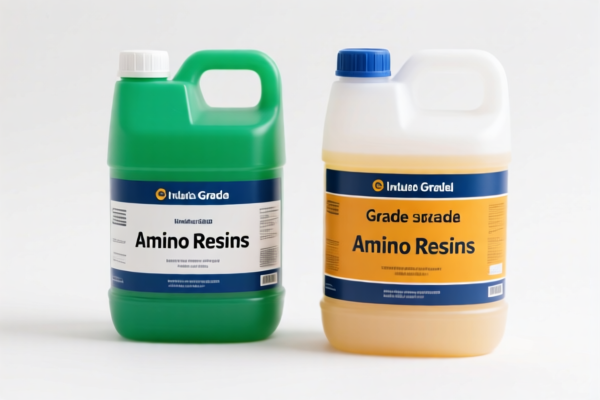
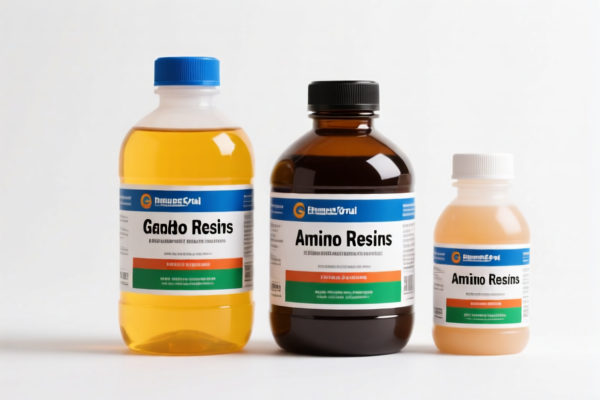
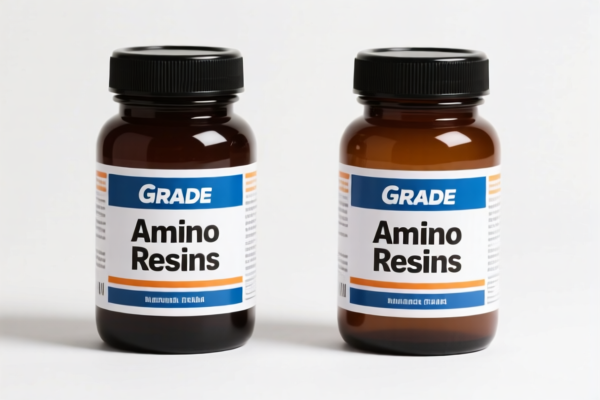
AI分析
🧪 Industrial Grade Rosin Acid (Rosin / Rosin Acid)
🌐 HS Code Reference & Customs Clearance Guide | 2026 Tariff Breakdown | Professional Clearance Strategy for Chemically Complex Goods
📌 I. Product Definition & Classification: What is "Industrial Grade Rosin Acid"?
Industrial Grade Rosin Acid (often referred to simply as Rosin, Rosin Acid, or Abietic Acid) is the solid residue obtained from the distillation of crude gum rosin or wood turpentine. It is a complex mixture of organic acids, primarily abietic acid and its isomers.
In international trade, the classification of Rosin is highly sensitive to chemical specificity and processing level. Unlike crude gum rosin (which is clearly a natural resin under Heading 13), highly purified or specific terpene fractions may fall under Chemical Chapters (29 or 38).
⚠️ Critical Distinction:
- Crude/Vein Rosin: A natural resin secretion → Chapter 13 (Lowest Tax)
- Purified Terpenes/Terpene Oils: Chemical fractions → Chapter 38 or Chapter 29 (Highest Tax)
- Misclassification Risk: Declaring "Rosin Acid" as "Resin" when it is chemically a "Terpene Oil" can lead to severe audits, back-taxes, and penalties due to the significant duty difference (18.8% vs 40.0%).
📦 II. HS Code Classification Details (Based on Provided Data)
The following HS Codes are derived strictly from the provided dataset for Industrial Grade Rosin Acid. Each code reflects a different chemical interpretation of the product's material properties.
| HS Code | Summary / Rationale | Total Tax Rate | Tax Breakdown |
|---|---|---|---|
| 1301.90.40.00 | Resin Category: Rosin is classified as an "Oil Resin." This category assumes the product retains the physical and chemical characteristics of industrial-grade rosin as a natural resin derivative. | 18.8% | Base: 1.3% Add-on: 7.5% Section 301 (122): 10% |
| 3805.10.00.00 | Terpene Oil Category: Rosin is viewed as a "Terpene Oil" (specifically Wood Turpentine/Rosin Oil). This classification applies if the product is processed as a terpene fraction rather than a solid resin. | 40.0% | Base: 5.0% Add-on: 25.0% Section 301 (122): 10% |
| 2902.19.00.50 | Cyclic Hydrocarbon Category: Rosin is treated as a "Cyclic Terpene" or "Cyclic Olefin." This applies if the product is chemically defined as a specific cyclic terpene compound (e.g., high-purity abietic isomers). | 35.0% | Base: 0.0% Add-on: 25.0% Section 301 (122): 10% |
| 3805.90.10.00 | General Terpene Product: Rosin fits the general description of "Other Terpene Products" used in industrial applications. This is a broader classification under Chapter 38 for industrial chemical preparations. | 35.0% | Base: 0.0% Add-on: 25.0% Section 301 (122): 10% |
| 1301.90.91.90 | Other Natural Resin Category: Rosin is classified under "Other" natural resins/oil resins not specifically listed elsewhere in Heading 13. This is a fallback for general natural rosin products. | 17.5% | Base: 0.0% Add-on: 7.5% Section 301 (122): 10% |
🔍 Key Insight:
- Chapter 13 (1301) generally carries lower tariffs (17.5% - 18.8%) because Rosin is historically viewed as a natural plant product.
- Chapters 29 & 38 (2902/3805) carry higher tariffs (35.0% - 40.0%) because they treat the product as a processed chemical or terpene oil.
- Section 301 (122) Tariff: A flat 10% is applied to ALL HS Codes in the dataset, consistent with US trade policy on Chinese chemical/resin imports.
💰 III. 2026 Tariff Rate Detailed Analysis
✅ Applicable Country: United States (US)
✅ Origin: China (CN)
✅ Effective Date: Current Trade Policy (Section 301 / IEEPA)
🎯 1. 1301.90.40.00 & 1301.90.91.90 —— The "Resin" Classification (Lower Duty)
| Item | Detail |
|---|---|
| HS Code | 1301.90.40.00 / 1301.90.91.90 |
| Base Duty | 0.0% - 1.3% (Ad Valorem) |
| USITC Add-on (301) | +7.5% |
| IEEPA Add-on (122) | +10% |
| Total Effective Rate | 17.5% - 18.8% |
| De Minimis Exemption | ❌ Not Applicable (Section 301 goods are generally excluded from de minimis duty-free treatment for Chinese origin) |
| Legal Basis | USITC:1301.90 → FOOTNOTE:301 → IEEPA:9903.01 |
📌 Explanation:
- This classification is most favorable for importers.
- It requires proving that the product is a "Rosin" (natural resin exuded by trees) and not a purified chemical terpene oil.
- Documentation Requirement: Certificate of Origin stating "Rosin" or "Gum Rosin," not "Abietic Acid" or "Terpene Resin."
🎯 2. 3805.10.00.00 —— The "Terpene Oil" Classification (Highest Duty)
| Item | Detail |
|---|---|
| HS Code | 3805.10.00.00 |
| Base Duty | 5.0% (Ad Valorem) |
| USITC Add-on (301) | +25% |
| IEEPA Add-on (122) | +10% |
| Total Effective Rate | 40.0% |
| De Minimis Exemption | ❌ Not Applicable |
| Legal Basis | USITC:3805.10 → FOOTNOTE:301.88 → IEEPA:9903.01 |
📌 Explanation:
- This is the most expensive classification.
- It applies if the product is described as "Wood Turpentine," "Rosin Oil," or "Terpentine Solvent."
- Customs may scrutinize this classification if the product is a solid block, as "Oil" usually implies liquid. However, chemical definitions sometimes override physical state.
🎯 3. 2902.19.00.50 & 3805.90.10.00 —— The "Chemical/Other" Classification (Mid-High Duty)
| Item | Detail |
|---|---|
| HS Code | 2902.19.00.50 / 3805.90.10.00 |
| Base Duty | 0.0% (Ad Valorem) |
| USITC Add-on (301) | +25% |
| IEEPA Add-on (122) | +10% |
| Total Effective Rate | 35.0% |
| De Minimis Exemption | ❌ Not Applicable |
| Legal Basis | USITC:2902 / USITC:3805 → FOOTNOTE:301 → IEEPA:9903.01 |
📌 Explanation:
-2902is for Cyclic Hydrocarbons (pure chemical structures).
-3805is for Other Terpenes (industrial chemical preparations).
- These rates are mid-range but still significantly higher than Chapter 13.
🛠️ IV. Customs Clearance Practical Advice
✅ 1. Documentation Checklist (Non-Negotiable)
| Document | Requirement | Why It Matters |
|---|---|---|
| Commercial Invoice | Must state "Rosin" or "Gum Rosin" as the commodity name. Avoid "Abietic Acid" unless intended for 2902. |
The name on the invoice triggers the initial HS Code scan. "Acid" may trigger Chapter 29. |
| Certificate of Origin (CO) | Must confirm Chinese Origin. | Required for Section 301 and 122 tariff application. |
| Product Specification Sheet | Must show physical state (solid/liquid) and chemical composition (percentage of abietic acid). | Helps Customs distinguish between "Natural Resin" (Ch 13) and "Purified Terpene" (Ch 29/38). |
| Manufacturer’s Declaration | Explicitly state: "This product is natural gum rosin derived from tree sap, processed through distillation but retaining resin characteristics." | Supports classification under 1301 (Resin) vs 3805 (Terpene Oil). |
| HS Code Pre-Ruling | Strongly Recommended. | Given the wide tax range (17.5% vs 40%), a pre-ruling from US CBP saves significant cost and risk. |
✅ 2. Classification Strategy (Critical Decision)
🔥 "Natural is Cheaper, Purified is Expensive!"
| Scenario | Recommended HS Code | Reason |
|---|---|---|
| Standard Industrial Rosin (Yellow/Brown blocks or flakes, natural tree origin) | 1301.90.40.00 or 1301.90.91.90 | It is a natural resin. Lowest duty (17.5-18.8%). |
| Highly Purified Abietic Acid (>95% purity, white powder, chemical synthesis) | 2902.19.00.50 | It is a specific cyclic hydrocarbon. Higher duty (35%). |
| Rosin Oil / Wood Turpentine (Liquid, used as solvent) | 3805.10.00.00 | It is a terpene oil. Highest duty (40%). |
| Mixed Terpene Preparations (Industrial chemical mix) | 3805.90.10.00 | Not a pure resin or pure oil, but an industrial terpene product. Mid-high duty (35%). |
✅ 3. Common Pitfalls & Avoidance
❌ Pitfall 1: Using "Rosin Acid" on the Invoice.
👉 Risk: Customs may classify as 2902 (35%) or 3805 (40%) because "Acid" implies a specific chemical compound, not a natural resin.
✅ Solution: Use "Industrial Rosin" or "Gum Rosin" on the commercial invoice.
❌ Pitfall 2: Assuming all Rosin falls under Chapter 13.
👉 Risk: If the product is chemically altered (e.g., hydrogenated rosin, esterified rosin), it may not be considered "Natural Rosin."
✅ Solution: Verify if the product is "Modified." Modified rosin often falls under 3824 or 3906. Note: The provided data does not include modified rosin codes; stick to the 5 provided if unmodified.
❌ Pitfall 3: Ignoring Section 301 / 122 Tariffs.
👉 Risk: Underestimating landed cost by 17-30%.
✅ Solution: Always include the 10% (122) and 7.5%/25% (301) in your CIF calculation.
🌍 V. Global Market Context (2026)
| Market | HS Code Focus | Duty Trend | Notes |
|---|---|---|---|
| 🇺🇸 USA | 1301 vs 3805 |
High Volatility | Section 301 and 122 tariffs make classification critical. Savings of 20%+ possible by choosing 1301. |
| 🇨🇳 China | 1302.19 |
Low | China imports Rosin for processing. Duty is low, but VAT applies. |
| 🇪🇺 EU | 1302.19 |
Low/Zero | EU treats Rosin as natural resin. No equivalent to US Section 301. |
| 🇮🇳 India | 1302.19 |
Moderate | Standard duty applies. No major punitive tariffs. |
📌 Conclusion:
The US market is the most complex for Rosin classification due to the steep differential between Chapter 13 (Resin) and Chapters 29/38 (Chemicals/Terpenes).
📌 VI. Final Recommendations for Importers
- Prioritize Chapter 13: If your product is standard industrial rosin (solid, natural origin), insist on
1301.90.40.00or1301.90.91.90. This saves you ~16-22% in duties compared to Chapter 38. - Avoid "Acid" in Naming: Use "Rosin" on all shipping documents unless you are importing pure chemical abietic acid.
- Secure a Pre-Ruling: Given the 17.5% vs 40.0% variance, file an Application for Advance Ruling (CBP Form 5500) with US Customs to lock in the
1301classification. - Budget for Total Landed Cost: Include 17.5% - 40% duty + 20% import security fee (if applicable) + 30% profit margin buffer in your pricing.
🎯 Key Takeaway:
📦 "Rosin is Resin, Not Acid!"
Declare it as Industrial Rosin (HS 1301) to pay 17.5-18.8%.
Declare it as Rosin Acid/Terpene (HS 2902/3805) and pay 35-40%.
Choose wisely, declare precisely.
✨ Professional Clearance, Precision Classification, Maximum Savings!
💼 Don't let a 3-word description cost you 20% in duties.
用户评价
关于 HS 编码归类
协调制度(HS)是由世界海关组织(WCO)制定的国际贸易商品分类标准。全球 200 多个国家采用 HS 系统作为海关关税、贸易统计和进出口监管的基础。
每个 HS 编码遵循以下层级结构:
- 章(2 位)——商品大类(例如:第 84 章:机器和机械设备)
- 品目(4 位)——章内的更具体分类
- 子目(6 位)——国际通用细分,所有 WCO 成员国统一使用
- 本国细分(8-10 位)——各国自行扩展的细分编码,如美国 HTSUS 10 位编码
正确的 HS 编码归类对于顺利通关、准确缴纳关税和遵守贸易法规至关重要。错误归类可能导致海关延误、多缴关税或罚款。
从CN进口到US时,适用的关税税率可能包括:
- 最惠国(MFN)税率——适用于 WTO 成员国的标准关税税率
- 普通税率——适用于无贸易协定国家
- 贸易救济关税——附加关税,如 301 条款(反倾销)、232 条款(国家安全)或反补贴税
本页内容仅供参考。如需正式归类,请咨询当地海关或持牌报关代理。