Industrial Grade Textile Plastic Sheet
CN → US| HS编码 | 关税税率 | 原产国 | 目的国 | 文档 |
|---|---|---|---|---|
| 3926905900 | 37.4% | CN | US | 官方文档 |
| 3926905700 | 41.5% | CN | US | 官方文档 |
| 5911900080 | 38.8% | CN | US | 官方文档 |
| 3920992000 | 39.2% | CN | US | 官方文档 |
| 3920995000 | 40.8% | CN | US | 官方文档 |
商品图片

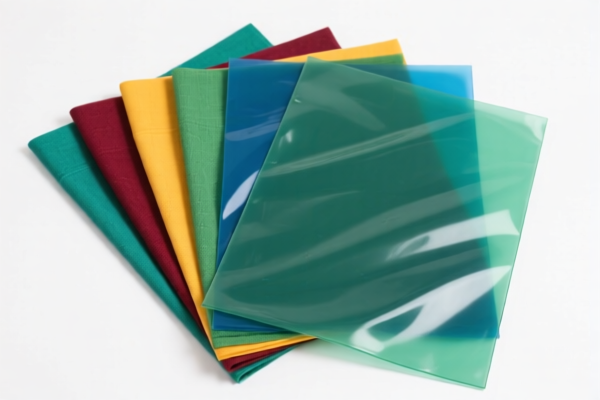


AI分析
🏭 Industrial Grade Textile Plastic Sheet
🌐 HS Code Reference & Customs Clearance Guide | 2026 Latest Tariff Analysis | Professional Customs Strategy
📌 I. Product Definition & Classification: What Exactly is an "Industrial Grade Textile Plastic Sheet" ?
This product presents a unique classification challenge because it combines two distinct material characteristics: Plastic and Textile Fiber. In international trade, the classification depends heavily on whether the plastic acts as the primary structural component (forming the sheet itself) or merely as a coating/impregnation on a textile substrate.
Based on the provided data, there are 5 potential HS Codes depending on the specific physical form (sheet vs. board/film) and functional end-use (general plastic goods vs. technical textile applications).
⚠️ Key Classification Logic:
- If it is a plastic sheet with minor textile attributes → Classify under Chapter 39 (Plastics).
- If it is a technical textile impregnated/coated with plastic → Classify under Chapter 59 (Impregnated Textiles).
- The presence of US Tariffs (Section 301 & 122) applies to all entries, significantly increasing landing costs.
📦 II. HS Code Classification Details (2026 Latest Tariff Authority Comparison)
| HS Code | Product Description & Logic | Application Scenario | Key Feature |
|---|---|---|---|
3926.90.59.00 |
Other plastic articles; Plastic sheet with textile fiber attributes | General-purpose plastic sheets with some textile content | "Other plastic products"; includes textile fiber attribute |
3926.90.57.00 |
Other plastic articles; Plastic sheet (intermediate/semi-finished) | Intermediate goods or semi-finished plastic sheeting | "Intermediate/Semi-finished" characteristics |
5911.90.00.80 |
Technical textile products; Plastic-coated/impregnated textile sheet | Technical/Industrial use textiles where material conflict is resolved in favor of textile | "Technical textile product"; no material conflict |
3920.99.20.00 |
Other plastic plates, sheets, etc.; Other plastic sheet | General plastic sheet classified by exclusion principle | "Other category inference"; fits general plastic sheet |
3920.99.50.00 |
Other plastic plates, sheets, etc.; Plastic plate/sheet/film/foil/belt | Plastic sheet fitting the definition of plate, sheet, film, foil, or belt | Fits "Plate, Sheet, Film, Foil, Belt" characteristics |
🔍 Critical Reminder:
- All five codes attract significant additional tariffs due to US-China trade policies.
- The base tariff varies from 2.4% to 6.5%, but the added tariffs are the dominant cost factor.
- Misclassification between Chapter 39 (Plastics) and Chapter 59 (Textiles) can lead to customs delays or penalties.
💰 III. 2026 Latest Tariff Rate Breakdown (Including Surcharges & Policy Add-ons)
✅ Applicable Country: United States (US)
✅ Country of Origin: China (CN)
✅ Effective Date: Current rates apply to imports including those from late 2025/2026.
🎯 1. 3926.90.59.00 —— Plastic Sheet with Textile Fiber Attributes
| Item | Detail |
|---|---|
| Base Tariff | 2.4% |
| Additional Tariff (Section 301) | +25.0% |
| 122 Clause Tariff | +10.0% |
| Total Effective Rate | 37.4% |
| Tax Calculation | CIF Value × 37.4% |
| De Minimis Exemption | ❌ Not Eligible (High tariff burden exceeds exemption thresholds) |
| Legal Basis | 3926.90.59.00 + USITC Footnotes + IEEPA Sections |
📌 Explanation:
- This code is for plastic sheets where textile fibers are present but do not change the essential character of the plastic article.
- The 37.4% total rate is a heavy cost burden.
🎯 2. 3926.90.57.00 —— Plastic Sheet (Intermediate/Semi-finished)
| Item | Detail |
|---|---|
| Base Tariff | 6.5% |
| Additional Tariff (Section 301) | +25.0% |
| 122 Clause Tariff | +10.0% |
| Total Effective Rate | 41.5% |
| Tax Calculation | CIF Value × 41.5% |
| De Minimis Exemption | ❌ Not Eligible |
| Legal Basis | 3926.90.57.00 + USITC Footnotes + IEEPA Sections |
📌 Note:
- This is the highest tariff among the plastic-based classifications.
- Use only if the product is clearly a semi-finished intermediate good.
🎯 3. 5911.90.00.80 —— Technical Textile Product (Plastic-Coated)
| Item | Detail |
|---|---|
| Base Tariff | 3.8% |
| Additional Tariff (Section 301) | +25.0% |
| 122 Clause Tariff | +10.0% |
| Total Effective Rate | 38.8% |
| Tax Calculation | CIF Value × 38.8% |
| De Minimis Exemption | ❌ Not Eligible |
| Legal Basis | 5911.90.00.80 + USITC Footnotes + IEEPA Sections |
📌 Important:
- If the product is deemed a "technical textile" (e.g., for filtration, insulation, or industrial strengthening) rather than just a plastic sheet, this code applies.
- No material conflict exists because the primary function is textile-based.
🎯 4. 3920.99.20.00 —— Other Plastic Sheet (General Category)
| Item | Detail |
|---|---|
| Base Tariff | 4.2% |
| Additional Tariff (Section 301) | +25.0% |
| 122 Clause Tariff | +10.0% |
| Total Effective Rate | 39.2% |
| Tax Calculation | CIF Value × 39.2% |
| De Minimis Exemption | ❌ Not Eligible |
| Legal Basis | 3920.99.20.00 + USITC Footnotes + IEEPA Sections |
📌 Note:
- This is a "catch-all" for plastic sheets that don’t fit more specific subheadings.
- Applies the "exclusion principle" if the product doesn’t meet other specific plastic criteria.
🎯 5. 3920.99.50.00 —— Plastic Plate, Sheet, Film, Foil, Belt
| Item | Detail |
|---|---|
| Base Tariff | 5.8% |
| Additional Tariff (Section 301) | +25.0% |
| 122 Clause Tariff | +10.0% |
| Total Effective Rate | 40.8% |
| Tax Calculation | CIF Value × 40.8% |
| De Minimis Exemption | ❌ Not Eligible |
| Legal Basis | 3920.99.50.00 + USITC Footnotes + IEEPA Sections |
📌 Note:
- Use this if the product strictly fits the physical description of "plate, sheet, film, foil, or belt" under Chapter 39.
🛠️ IV. Customs Clearance Practical Advice (Avoid Pitfalls)
✅ 1. Required Documentation Checklist (Mandatory)
| Document | Must Provide | Description |
|---|---|---|
| ✅ Product Specification Sheet | ✔️ | Must detail: Material composition (% Plastic vs. % Textile), Thickness, Width, Length, Density, and Intended Industrial Use. |
| ✅ Structure Diagram | ✔️ | Show layers: Is it a single-layer plastic sheet with fiber additives? Or a multi-layer laminate (textile core + plastic coating)? |
| ✅ Product Photos | ✔️ | Clear images of the sheet, edges, and any packaging labels showing material composition. |
| ✅ Commercial Invoice | ✔️ | Must clearly state: "Industrial Plastic Sheet with Textile Fiber Attributes" or "Technical Textile Sheet." Avoid vague terms like "Generic Sheet." |
| ✅ Packing List | ✔️ | Detail dimensions and weight to verify if it fits "Sheet" vs. "Article" classification. |
| ✅ Origin Certificate | ✔️ | Critical for proving Chinese origin (triggering additional tariffs) or potential exemption claims if routed through third countries (check trade agreements). |
✅ 2. Declaration Strategy (Key Mnemonic)
🔥 "Material First, Function Second, Declare Accurately!"
| Scenario | Correct Declaration | Incorrect Practice |
|---|---|---|
| Plastic-rich sheet (>50% plastic by weight/value) | 3926.90.59.00 or 3920.99.xxxxxx |
Declaring as pure textile → Risk of misclassification penalty |
| Textile-rich sheet (Textile is essential character) | 5911.90.00.80 |
Declaring as pure plastic → Underpayment risk if deemed textile |
| Semi-finished goods | 3926.90.57.00 |
Declaring as finished article → Potential duty difference |
| Vague "Plastic Sheet" | Specify subtype: Film, Foil, Board, or General Sheet | Using generic term → Customs may select highest duty code |
✅ 3. Special Circumstances Handling
| Situation | Recommendation |
|---|---|
| Mixed Material Composition | If >50% plastic → Use Chapter 39. If textile is essential → Use Chapter 59. Provide lab test results. |
| Industrial Use Proof | If claiming 5911.90.00.80, provide proof of technical use (e.g., filtration, insulation, reinforcement). |
| Third-Country Transshipment | ⚠️ Warning: Simply transshipping through Vietnam/Mexico may not avoid Section 301/122 tariffs if "substantial transformation" does not occur. |
| De Minimis Eligibility | ❌ Not Eligible. Due to total tariffs >25%, shipments cannot use de minimis exemptions for small parcels. |
🌍 V. Global Market Clearance Comparison (2026 Latest)
| Country/Region | Recommended HS Code | Total Tariff (China Origin) | Certification Requirements | Notes |
|---|---|---|---|---|
| 🇺🇸 USA | 3926.90.59.00 / 5911.90.00.80 |
37.4% – 41.5% | None specific, but accurate material declaration is key | High tariffs due to Section 301 & 122 |
| 🇨🇳 China | 3926.90.59.00 / 5911.90.00.80 |
~10% – 13% (Import Duty) | None specific | Lower entry barriers |
| 🇪🇺 EU | 3920.99.00 / 5911.90 |
~6.5% – 9.5% | REACH, RoHS (if plastic) | No Section 301 equivalent |
| 🇬🇧 UK | 3920.99.00 / 5911.90 |
~6.5% – 9.5% | UKCA, REACH | Post-Brexit rules apply |
| 🇦🇺 Australia | 3920.99.00 / 5911.90 |
~5% – 10% | RCM (if electrical components) | No high additional tariffs |
📌 Conclusion:
- The US market is uniquely challenging due to the叠加 (stacking) of Base Tariff + Section 301 (25%) + Section 122 (10%).
- Total tariffs range from 37.4% to 41.5%, making cost control critical.
- Europe and Asia offer significantly lower tariff burdens but require strict material compliance (REACH/RoHS).
📌 VI. Common Errors & Pitfalls (Lessons Learned)
❌ Error 1: Declaring a "Textile-Reinforced Plastic Sheet" as pure "Textile" (5911) to avoid plastic tariffs.
👉 Consequence: Customs detects plastic dominance → Re-classified to Chapter 39 → Back taxes + penalties.
❌ Error 2: Using "Plastic Sheet" without specifying the textile attribute.
👉 Consequence: Customs may assign a higher base rate or request excessive documentation → Delays at border.
❌ Error 3: Assuming small shipments are exempt from tariffs.
👉 Consequence: De Minimis does not apply to goods with Section 301/122 tariffs → Full duty collected even on small samples.
❌ Error 4: Misidentifying "Intermediate" vs. "Finished" goods.
👉 Consequence: Using 3926.90.57.00 for a finished product may trigger audits → Audit risk.
✅ Correct Practice:
"Industrial Plastic Sheet, 0.5mm thickness, reinforced with polyester fibers, for insulation use, Model XYZ, Material: 80% PP / 20% Polyester"
🎯 VII. Conclusion: Professional Declaration for Cost Efficiency
🎯 Remember:
🔹 "37% to 41% is the US reality for this product!"
🔹 "Material composition dictates the HS Code, not the marketing name."
🔹 "No de minimis exemption for China-origin plastic/textile hybrids."
📌 Pro Tip:
If your supply chain allows, consider substantial transformation in a third country (e.g., Vietnam) where the plastic and textile are combined into a new product form that changes the HS Code chapter entirely.
Recommendation:
📞 Apply for an Advance Ruling (Pre-Ruling) from US Customs and Border Protection (CBP) before shipment.
🚀 Accurate classification saves thousands in potential back-duties and delays!
✨ Professional Customs Clearance Starts with Precise Classification!
💼 Every percentage point of tariff matters – optimize your supply chain today!
用户评价
关于 HS 编码归类
协调制度(HS)是由世界海关组织(WCO)制定的国际贸易商品分类标准。全球 200 多个国家采用 HS 系统作为海关关税、贸易统计和进出口监管的基础。
每个 HS 编码遵循以下层级结构:
- 章(2 位)——商品大类(例如:第 84 章:机器和机械设备)
- 品目(4 位)——章内的更具体分类
- 子目(6 位)——国际通用细分,所有 WCO 成员国统一使用
- 本国细分(8-10 位)——各国自行扩展的细分编码,如美国 HTSUS 10 位编码
正确的 HS 编码归类对于顺利通关、准确缴纳关税和遵守贸易法规至关重要。错误归类可能导致海关延误、多缴关税或罚款。
从CN进口到US时,适用的关税税率可能包括:
- 最惠国(MFN)税率——适用于 WTO 成员国的标准关税税率
- 普通税率——适用于无贸易协定国家
- 贸易救济关税——附加关税,如 301 条款(反倾销)、232 条款(国家安全)或反补贴税
本页内容仅供参考。如需正式归类,请咨询当地海关或持牌报关代理。