Industrial Grade Zinc Lignosulfonate
CN → US| HS编码 | 关税税率 | 原产国 | 目的国 | 文档 |
|---|---|---|---|---|
| 3824999397 | 40.0% | CN | US | 官方文档 |
| 3824997550 | 38.7% | CN | US | 官方文档 |
| 1302199140 | 17.5% | CN | US | 官方文档 |
| 1302199120 | 17.5% | CN | US | 官方文档 |
| 3913902090 | 40.8% | CN | US | 官方文档 |
商品图片
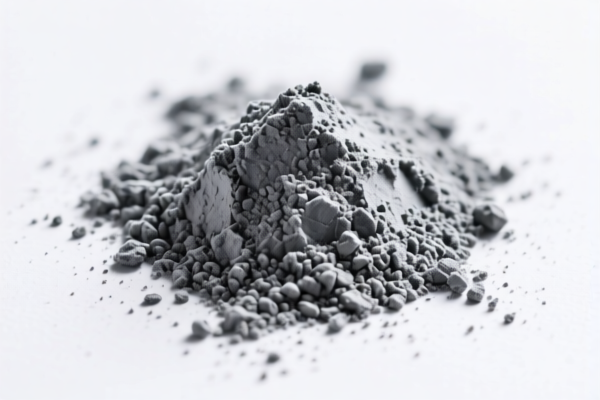
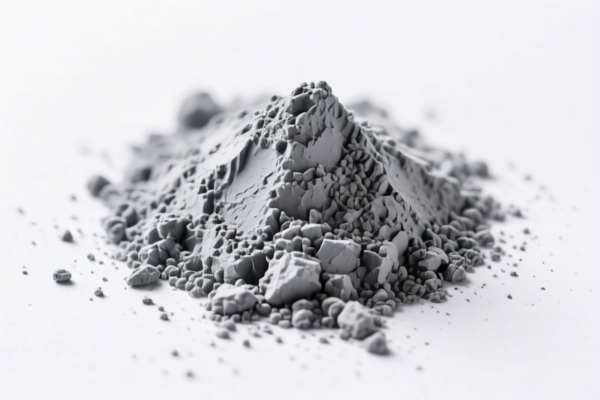
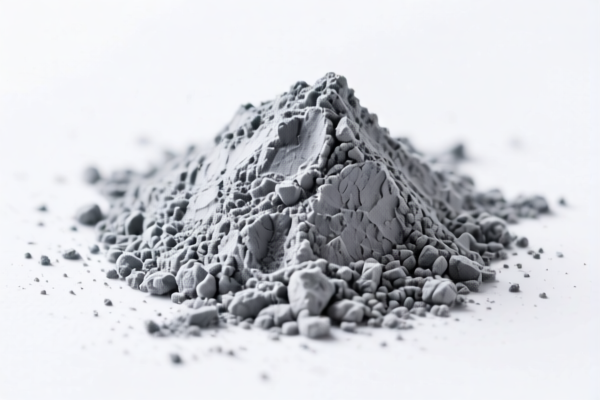
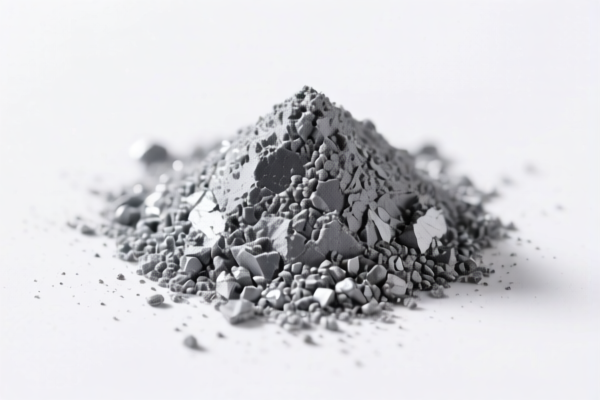
AI分析
🧪 Industrial Grade Zinc Lignosulfonate (木质素磺酸锌)
🌐 HS Code Reference & Customs Clearance Guide | 2026 Latest Tariff Analysis | Professional通关 Strategy
📌 I. Product Definition & Classification: What exactly is "Zinc Lignosulfonate"?
Industrial Grade Zinc Lignosulfonate is a complex organic-inorganic compound derived from lignin (a byproduct of the paper industry) processed with zinc salts. It is primarily used as a binder, dispersant, or additive in ceramics, concrete, paints, and agricultural sprays.
In international trade, its classification is highly contested because it sits at the intersection of chemical extracts, inorganic salts, and organic polymers. This ambiguity leads to four potential HS Code classifications, each with drastically different tax implications.
⚠️ Key Distinction Point:
- Is it treated as a Chemical Preparation (General)? → Higher Tax
- Is it treated as a Metal Salt? → Medium Tax
- Is it treated as a Plant Extract? → Lowest Tax
- Is it treated as a Polysaccharide Derivative? → High Tax
📦 II. HS Code Classification Details (Based on Provided Data)
Below are the four possible HS Codes provided in the data, along with their logical justification, tax rates, and specific tariff details.
| HS Code | Product Description (Summary) | Logic for Classification | Total Tax Rate |
|---|---|---|---|
| 3824.99.93.97 | Chemical Industry Preparations (General) | Classified under "Other chemical products and preparations" not elsewhere specified. Views the substance as a complex industrial chemical blend. | 40.0% |
| 3824.99.75.50 | Metal Salts / Naphthenates | Classified under "Metal salts of naphthenic acids... other." Views the zinc component as the primary chemical identity, akin to other metal salt preparations. | 38.7% |
| 1302.19.91.40 | Botanical Extracts (Non-specific) | Classified under "Vegetable saps and extracts... other." Views the lignin base (wood pulp derivative) as the primary origin, treating zinc as an additive to a natural extract. | 17.5% |
| 1302.19.91.20 | Zinc Salt Extracts (Specific Botanical) | Classified under "Vegetable/Chemical Extracts" specifically for zinc salts. A more specific subset of botanical extracts, focusing on the metal-organic hybrid nature. | 17.5% |
| 3913.90.20.90 | Polysaccharide Derivatives (Miscellaneous) | Classified under "Modified natural polymers... other." Views lignin as a polysaccharide derivative modified by chemical treatment with zinc. | 40.8% |
🔍 Critical Analysis:
- The 1302 series (Plant Extracts) offers the lowest tax burden (17.5%) but carries higher scrutiny risk, as Zinc Lignosulfonate is chemically modified, not just a raw extract.
- The 3824 and 3913 series are considered "catch-all" categories for chemical/polymers, resulting in significantly higher taxes (38.7% – 40.8%).
- Customs authorities often reject the 1302 classification for industrial-grade modified products, preferring 3824.
💰 III. Detailed Tax Breakdown (2026 Latest Tariffs)
✅ Applicable Country: USA (US)
✅ Origin: China (CN) (Implied by the "122 Clause" and typical trade context for Chinese exports)
✅ Effective Date: Current US Trade Policy (Section 301 & IEEPA)
🎯 1. High-Tax Category: 3824.99.93.97 & 3913.90.20.90
| Item | Content |
|---|---|
| Base Duty | 5.0% (for 3824) / 5.8% (for 3913) |
| Section 301 Additional Duty | +25.0% |
| 122-Clause Duty (IEEPA) | +10.0% (Specific到中国/香港 products) |
| Total Effective Tax Rate | 40.0% (3824) / 40.8% (3913) |
| Calculation Basis | CIF Value × Total Rate |
| De Minimis Exemption | ❌ NOT Eligible (Denied for China-origin goods under these codes) |
| Legal Path | USITC:3824.99.93.97 → FOOTNOTE:301.02.99 → IEEPA:9903.01.25 |
📌 Explanation:
- These codes are treated as standard industrial chemicals/polymers.
- The 25% Section 301 tariff applies to most Chinese chemical products.
- The 10% IEEPA tariff is the new layer targeting strategic/industrial materials from China.
- Total: ~40%. This is the "Safe but Expensive" route if classification as an extract is rejected.
🎯 2. Medium-Tax Category: 3824.99.75.50
| Item | Content |
|---|---|
| Base Duty | 3.7% |
| Section 301 Additional Duty | +25.0% |
| 122-Clause Duty (IEEPA) | +10.0% |
| Total Effective Tax Rate | 38.7% |
| Calculation Basis | CIF Value × 38.7% |
| De Minimis Exemption | ❌ NOT Eligible |
| Legal Path | USITC:3824.99.75.50 → FOOTNOTE:301.02.99 → IEEPA:9903.01.25 |
📌 Explanation:
- Slightly lower base duty (3.7%) due to specific metal salt classification, but still hit hard by the 35% combined add-on tariffs.
🎯 3. Low-Tax Category: 1302.19.91.40 & 1302.19.91.20
| Item | Content |
|---|---|
| Base Duty | 0.0% |
| Section 301 Additional Duty | +7.5% (Note: Data shows 7.5% add-on for this category, likely due to specific HTUS footnote or recent adjustment) |
| 122-Clause Duty (IEEPA) | +10.0% |
| Total Effective Tax Rate | 17.5% |
| Calculation Basis | CIF Value × 17.5% |
| De Minimis Exemption | ❌ NOT Eligible |
| Legal Path | USITC:1302.19.91.XX → FOOTNOTE:1302.19 → IEEPA:9903.01.25 |
📌 Explanation:
- This is the aggressive, low-cost strategy.
- Base duty is 0% because vegetable/plant extracts often have preferential base rates.
- However, the 7.5% Section 301 and 10% IEEPA still apply.
- Risk: Customs may argue that Zinc Lignosulfonate is a manufactured chemical preparation, not a natural extract, and reclassify it to 3824, leading to back taxes + penalties.
🛠️ IV. Customs Clearance Practical Advice
✅ 1. Documentation Checklist (Mandatory)
| Document | Requirement | Purpose |
|---|---|---|
| ✅ Safety Data Sheet (SDS) | ✔️ Must be Section 15 compliant | Proves chemical composition and hazards. |
| ✅ Formula/Composition Breakdown | ✔️ Must list % of Lignin vs. Zinc | Crucial for arguing classification as "Extract" (1302) vs "Salt" (3824). |
| ✅ Product Specification Sheet | ✔️ Indicate "Industrial Grade" | Justifies use in construction/ceramics, not food/pharma. |
| ✅ Commercial Invoice | ✔️ Detailed description | Use precise language: "Processed Lignin Derivative with Zinc Content" |
| ✅ Certificate of Analysis (COA) | ✔️ Third-party lab results | Verifies zinc content and lignin purity. |
| ✅ Proof of Manufacturing Process | ✔️ Flowchart of sulfonation & zincation | Helps prove if it’s a "natural extract" (1302) or "chemical synthesis" (3824). |
✅ 2. Classification Strategy (The "Big Decision")
| Strategy | HS Code Used | Tax Rate | Pros | Cons |
|---|---|---|---|---|
| Aggressive (Low Tax) | 1302.19.91.40 / .20 |
17.5% | Saves ~20-23% in duties. | High audit risk. Customs may classify as chemical (3824). |
| Balanced (Metal Salt) | 3824.99.75.50 |
38.7% | Lower base duty than general prep. | Still high total tax. Hard to justify "Naphthenate" logic. |
| Conservative (Safe) | 3824.99.93.97 / 3913.90.20.90 |
40.0%+ | Low risk of reclassification. | Highest cost. Margins may be wiped out. |
🔥 Recommendation:
- If the Zinc content is low and the product is primarily Lignin-based, argue for 1302.
- If the product is a high-purity chemical salt, accept 3824.
- Do NOT split shipments. One HS Code per shipment.
✅ 3. Common Pitfalls & How to Avoid Them
❌ Pitfall 1: Labeling as "Natural Extract" when it’s chemically modified.
👉 Solution: If using 1302, emphasize the lignin source and minor chemical modification. Provide a Process Flow Diagram showing lignin extraction.
❌ Pitfall 2: Ignoring the "122 Clause" (IEEPA).
👉 Solution: The 10% IEEPA tariff applies to all these codes if originating from China. It is non-negotiable. Plan for this cost.
❌ Pitfall 3: Using generic descriptions like "Chemical Additive".
👉 Solution: Be specific: "Industrial Grade Zinc Lignosulfonate, HS 1302/3824, for use in [Specific Industry]".
🌍 V. Global Market Comparison (Contextual)
| Country | Recommended HS Code | Est. Total Tax (China Origin) | Notes |
|---|---|---|---|
| 🇺🇸 USA | 1302.19.91.XX (Aggressive) |
17.5% | High risk of audit. |
| 🇺🇸 USA | 3824.99.93.97 (Conservative) |
40.0% | Safe but costly. |
| 🇨🇳 China | 3824.99.99 (Import) |
5-6% | No Section 301/IEEPA for imports into China. |
| 🇪🇺 EU | 3824.99.91 |
6.5% | No Section 301, but anti-dumping may apply. |
| 🇮🇳 India | 2939.99 / 3824 |
10-15% | Varies by state GST. |
📌 Conclusion:
- The US market is the most challenging due to the combination of Section 301 (25%) and IEEPA (10%) tariffs.
- Total tax ranges from 17.5% to 40.8%, depending entirely on HS Code classification.
- Proactive classification defense is essential.
📌 VI. Final Advice for Importers
-
Apply for an Advance Ruling:
Before shipping, submit a Binding Ruling Request to US Customs (CBP) for the specific HS Code. This protects you from retroactive duties. -
Document the "Plant Origin":
If claiming 1302, ensure your supplier provides lignin source documentation (e.g., from wood pulp). This strengthens the "extract" argument. -
Budget for 40% Tax if Unsure:
If you cannot prove the "extract" status, budget for the 40% total tax to avoid cash flow surprises. -
Check for Anti-Dumping Duties (AD/CVD):
While not in the provided data, Zinc Lignosulfonate or its precursors may have existing AD/CVD orders. Verify with a trade attorney.
🎯 Remember:
🔹 "HS Code is not just a number—it’s your profit margin."
🔹 "Low tax (17.5%) comes with high risk; High tax (40%) comes with peace of mind."
🔹 "Document everything. The '122 Clause' is real and unavoidable for China-origin goods."
📌 Disclaimer:
This guide is based on the provided data and general 2026 US tariff policies. It does not constitute legal advice. Consult a licensed customs broker or trade attorney for specific shipment classification.
✨ Clearance Made Simple. Profits Protected.
💼 Precision in Classification, Success in Commerce.
用户评价
关于 HS 编码归类
协调制度(HS)是由世界海关组织(WCO)制定的国际贸易商品分类标准。全球 200 多个国家采用 HS 系统作为海关关税、贸易统计和进出口监管的基础。
每个 HS 编码遵循以下层级结构:
- 章(2 位)——商品大类(例如:第 84 章:机器和机械设备)
- 品目(4 位)——章内的更具体分类
- 子目(6 位)——国际通用细分,所有 WCO 成员国统一使用
- 本国细分(8-10 位)——各国自行扩展的细分编码,如美国 HTSUS 10 位编码
正确的 HS 编码归类对于顺利通关、准确缴纳关税和遵守贸易法规至关重要。错误归类可能导致海关延误、多缴关税或罚款。
从CN进口到US时,适用的关税税率可能包括:
- 最惠国(MFN)税率——适用于 WTO 成员国的标准关税税率
- 普通税率——适用于无贸易协定国家
- 贸易救济关税——附加关税,如 301 条款(反倾销)、232 条款(国家安全)或反补贴税
本页内容仅供参考。如需正式归类,请咨询当地海关或持牌报关代理。