Industrial Oven or Furnace
CN → US| HS编码 | 关税税率 | 原产国 | 目的国 | 文档 |
|---|---|---|---|---|
| 8516604070 | 35.0% | CN | US | 官方文档 |
| 8516604074 | 35.0% | CN | US | 官方文档 |
| 8438800000 | 35.0% | CN | US | 官方文档 |
商品图片
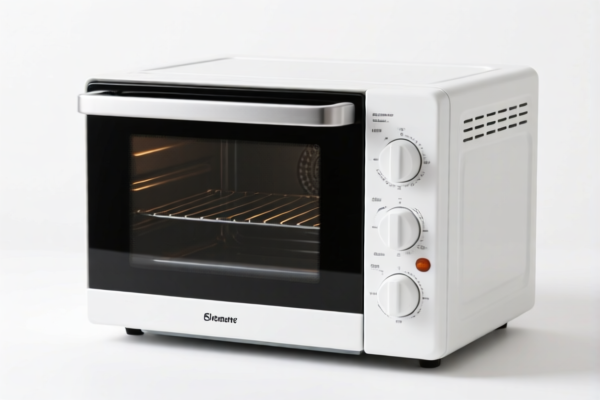
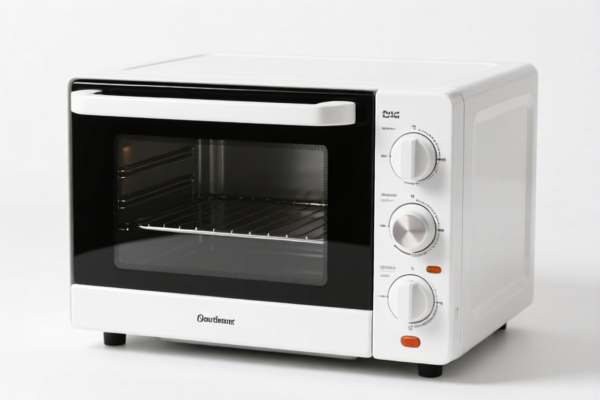
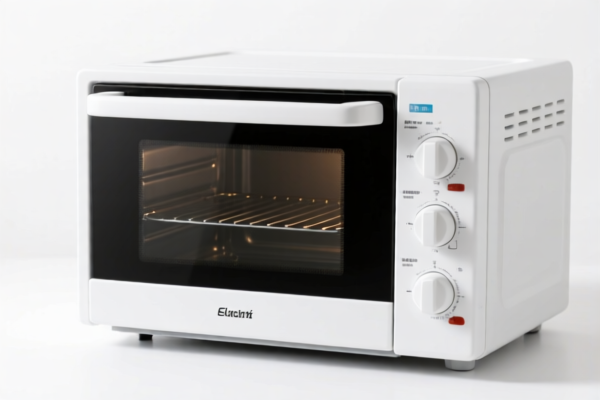
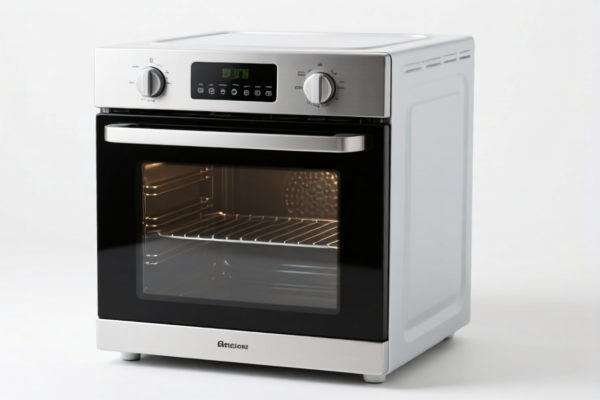
AI分析
🔥 Industrial Oven or Furnace (Industrial Heating Equipment)
🌐 HS Code Reference & Customs Clearance Guide | 2026 Latest Tariff Analysis | Professional-Level Compliance Strategy
📌 I. Product Definition & Classification: Do You Truly Understand "Industrial Ovens"?
An Industrial Oven or Furnace is a generic term for equipment designed to heat materials to high temperatures for processes such as drying, curing, baking, annealing, or smelting. However, in international trade, the HS Code classification depends heavily on specific usage, power source, and integration status.
The data provided indicates three distinct classification paths, each with significant implications for tax liability:
⚠️ Key Distinction Point:
- Is it a portable/consumer-grade oven (Household/Small Business)? → Group A (8516)
- Is it a standalone electrical heating appliance without specific food processing machinery status? → Group B (8516)
- Is it a mechanical device for food/beverage manufacturing (Industrial Scale)? → Group C (8438)
📦 II. HS Code Classification Details (Based on Provided Data)
| HS Code | Product Description | Application Scenario | Classification Logic |
|---|---|---|---|
8516.60.40.70 |
Portable Ovens/Stoves | Matches usage (Oven) and fits the category range of "Portable stoves, cookers, and ovens" | 🔹 Logic: Classified under portable household or semi-portable kitchen appliances. The summary explicitly mentions "Portable other stoves, cookers, and ovens." |
8516.60.40.74 |
Electric Heating Appliances | Matches usage (Oven) with no material/form conflict, classified as an electric heating device | 🔹 Logic: A broader electrical appliance classification. It acknowledges the device is an "electric heating device" but does not fit the specific "portable stove" definition or the "food machinery" definition. |
8438.80.00.00 |
Food Processing Machinery | Inferred as mechanical equipment for food processing, fitting the use description of "Food/Bev Manufacturing Machinery" | 🔹 Logic: Classified as industrial machinery specifically for producing or processing food/beverages. This implies a larger scale, mechanized process rather than simple heating. |
🔍 Critical Reminder:
- The difference between 8516 and 8438 is often the degree of automation and specific food manufacturing function.
-8516generally covers heating elements/appliances (even if industrial-sized, if they are essentially "ovens").
-8438covers mechanical processing lines (e.g., tunnel ovens with conveyors, mixing, and automated baking systems).
- Misclassification Risk: Declaring an industrial tunnel oven as8516(simple oven) may lead to rejection if it has significant mechanical processing components. Conversely, declaring a simple electric drying oven as8438may trigger unnecessary scrutiny.
💰 III. 2026 Latest Tariff Rate Breakdown (Including Surcharges & Policy Add-ons)
✅ Applicable Country: United States (US)
✅ Origin: China (CN)
✅ Effective Time: As per latest USITC/IEEPA rulings (2025-2026)
All three HS Codes in the provided data carry the same total tax rate of 35.0% due to identical tariff structures.
🎯 1. 8516.60.40.70 – Portable Ovens/Stoves
| Item | Content |
|---|---|
| Base Tariff | 0.0% (Ad Valorem) |
| Section 301 Tariff (Added Duty) | +25.0% |
| Section 122 Tariff (IEEPA Add-on) | +10.0% |
| Total Tax Rate | 35.0% |
| Tax Calculation | CIF Value × 35% |
| De Minimis Exemption | ❌ Not Applicable (Denied for these codes under current China-specific rules) |
| Legal Basis Path | USITC:8516.60.40.70 → Section 301: 25% → IEEPA Sec 122: 10% |
📌 Explanation:
- Section 301 (25%): Imposed under the Trade Act of 1974, Section 301, targeting specific Chinese goods.
- Section 122 IEEPA (10%): Imposed under the International Emergency Economic Powers Act, targeting additional categories of Chinese imports.
- Total 35%: This is a high-cost import. Profit margins must be carefully calculated.
🎯 2. 8516.60.40.74 – Electric Heating Appliances
| Item | Content |
|---|---|
| Base Tariff | 0.0% |
| Section 301 Tariff | +25.0% |
| Section 122 Tariff | +10.0% |
| Total Tax Rate | 35.0% |
| Tax Calculation | CIF Value × 35% |
| De Minimis Exemption | ❌ Not Applicable |
| Legal Basis Path | USITC:8516.60.40.74 → Section 301: 25% → IEEPA Sec 122: 10% |
📌 Note:
- Same tariff structure as8516.60.40.70.
- Even if the product is not "portable," it remains subject to the same punitive tariffs if classified under this heading.
🎯 3. 8438.80.00.00 – Food Processing Machinery
| Item | Content |
|---|---|
| Base Tariff | 0.0% |
| Section 301 Tariff | +25.0% |
| Section 122 Tariff | +10.0% |
| Total Tax Rate | 35.0% |
| Tax Calculation | CIF Value × 35% |
| De Minimis Exemption | ❌ Not Applicable |
| Legal Basis Path | USITC:8438.80.00.00 → Section 301: 25% → IEEPA Sec 122: 10% |
📌 Important:
- Although8438is typically for machinery, if it is of Chinese origin, it is not exempt from Section 301 or IEEPA tariffs in this specific data context.
- Strategic Implication: Since the tax rate is identical (35%) across all three codes, the choice of HS Code should be driven by compliance accuracy (correct usage description) rather than tax minimization.
🛠️ IV. Customs Clearance Practical Advice (Pitfall Avoidance Guide)
✅ 1. Documentation Checklist (Mandatory)
| Document | Required | Notes |
|---|---|---|
| ✅ Product Specification Sheet | ✔️ | Must detail heating capacity (kW/BTU), temperature range, power supply, and dimensions. |
| ✅ Technical Drawings / Diagrams | ✔️ | Crucial to prove if it's a "portable oven" (8516) or "food processing machinery" (8438). |
| ✅ Product Photos (Labeled) | ✔️ | Show brand, model, input/output voltage, and any warning labels. |
| ✅ Certifications | ✔️ | UL, ETL, NSF (for food contact), CE, RoHS. NSF is critical for 8438 food machinery. |
| ✅ Commercial Invoice | ✔️ | Clearly state "Industrial Oven for [Specific Food Process]" or "Portable Electric Oven." |
| ✅ Packing List | ✔️ | Detail packaging to prevent damage and clarify contents. |
✅ 2. Classification Strategy (Key Mantra)
🔥 “Usage Defines Code, Portability Determines 8516, Machinery Defines 8438!”
| Scenario | Recommended HS Code | Reasoning |
|---|---|---|
| Small, portable electric oven (e.g., for small cafes, home use) | 8516.60.40.70 |
Fits "Portable stoves, cookers, and ovens." |
| Fixed electric oven (no complex food processing mechanism) | 8516.60.40.74 |
Classified as generic electric heating appliance. |
| Large industrial tunnel oven with conveyor, automatic temperature control, for mass food production | 8438.80.00.00 |
Classified as "Machinery for the industrial preparation of food." |
⚠️ Warning:
- Do not misdeclare a large industrial tunnel oven as8516to avoid scrutiny; US Customs and Border Protection (CBP) will likely reclassify it to8438based on technical specs, causing delays.
- Do not declare a simple electric dryer as8438if it lacks "mechanical processing" functions; it may be rejected as improper classification.
✅ 3. Special Case Handling
| Situation | Handling Advice |
|---|---|
| OEM Custom Ovens | Provide design drawings and customer orders. Specify if it’s for "general industrial heating" or "specific food product." |
| Dual-Use Equipment | If the oven can heat non-food items (e.g., curing plastic), but is marketed for food, provide clear marketing materials to justify 8438 if applicable, or 8516 if it’s primarily a heater. |
| Import from Non-China Origins | If the oven is manufactured in Vietnam, Mexico, or Thailand, the Section 301 (25%) and IEEPA (10%) tariffs do not apply. Tax could drop to 0-5%! |
| Pre-Ruling Request | Given the high tax rate (35%), it is highly recommended to request an Advance Ruling from CBP if the classification is ambiguous. |
🌍 V. Global Market Comparison (2026 Latest)
| Country/Region | Recommended HS Code | Tariff (China Origin) | Certification Requirements | Notes |
|---|---|---|---|---|
| 🇺🇸 USA | 8516.60.40.70 / 8438.80.00.00 |
35% | UL/ETL, NSF (if food) | High tariff burden. |
| 🇨🇳 China | 8516.60.40.70 / 8438.80.00.00 |
0-5% | CCC (if applicable), GB Standards | No additional punitive tariffs. |
| 🇪🇺 EU | 8516.60.40.70 / 8438.80.00.00 |
0-4% | CE, RoHS, ERP (Energy) | No Section 301/IEEPA tariffs. |
| 🇬🇧 UK | 8516.60.40.70 / 8438.80.00.00 |
0-4% | UKCA, RoHS | Post-Brexit independent tariffs. |
| 🇦🇺 Australia | 8516.60.40.70 / 8438.80.00.00 |
0-5% | RCM, SAA | Free Trade Agreement benefits may apply. |
📌 Conclusion:
- USA is the only market with punitive 35% tariffs for Chinese-made ovens.
- If targeting the US market, consider supply chain diversification (e.g., assembly in Vietnam/Mexico) to avoid tariffs.
- For EU/UK/AU markets, tariffs are significantly lower, making them more competitive.
📌 VI. Common Errors & Pitfall Guide (Lessons Learned)
❌ Error 1: Declaring a mechanical food processing line (with conveyors, mixers) as a simple "oven" (8516).
👉 Consequence: CBP reclassifies to 8438, leading to audit, penalties, and storage fees.
❌ Error 2: Declaring a simple electric heater as "Food Processing Machinery" (8438).
👉 Consequence: Request for additional documentation (NSF certs, process flowcharts), causing shipment delays.
❌ Error 3: Ignoring Section 122 (IEEPA) tariffs.
👉 Consequence: Underpaying by 10%, resulting in back taxes + interest.
❌ Error 4: Using vague descriptions like "Heater" or "Oven" without specifying power source or usage.
👉 Consequence: CBP issues a Request for Information (RFI), delaying clearance by weeks.
✅ Correct Approach:
“Industrial Electric Tunnel Oven, Model XYZ, 20kW, for Curing Food Products, UL Listed, NSF Certified”
(For8438)vs.
“Portable Electric Countertop Oven, Model ABC, 1.5kW, for Home Use, UL Listed”
(For8516.60.40.70)
🎯 VII. Conclusion: Precision Classification, Cost Efficiency, and Compliance
🎯 Remember the Mantra:
🔹 “Usage is Key: Portable = 8516, Mechanical Food Process = 8438.”
🔹 “35% Tariff is Real for China Origin: Plan Supply Chain or Accept Cost.”
🔹 “Documentation is King: Specs, Certs, and Drawings Prevent Delays.”
📌 Pro Tip:
If your ovens are originally produced in Vietnam, Mexico, or Thailand, you can claim preferential tariffs (often 0-5%) under USMCA or other FTAs.
Recommendation: Apply for a Pre-Ruling (Advance Ruling) from CBP to confirm the HS Code and tariff liability before shipping.
📣 Immediate Action:
📞 Contact a licensed customs broker + Provide technical specs + Verify origin country
🚀 Ensure smooth customs clearance, minimize costs, and maximize market competitiveness!
✨ Professional clearance starts with accurate classification!
💼 Every percentage point of tax matters!
用户评价
关于 HS 编码归类
协调制度(HS)是由世界海关组织(WCO)制定的国际贸易商品分类标准。全球 200 多个国家采用 HS 系统作为海关关税、贸易统计和进出口监管的基础。
每个 HS 编码遵循以下层级结构:
- 章(2 位)——商品大类(例如:第 84 章:机器和机械设备)
- 品目(4 位)——章内的更具体分类
- 子目(6 位)——国际通用细分,所有 WCO 成员国统一使用
- 本国细分(8-10 位)——各国自行扩展的细分编码,如美国 HTSUS 10 位编码
正确的 HS 编码归类对于顺利通关、准确缴纳关税和遵守贸易法规至关重要。错误归类可能导致海关延误、多缴关税或罚款。
从CN进口到US时,适用的关税税率可能包括:
- 最惠国(MFN)税率——适用于 WTO 成员国的标准关税税率
- 普通税率——适用于无贸易协定国家
- 贸易救济关税——附加关税,如 301 条款(反倾销)、232 条款(国家安全)或反补贴税
本页内容仅供参考。如需正式归类,请咨询当地海关或持牌报关代理。