Industrial PVC Foam Board
CN → US商品图片

AI分析
🛠️ Industrial PVC Foam Board (Rigid PVC Foam Sheeting)
🌐 HS Code Reference & Customs Clearance Guide | 2026 Latest Tariff Analysis | Professional Compliance Strategy 📌 1. Product Definition & Classification: Do You Really Know "PVC Foam Board"?
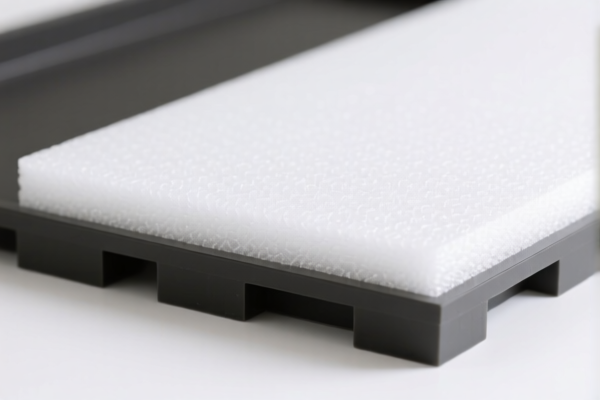
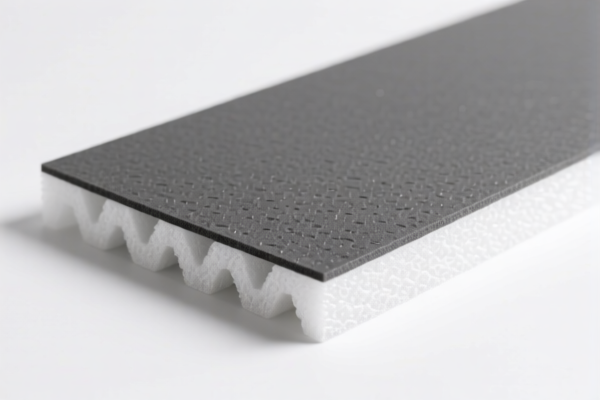
Industrial PVC Foam Board (often referred to as Rigid PVC Foam Sheet or Chevron Board) is a lightweight, closed-cell plastic material widely used in construction, signage, CNC routing, and furniture manufacturing. It serves as an alternative to wood, metal, and acrylic.
In international trade, the classification depends heavily on its chemical composition and form:
1. Pure PVC Foam Boards: Made primarily from Polyvinyl Chloride (PVC) with blowing agents. 👉 Classification: Generally falls under Chapter 39 (Plastics and Articles Thereof).
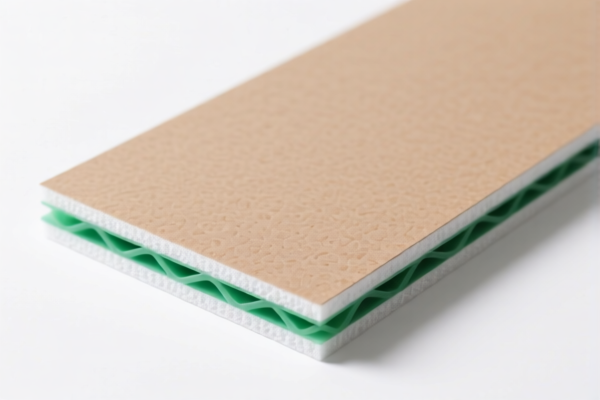
2. Composite Panels (PVC Core + Surface Layers): If the board has significant layers of other materials (e.g., aluminum, wood veneer, honeycomb core), it may be classified differently (e.g., Chapter 48 for paper/wood or Chapter 76 for aluminum).
⚠️ Key Distinction Point: - If it is >50% PVC by weight and in flat sheet/plate form → HS 3918 or 3921. - If it is finished construction material (e.g., pre-drilled, specific wall cladding profile) → May lean towards 3918. - If it is raw foam sheet for further processing → 3921.
📦 2. HS Code Classification Details (2026 Latest Tariff Authority Comparison)
| HS Code | Product Description | Application Scenario | Key Feature |
|---|---|---|---|
3921.90.91.00 |
Other plates, sheets, film, foil and strip, of plastics (Specifically: PVC Foam Sheets) |
Raw industrial sheets, CNC blanks, signage substrates | ✅ Unworked foam sheets |
3918.10.90.00 |
Floor coverings, of plastics, whether or not self-adhesive (PVC Foam Flooring/Wall Cladding) |
Pre-finished wall panels, flooring, decorative cladding | ✅ Finished/Profiled |
3920.62.00.00 |
Other plates, sheets, film, foil and strip, of polymers of vinyl chloride (Non-foamed PVC Sheets) |
Note: Do NOT use for foam boards. | ❌ Non-foamed (Solid PVC) |
🔍 Critical Reminder: - Most standard Industrial PVC Foam Boards (white, black, or colored sheets used for carving/signage) are classified under
3921.90.91.00(or similar national sub-headings like3921.90.91.00in the US). - If the board is finished for a specific use (like wall paneling), customs may argue for3918.10.90.00. - Do not confuse with3920.62(solid PVC). The "foam" aspect is crucial for duty calculation.
💰 3. 2026 Latest Tariff Rate Breakdown (Including Surcharges & Policy Add-ons)
✅ Applicable Country: United States (US)
✅ Country of Origin: China (CN)
✅ Effective Date: November 10, 2025 (and onwards)
🎯 1. 3921.90.91.00 —— PVC Foam Sheets (Unworked/Foamed)
| Item | Content |
|---|---|
| Base Duty Rate | 0% (Ad Valorem) |
| USITC Additional Duty (Section 301) | +25% (Footnote 9903.88.01 / HTS 3921.90.91) |
| IEEPA Additional Duty | +10% (For China/HK products, effective Nov 2025) |
| Total Effective Rate | 35% |
| Tax Calculation | CIF Value × 35% |
| De Minimis Eligibility | ❌ No (deny_de_minimis applies due to Section 301/IEEPA) |
| Legal Path | IEEPA:9903.01.25 → USITC:3921.90.91.00 → FOOTNOTE:9903.88.01 |
📌 Explanation: - Base 0%: Plastics sheets generally have low base duties. - 25% Section 301 Tariff: PVC foam boards are explicitly listed in the exclusion/exemption lists or remain subject to 301 tariffs depending on specific sub-classifications. Crucially, most PVC foam sheets from China are NOT exempt. - 10% IEEPA Tariff: New 2025/2026 additional tariff on Chinese plastics. - Total 35%: This is a high-cost item for importers. Price margins must account for this.
🎯 2. 3918.10.90.00 —— Finished PVC Wall/Floor Panels
| Item | Content |
|---|---|
| Base Duty Rate | 0% |
| USITC Additional Duty (Section 301) | +25% |
| IEEPA Additional Duty | +10% |
| Total Effective Rate | 35% |
| De Minimis Eligibility | ❌ No |
📌 Note: - Even if classified as "finished" flooring/wall panels, the additional tariffs apply similarly. - Risk: Misclassifying a raw sheet (
3921) as a finished panel (3918) to seek lower rates is risky if the product is clearly unworked. However, in this case, both attract 35%.
🛠️ 4. Customs Clearance Practical Advice (Real-World Pitfall Avoidance Guide)
✅ 1. Documentation Checklist (缺一不可)
| Document | Required? | Notes |
|---|---|---|
| ✅ Commercial Invoice | ✔️ | Must clearly state "PVC Foam Board" or "Rigid PVC Foam Sheet", NOT just "Plastic Board" |
| ✅ Product Specification Sheet | ✔️ | Must include: Material Composition (e.g., 95% PVC), Density (kg/m³), Dimensions, Fire Rating (B1/B2) |
| ✅ Structure/Composition Chart | ✔️ | Proves it is a single-material foam (PVC), not a composite with wood/aluminum (which changes HS Code) |
| ✅ Certificate of Origin (CO) | ✔️ | Essential for verifying Chinese origin for tariff calculation |
| ✅ FCC/UL Certificates | ✔️ | If intended for electronic enclosures or specific construction uses |
| ✅ Packaging List | ✔️ | Net Weight/Gross Weight must be accurate for duty assessment |
✅ 2. Declaration Tips (Key Mantra)
🔥 "Specify Material, Specify Form, Avoid 'Composite' Traps!"
| Scenario | Correct Declaration | Incorrect Practice |
|---|---|---|
| Standard White/Black Sheet | 3921.90.91.00 - PVC Foam Sheet |
"Plastic Board" (Too vague) |
| Colored/Printed Sheet | 3921.90.91.00 - PVC Foam Sheet (Printed) |
"Signage Material" (Vague) |
| PVC + Wood Core Panel | Do NOT use PVC HS Code → Use Chapter 44 or 48 | Misdeclaring as PVC Foam → Penalty |
| PVC Flooring Rolls | 3918.10.90.00 |
3921.90.91.00 → Misclassification Risk |
✅ 3. Special Case Handling
| Scenario | Handling Advice |
|---|---|
| Density Variations | High-density (>1.0 g/cm³) may be questioned as "solid" PVC. Provide density test reports to prove it is foamed. |
| Fire Retardant (FR) | If FR additives are >5%, declare chemical composition accurately. Some FR chemicals may trigger additional safety inspections (CPSC). |
| Composite Panels | If the board has a melamine overlay or aluminum foil, check if the plastic component is still >50%. If not, re-classify. |
| Recycled PVC | If made from recycled PVC, declare "Recycled" on invoice. Some jurisdictions offer lower duties, but 301 tariffs still apply to China origin. |
🌍 5. Global Market Comparison (2026 Latest)
| Country/Region | Recommended HS Code | Duty Rate (China Origin) | Certification | Remarks |
|---|---|---|---|---|
| 🇺🇸 USA | 3921.90.91.00 |
35% (0% + 25% + 10%) | FCC, UL (if electrical) | High barrier due to IEEPA/301 |
| 🇨🇳 China | 3921.90.91.00 |
5% - 10% | CCC (if applicable) | Lower duty, domestic consumption high |
| 🇪🇺 EU | 3921.90.90 |
6.5% | CE, REACH | No additional sanctions, but REACH strict |
| 🇦🇺 Australia | 3921.90.90 |
5% | RCM, AS/NZS Standards | Moderate duty |
| 🇮🇳 India | 3921.90.90 |
~20% - 25% | BIS, IRC | High duties + Anti-dumping risks |
📌 Conclusion: - USA is the most challenging market due to the 35% combined tariff. - EU & Australia are more friendly, with no additional punitive tariffs. - Consider Supply Chain Diversification (e.g., sourcing from Vietnam or Thailand) to mitigate US tariffs if volume is high.
📌 6. Common Mistakes & Pitfall Guide (Lessons Learned)
❌ Mistake 1: Declaring as "Plastic Sheet" without specifying "Foam"
👉 Consequence: Customs may classify as solid PVC (3920.62.00.00), which has a 6% base duty + tariffs → Total ~41%. Overpayment!
❌ Mistake 2: Misclassifying Composite Panels (e.g., PVC-Wood) as Pure PVC 👉 Consequence: Customs Audit & Penalty. HS Code mismatch leads to fines and shipment delay.
❌ Mistake 3: Ignoring the "De Minimis" Exemption 👉 Consequence: Trying to use $800 de minimis for PVC foam boards from China → Seizure because these goods are explicitly excluded from de minimis under Section 301/IEEPA.
❌ Mistake 4: Not declaring Fire Rating 👉 Consequence: Customs may detain shipment for safety review if the intended use is construction/signage.
✅ Correct Practice:
"PVC Rigid Foam Sheet, 20mm Thickness, White, Density 0.6g/cm³, For CNC Signage, Non-Recycled, Model: PVC-FOAM-20"
🎯 7. Conclusion: Professional Declaration, Cost Control, Risk Mitigation
🎯 Key Takeaways:
🔹 "Foam is Key, Density Matters, 35% is the US Price!"
🔹 "Don't hide the foam! Accurate density saves money."
🔹 "Composite = Different Code! Don't guess!"
📌 Pro Tip:
If you are importing large volumes to the US, consider: 1. Pre-Ruling: Apply for an Advance Ruling from US Customs to confirm HS Code. 2. Supply Chain Shift: Source from Southeast Asia (Vietnam, Thailand) to avoid IEEPA/301 tariffs (if origin rules allow). 3. Value Engineering: Reduce density if possible (within spec) to lower weight-based costs, though duty is ad valorem (value-based).
📣 Immediate Action:
📞 Contact your freight forwarder to verify 3921.90.91.00 applicability.
📄 Provide Density Test Reports to support "Foam" classification.
🚀 Plan for 35% tariff in your P&L statement.
✨ Professional Customs Compliance Starts with Accurate Classification! 💼 Your Bottom Line Depends on This HS Code!
用户评价
关于 HS 编码归类
协调制度(HS)是由世界海关组织(WCO)制定的国际贸易商品分类标准。全球 200 多个国家采用 HS 系统作为海关关税、贸易统计和进出口监管的基础。
每个 HS 编码遵循以下层级结构:
- 章(2 位)——商品大类(例如:第 84 章:机器和机械设备)
- 品目(4 位)——章内的更具体分类
- 子目(6 位)——国际通用细分,所有 WCO 成员国统一使用
- 本国细分(8-10 位)——各国自行扩展的细分编码,如美国 HTSUS 10 位编码
正确的 HS 编码归类对于顺利通关、准确缴纳关税和遵守贸易法规至关重要。错误归类可能导致海关延误、多缴关税或罚款。
从CN进口到US时,适用的关税税率可能包括:
- 最惠国(MFN)税率——适用于 WTO 成员国的标准关税税率
- 普通税率——适用于无贸易协定国家
- 贸易救济关税——附加关税,如 301 条款(反倾销)、232 条款(国家安全)或反补贴税
本页内容仅供参考。如需正式归类,请咨询当地海关或持牌报关代理。