Industrial Plastic Pipe
CN → US| HS编码 | 关税税率 | 原产国 | 目的国 | 文档 |
|---|---|---|---|---|
| 3917290090 | 38.1% | CN | US | 官方文档 |
| 3926909987 | 22.8% | CN | US | 官方文档 |
| 3917210000 | 38.1% | CN | US | 官方文档 |
| 3926909989 | 22.8% | CN | US | 官方文档 |
| 3916200020 | 40.8% | CN | US | 官方文档 |
商品图片
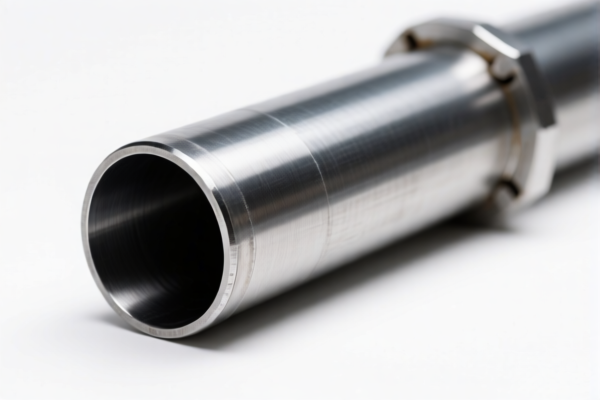
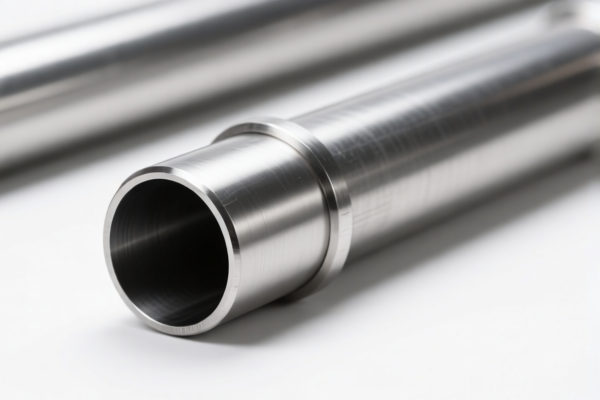
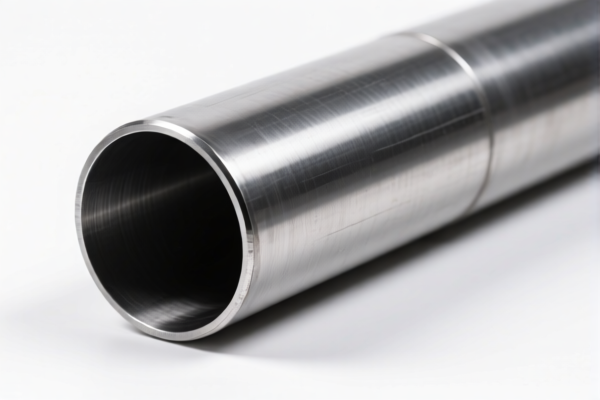
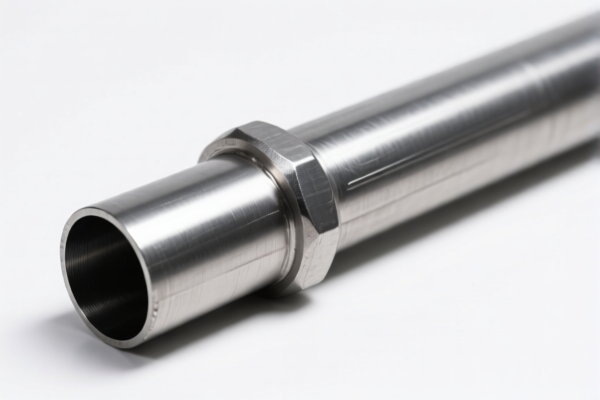
AI分析
🏭 Industrial Plastic Pipe: The Ultimate HS Code Classification & Tax Strategy Guide (2026)
🌐 HS Code Reference & Customs Clearance Guide | 2026 Latest Tariff Analysis | Professional Clearance Strategy
📌 I. Product Definition & Classification: What Exactly is an "Industrial Plastic Pipe"?
Industrial plastic pipes are not a single entity. They are categorized based on Material Type, Physical Form, and Specific Application. In international trade, misclassifying a pipe can lead to severe tariff penalties (e.g., paying 40.8% instead of 22.8%).
The key differentiators are: 1. Specificity of Use: Is it explicitly for construction (windows/doors) or general industrial use? 2. Material Precision: Is it a specific polymer (e.g., PVC) or a general "plastic"? 3. Form: Is it clearly defined as a tube/pipe, or does it fall under a "catch-all" category?
⚠️ Critical Distinction:
- General/Other Plastic Pipes: Fall under Chapter 39, Heading 3917 or 3926. - Construction-Specific Plastic Pipes: Specifically for windows/doors may fall under Heading 3916. - "Other" Pipes: If no specific material or use fits, it may be misclassified into broader "Other" categories, affecting tax rates significantly.
📦 II. HS Code Classification Matrix (Based on Provided Data)
The following table details the five potential HS Codes for "Industrial Plastic Pipe" as derived from the provided dataset. Each code reflects a different interpretation of the product's material, form, and use.
| HS Code | Product Description & Rationale | Total Tax Rate | Tax Breakdown (US/China Origin Assumption) |
|---|---|---|---|
3917.29.00.90 |
Plastic Pipe, Generic/Construction Matches material (Plastic) & form (Pipe). Applies to lengths unspecified, including construction uses. (Rationale: Broad application within tube/pipe heading) |
38.1% | Base: 3.1% Section 301: 25.0% Section 122: 10.0% |
3926.90.99.87 |
Plastic Pipe, "Other" Category Matches material (Plastic) & form (Pipe). Classified under "Other" / Catch-all principle due to lack of specific conflict. (Rationale: Generic plastic article) |
22.8% | Base: 5.3% Section 301: 7.5% Section 122: 10.0% |
3917.21.00.00 |
Plastic Pipe, Specific Polyethylene Matches material (Plastic) & form (Pipe). Clear classification. (Rationale: Likely refers to Polyethylene pipes, a specific subheading in 3917) |
38.1% | Base: 3.1% Section 301: 25.0% Section 122: 10.0% |
3926.90.99.89 |
Plastic Pipe, General Plastic Article Matches material (Plastic). Form not explicitly stated but inferred from name. No conflict. (Rationale: General plastic product, less specific than 3917) |
22.8% | Base: 5.3% Section 301: 7.5% Section 122: 10.0% |
3916.20.00.20 |
Plastic Pipe for Construction (Windows/Doors) Matches material (Plastic), form (Pipe/Profile), and specific use (Construction profiles like windows/doors). (Rationale: Specific construction application triggers different heading 3916) |
40.8% | Base: 5.8% Section 301: 25.0% Section 122: 10.0% |
🔍 Key Insight:
- The lowest tax rate (22.8%) applies to codes3926.90.99.87and3926.90.99.89. These are "catch-all" categories for plastic articles that don't fit specific pipe material descriptions. - The highest tax rate (40.8%) applies to3916.20.00.20, which is specifically for construction profiles (windows/doors). If your pipe is used for plumbing or industrial flow, DO NOT use this code. - Codes under3917(like3917.21.00.00and3917.29.00.90) generally carry higher Section 301 tariffs (25%) compared to3926(7.5%).
💰 III. 2026 Tariff Rate Detailed Analysis
✅ Applicable Country: United States (US)
✅ Origin: China (CN)
✅ Effective Time: 2025/2026 Tariff Schedule
🎯 1. The "Low Tax" Strategy: 3926.90.99.87 & 3926.90.99.89 (22.8%)
| Item | Details |
|---|---|
| Base Duty | 5.3% |
| Section 301 Duty | 7.5% (Lowest among all options) |
| Section 122 Duty | 10.0% |
| Total Rate | 22.8% |
| Calculation | CIF Value × 22.8% |
| De Minimis Exemption | ❌ Not Available (Deny de_minimis) |
| Legal Basis | USITC:3926.90.99.87/89 → Footnotes for Sec 301/122 |
📌 Explanation:
- These codes fall under Chapter 39, Heading 3926 ("Other articles of plastics"). - The Section 301 rate is only 7.5%, compared to 25% for other plastic pipe codes. - Risk: Customs may argue that plastic pipes should be classified under 3917 (Tubes, pipes, and hoses), not 3926. If misclassified, you risk back-taxes and penalties. - Use Case: Best for generic plastic pipes where the specific polymer type is not declared or is a mix, and the use is not exclusively construction profiles.
🎯 2. The "Standard Pipe" Strategy: 3917.29.00.90 & 3917.21.00.00 (38.1%)
| Item | Details |
|---|---|
| Base Duty | 3.1% |
| Section 301 Duty | 25.0% |
| Section 122 Duty | 10.0% |
| Total Rate | 38.1% |
| Calculation | CIF Value × 38.1% |
| De Minimis Exemption | ❌ Not Available |
| Legal Basis | USITC:3917.29.00.90 / 3917.21.00.00 → Footnotes |
📌 Explanation:
- These codes fall under Chapter 39, Heading 3917 ("Tubes, pipes, and hoses..."). - 3917.21.00.00 likely refers to Polyethylene pipes (a common industrial material). - 3917.29.00.90 is a broader "Other" plastic pipe category. - Risk: Standard classification for industrial pipes. If your pipe is PVC, HDPE, or PP, it must go here. Misclassifying to 3926 will trigger an audit.
🎯 3. The "Construction Profile" Trap: 3916.20.00.20 (40.8%)
| Item | Details |
|---|---|
| Base Duty | 5.8% |
| Section 301 Duty | 25.0% |
| Section 122 Duty | 10.0% |
| Total Rate | 40.8% |
| Calculation | CIF Value × 40.8% |
| De Minimis Exemption | ❌ Not Available |
| Legal Basis | USITC:3916.20.00.20 |
📌 Explanation:
- This code is for Plastic Profiles for Building Purposes (e.g., window frames, door profiles). - CRITICAL WARNING: If you are importing a plastic pipe for plumbing, irrigation, or industrial fluid transport, DO NOT use this code. It is for structural building components, not flow conduits. - Using this code for a standard pipe is a major compliance error.
🛠️ IV. Customs Clearance Practical Advice (Avoid Pitfalls)
✅ 1. Documentation Checklist (Non-Negotiable)
| Document | Required? | Explanation |
|---|---|---|
| Product Specifications | ✅ Yes | Must state: Material (e.g., HDPE, PVC, PP), Diameter, Wall Thickness, Pressure Rating, Use (Industrial/Construction). |
| Material Safety Data Sheet (MSDS) | ✅ Yes | Confirms chemical composition, aiding in correct HS Code determination (e.g., distinguishing PE from PVC). |
| Commercial Invoice | ✅ Yes | Description must be precise: "Industrial HDPE Pipe for Water Transport" vs. "Plastic Pipe". |
| Packing List | ✅ Yes | Detail dimensions and weight. |
| Certificate of Origin | ✅ Yes | If claiming any preferential rates (unlikely for China-US, but good practice). |
| Test Reports | ✅ Optional but Recommended | ASTM/ISO standards compliance (e.g., ASTM D3035 for PE pipe) proves it is a "pipe" and not just a "plastic article". |
✅ 2. Declaration Strategy (Key Mantra)
🔥 "Specify Material, Define Use, Avoid Construction Profiles!"
| Scenario | Recommended HS Code | Why? |
|---|---|---|
| HDPE/PE Pipe for Water/Gas | 3917.21.00.00 (38.1%) |
Specific to Polyethylene. Most common industrial pipe. |
| Generic Plastic Pipe (Other Material) | 3917.29.00.90 (38.1%) |
If not PE, PVC, PP, etc., falls here. |
| Unclear Material / General Use | 3926.90.99.87 (22.8%) |
Only if you can prove it doesn't fit 3917. High risk of audit. Use with caution. |
| Pipe for Window Frames | 3916.20.00.20 (40.8%) |
If it is a structural profile for windows/doors. |
| PVC Pipe | Likely 3917.21 or 3917.29 | Check specific PVC subheadings. Do not use 3926. |
⚠️ Warning on "Low Tax" Codes (
3926):
- Customs may reclassify generic "plastic pipes" into 3917 because Heading 3917 specifically covers "Tubes, pipes, and hoses." - To use3926, you must prove the item is not a tube/pipe in the technical sense, or is a composite article. For pure plastic pipes, 3917 is the safer, more accurate classification, even if the tax is higher.
✅ 3. Special Cases
| Case | Handling Advice |
|---|---|
| Multi-Layer Pipes | If layers are different materials, classify based on the dominant material or the layer providing essential character. |
| Pipe Fittings | Fittings are often classified separately (e.g., 3917.23). Ensure fittings are not bundled in a way that changes the primary classification. |
| Colored vs. Clear | Color does not affect HS Code. |
| Pressurized vs. Non-Pressurized | Both fall under 3917. Pressure rating is for safety, not classification. |
🌍 V. Global Market Comparison (2026)
| Region | Typical HS Code for Plastic Pipe | Estimated Duty | Notes |
|---|---|---|---|
| 🇺🇸 USA | 3917.21.00.00 or 3917.29.00.90 |
38.1% | High Section 301 tariffs. |
| 🇨🇳 China | 3917.21.00.00 |
6.5% - 10% | No Section 301. Import duty varies. |
| 🇪🇺 EU | 3917.21 or 3917.29 |
6.5% | No Section 301. CE marking required. |
| 🇬🇧 UK | 3917.21 |
6.5% | Post-Brexit tariffs apply. |
| 🇲🇽 Mexico | 3917.21 |
0% - 5% | USMCA may apply if originating. |
📌 Conclusion:
- The US imposes the highest burden due to Section 301 and 122 tariffs. - No de minimis exemption for plastic pipes from China. - Accurate material declaration is critical to avoid reclassification and penalties.
📌 VI. Common Mistakes & Pitfalls (Lessons Learned)
❌ Mistake 1: Classifying all plastic pipes under 3926.90.99.87 to save tax.
👉 Consequence: Customs audits the shipment, reclassifies to 3917.29.00.90, and demands 15.3% more in duties plus penalties.
❌ Mistake 2: Using 3916.20.00.20 (Construction Profiles) for plumbing pipes.
👉 Consequence: 40.8% tax (highest in the list). Incorrect use leads to delays and re-filing.
❌ Mistake 3: Vague Description: "Plastic Pipe".
👉 Consequence: Customs cannot determine the correct subheading. May lead to hold for inspection or misclassification.
❌ Mistake 4: Ignoring Material Type.
👉 Consequence: PVC, PE, and PP have different subheadings. Declaring "Plastic" without specifying leads to the "Other" category (3917.29), which may have higher base duties than specific categories.
✅ Correct Practice:
"HDPE Industrial Water Pipe, ASTM D3035, 4" Diameter, 160 PSI, Black with Blue Stripes, Made in China"
🎯 VII. Conclusion: Precision Saves Money
🎯 Remember the Key Rules:
🔹 "Specific Material + Pipe Form = 3917"
🔹 "Construction Profile = 3916 (High Tax)"
🔹 "Generic Article = 3926 (Risk of Audit)"
📌 Final Advice:
1. Identify the Material: Is it Polyethylene (PE), Polypropylene (PP), PVC, etc.?
2. Identify the Use: Is it for fluid transport (Pipe) or structural building (Profile)?
3. Choose the Code:
- PE Pipe: 3917.21.00.00 (38.1%)
- Other Plastic Pipe: 3917.29.00.90 (38.1%)
- Window/Door Profile: 3916.20.00.20 (40.8%)
4. Document Everything: Provide specs, MSDS, and test reports to prove your classification.
🚀 Your Bottom Line:
While3926offers a lower rate (22.8%), it is high-risk for standard plastic pipes. Stick to 3917 for accurate, compliant clearance. The extra 15.3% is worth the peace of mind and avoiding customs penalties.
✨ Professional Clearance Starts with Accurate Classification!
💼 Don't let tariff rates surprise you. Know your HS Code!
用户评价
关于 HS 编码归类
协调制度(HS)是由世界海关组织(WCO)制定的国际贸易商品分类标准。全球 200 多个国家采用 HS 系统作为海关关税、贸易统计和进出口监管的基础。
每个 HS 编码遵循以下层级结构:
- 章(2 位)——商品大类(例如:第 84 章:机器和机械设备)
- 品目(4 位)——章内的更具体分类
- 子目(6 位)——国际通用细分,所有 WCO 成员国统一使用
- 本国细分(8-10 位)——各国自行扩展的细分编码,如美国 HTSUS 10 位编码
正确的 HS 编码归类对于顺利通关、准确缴纳关税和遵守贸易法规至关重要。错误归类可能导致海关延误、多缴关税或罚款。
从CN进口到US时,适用的关税税率可能包括:
- 最惠国(MFN)税率——适用于 WTO 成员国的标准关税税率
- 普通税率——适用于无贸易协定国家
- 贸易救济关税——附加关税,如 301 条款(反倾销)、232 条款(国家安全)或反补贴税
本页内容仅供参考。如需正式归类,请咨询当地海关或持牌报关代理。