Industrial Pulp Packaging
CN → US| HS编码 | 关税税率 | 原产国 | 目的国 | 文档 |
|---|---|---|---|---|
| 3923900080 | 38.0% | CN | US | 官方文档 |
| 3923109000 | 38.0% | CN | US | 官方文档 |
| 4819504020 | 35.0% | CN | US | 官方文档 |
| 4819100040 | 35.0% | CN | US | 官方文档 |
| 3923109000 | 38.0% | CN | US | 官方文档 |
商品图片
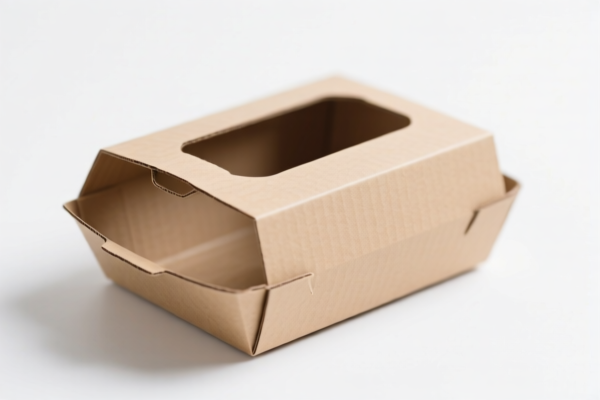
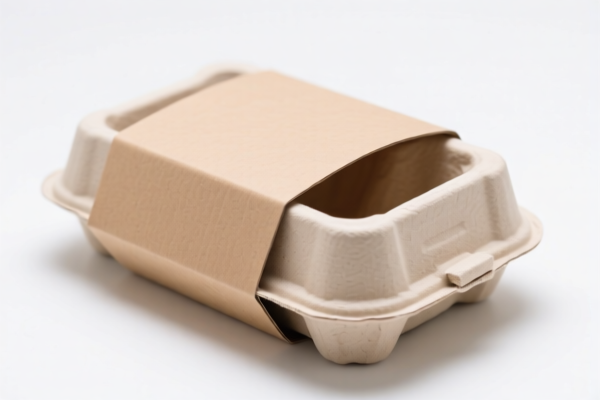
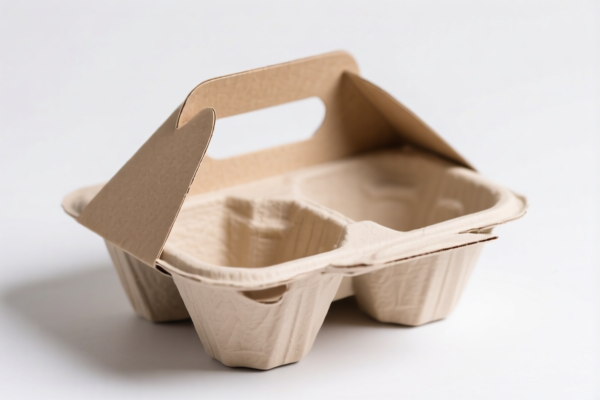
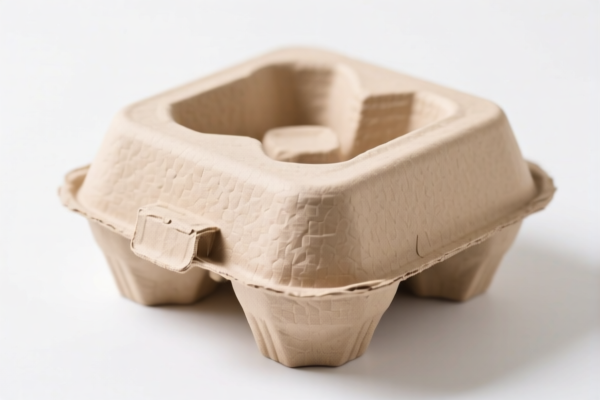
AI分析
📦 Industrial Pulp Packaging (Industrial Pulp Packaging)
🌐 HS Code Reference & Customs Clearance Guide | 2026 Latest Tariff Analysis | Professional Clearance Strategy
📌 I. Product Definition & Classification: Do You Really Understand "Industrial Pulp Packaging"?
Industrial Pulp Packaging refers to packaging containers made from pulp (often recycled paper or plant fibers) designed for industrial logistics and transport. In international trade, classification is critical because material composition dictates the HS Code, which directly impacts tax liability.
While the name suggests "Pulp" (Paper), many importers confuse it with Plastic Packaging due to the term "Industrial Packaging." However, Pulp is a Paper Product, not Plastic.
⚠️ Key Distinction:
- If the material is Paper/Pulp/Cardboard → It belongs to Chapter 48.
- If the material is Plastic → It belongs to Chapter 39.
- Risk: Misclassifying Pulp Packaging as Plastic or vice versa leads to severe penalties, delayed clearance, or incorrect tax assessment.
📦 II. HS Code Classification Details (2026 Latest Tariff Authority Comparison)
Based on the provided data, there are two main material pathways for "Industrial Pulp Packaging." Note that HS Code 3923.10.90.00 appears twice with slightly different summaries, but the tax implication is identical.
| HS Code | Product Description | Material Basis | Applicable Scenario | Tax Rate (Total) |
|--------|--------------------------|----------|----------------|
| 3923.10.90.00 | Boxes, cases, crates, and similar articles of plastics; Other | Plastic (Inferred) | If the "Pulp" is actually a plastic coating or if the user mistakenly classifies plastic industrial packaging. See Note Below. | 38.0% |
| 3923.90.00.80 | Other articles of plastics for the transport or packaging of goods; Other | Plastic (Inferred) | Fallback category for plastic industrial packaging items not specified elsewhere. | 38.0% |
| 4819.50.40.20 | Containers, of paper or paperboard, for the transport or packaging of goods; Other, of pulp | Pulp (Explicit) | Correct Match for Pulp: Industrial containers made specifically from pulp. | 35.0% |
| 4819.10.00.40 | Cartons, boxes, cases, and similar articles, of corrugated paper or paperboard; Other, of pulp | Pulp (Inferred) | Paper/cardboard packaging containers made from pulp. | 35.0% |
🔍 Critical Analysis:
- The product name contains "Pulp". According to HS Chapter 48, Pulp = Paper/Cellulose Fiber.
- Why are Plastic Codes (3923) listed?
- The data indicates a "Conflict/Confusion" in classification logic. Some summaries suggest matching by "Use" (Industrial Packaging) rather than "Material."
- However, in customs practice, Material takes precedence over Use. If the item is physically made of pulp, it MUST be classified under Chapter 48 (Paper), NOT Chapter 39 (Plastic).
- Risk Warning: If you classify Pulp Packaging as3923.xx.xx(Plastic), you are misdeclaring the material. While the total tax rate in this specific dataset is similar (38% vs 35%), the Legal Basis is different, and customs audits may flag this as a material misdeclaration.
💰 III. 2026 Latest Tariff Rate Breakdown (Including Surtaxes & Policy Add-ons)
✅ Applicable Country: United States (US)
✅ Country of Origin: China (CN)
✅ Effective Time: November 10, 2025 (and subsequent imports)
🎯 1. For Paper/Pulp Based Codes: 4819.50.40.20 & 4819.10.00.40
| Item | Content |
|---|---|
| Base Tariff | 0.0% (ad valorem) |
| USITC Surtax (Section 301) | +25% |
| IEEPA Surtax (Section 122/EO) | +10% |
| Total Tax Rate | 35.0% |
| Tax Calculation | CIF Value × 35% |
| De Minimis Exemption | ❌ Not Eligible (deny_de_minimis) |
| Legal Basis Path | IEEPA:9903.01.25 → IEEPA:9903.01.24 → USITC:4819.xx.xx → FOOTNOTE:9903.88.01 |
📌 Explanation:
- Although the Base Tariff is 0%, the Combined Surtax is 35%.
- The 25% USITC Surtax is the standard Section 301 tariff for many Chinese goods.
- The 10% IEEPA Surtax is an additional levy on Chinese imports under Executive Orders.
- Conclusion: Even though it's "Paper," it is NOT duty-free. It is heavily taxed due to geopolitical trade policies.
🎯 2. For Plastic-Based Codes (If Misclassified): 3923.10.90.00 & 3923.90.00.80
| Item | Content |
|---|---|
| Base Tariff | 3.0% (ad valorem) |
| USITC Surtax (Section 301) | +25% |
| IEEPA Surtax (Section 122/EO) | +10% |
| Total Tax Rate | 38.0% |
| Tax Calculation | CIF Value × 38% |
| De Minimis Exemption | ❌ Not Eligible (deny_de_minimis) |
| Legal Basis Path | IEEPA:9903.01.25 → IEEPA:9903.01.24 → USITC:3923.xx.xx → FOOTNOTE:9903.88.01 |
📌 Explanation:
- The Base Tariff is 3%, which is higher than paper (0%).
- Total Tax is 38%, which is 3% higher than the correct Pulp classification.
- Why might this appear in the data?
- The provided data suggests a "Fallback" logic where "Industrial Packaging" triggers Chapter 39 if the material is ambiguous.
- Recommendation: Do NOT use this classification unless the product is actually plastic. It is more expensive and legally risky if the product is pulp.
🛠️ IV. Customs Clearance Practical Advice (实战避坑指南)
✅ 1. Required Documents Checklist (Missing One = Delay!)
| Document | Must Provide | Description |
|---|---|---|
| ✅ Product Specification Sheet | ✔️ | Must explicitly state "Material: Pulp / Recycled Paper Fiber". Do not just say "Packaging." |
| ✅ Material Composition Certificate | ✔️ | Third-party lab test confirming >95% paper/pulp content, minimal plastic coating (if any). |
| ✅ Product Photos (Clear) | ✔️ | Show texture (fibrous, not smooth/shiny like plastic). Label must say "Paper Pulp." |
| ✅ Commercial Invoice | ✔️ | Clearly state "Industrial Pulp Packaging Containers" as the description. |
| ✅ Packing List | ✔️ | Detail weights and dimensions. Ensure no plastic fillers are mixed in unless declared. |
✅ 2. Declaration Tips (Key Mantra)
🔥 “Material First, Use Second! Pulp is Paper, Not Plastic!”
| Scenario | Correct Declaration | Wrong Practice |
|---|---|---|
| Product is Pulp/Cardboard | 4819.50.40.20 (35% Total) |
Declaring as 3923.10.90.00 (38% Total + Risk of Misdeclaration) |
| Product has Plastic Coating | Check %: If >50% plastic, may be 3923; If <50%, still 4819 |
Ignoring coating percentage |
| Industrial Use | Mention "For Industrial Transport" in notes | Relying solely on "Industrial" to force Plastic classification |
📌 Note:
- The 3% difference (35% vs 38%) matters in high-volume shipments.
- More importantly, misclassifying Paper as Plastic can lead to fines for false material declaration, which is worse than just paying extra duty.
✅ 3. Special Cases Handling
| Scenario | Handling Advice |
|---|---|
| Pulp with Plastic Window/Label | If the plastic component is negligible (e.g., a small label), classify as 4819. Declare the plastic part separately if required by US CBP. |
| Water-Resistant Pulp | If treated with resin/coating, check if it loses "Paper" character. Usually, light coating still keeps it in Chapter 48. |
| Corrugated vs. Molded Pulp | Corrugated → 4819.10; Molded/Custom Shape → 4819.50. Both are 35% Total Tax. |
🌍 V. Global Market Comparison (2026 Latest)
| Country/Region | Recommended HS Code | Total Tariff (China Origin) | Notes |
|---|---|---|---|
| 🇺🇸 USA | 4819.50.40.20 |
35.0% | High surtaxes (301 + IEEPA) make all imports expensive. |
| 🇨🇳 China | 4819.50.40.20 |
Low/0% (Domestic) | Not applicable for export clearance, but relevant for cost basis. |
| 🇪🇺 EU | 4819.10 / 4819.50 |
5-12% | No Section 301 equivalent, but Carbon Border Tax (CBAM) may apply in future. |
| 🇬🇧 UK | 4819.50 |
6-12% | Post-Brexit tariffs vary by trade agreement. |
| 🇯🇵 Japan | 4819.50 |
4-6% | Generally lower tariffs for paper products. |
📌 Conclusion:
- USA is the highest cost market for this product due to 301 + IEEPA surtaxes.
- Diversification Strategy: If margins are thin, consider sourcing or final assembly in Vietnam/Mexico to avoid Chinese origin surtaxes (subject to strict rules of origin).
📌 VI. Common Mistakes & Pitfalls (Lessons Learned from Pain)
❌ Mistake 1: Calling it "Plastic Packaging" because it's for "Industrial Use."
👉 Consequence: 38% Tax instead of 35%, plus Audits for false material declaration.
❌ Mistake 2: Using vague terms like "Packaging Material" on the Invoice.
👉 Consequence: Customs holds the shipment for Material Testing, delaying clearance by 2-4 weeks.
❌ Mistake 3: Assuming "Paper" = "0% Tax."
👉 Consequence: Shocking 35% Bill because they forgot about Section 301 and IEEPA surtaxes.
❌ Mistake 4: Mixing Plastic and Pulp in one shipment without separate declaration.
👉 Consequence: The entire shipment may be classified under the stricter/harder-to-clear code, or subject to penalties.
✅ Correct Action:
"Industrial Pulp Containers, Molded from Recycled Paper Fiber, Non-Plastic Structure, For Shipping Goods. HS: 4819.50.40.20"
🎯 VII. Conclusion: Precise Classification Saves Money & Time
🎯 Remember the Mantra:
🔹 "Pulp is Paper, Not Plastic!"
🔹 "Base Rate is 0%, but Surtax is 35%!"
🔹 "Declare Material, Not Just Use!"
📌 Pro Tip:
If you are importing large volumes, calculate the 3% difference between 35% and 38%. For a $100,000 shipment, that’s $3,000 saved by using the correct 4819 code instead of 3923.
📣 Immediate Action:
📞 Contact your Customs Broker with photos and material specs.
📄 Apply for a Binding Ruling if unsure about coated pulp.
🚀 Ensure your invoice says "Pulp" or "Paper Fiber", not just "Packaging."
✨ Professional clearance starts with accurate classification!
💼 Your every dollar of cost deserves precise calculation!
用户评价
关于 HS 编码归类
协调制度(HS)是由世界海关组织(WCO)制定的国际贸易商品分类标准。全球 200 多个国家采用 HS 系统作为海关关税、贸易统计和进出口监管的基础。
每个 HS 编码遵循以下层级结构:
- 章(2 位)——商品大类(例如:第 84 章:机器和机械设备)
- 品目(4 位)——章内的更具体分类
- 子目(6 位)——国际通用细分,所有 WCO 成员国统一使用
- 本国细分(8-10 位)——各国自行扩展的细分编码,如美国 HTSUS 10 位编码
正确的 HS 编码归类对于顺利通关、准确缴纳关税和遵守贸易法规至关重要。错误归类可能导致海关延误、多缴关税或罚款。
从CN进口到US时,适用的关税税率可能包括:
- 最惠国(MFN)税率——适用于 WTO 成员国的标准关税税率
- 普通税率——适用于无贸易协定国家
- 贸易救济关税——附加关税,如 301 条款(反倾销)、232 条款(国家安全)或反补贴税
本页内容仅供参考。如需正式归类,请咨询当地海关或持牌报关代理。