Industrial Rubber Transmission Belts
CN → US| HS编码 | 关税税率 | 原产国 | 目的国 | 文档 |
|---|---|---|---|---|
| 4008111000 | 35.0% | CN | US | 官方文档 |
| 4010198000 | 36.9% | CN | US | 官方文档 |
| 4008210000 | 35.0% | CN | US | 官方文档 |
| 4010199100 | 38.3% | CN | US | 官方文档 |
| 4017000000 | 37.7% | CN | US | 官方文档 |
商品图片
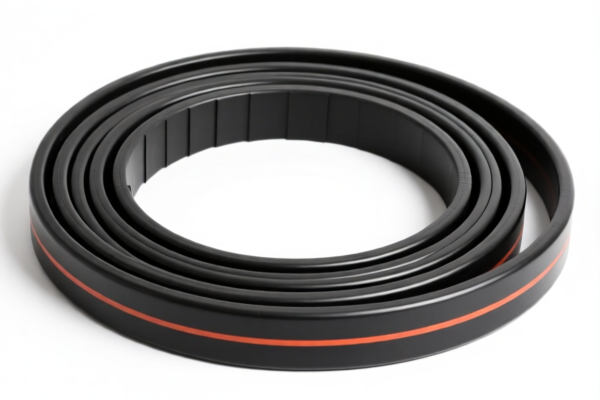
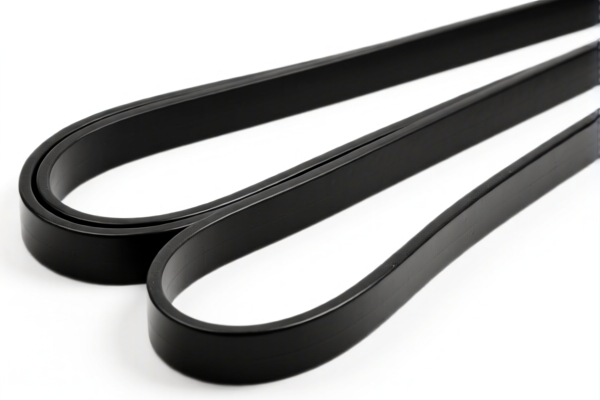
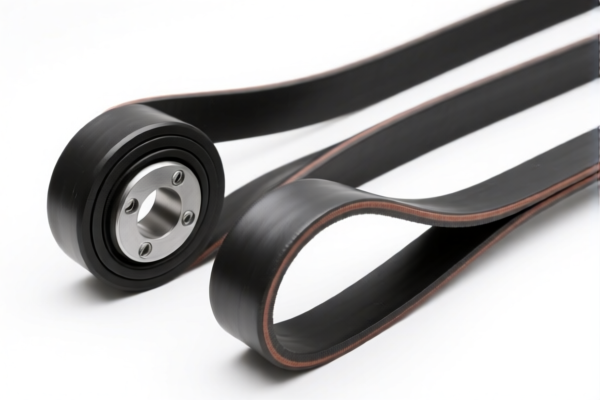
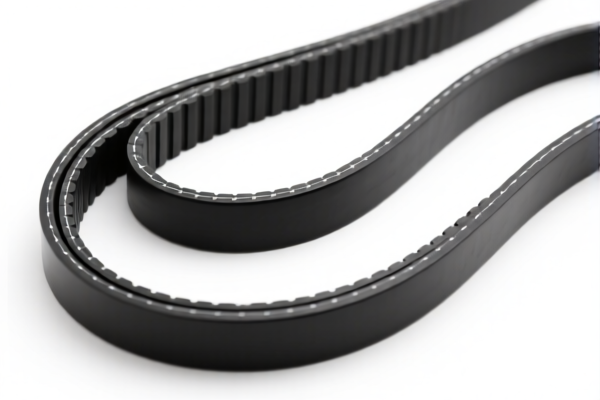
AI分析
🛠️ Industrial Rubber Transmission Belts (Industrial Rubber Strip/Belt Products)
🌐 HS Code Reference & Customs Clearance Guide | 2026 Latest Tariff Analysis | Professional-Level Clearance Strategy
📌 I. Product Definition & Classification: Do You Really Understand "Industrial Rubber Belts"?
Industrial Rubber Transmission Belts are critical components in mechanical power transmission systems. In international trade, they are primarily classified based on their material composition (vulcanized rubber), form (strip/belt/shape), and processing state. They are distinct from textile-reinforced conveyor belts or automotive timing belts, often falling under general rubber articles or specific transmission belt categories.
In customs classification, the key distinction lies between: * Raw/Intermediate Rubber Shapes: Vulcanized rubber plates, sheets, strips, rods, and profiles (Chapter 40, Heading 4008). * Specific Rubber Articles: Rubber transmission belts, specifically designed for power transmission (Chapter 40, Heading 4010). * Hard Rubber: Vulcanized rubber with high sulfur content, used for industrial insulators or structural parts (Chapter 40, Heading 4017).
⚠️ Key Distinction Point:
- If the product is a simple vulcanized rubber strip/profile without specific mechanical engineering features (like cogged teeth for synchronous transmission), it often falls under 4008.
- If it is a manufactured transmission belt (with specific dimensions, tension members, or toothed profiles designed for pulleys), it falls under 4010.
- If it is hard rubber (high sulfur, rigid, non-flexible), it falls under 4017.
📦 II. HS Code Classification Details (2026 Latest Tariff Authority Comparison)
| HS Code | Product Description | Application Scenario | Classification Logic |
|---|---|---|---|
4008.11.10.00 |
Vulcanized rubber plates, sheets, strips, rods, and profiles: Strip, of cross-section exceeding 20 mm but not exceeding 40 mm, in the form of strips | Industrial rubber strips/belts, raw form or semi-finished | ✅ Strip Form: Matches "strips" of rubber, specific cross-section limits. |
4010.19.80.00 |
Transmission belts and belting, of rubber: Other: Other | Industrial rubber transmission belts, specific shaped belts | ✅ Transmission Belt: Specifically designated for "transmission belts" not elsewhere specified. |
4008.21.00.00 |
Vulcanized rubber plates, sheets, strips, rods, and profiles: Other: Of cross-section exceeding 3 mm, not exceeding 20 mm, in the form of strips | Thin rubber strips, general industrial strip usage | ✅ Strip Form: Matches "strips" for thinner cross-sections (3-20mm). |
4010.19.91.00 |
Transmission belts and belting, of rubber: Other: Other: Of a width not exceeding 30 cm | Narrow industrial belts, inferred category | ✅ Width Constraint: Specific width criteria for transmission belts. |
4017.00.00.00 |
Articles of hardened rubber (e.g., ebonite) | Industrial hard rubber components, non-flexible parts | ✅ Hard Rubber: If the belt is rigid (ebonite) rather than flexible rubber. |
🔍 Key Reminder:
- Flexible transmission belts used for power transmission should ideally be classified under 4010.
- Simple rubber strips used for sealing, damping, or as raw material are better classified under 4008.
- Rigid rubber parts must not be confused with flexible belts; they belong to 4017.
- Misclassification can lead to significant tariff differences due to the high additional duties on Chinese-origin goods.
💰 III. 2026 Latest Tariff Rate Details (Including Additional Taxes & Policy Add-ons)
✅ Applicable Country: United States (US)
✅ Origin: China (CN)
✅ Effective Time: From November 10, 2025 (including subsequent imports)
🎯 1. 4008.11.10.00 —— Vulcanized Rubber Strip (Cross-section 20-40mm)
| Item | Content |
|---|---|
| Base Tariff | 0% (ad valorem) |
| USITC Additional Tariff | +25% (under USITC Footnote 9903.40.00 series) |
| IEEPA Additional Tariff | +10% (targeting China/Hong Kong products, effective Nov 10, 2025) |
| Total Tax Rate | 35.0% |
| Tax Calculation | CIF Value × 35% |
| De Minimis Exemption Available? | ❌ No (deny_de_minimis) |
| Legal Basis Path | IEEPA:9903.01.25 → IEEPA:9903.01.24 → USITC:4008.11.10.00 → FOOTNOTE:9903.40.00 |
📌 Explanation:
- The 25% USITC tariff applies under Section 301 of the Trade Act for specific rubber products.
- The 10% IEEPA tariff is an additional levy on Chinese-made rubber goods.
- Total 35% is a high duty rate. Pre-planning is essential to avoid cost overruns.
🎯 2. 4010.19.80.00 —— Other Rubber Transmission Belts
| Item | Content |
|---|---|
| Base Tariff | 1.9% (ad valorem) |
| USITC Additional Tariff | +25% |
| IEEPA Additional Tariff | +10% |
| Total Tax Rate | 36.9% |
| Tax Calculation | CIF Value × 36.9% |
| De Minimis Exemption Available? | ❌ No |
| Legal Basis Path | IEEPA:9903.01.25 → IEEPA:9903.01.24 → USITC:4010.19.80.00 → FOOTNOTE:9903.40.00 |
📌 Note:
- Transmission belts often attract a small base duty (1.9%) compared to raw strips (0%).
- However, the additional taxes (35%) dominate the cost.
- Ensure the product is truly a "transmission belt" (mechanical function) and not just a "rubber strip" to avoid misclassification disputes.
🎯 3. 4008.21.00.00 —— Vulcanized Rubber Strip (Cross-section 3-20mm)
| Item | Content |
|---|---|
| Base Tariff | 0% |
| USITC Additional Tariff | +25% |
| IEEPA Additional Tariff | +10% |
| Total Tax Rate | 35.0% |
| Tax Calculation | CIF Value × 35% |
| De Minimis Exemption Available? | ❌ No |
| Legal Basis Path | IEEPA:9903.01.25 → IEEPA:9903.01.24 → USITC:4008.21.00.00 → FOOTNOTE:9903.40.00 |
📌 Note:
- Similar to4008.11.10.00, but for thinner strips.
- The 35% total rate is consistent across simple vulcanized rubber shapes.
🎯 4. 4010.19.91.00 —— Rubber Transmission Belts (Width ≤ 30cm)
| Item | Content |
|---|---|
| Base Tariff | 3.3% |
| USITC Additional Tariff | +25% |
| IEEPA Additional Tariff | +10% |
| Total Tax Rate | 38.3% |
| Tax Calculation | CIF Value × 38.3% |
| De Minimis Exemption Available? | ❌ No |
| Legal Basis Path | IEEPA:9903.01.25 → IEEPA:9903.01.24 → USITC:4010.19.91.00 → FOOTNOTE:9903.40.00 |
📌 Note:
- This category has the highest total rate (38.3%) among the options due to the higher base duty (3.3%).
- Only use if the belt strictly meets the width criteria (<30cm) and is a transmission belt.
🎯 5. 4017.00.00.00 —— Articles of Hardened Rubber
| Item | Content |
|---|---|
| Base Tariff | 2.7% |
| USITC Additional Tariff | +25% |
| IEEPA Additional Tariff | +10% |
| Total Tax Rate | 37.7% |
| Tax Calculation | CIF Value × 37.7% |
| De Minimis Exemption Available? | ❌ No |
| Legal Basis Path | IEEPA:9903.01.25 → IEEPA:9903.01.24 → USITC:4017.00.00.00 → FOOTNOTE:9903.40.00 |
📌 Note:
- Only applicable if the product is hard rubber (ebonite), not flexible rubber.
- Misclassifying flexible rubber as hard rubber can lead to severe penalties.
🛠️ IV. Customs Clearance Practical Advice (Battle-Tested Pitfall Avoidance Guide)
✅ 1. Required Documentation Checklist (Non-Negotiable)
| Document | Mandatory? | Description |
|---|---|---|
| ✅ Product Specifications | ✔️ | Include material (vulcanized rubber), cross-section dimensions, hardness (Shore A), and intended use. |
| ✅ Cross-Section Diagrams | ✔️ | Critical to prove shape (strip vs. belt vs. profile) and dimensions for 4008 classification. |
| ✅ Product Photos (with Labels) | ✔️ | Clear images showing the item's form, flexibility, and any markings. |
| ✅ Third-Party Test Report | ✔️ | Rubber compound analysis, tensile strength, elongation at break (to prove vulcanization and flexibility). |
| ✅ Commercial Invoice | ✔️ | Must clearly state "Industrial Rubber Strip" or "Transmission Belt" with HS Code. |
| ✅ Certificate of Origin (CO) | ✔️ | If applicable, to verify China origin (which triggers additional taxes). |
| ✅ Packing List | ✔️ | Detailing quantities and weights. |
✅ 2. Declaration Tips (Key Mnemonics)
🔥 "Flexible is 4010, Strip is 4008, Hard is 4017. Don't mix them up!"
| Scenario | Correct Declaration | Wrong Practice |
|---|---|---|
| Flexible transmission belt (with teeth/cogs) | 4010.19.80.00 or 4010.19.91.00 |
Misclassifying as "rubber strip" (4008) → Potential penalty. |
| Simple rubber strip (for sealing/damping) | 4008.11.10.00 or 4008.21.00.00 |
Misclassifying as "transmission belt" (4010) → Higher base duty. |
| Rigid rubber part (insulator) | 4017.00.00.00 |
Misclassifying as flexible rubber → Severe misclassification. |
| OEM Custom Belts | Provide design specs + customer order | Vague description "Rubber Belt" → Delays. |
✅ 3. Special Cases Handling
| Scenario | Handling Advice |
|---|---|
| Composite Belts (Rubber + Fabric/Metal) | If rubber is the essential character, still 4010. If fabric dominates, may be 59.10. Analyze carefully! |
| Belt Width > 30cm | Falls under 4010.19.80.00 ("Other"), not 4010.19.91.00. |
| Raw Rubber Strip for Further Processing | 4008.11.10.00 or 4008.21.00.00. |
| Hard Rubber Belt (Rare) | 4017.00.00.00. Must provide proof of high sulfur content/rigidity. |
🌍 V. Global Market Clearance Comparison (2026 Latest)
| Country/Region | Recommended HS Code | Tariff (China Origin) | Certification Requirements | Notes |
|---|---|---|---|---|
| 🇺🇸 USA | 4010.19.80.00 or 4008.11.10.00 |
35% - 38.3% | None specific, but CBP scrutiny high | High additional taxes due to Section 301 & IEEPA. |
| 🇨🇳 China | 4010.19.80.00 or 4008.11.10.00 |
0% - 3% | None | Low tariffs for domestic trade. |
| 🇪🇺 EU | 4010.39.00 or 4008.11 |
0% - 6.5% | REACH, RoHS (if electrical) | No additional punitive tariffs. |
| 🇦🇺 Australia | 4010.39.00 or 4008.11 |
5% | None | Moderate tariffs. |
| 🇯🇵 Japan | 4010.39.00 or 4008.11 |
0% - 3.5% | PSE (if electrical) | Low tariffs. |
📌 Conclusion:
- The USA is the most expensive market for industrial rubber belts due to 35%+ total tariffs.
- China, EU, Australia, and Japan have significantly lower total tariff burdens.
- For US-bound goods, supply chain diversification (e.g., Vietnam, Mexico) is critical to mitigate costs.
📌 VI. Common Errors & Pitfalls (Blood-Tested Lessons)
❌ Error 1: Calling a "Transmission Belt" a "Rubber Strip" to avoid 1.9-3.3% base duty.
👉 Consequence: CBP reclassification → 35-38% total duty applies anyway, plus penalties.
❌ Error 2: Misclassifying flexible rubber as "Hard Rubber" (4017).
👉 Consequence: Goods rejected at port for not matching "hard rubber" definition → Return or Destruction.
❌ Error 3: Ignoring the 30cm width limit for 4010.19.91.00.
👉 Consequence: Overpaying base duty or misclassification → Delays.
❌ Error 4: Assuming "De Minimis" (Section 321) applies to rubber imports.
👉 Consequence: Denial of De Minimis → Immediate duty collection on all shipments, even small parcels.
✅ Correct Approach:
"Vulcanized Rubber Transmission Belt, Cogged, Width 25cm, Hardness 70 Shore A, Model XYZ"
🎯 VII. Conclusion: Professional Declaration, Save Time and Money!
🎯 Remember the Mantra:
🔹 "Flexible Belt = 4010, Strip = 4008, Hard = 4017. Check Width, Check Shape, Check Hardness!"
🔹 "HS Code Dictates Fate, 35% Duty is High, Declare Correctly, Save Thousands!"
📌 Pro Tip:
If your rubber belts are originally from Vietnam, Mexico, Thailand, or Malaysia, you may qualify for IEEPA Exemptions, reducing the total tariff to 0%-5%.
Recommendation: Apply for Advance Ruling before shipping to US to avoid clearance risks and unexpected costs.
📣 Immediate Action:
📞 Contact a professional customs broker + Provide product specs + Apply for HS Code Advance Ruling
🚀 Let your rubber belts clear smoothly, reduce costs, and maximize profits!
✨ Professional Clearance Starts with Accurate Classification!
💼 Every cent of your cost deserves precise calculation!
用户评价
关于 HS 编码归类
协调制度(HS)是由世界海关组织(WCO)制定的国际贸易商品分类标准。全球 200 多个国家采用 HS 系统作为海关关税、贸易统计和进出口监管的基础。
每个 HS 编码遵循以下层级结构:
- 章(2 位)——商品大类(例如:第 84 章:机器和机械设备)
- 品目(4 位)——章内的更具体分类
- 子目(6 位)——国际通用细分,所有 WCO 成员国统一使用
- 本国细分(8-10 位)——各国自行扩展的细分编码,如美国 HTSUS 10 位编码
正确的 HS 编码归类对于顺利通关、准确缴纳关税和遵守贸易法规至关重要。错误归类可能导致海关延误、多缴关税或罚款。
从CN进口到US时,适用的关税税率可能包括:
- 最惠国(MFN)税率——适用于 WTO 成员国的标准关税税率
- 普通税率——适用于无贸易协定国家
- 贸易救济关税——附加关税,如 301 条款(反倾销)、232 条款(国家安全)或反补贴税
本页内容仅供参考。如需正式归类,请咨询当地海关或持牌报关代理。