Industrial Seamless Rubber Gloves
CN → US| HS编码 | 关税税率 | 原产国 | 目的国 | 文档 |
|---|---|---|---|---|
| 3926204050 | 16.5% | CN | US | 官方文档 |
| 6116106500 | 24.5% | CN | US | 官方文档 |
| 4015191150 | 38.0% | CN | US | 官方文档 |
| 4015195100 | 49.0% | CN | US | 官方文档 |
| 3926201050 | 10.0% | CN | US | 官方文档 |
商品图片
AI分析
🧤 Industrial Seamless Rubber Gloves
🌐 HS Code Reference & Customs Clearance Guide | 2026 Latest Tariff Analysis | Professional Clearance Strategy
📌 1. Product Definition & Classification: Understanding "Industrial Seamless Rubber Gloves"
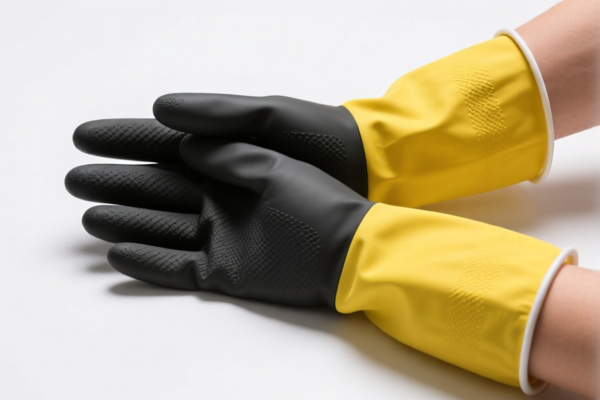
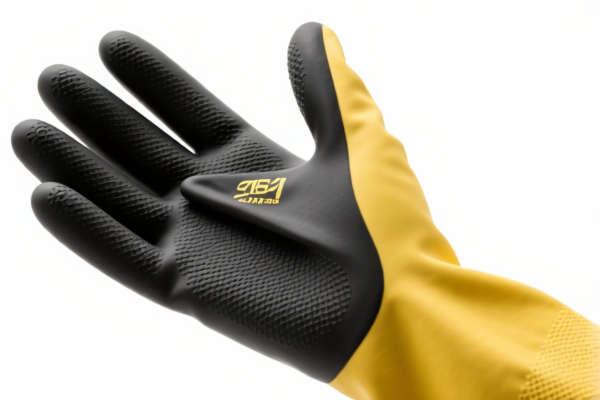
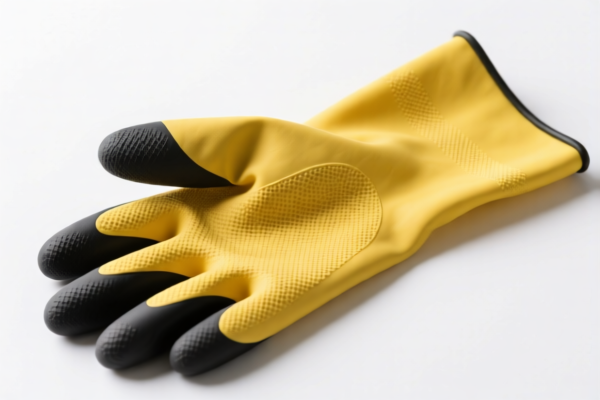
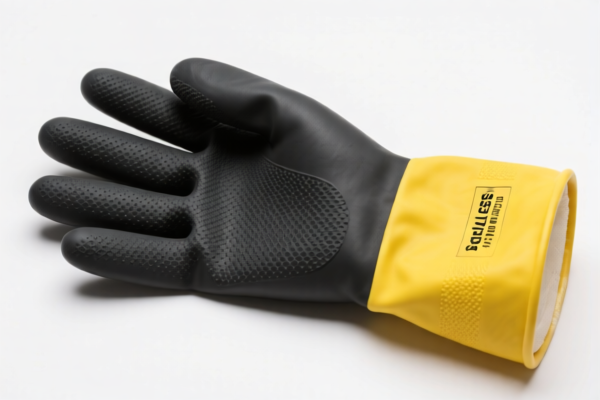
Industrial seamless rubber gloves are specialized protective gear designed for environments requiring high dexterity, chemical resistance, or mechanical protection. Unlike dipped gloves (which are coated), seamless gloves are formed directly from liquid latex or rubber compounds through a molding process, resulting in a uniform thickness and no side seams.
⚠️ Key Distinction:
- Seamless Construction: Molded from start to finish, offering superior barrier protection and comfort.
- Material Composition: Primarily Natural Rubber (Latex) or Synthetic Rubber (e.g., Nitrile, Neoprene, PVC).
- Application: Industrial hygiene, chemical handling, medical procedures, electronics manufacturing.
📦 2. HS Code Classification Details (2026 Latest Tariff Authority Comparison)
Based on the provided data, here is the breakdown of how "Industrial Seamless Rubber Gloves" might be classified depending on their specific material composition and manufacturing finish.
| HS Code | Product Description | Application Scenario | Material/Feature Focus |
|---|---|---|---|
3926.20.40.50 |
Rubber Material Gloves, Classified as "Other Gloves" | General industrial use, non-medical, non-specialized | General Rubber |
6116.10.65.00 |
Gloves Impregnated or Coated with Rubber, Knitted | Liner gloves, rubber-coated knit bases | Knitted Base + Rubber Coating |
4015.19.11.50 |
Vulcanized Rubber Gloves, Classified as "Other" | Heavy-duty industrial, chemical resistance | Vulcanized Natural/Synthetic Rubber |
4015.19.51.00 |
Vulcanized Rubber Garments & Accessories (Gloves) | Specialized protective gear, high-end industrial | Vulcanized Rubber Apparel Component |
3926.20.10.50 |
Other Seamless Industrial Gloves, Catch-all Logic | Non-standard materials, unique synthetic blends | Seamless, Catch-all Category |
🔍 Critical Note:
- The classification hinges on whether the glove is knitted then dipped (6116.10.65.00) or fully molded/seamless (4015.19.xxxxor3926.20.xxxx).
- Seamless gloves typically fall under Chapter 40 (Rubber) if made entirely of rubber, or Chapter 39 (Plastics) if made of certain synthetic polymers not classified as rubber.
- Vulcanization is a key indicator for4015classification.
💰 3. 2026 Latest Tariff Rate Breakdown (Including Surtaxes & Policy Add-ons)
✅ Applicable Country: United States (US)
✅ Country of Origin: China (CN)
✅ Effective Date: From November 10, 2025 (and onwards)
🎯 1. 3926.20.40.50 —— Rubber Material Gloves (Other)
| Item | Content |
|---|---|
| Basic Tariff | 6.5% (ad valorem) |
| Surtax (Section 301) | 0.0% |
| Section 122 Surtax | +10.0% |
| Total Tax Rate | 16.5% |
| Tax Calculation | CIF Value × 16.5% |
| De Minimis Eligibility | ❌ No |
| Legal Basis Path | General Tariff: 6.5% → Section 122: 10% |
📌 Explanation:
- This is a moderate tariff category.
- No Section 301 surtax applies, but the Section 122 surtax of 10% is active.
- Suitable for general-purpose industrial gloves made of non-vulcanized or specific synthetic rubber materials.
🎯 2. 6116.10.65.00 —— Rubber-Coated Knitted Gloves
| Item | Content |
|---|---|
| Basic Tariff | 7.0% |
| Surtax (Section 301) | 7.5% |
| Section 122 Surtax | +10.0% |
| Total Tax Rate | 24.5% |
| Tax Calculation | CIF Value × 24.5% |
| De Minimis Eligibility | ❌ No |
| Legal Basis Path | General Tariff: 7.0% → Section 301: 7.5% → Section 122: 10% |
📌 Explanation:
- Higher tax burden due to the combination of Section 301 and Section 122.
- Applies if the glove has a knitted fabric base with rubber impregnation.
- Not fully seamless molded rubber; it’s a coated product.
🎯 3. 4015.19.11.50 —— Vulcanized Rubber Gloves (Other)
| Item | Content |
|---|---|
| Basic Tariff | 3.0% |
| Surtax (Section 301) | 25.0% |
| Section 122 Surtax | +10.0% |
| Total Tax Rate | 38.0% |
| Tax Calculation | CIF Value × 38.0% |
| De Minimis Eligibility | ❌ No |
| Legal Basis Path | General Tariff: 3.0% → Section 301: 25.0% → Section 122: 10% |
📌 Explanation:
- High tariff rate driven by the significant Section 301 surtax (25%).
- Applies to vulcanized rubber gloves, which are common in heavy industrial settings.
- Despite a low basic tariff, the total cost is high due to trade restrictions.
🎯 4. 4015.19.51.00 —— Vulcanized Rubber Garments & Accessories
| Item | Content |
|---|---|
| Basic Tariff | 14.0% |
| Surtax (Section 301) | 25.0% |
| Section 122 Surtax | +10.0% |
| Total Tax Rate | 49.0% |
| Tax Calculation | CIF Value × 49.0% |
| De Minimis Eligibility | ❌ No |
| Legal Basis Path | General Tariff: 14.0% → Section 301: 25.0% → Section 122: 10% |
📌 Explanation:
- Highest tariff rate in the provided dataset.
- Applies if gloves are classified under "Garments and Accessories" of vulcanized rubber.
- Strongly advise against this classification unless structurally mandatory, as it nearly doubles the cost compared to3926.20.40.50.
🎯 5. 3926.20.10.50 —— Other Seamless Industrial Gloves (Catch-all)
| Item | Content |
|---|---|
| Basic Tariff | 0.0% |
| Surtax (Section 301) | 0.0% |
| Section 122 Surtax | +10.0% |
| Total Tax Rate | 10.0% |
| Tax Calculation | CIF Value × 10.0% |
| De Minimis Eligibility | ❌ No |
| Legal Basis Path | General Tariff: 0.0% → Section 122: 10% |
📌 Explanation:
- Lowest tariff rate among the options.
- Applies to seamless gloves that fit a "catch-all" logic for other materials not specifically detailed elsewhere.
- Optimal Choice if your product qualifies under this description (e.g., non-vulcanized, specific synthetic seamless gloves).
🛠️ 4. Customs Clearance Practical Advice (Battle-Tested Pitfall Guide)
✅ 1. Preparation Checklist (Non-negotiable)
| Document | Required | Explanation |
|---|---|---|
| ✅ Product Specification Sheet | ✔️ | Must detail material (Natural/Synthetic), thickness, vulcanization status, and usage. |
| ✅ Material Safety Data Sheet (MSDS) | ✔️ | Critical for chemical resistance claims. |
| ✅ Product Photos (Unpacked & Packed) | ✔️ | Show seamless construction, no knit fabric base (if claiming 3926 or 4015). |
| ✅ Commercial Invoice | ✔️ | Clearly state "Seamless Rubber Gloves," not generic "Protective Gloves." |
| ✅ Certificate of Origin (CO) | ✔️ | Essential for Section 301/122 determination. |
✅ 2. Classification Strategy (Key Mantra)
🔥 “Seamless vs. Coated, Vulcanized or Not, Chapter 40 or 39, Tariff Varies Huge!”
| Scenario | Correct HS Code | Wrong Classification | Risk |
|---|---|---|---|
| Fully Molded, Non-Knit, Non-Vulcanized | 3926.20.10.50 |
6116.10.65.00 |
Tax jumps from 10% to 24.5% |
| Fully Molded, Vulcanized, Industrial | 4015.19.11.50 |
3926.20.40.50 |
Tax jumps from 38% to 16.5% (Wait, this is lower! But 4015 is more accurate for vulcanized). Note: Misclassification can lead to penalties even if tax is lower. |
| Knitted Base + Rubber Coating | 6116.10.65.00 |
4015.19.11.50 |
Tax drops from 38% to 24.5%, but must prove knit base. |
| High-End Protective Garment Accessory | 4015.19.51.00 |
4015.19.11.50 |
Tax jumps from 49% to 38%. Avoid 4015.19.51.00 if possible. |
✅ 3. Special Situations Handling
| Situation | Handling Advice |
|---|---|
| OEM Custom Gloves | Provide client specs + design drawings. Prove "Seamless" construction with cross-section photos. |
| Mixed Materials | If glove has a cotton liner, it’s not seamless rubber → Use 6116.10.65.00. |
| Chemical Resistance Claim | Must provide test reports (e.g., ASTM D5159) to support "Industrial" classification. |
| Medical vs. Industrial | Medical gloves may have different codes (4015.13). Clearly state "Industrial Use" to avoid medical device scrutiny. |
🌍 5. Global Market Customs Comparison (2026 Latest)
| Country/Region | Recommended HS Code | Tariff Rate | Certification | Note |
|---|---|---|---|---|
| 🇺🇸 USA | 3926.20.10.50 (if applicable) |
10% | None | Lowest US Tariff |
| 🇺🇸 USA | 4015.19.11.50 |
38% | None | High due to Section 301 |
| 🇨🇳 China | 4015.19.11.50 |
~7-10% | CCC (if medical) | Lower base tariff, no surtax |
| 🇪🇺 EU | 4015.11.00 |
0% | CE, REACH | No Section 122/301 |
| 🇯🇵 Japan | 4015.11.00 |
~5% | PSE (if electrical) | Moderate tariff |
📌 Conclusion:
- USA is the most complex market due to Section 122 (10%) and Section 301 (0%-25%) surtaxes.
- Strategy: Aim for3926.20.10.50(10%) if the product fits the "seamless, non-vulcanized, other material" description.
- Avoid4015.19.51.00(49%) unless absolutely necessary.
📌 6. Common Errors & Pitfall Guide (Blood & Tears Lessons)
❌ Error 1: Classifying knitted rubber-coated gloves as seamless rubber gloves
👉 Result: If customs finds knit base, they may reclassify to 6116.10.65.00 (24.5%) or impose penalties for misdeclaration.
❌ Error 2: Claiming vulcanized gloves are non-vulcanized to get 10% tax
👉 Result: Customs lab tests will detect vulcanization → Reclassify to 4015.19.11.50 (38%) + penalties + delay.
❌ Error 3: Using generic "Gloves" in invoice description
👉 Result: Customs may select the highest tax code (4015.19.51.00 at 49%) for audit purposes.
❌ Error 4: Ignoring Section 122 applicability
👉 Result: All Chinese-origin rubber gloves are subject to 10% Section 122 surtax. Forgetting this leads to underpayment.
✅ Correct Approach:
“Seamless Nitrile Rubber Industrial Gloves, Vulcanized/Non-Vulcanized, For Chemical Handling, Model XYZ, No Knit Base”
🎯 7. Conclusion: Precise Classification Saves Money!
🎯 Remember the Mantra:
🔹 “Seamless + Non-Vulcanized = 10% (
3926.20.10.50); Seamless + Vulcanized = 38% (4015.19.11.50); Knitted + Coated = 24.5% (6116.10.65.00); Garment Accessory = 49% (4015.19.51.00).”
🔹 “HS Code Determines Fate, Tax Difference is Huge, Declare Accurately, Avoid Penalties!”
📌 Pro Tip:
- If your gloves are non-vulcanized and truly seamless, fight for 3926.20.10.50 to save 28% vs. vulcanized options.
- If vulcanized, 4015.19.11.50 (38%) is better than 4015.19.51.00 (49%).
- Always consult a customs broker for Pre-Ruling (Advance Ruling) if your product is ambiguous.
📣 Act Now:
📞 Contact a licensed customs broker + Provide product cross-section images + Apply for HS Code Pre-Ruling
🚀 Ensure smooth clearance, cost efficiency, and compliance!
✨ Professional Clearance Starts with Accurate Classification!
💼 Every percent of tariff saved is pure profit!
用户评价
关于 HS 编码归类
协调制度(HS)是由世界海关组织(WCO)制定的国际贸易商品分类标准。全球 200 多个国家采用 HS 系统作为海关关税、贸易统计和进出口监管的基础。
每个 HS 编码遵循以下层级结构:
- 章(2 位)——商品大类(例如:第 84 章:机器和机械设备)
- 品目(4 位)——章内的更具体分类
- 子目(6 位)——国际通用细分,所有 WCO 成员国统一使用
- 本国细分(8-10 位)——各国自行扩展的细分编码,如美国 HTSUS 10 位编码
正确的 HS 编码归类对于顺利通关、准确缴纳关税和遵守贸易法规至关重要。错误归类可能导致海关延误、多缴关税或罚款。
从CN进口到US时,适用的关税税率可能包括:
- 最惠国(MFN)税率——适用于 WTO 成员国的标准关税税率
- 普通税率——适用于无贸易协定国家
- 贸易救济关税——附加关税,如 301 条款(反倾销)、232 条款(国家安全)或反补贴税
本页内容仅供参考。如需正式归类,请咨询当地海关或持牌报关代理。