Industrial Synchronous Belt
CN → US| HS编码 | 关税税率 | 原产国 | 目的国 | 文档 |
|---|---|---|---|---|
| 8483901050 | 37.8% | CN | US | 官方文档 |
| 8483908080 | 37.8% | CN | US | 官方文档 |
| 4010359000 | 38.3% | CN | US | 官方文档 |
| 4010369000 | 38.3% | CN | US | 官方文档 |
| 5910001020 | 39.0% | CN | US | 官方文档 |
商品图片
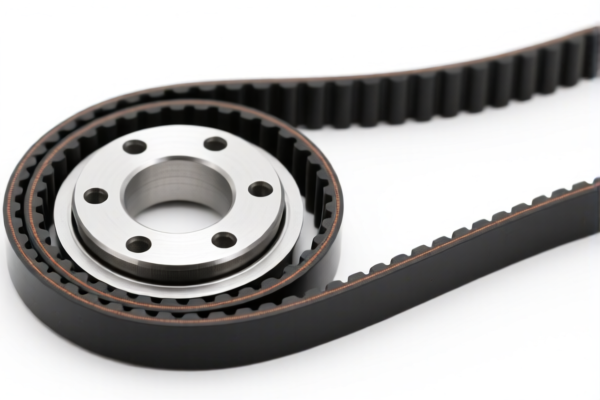
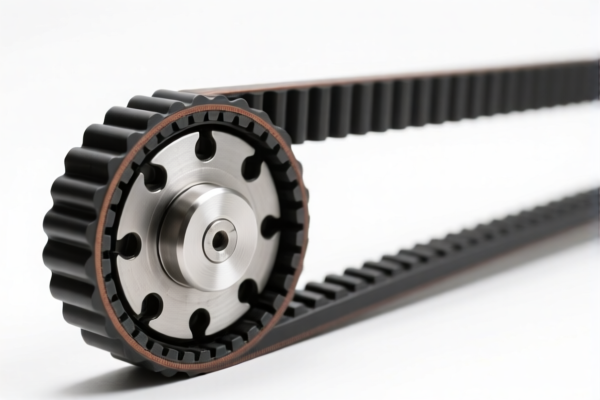
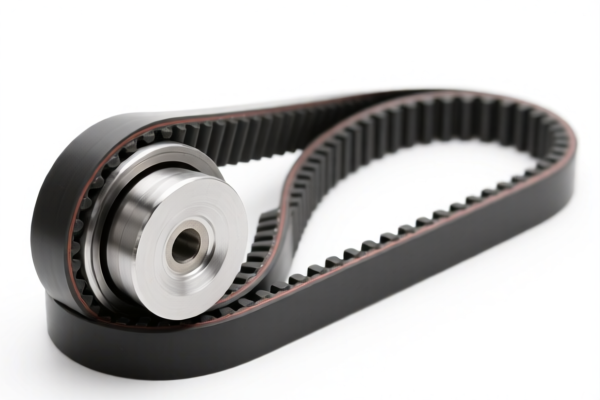
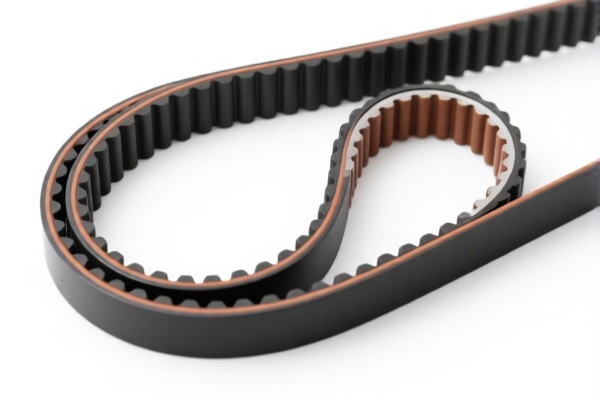
AI分析
🏭 Industrial Synchronous Belt (Timing Belt)
🌐 HS Code Reference & Customs Clearance Guide | 2026 Latest Tariff Analysis | Professional Clearance Strategy
📌 I. Product Definition & Classification: Do You Truly Understand "Synchronous Belts"?
Industrial Synchronous Belts, also known as timing belts, are critical transmission components used in machinery to transmit power and motion without slippage. In international trade, they are classified based on their material composition and functional role within the mechanical system.
Transmission Components (Mechanical): Belts considered as parts of transmission devices, regardless of material, falling under Chapter 84.
Rubber Products: Belts primarily defined by their rubber material nature, falling under Chapter 40.
Textile/Artificial Fiber Products: Belts made predominantly of textile materials or artificial fibers, falling under Chapter 59.
⚠️ Key Distinction Points:
- If the belt is treated as a mechanical part of a machine (emphasizing function over material) → Classified under 8483.90
- If the belt is treated as a rubber good (emphasizing material) → Classified under 4010
- If the belt is treated as a textile/aramid product (emphasizing fabric reinforcement) → Classified under 5910
📦 II. HS Code Classification Details (2026 Latest Tariff Authority对照)
| HS Code | Product Description | Applicable Scenario | Material Basis |
|---|---|---|---|
8483.90.10.50 |
Other transmission parts (Synchronous Belt) | Mechanical transmission systems; regarded as transmission components | Mechanical/General |
8483.90.80.80 |
Other parts of transmission shafts/cranks (Synchronous Belt) | "Catch-all" category for transmission devices and pulleys | Mechanical/General |
4010.35.90.00 |
Other V-ribbed or toothed belts of vulcanized rubber (Synchronous Belt) | Rubber-based belts; inferred rubber material with no conflict | Vulcanized Rubber |
4010.36.90.00 |
Other toothed belts of vulcanized rubber (Synchronous Belt) | Rubber-based belts; consistent morphology, no other category conflicts | Vulcanized Rubber |
5910.00.10.20 |
Transmission belts, whether or not reinforced, of textile materials or artificial fibers (Synchronous Belt) | Textile-reinforced belts; inferred textile/artificial fiber material | Textile/Artificial Fiber |
🔍 Critical Reminder:
- Chapter 84 (8483): Focuses on the function as a transmission part. Often preferred if the belt is sold as a machine part.
- Chapter 40 (4010): Focuses on the material (rubber). Common for standard industrial rubber timing belts.
- Chapter 59 (5910): Focuses on textile reinforcement (e.g., aramid, polyester cords). Used for high-strength or specialized textile-based belts.
💰 III. 2026 Latest Tariff Rate Breakdown (Including Surcharges & Policy Add-ons)
✅ Applicable Country: United States (US)
✅ Origin: China (CN)
✅ Effective Date: From November 10, 2025 (for subsequent imports)
🎯 1. 8483.90.10.50 & 8483.90.80.80 —— Transmission Parts (Mechanical Classification)
| Item | Content |
|---|---|
| Base Tariff | 2.8% (ad valorem) |
| USITC Surcharge (Section 301) | +25.0% |
| IEEPA Surcharge (Section 122/Trump Tariff) | +10.0% |
| Total Tariff | 37.8% |
| Tax Calculation | CIF Value × 37.8% |
| De Minimis Eligibility | ❌ Not Eligible (deny_de_minimis) |
| Legal Basis Path | IEEPA:9903.01.25 → USITC:8483.90.10.50 / 8483.90.80.80 |
📌 Explanation:
- "Base Tariff 2.8%": Standard Most Favored Nation (MFN) rate for mechanical transmission parts.
- "USITC Surcharge 25%": From Section 301 Tariffs on Chinese goods.
- "IEEPA Surcharge 10%": Additional tariff under the International Emergency Economic Powers Act.
- Total 37.8%: High cost. Requires careful cost-benefit analysis.
🎯 2. 4010.35.90.00 & 4010.36.90.00 —— Rubber Synchronous Belts (Material Classification)
| Item | Content |
|---|---|
| Base Tariff | 3.3% (ad valorem) |
| USITC Surcharge (Section 301) | +25.0% |
| IEEPA Surcharge (Section 122/Trump Tariff) | +10.0% |
| Total Tariff | 38.3% |
| Tax Calculation | CIF Value × 38.3% |
| De Minimis Eligibility | ❌ Not Eligible (deny_de_minimis) |
| Legal Basis Path | IEEPA:9903.01.25 → USITC:4010.35.90.00 / 4010.36.90.00 |
📌 Note:
- Slightly Higher Base Rate: 3.3% vs. 2.8% for mechanical parts, leading to a total of 38.3% vs. 37.8%.
- Material Inference: Customs assumes "vulcanized rubber" for synchronous belts unless proven otherwise.
- No Conflict: No conflicting features detected for rubber classification.
🎯 3. 5910.00.10.20 —— Textile/Artificial Fiber Synchronous Belts
| Item | Content |
|---|---|
| Base Tariff | 4.0% (ad valorem) |
| USITC Surcharge (Section 301) | +25.0% |
| IEEPA Surcharge (Section 122/Trump Tariff) | +10.0% |
| Total Tariff | 39.0% |
| Tax Calculation | CIF Value × 39.0% |
| De Minimis Eligibility | ❌ Not Eligible (deny_de_minimis) |
| Legal Basis Path | IEEPA:9903.01.25 → USITC:5910.00.10.20 |
📌 Note:
- Highest Total Tariff: 39.0% due to higher base rate (4.0%) for textile-based products.
- Use Case: High-strength belts with aramid or polyester cord reinforcement where textile is the defining feature.
- No Material Conflict: Assumed textile/artificial fiber material with no conflicting characteristics.
🛠️ IV. Customs Clearance Practical Advice (Real-World Pitfall Avoidance)
✅ 1. Document Checklist (Mandatory)
| Document | Must Provide | Description |
|---|---|---|
| ✅ Product Spec Sheet | ✔️ | Includes material composition (rubber vs. textile), reinforcement type, tooth profile |
| ✅ Material Test Report | ✔️ | Third-party lab report confirming rubber content or textile reinforcement |
| ✅ Product Photos | ✔️ | Clear images of belt, side view (showing teeth), and cross-section if possible |
| ✅ Commercial Invoice | ✔️ | Clearly state "Synchronous Belt" or "Timing Belt" with HS Code |
| ✅ Packing List | ✔️ | Quantity, weight, dimensions |
| ✅ Origin Certificate | ✔️ | If not China-origin, may qualify for lower rates |
✅ 2. Declaration Tips (Key Mantra)
🔥 "Material Defines Chapter, Function Defines Heading: Choose Wisely!"
| Scenario | Correct Declaration | Incorrect Practice |
|---|---|---|
| Standard Rubber Belt | 4010.35.90.00 or 4010.36.90.00 |
Declare as mechanical part → 37.8% (still high, but base rate differs) |
| Textile-Reinforced Belt | 5910.00.10.20 |
Declare as rubber → Potential misclassification penalty |
| General Transmission Part | 8483.90.10.50 |
Declare as rubber → Slightly lower tax (37.8% vs. 38.3%) |
| Mixed Material Belt | Provide detailed breakdown | Vague description → Customs may assign worst-case rate |
✅ 3. Special Cases Handling
| Scenario | Handling Advice |
|---|---|
| OEM Custom Belts | Provide customer order + design drawings to confirm material |
| Belts with Metal Cores | If metal core dominates, may fall under 8483; otherwise, still 4010/5910 |
| Small Sample Shipments | No de minimis exemption for China-origin goods → Declare properly |
| High-Performance Belts | If aramid/textile is key, use 5910; if rubber is key, use 4010 |
🌍 V. Global Market Clearance Comparison (2026 Latest)
| Country/Region | Recommended HS Code | Tariff | Certification | Notes |
|---|---|---|---|---|
| 🇺🇸 USA | 4010.35.90.00 / 8483.90.10.50 |
37.8% - 39.0% (China-origin) | N/A | Highest tariffs among major markets |
| 🇨🇳 China | 4010.35.90.00 |
~5-10% | CCC (if applicable) | Lower base rates, no Section 301 |
| 🇪🇺 EU | 4010.35.00 |
0% - 3% | CE (if machinery) | No Section 301 equivalent |
| 🇦🇺 Australia | 4010.35.00 |
5% | N/A | Moderate rates |
| 🇯🇵 Japan | 4010.35.00 |
0% - 2% | N/A | Low rates |
📌 Conclusion:
- USA imposes the highest tariffs on Chinese synchronous belts due to Section 301 + IEEPA.
- EU, Japan, and Australia offer significantly lower tariffs, making them more cost-effective markets.
- China-origin goods face significant hurdles in the US market; consider supply chain diversification if volume is high.
📌 VI. Common Errors & Pitfall Guide (Lessons from Experience)
❌ Error 1: Declaring a rubber belt as a "textile belt" to avoid scrutiny
👉 Consequence: Customs may reject and reclassify → Penalty + delay
❌ Error 2: Using generic terms like "Belts" without specifying type
👉 Consequence: Customs may assign highest possible rate → 39.0%
❌ Error 3: Ignoring material composition in documentation
👉 Consequence: Discrepancy between spec sheet and declaration → Hold for inspection
❌ Error 4: Assuming de minimis exemption applies
👉 Consequence: Shipments held, duties assessed retroactively + storage fees
✅ Correct Approach:
"Synchronous Belt, Vulcanized Rubber, Toothed Profile, 10mm Width, 500mm Length, Model XYZ, for Industrial Machinery"
🎯 VII. Conclusion: Professional Declaration, Cost Savings, Efficiency!
🎯 Remember the Mantra:
🔹 "Material Determines Chapter, Function Determines Heading!"
🔹 "HS Code Decides Fate, Tax Rate Differs by 1.2%, One Mistake Costs Thousands!"
📌 Tips:
- If your synchronous belts are originating from Vietnam, Mexico, Thailand, or Malaysia, you may qualify for IEEPA Exemptions or lower tariffs.
- Consider Advance Ruling application to customs before shipment to avoid classification risks.
- For high-volume imports, evaluate supply chain shift to non-China origins to mitigate 301/122 tariffs.
📣 Immediate Action:
📞 Contact Professional Customs Broker + Provide Product Photos + Apply for HS Code Advance Ruling
🚀 Ensure Smooth Customs Clearance, Efficient Export, and Profit Maximization!
✨ Professional Customs Clearance Starts with Accurate Classification!
💼 Every Dollar of Your Cost Deserves Precise Calculation!
用户评价
关于 HS 编码归类
协调制度(HS)是由世界海关组织(WCO)制定的国际贸易商品分类标准。全球 200 多个国家采用 HS 系统作为海关关税、贸易统计和进出口监管的基础。
每个 HS 编码遵循以下层级结构:
- 章(2 位)——商品大类(例如:第 84 章:机器和机械设备)
- 品目(4 位)——章内的更具体分类
- 子目(6 位)——国际通用细分,所有 WCO 成员国统一使用
- 本国细分(8-10 位)——各国自行扩展的细分编码,如美国 HTSUS 10 位编码
正确的 HS 编码归类对于顺利通关、准确缴纳关税和遵守贸易法规至关重要。错误归类可能导致海关延误、多缴关税或罚款。
从CN进口到US时,适用的关税税率可能包括:
- 最惠国(MFN)税率——适用于 WTO 成员国的标准关税税率
- 普通税率——适用于无贸易协定国家
- 贸易救济关税——附加关税,如 301 条款(反倾销)、232 条款(国家安全)或反补贴税
本页内容仅供参考。如需正式归类,请咨询当地海关或持牌报关代理。