Industrial Transmission Textile Synchronous Belt
CN → US| HS编码 | 关税税率 | 原产国 | 目的国 | 文档 |
|---|---|---|---|---|
| 4010364500 | 41.4% | CN | US | 官方文档 |
| 5910001020 | 39.0% | CN | US | 官方文档 |
| 4010354500 | 41.4% | CN | US | 官方文档 |
商品图片
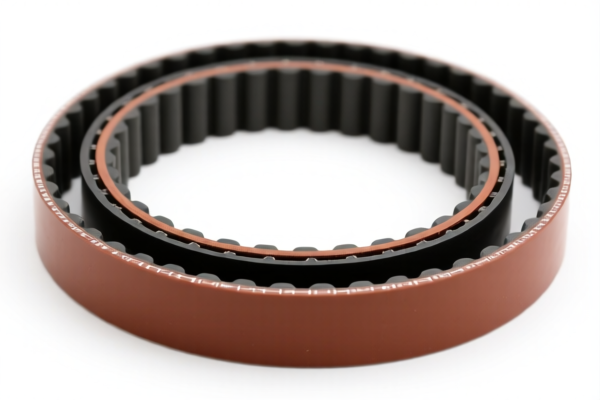
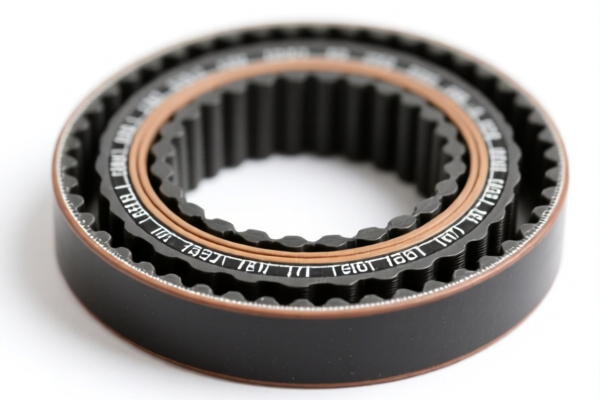
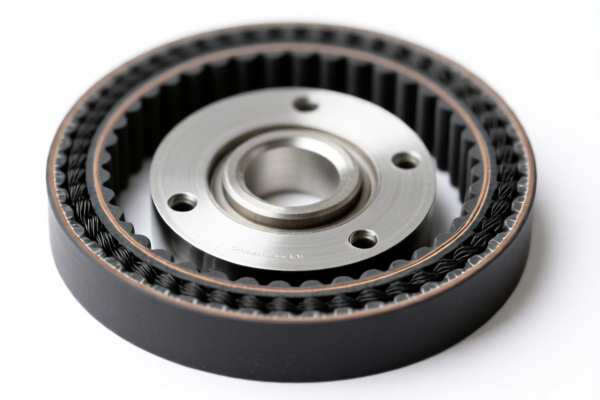
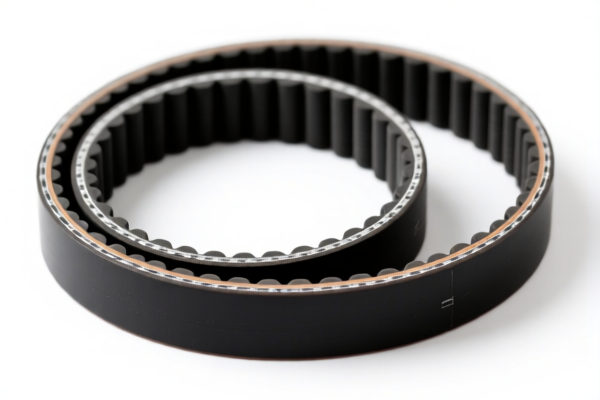
AI分析
🏭 Industrial Transmission Textile Synchronous Belt
🌐 HS Code Reference & Customs Clearance Guide | 2026 Latest Tariff Analysis | Professional Entry Strategy
📌 I. Product Definition & Classification: Do You Really Know the "Textile Reinforced Synchronous Belt"?
Industrial transmission textile synchronous belts are critical power transmission components used in machinery, automotive engines, and manufacturing lines. In international trade, they are primarily classified based on their material composition and structural reinforcement.
Reinforcement Material: The key differentiator is the presence of "textile reinforcement" (typically nylon, polyester, or aramid cords). This distinguishes them from standard rubber belts or those reinforced with steel cords.
Core Material: The body of the belt is typically Vulcanized Rubber (Chapter 40) or a composite fabric (Chapter 59).
⚠️ Key Distinction Point:
- If the belt is made of vulcanized rubber with textile cords embedded for strength → It falls under Chapter 40 (Rubber Articles).
- If the belt is considered primarily as an article of textile fabric (even if rubber-coated) → It may fall under Chapter 59 (Impregnated Fabric).
- Steel-reinforced belts are excluded from these specific textile codes and fall elsewhere (e.g., 4010.31/39).
📦 II. HS Code Classification Details (2026 Latest Tariff Authority Comparison)
Based on the specific characteristics of "Industrial Transmission Textile Synchronous Belt", here are the three most relevant HS codes from the provided data:
| HS Code | Product Description | Applicability Scenario | Reinforcement Type |
|---|---|---|---|
5910.00.10.20 |
Synchronous Belts, of textile material | Belts where the textile aspect is dominant; explicitly defined as "synchronous belts" made of artificial fibers/textiles. | ✅ Textile (Artificial Fibers) |
4010.35.45.00 |
Vulcanized Rubber Synchronous Belts (Textile Reinforced) | Standard rubber belts reinforced with textile cords. Matches "non-endless synchronous belts" with textile integration. | ✅ Rubber Body + Textile Cord |
4010.36.45.00 |
Vulcanized Rubber Synchronous Belts (Textile Reinforced) | Similar to above; matches "synchronous belt" form with "combined with textile materials" feature. | ✅ Rubber Body + Textile Cord |
🔍 Critical Reminder:
-5910.00.10.20: Best if the belt is classified as a textile article. The summary notes it "completely conforms to the definition of synchronous belts made of artificial fibers."
-4010.35.45.00&4010.36.45.00: Best if the belt is primarily a rubber product (Chapter 40) that has been reinforced with textile cords. The summaries emphasize the "vulcanized rubber" subject matter and "textile reinforcement" feature.
- Avoid Misclassification: Do not classify steel-corded synchronous belts here. Ensure the "textile" component is the primary reinforcement type.
💰 III. 2026 Latest Tariff Rate Breakdown (Including Surcharges & Policy Add-ons)
✅ Applicable Country: United States (US)
✅ Origin: China (CN)
✅ Effective Date: 2025/2026 (Current Policy)
🎯 1. 5910.00.10.20 —— Synchronous Belts, of Textile Material
| Item | Detail |
|---|---|
| Base Tariff | 4.0% (ad valorem) |
| Section 301 Surcharge | +25.0% (USITC Footnote for Chinese goods) |
| Section 122 Surcharge | +10.0% (Specific duty on certain goods from China) |
| Total Tax Rate | 39.0% |
| Tax Calculation | CIF Value × 39.0% |
| De Minimis Exemption | ❌ Not Eligible (Section 301 goods are strictly excluded from de minimis relief) |
| Legal Basis Path | USITC:5910.00.10.20 → 301:25% → 122:10% |
📌 Explanation:
- This code carries the lowest total tariff (39.0%) among the three options because its base rate (4.0%) is lower than the rubber codes (6.4%).
- However, it is still subject to both the 25% Section 301 and 10% Section 122 surcharges.
- Note: Classification as a "textile article" (Ch 59) can sometimes be challenged if the rubber content is high, potentially leading to audits.
🎯 2. 4010.35.45.00 —— Vulcanized Rubber Synchronous Belts (Textile Reinforced)
| Item | Detail |
|---|---|
| Base Tariff | 6.4% (ad valorem) |
| Section 301 Surcharge | +25.0% (USITC Footnote for Chinese goods) |
| Section 122 Surcharge | +10.0% (Specific duty on certain goods from China) |
| Total Tax Rate | 41.4% |
| Tax Calculation | CIF Value × 41.4% |
| De Minimis Exemption | ❌ Not Eligible |
| Legal Basis Path | USITC:4010.35.45.00 → 301:25% → 122:10% |
📌 Note:
- This is the most common classification for standard industrial rubber belts with textile cords.
- The 2.4% difference compared to5910comes from the higher base tariff.
- Must provide clear documentation showing vulcanized rubber as the main material.
🎯 3. 4010.36.45.00 —— Vulcanized Rubber Synchronous Belts (Textile Reinforced)
| Item | Detail |
|---|---|
| Base Tariff | 6.4% (ad valorem) |
| Section 301 Surcharge | +25.0% (USITC Footnote for Chinese goods) |
| Section 122 Surcharge | +10.0% (Specific duty on certain goods from China) |
| Total Tax Rate | 41.4% |
| Tax Calculation | CIF Value × 41.4% |
| De Minimis Exemption | ❌ Not Eligible |
| Legal Basis Path | USITC:4010.36.45.00 → 301:25% → 122:10% |
📌 Note:
- Functionally similar to4010.35.45.00in terms of tariff.
- The distinction between35and36often lies in specific technical specifications (e.g., endless vs. non-endless, specific size ranges, or precise rubber compound definitions).
- Use this code if the belt is specified as "combined with textile materials" and fits the subheading criteria for4010.36.
🛠️ IV. Customs Clearance Practical Advice (Real-World Pitfall Avoidance)
✅ 1. Required Documentation Checklist (Mandatory)
| Document | Required? | Description |
|---|---|---|
| ✅ Product Specifications | ✔️ | Must explicitly state: "Textile Reinforced" (e.g., Nylon, Polyester cords). |
| ✅ Material Composition Statement | ✔️ | Detail the % of Rubber vs. Textile vs. Rubber Coating. Crucial for Ch 40 vs. Ch 59 dispute. |
| ✅ Technical Drawings | ✔️ | Show cross-section of the belt to prove textile cord structure. |
| ✅ Commercial Invoice | ✔️ | Clearly describe as "Synchronous Belt, Industrial Transmission, Textile Reinforced, Rubber/Textile". |
| ✅ Packing List | ✔️ | Standard packaging details. |
| ✅ Certificate of Origin | ✔️ | Required to determine applicability of China-specific surcharges. |
✅ 2. Declaration Tips (Key Mantra)
🔥 "Material Matters: Rubber or Fabric? Define it clearly!"
| Scenario | Correct Declaration | Incorrect Practice |
|---|---|---|
| Rubber Body + Textile Cords | Use 4010.35 or 4010.36. Emphasize "Vulcanized Rubber". |
Call it "Textile Belt" → Risk of Ch 59 (or audit). |
| Fabric-Based Belt (Rubber Coated) | Use 5910.00.10.20. Emphasize "Artificial Fiber Construction". |
Call it "Rubber Belt" → Risk of Ch 40. |
| Steel Cord Belt | DO NOT USE THESE CODES. Use appropriate steel-cord codes (e.g., 4010.31/39). | Misclassifying steel as textile → Severe Penalty. |
| Mixed Shipment | Separate invoices for Rubber vs. Textile types. | Mixing codes → Customs Delay. |
✅ 3. Special Case Handling
| Situation | Handling Advice |
|---|---|
| New Textile Composition | If using Aramid or Carbon fiber instead of Nylon/Polyester, consult a specialist. May still fit "textile" but verify Chapter 59 applicability. |
| High Rubber Content | If rubber > 50% by weight/structure, 4010 is safer. If fabric dominates, 5910 is better. |
| Customs Audit Trigger | Provide photos of the belt cross-section showing the textile cords embedded in rubber. This is the #1 proof for Ch 40 classification. |
| Section 122 Impact | Note that the 10% Section 122 surcharge applies to all three codes. There is no exemption for synchronous belts under this clause. |
🌍 V. Global Market Comparison (2026 Latest)
| Country/Region | Recommended HS Code | Tariff (China Origin) | Key Requirement |
|---|---|---|---|
| 🇺🇸 USA | 4010.35.45.00 / 5910.00.10.20 |
39.0% - 41.4% | Section 301 + Section 122 apply. No de minimis. |
| 🇨🇳 China | 4010.35.45.00 / 5910.00.10.20 |
~6.4% / ~4.0% | No additional surcharges. |
| 🇪🇺 EU | 4010.35 / 5910.00 |
~4.0% - 6.4% | No Section 301/122 equivalents. CE marking may be needed. |
| 🇨🇦 Canada | 4010.35 / 5910.00 |
~6.4% / ~4.0% | No major surcharges. |
| 🇲🇽 Mexico | 4010.35 / 5910.00 |
~6.4% / ~4.0% | USMCA benefits may apply if originated in NA. |
📌 Conclusion:
- The US market is the most expensive due to the layered surcharges (Base + 25% + 10%).
- Classification Strategy: If your belt is clearly a textile article,5910.00.10.20saves you 2.4% compared to the rubber codes. However, ensure it passes the "Textile Article" test to avoid reclassification penalties.
- Always verify the reinforcement type: If there is any steel, do not use these codes.
📌 VI. Common Errors & Pitfall Guide (Lessons from the Field)
❌ Error 1: Classifying a Steel-Corded Belt as 4010.35.45.00.
👉 Consequence: Customs will reclassify to steel-cord codes (often higher tax or different duty treatment) + Penalties.
❌ Error 2: Claiming De Minimis (Section 321) for shipments under $800.
👉 Consequence: Denied. Section 301 and 122 goods are explicitly excluded from de minimis relief.
❌ Error 3: Vague Description: "Rubber Belt".
👉 Consequence: Customs may choose the higher base tariff code or initiate an audit to determine if it's Ch 40 or Ch 59.
✅ Correct Practice:
"Industrial Synchronous Belt, Model XYZ, Vulcanized Rubber Body with Nylon Textile Reinforcement, for CNC Machinery"
(For Ch 59): "Synchronous Belt, Textile Structure, Artificial Fibers, Rubber-Coated, for Power Transmission"
🎯 VII. Conclusion: Precision in Classification Saves Money!
🎯 Remember the Mantra:
🔹 "Textile Reinforcement? Check Base Rate. Ch 59 saves 2.4% vs Ch 40."
🔹 "US Imports? 39%-41% Tax is Inevitable. Plan Cash Flow."
🔹 "No Steel Cords? Then you're safe in 4010/5910."
📌 Pro Tip:
If your belt uses high-performance textiles (e.g., Kevlar/Aramid), consult a customs broker to confirm if it still fits "Textile" definitions or if it triggers a different material classification.
Pre-classification Ruling: Consider applying for an ACE Ruling from US Customs if the product is complex.
📣 Action Now:
📞 Verify Material Composition → Select HS Code (
4010or5910) → Prepare Cross-Section Photos → Calculate 39-41% Budget.
🚀 Clear Your Inventory, Clear Your Mind, Clear Your Customs!
✨ Professional Customs Clearance Starts with Accurate Classification!
💼 Every Percent Counts in the Age of Trade Wars!
用户评价
关于 HS 编码归类
协调制度(HS)是由世界海关组织(WCO)制定的国际贸易商品分类标准。全球 200 多个国家采用 HS 系统作为海关关税、贸易统计和进出口监管的基础。
每个 HS 编码遵循以下层级结构:
- 章(2 位)——商品大类(例如:第 84 章:机器和机械设备)
- 品目(4 位)——章内的更具体分类
- 子目(6 位)——国际通用细分,所有 WCO 成员国统一使用
- 本国细分(8-10 位)——各国自行扩展的细分编码,如美国 HTSUS 10 位编码
正确的 HS 编码归类对于顺利通关、准确缴纳关税和遵守贸易法规至关重要。错误归类可能导致海关延误、多缴关税或罚款。
从CN进口到US时,适用的关税税率可能包括:
- 最惠国(MFN)税率——适用于 WTO 成员国的标准关税税率
- 普通税率——适用于无贸易协定国家
- 贸易救济关税——附加关税,如 301 条款(反倾销)、232 条款(国家安全)或反补贴税
本页内容仅供参考。如需正式归类,请咨询当地海关或持牌报关代理。