Industrial Walnut Shell Activated Carbon
CN → US| HS编码 | 关税税率 | 原产国 | 目的国 | 文档 |
|---|---|---|---|---|
| 3802100050 | 39.8% | CN | US | 官方文档 |
| 3802100010 | 39.8% | CN | US | 官方文档 |
| 2803000010 | 35.0% | CN | US | 官方文档 |
| 2803000050 | 35.0% | CN | US | 官方文档 |
| 3802100050 | 39.8% | CN | US | 官方文档 |
商品图片
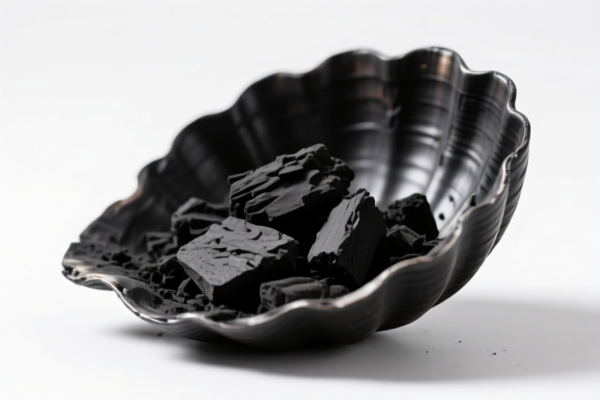
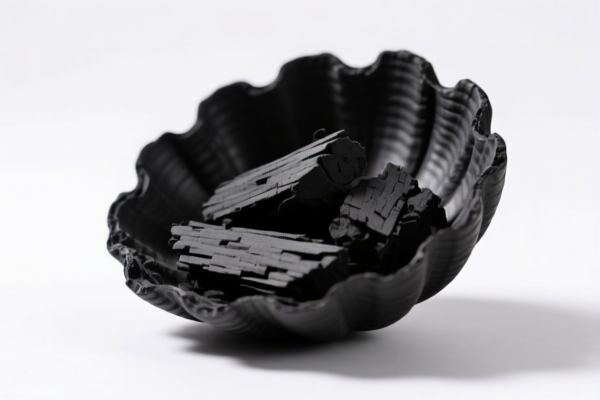
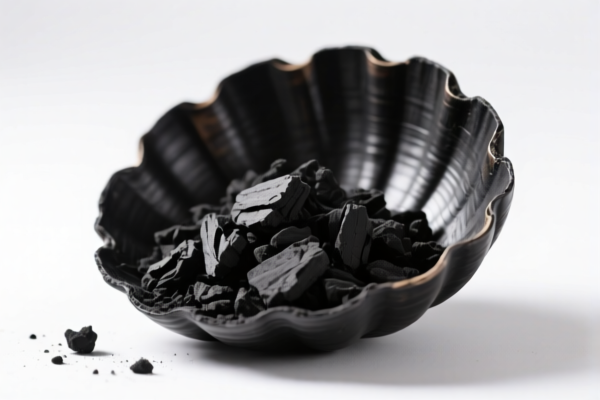
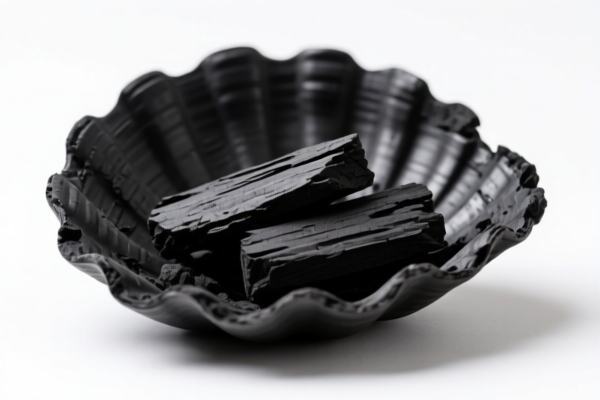
AI分析
🌰 Industrial Walnut Shell Activated Carbon (Industrial Walnut Shell Activated Carbon)
🌐 HS Code Reference & Customs Clearance Guide | 2026 Latest Tariff Analysis | Professional Clearance Strategy
📌 Part I: Product Definition & Classification: Do You Really Understand "Activated Carbon"?
Industrial Walnut Shell Activated Carbon is a high-efficiency adsorption material derived from carbonized walnut shells. It is widely used in water purification, air filtration, and gold recovery. In international trade, its classification is contentious because it sits at the intersection of "Chemical Products" (HS Chapter 38) and "Basic Carbon Forms" (HS Chapter 28).
Two Main Classification Paths:
- HS 3802.10.00 Series (Chemical Products): Classified as "Activated Carbon" (a processed chemical product with adsorptive properties). This is the most common and specific classification for activated carbon, regardless of the raw material (wood, coal, or nut shell).
- HS 2803.00.00 Series (Basic Elements): Classified as "Carbon" (specifically "Other Forms of Carbon" like charcoal or lampblack). Some customs authorities argue that since walnut shell carbon is essentially carbonized biomass, it fits here.
⚠️ Key Distinction Point:
- If the product is explicitly described as "Activated" (porous, high surface area, treated for adsorption) → Prefer HS 3802.10.00 (More specific).
- If the product is simple charcoal/carbon without activation → HS 2803.00.00.
- Note: Walnut shell carbon is almost always "activated" for industrial use, making 3802 the stronger technical fit, but 2803 is often attempted for lower base duties.
📦 Part II: HS Code Classification Details (2026 Latest Tariff Authority Comparison)
| HS Code | Product Description | Applicability | Tax Rate |
|---|---|---|---|
3802.10.00.50 |
Activated Carbon, Other Types | General industrial activated carbon; walnut shell activated carbon falls under "other types" of activated carbon. | 39.8% |
3802.10.00.10 |
Activated Carbon, Industrial Use | Industrial activated carbon with no material or form conflicts; matches general industrial applications. | 39.8% |
2803.00.00.10 |
Carbon, Other Forms | Activated carbon is a form of carbon; fits "black carbon and other forms of carbon." | 35.0% |
2803.00.00.50 |
Carbon, Other Forms | Industrial activated carbon fits "other forms of carbon" classification requirements. | 35.0% |
🔍 Critical Insight:
- HS 3802 is the most accurate description for Activated Carbon because it specifically targets the chemical product category.
- HS 2803 is often used as a cost-saving strategy because the base duty is 0%, but it carries a higher risk of customs scrutiny if the "activation" process isn't clearly documented as simple carbonization.
- Total Tax Rate Difference: 39.8% (3802) vs. 35.0% (2803). The difference is 4.8%, which comes from the base tariff. However, the risk profile differs significantly.
💰 Part III: 2026 Latest Tariff Rate Breakdown (Detailed Tax Clauses)
✅ Applicable Country: USA (US)
✅ Origin: China (CN)
✅ Effective Date: From November 10, 2025 onwards (including subsequent imports)
🎯 1. 3802.10.00.50 & 3802.10.00.10 —— Activated Carbon (Chemical Products)
| Item | Detail |
|---|---|
| Base Duty Rate | 4.8% (Ad Valorem) |
| Section 301 Additional Duty | +25.0% (USITC Footnote 9903.88.01) |
| IEEPA Additional Duty | +10.0% (Targeting China/HK products, effective Nov 10, 2025) |
| Total Tax Rate | 39.8% |
| Tax Calculation | CIF Value × 39.8% |
| De Minimis Exemption | ❌ Not Eligible (deny_de_minimis) |
| Legal Path | IEEPA:9903.01.25 → IEEPA:9903.01.24 → USITC:3802.10.00 → FOOTNOTE:9903.88.01 |
📌 Explanation:
- The 25% is the standard Section 301 tariff on Chinese chemical products.
- The 10% is the new IEEPA surcharge on Chinese goods.
- The 4.8% is the standard MFN base duty for HS 3802.
- Total: 39.8%. This is a high-cost classification.
🎯 2. 2803.00.00.10 & 2803.00.00.50 —— Other Forms of Carbon
| Item | Detail |
|---|---|
| Base Duty Rate | 0.0% (Ad Valorem) |
| Section 301 Additional Duty | +25.0% (USITC Footnote 9903.88.01) |
| IEEPA Additional Duty | +10.0% (Targeting China/HK products, effective Nov 10, 2025) |
| Total Tax Rate | 35.0% |
| Tax Calculation | CIF Value × 35.0% |
| De Minimis Exemption | ❌ Not Eligible (deny_de_minimis) |
| Legal Path | IEEPA:9901.25 → IEEPA:9903.01.24 → USITC:2803.00.00 → FOOTNOTE:9903.88.01 |
📌 Explanation:
- The Base Duty is 0% because carbon in its basic form is often considered a raw material.
- The 25% and 10% surcharges still apply because it is still a Chinese-origin good subject to trade wars.
- Total: 35.0%. This is 4.8% cheaper than HS 3802.
- Risk: Customs may argue that "Activated Carbon" is not just "Carbon" but a "Chemical Product," leading to re-classification and penalties.
🛠️ Part IV: Customs Clearance Practical Advice (Battle-Tested Pitfall Avoidance)
✅ 1. Required Documentation Checklist (Non-negotiable)
| Document | Must Provide | Purpose |
|---|---|---|
| ✅ Product Specification Sheet | ✔️ | Must specify "Activated," porosity, surface area, and raw material (Walnut Shell). |
| ✅ Technical Data Sheet | ✔️ | Proves the "activation" process (physical/chemical) to justify HS 3802 over 2803. |
| ✅ Product Photos | ✔️ | Clear images of the granules/powder, labeling, and packaging. |
| ✅ Third-Party Lab Report | ✔️ | ISTA, ISO, or specific adsorption capacity test results. |
| ✅ Commercial Invoice | ✔️ | Must clearly state "Industrial Walnut Shell Activated Carbon." |
| ✅ Certificate of Origin (CO) | ✔️ | Essential for proving Chinese origin (triggering the 25%+10% tariffs). |
| ✅ Packing List | ✔️ | Net/Gross weight details. |
✅ 2. Declaration Strategy (Key Mnemonics)
🔥 “Specify 'Activated,' Don’t Just Say 'Carbon’! Details Prevent Penalties!”
| Scenario | Correct Declaration | Wrong Practice |
|---|---|---|
| Standard Industrial Use | Use 3802.10.00.50 or 3802.10.00.10. State "Activated Carbon." |
Use 2803.00.00 without proof of activation → Risk of reclassification + penalties. |
| Raw Charcoal (Not Activated) | Use 2803.00.00.10 or 2803.00.00.50. State "Walnut Shell Charcoal." |
Call it "Activated Carbon" → Fraud/Severe penalties. |
| Mixed Shipment | Declare separately. | Combine "Activated" and "Raw" → Customs confusion, holds. |
| Walnut Shell Specificity | Mention "Walnut Shell" in description. | Just "Activated Carbon" → May lose specificity advantage. |
✅ 3. Special Case Handling
| Situation | Recommendation |
|---|---|
| High Adsorption Capacity | If > 1000 mg/g iodine value, strongly support HS 3802. |
| Low-Grade Charcoal | If no activation process, use HS 2803 to save 4.8%. |
| OEM Custom Grains | Provide design specs to justify specific industrial use under 3802.10. |
| Dispute with Customs | If Customs insists on 3802 for a 2803 declaration, be prepared to pay the 4.8% difference + back taxes. |
🌍 Part V: Global Market Comparison (2026 Latest)
| Country/Region | Recommended HS Code | Tariff (China Origin) | Notes |
|---|---|---|---|
| 🇺🇸 USA | 3802.10.00.50 |
39.8% (Base 4.8% + 25% + 10%) | Most accurate for Activated Carbon. 2803 is risky. |
| 🇨🇳 China | 3802.10.00.50 |
5% (Import Duty) | Standard chemical product rate. |
| 🇪🇺 EU | 3802.10.00.50 |
6.5% | No Section 301/IEEPA surcharges. |
| 🇦🇺 Australia | 3802.10.00.50 |
5% | No surcharges. |
| 🇯🇵 Japan | 3802.10.00.50 |
6% | No surcharges. |
📌 Conclusion:
- USA is the most expensive market due to trade tariffs.
- HS 3802 is the safer, more accurate choice for Activated Carbon in the US, despite the slightly higher base rate.
- Attempting HS 2803 in the US for Activated Carbon is a high-risk gamble for a 4.8% saving.
📌 Part VI: Common Mistakes & Pitfall Guide (Blood & Tears Lessons)
❌ Mistake 1: Declaring "Activated Carbon" as "Walnut Shell Charcoal" (HS 2803) without activation proof.
👉 Consequence: Customs reclassifies to HS 3802 → Back taxes + 25% penalty.
❌ Mistake 2: Not specifying "Walnut Shell" in the description.
👉 Consequence: May be misidentified as coal-based carbon, leading to additional environmental compliance checks.
❌ Mistake 3: Assuming De Minimis ($800) applies.
👉 Consequence: Denied. Section 301 and IEEPA goods are never exempt from de minimis.
❌ Mistake 4: Using "Other Carbon" (HS 2803) for high-grade activated carbon.
👉 Consequence: High risk of audit. If the carbon has high surface area, it’s chemically a product, not just a basic material.
✅ Correct Practice:
“Industrial Walnut Shell Activated Carbon, Granular, Iodine Value 1050mg/g, For Water Treatment, Made in China”
🎯 Part VII: Conclusion: Precise Classification Saves Money!
🎯 Remember the Mnemonic:
🔹 “Activated = Chemical (3802) = 39.8%.”
🔹 “Raw Charcoal = Carbon (2803) = 35.0%.”
🔹 “Don’t Guess, Prove It! Or Pay the Penalty!”
📌 Tips:
- If your product is not chemically activated (just carbonized), use HS 2803 to save 4.8%.
- If it is activated (porous, adsorptive), use HS 3802 to ensure compliance.
- Pre-Ruling: Consider applying for an Advance Ruling from CBP if the shipment value is high, to lock in the HS Code.
📣 Take Action Now:
📞 Contact a licensed customs broker + Provide Technical Data Sheet + Apply for Pre-Ruling.
🚀 Ensure smooth clearance, avoid penalties, and maximize profit margins!
✨ Professional Clearance Starts with Accurate Classification!
💼 Every Percentage Point Counts!
用户评价
关于 HS 编码归类
协调制度(HS)是由世界海关组织(WCO)制定的国际贸易商品分类标准。全球 200 多个国家采用 HS 系统作为海关关税、贸易统计和进出口监管的基础。
每个 HS 编码遵循以下层级结构:
- 章(2 位)——商品大类(例如:第 84 章:机器和机械设备)
- 品目(4 位)——章内的更具体分类
- 子目(6 位)——国际通用细分,所有 WCO 成员国统一使用
- 本国细分(8-10 位)——各国自行扩展的细分编码,如美国 HTSUS 10 位编码
正确的 HS 编码归类对于顺利通关、准确缴纳关税和遵守贸易法规至关重要。错误归类可能导致海关延误、多缴关税或罚款。
从CN进口到US时,适用的关税税率可能包括:
- 最惠国(MFN)税率——适用于 WTO 成员国的标准关税税率
- 普通税率——适用于无贸易协定国家
- 贸易救济关税——附加关税,如 301 条款(反倾销)、232 条款(国家安全)或反补贴税
本页内容仅供参考。如需正式归类,请咨询当地海关或持牌报关代理。