Injection Molding Grade Medium Density Polyethylene
CN → US| HS编码 | 关税税率 | 原产国 | 目的国 | 文档 |
|---|---|---|---|---|
| 3901105030 | 41.5% | CN | US | 官方文档 |
| 3901909000 | 41.5% | CN | US | 官方文档 |
| 3902100000 | 41.5% | CN | US | 官方文档 |
| 3917220000 | 38.1% | CN | US | 官方文档 |
| 3901105030 | 41.5% | CN | US | 官方文档 |
商品图片
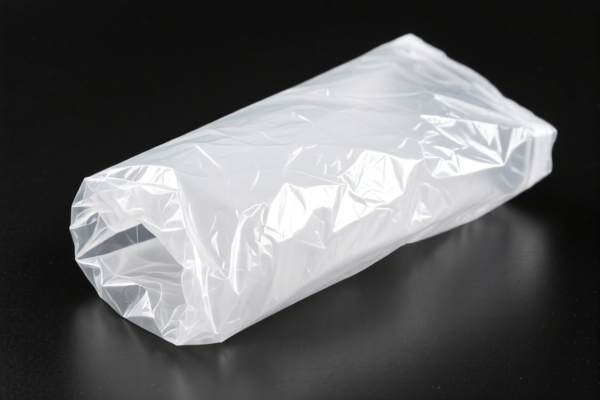
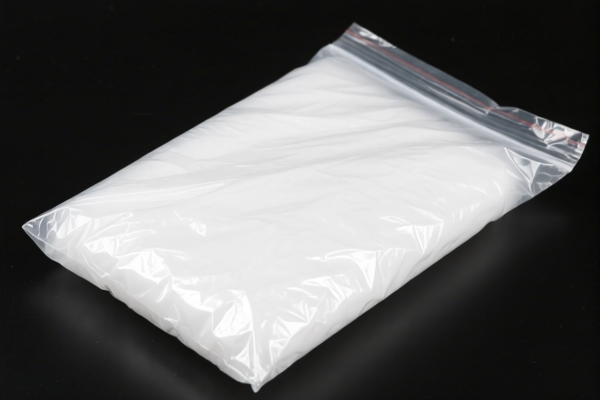


AI分析
🏭 Injection Molding Grade Medium Density Polyethylene (MDPE)
🌐 HS Code Classification & Customs Clearance Guide | 2026 Tariff Deep Dive | Professional Logistics Strategy
📌 一、Product Definition & Classification: Do You Know the Difference Between "MDPE" and "HDPE"?
Medium Density Polyethylene (MDPE) is a versatile plastic polymer used extensively in the manufacturing of pipes, fittings, and containers due to its balance of flexibility and strength. In the context of Injection Molding Grade, the material is specifically formulated to flow into molds at high speeds, producing complex shapes like caps, closures, and automotive parts.
In international trade, the classification depends heavily on: 1. Density: Is it truly "Medium" (0.926–0.940 g/cm³)? 2. Form: Is it in "primary forms" (granules/pellets)? 3. Application: Is it specifically for Injection Molding?
⚠️ Key Distinction for MDPE: - If the product is explicitly Injection Molding Grade and meets the density criteria for MDPE, it often falls under 3901.10.50.30. - If the product is generic "Polyethylene" (including MDPE) in primary forms but doesn't strictly fit the "MDPE Injection Molding" sub-category, it may be classified under the residual category 3901.90.90.00. - Crucial Note: While "Propylene" (PP) items were listed in your data source, MDPE is strictly a Polyethylene (PE) product. Do not confuse it with Polypropylene (PP) under 3902 or 3917.
📦 二、HS Code Classification Details (Based on 2026 Data)
The following HS Codes are derived strictly from the provided data for Injection Molding Grade Medium Density Polyethylene.
| HS Code | Product Description | Application | Density/Form Details |
|---|---|---|---|
3901.10.50.30 |
MDPE Injection Molding Grade | High-precision molding (bottles, caps, automotive parts) | Material: Polyethylene; Attribute: Medium Density; Form: Primary (Pellets) |
3901.90.90.00 |
MDPE Injection Molding Grade (General) | General injection molding where specific sub-codes don't apply | Material: Polyethylene; Form: Primary (Original Shape); Fits general "Other PE" definition |
🔍 Critical Observation: - Both codes share the exact same tax burden (41.5%). - The distinction lies in the specific definition of the "Medium Density" attribute. 3901.10.50.30 is more specific, while 3901.90.90.00 is a catch-all for PE products not meeting other specific sub-codes. - Note on Data: The provided data also lists PP (Polypropylene) codes (
3902.10.00.00and3917.22.00.00). Do not use these for MDPE. Those codes are for Polypropylene, a different polymer. Using them for MDPE will lead to severe customs penalties for misclassification.
💰 三、2026 Tariff Rate Breakdown (Detailed Analysis)
✅ Applicable Region: US (United States) ✅ Country of Origin: China (CN) ✅ Effective Period: 2025 onwards (Current Trade War Era)
🎯 1. 3901.10.50.30 —— MDPE Injection Molding Grade (Specific)
| Item | Content |
|---|---|
| Base Tariff | 6.5% (Ad valorem) |
| Section 301 Tariff (Additional) | +25.0% (From USITC Section 301) |
| 122-Section Tariff (Additional) | +10.0% (Specific China-related provision) |
| Total Tariff Rate | 41.5% |
| Tax Calculation | CIF Value × 41.5% |
| De Minimis Exemption | ❌ Not Applicable (Cannot use $800 de minimis threshold) |
| Legal Pathway | Base Duty: 3901.10 → 301: 25% → Section 122: 10% |
📌 Explanation: - Base Tariff (6.5%): Standard Most-Favored-Nation (MFN) rate for Polyethylene. - Section 301 (25%): Imposed due to the US-China trade dispute on Chinese imports. - Section 122 (10%): A specific additional tariff layer for certain Chinese polymer products. - Result: 41.5% is a very high cost. You cannot rely on small shipments to avoid this.
🎯 2. 3901.90.90.00 —— MDPE Injection Molding Grade (General/Other)
| Item | Content |
|---|---|
| Base Tariff | 6.5% |
| Section 301 Tariff (Additional) | +25.0% |
| 122-Section Tariff (Additional) | +10.0% |
| Total Tariff Rate | 41.5% |
| Tax Calculation | CIF Value × 41.5% |
| De Minimis Exemption | ❌ Not Applicable |
| Legal Pathway | Base Duty: 3901.90 → 301: 25% → Section 122: 10% |
📌 Note: - Despite being a different sub-category, the total tax impact is identical (41.5%). - Classification choice should be based on technical documentation (Certificate of Analysis) proving the density and grade, not tax avoidance, as the rates are the same.
🛠️ 四、Customs Clearance Practical Suggestions (Avoid Pitfalls)
✅ 1. Documentation Checklist (Mandatory)
| Document | Must Provide | Purpose |
|---|---|---|
| ✅ Certificate of Analysis (COA) | ✔️ Critical | Must prove Density (0.926–0.940 g/cm³) and MFI (Melt Flow Index) to confirm "Injection Molding Grade". |
| ✅ Material Safety Data Sheet (MSDS) | ✔️ | Chemical composition details required for polymer safety. |
| ✅ Commercial Invoice | ✔️ | Must clearly state "Medium Density Polyethylene, Injection Molding Grade". Avoid vague terms like "Plastic Granules". |
| ✅ Packing List | ✔️ | Net weight vs. Gross weight; specify container type (PP bags on pallets). |
| ✅ Certificate of Origin (CO) | ✔️ | Essential for proving Origin: China to trigger the correct 301/122 tariffs. |
✅ 2. Declaration Strategy (Golden Rules)
🔥 Rule: "Density & Grade Define the Code!"
| Scenario | Correct Declaration | Wrong Declaration | Consequence |
|---|---|---|---|
| Proven MDPE (Injection Molding) | 3901.10.50.30 |
3901.90.90.00 |
Minor risk of audit, but tax is same. |
| Generic PE Pellets | 3901.90.90.00 |
3902.10.00.00 (PP) |
Severe Penalty: Misclassification of Polymer Type. |
| HDPE (High Density) | 3901.10.50.90 (Example) |
3901.10.50.30 (MDPE) |
Risk of under-declaration or audit. |
| Vague "Plastic Raw Material" | 3901.90.90.00 |
No Code | Customs Hold: Seizure of goods. |
Warning: Do NOT classify MDPE under
3902.10.00.00(Polypropylene) or3917.22.00.00(Tubes/Profiles) just because they share similar tax rates in the data. MDPE is Polyethylene, not Polypropylene. Misclassification leads to legal issues.
✅ 3. Special Circumstances Handling
| Situation | Strategy |
|---|---|
| OEM Customization | Provide the customer's technical drawing + Material Certificate showing density. |
| Mixed Batches | If a shipment contains both MDPE and PP, separate them in the declaration. Do not mix. |
| Pre-Approval | If the density is borderline (e.g., 0.925 vs 0.926), submit a Binding Ruling Request to US CBP before shipping. |
| Transshipment Risk | If shipping via Mexico/Vietnam, be aware that "Made in China" content is still scrutinized for 301/122 duties. |
🌍 五、Global Market Comparison (2026 Context)
| Region | Recommended HS Code | Tariff (China Origin) | Key Certifications | Notes |
|---|---|---|---|---|
| 🇺🇸 USA | 3901.10.50.30 |
41.5% | EPA, FDA (if food contact) | Highest Cost; 301+122 combined. |
| 🇪🇺 EU | 3901.10.50.30 |
~2.5% | REACH, RoHS | No Section 301; Lower cost. |
| 🇨🇳 China | 3901.10.50.30 |
~6.5% | CCC (if applicable) | Base rate only. |
| 🇲🇽 Mexico | 3901.10.50.30 |
~0% (USMCA) | N/A | Excellent hub for US re-export if transformed. |
📌 Conclusion: - The US market is the most expensive destination due to the 41.5% combined tariff. - Polyethylene (PE) and Polypropylene (PP) are distinct; ensure your lab report distinguishes them clearly to avoid
3902vs3901errors.
📌 Six, Common Mistakes & Pitfalls (Lessons Learned)
❌ Mistake 1: Confusing PE and PP
👉 Consequence: Declaring MDPE under 3902.10.00.00 (PP) leads to immediate rejection by customs due to chemical mismatch.
❌ Mistake 2: Vague Descriptions
👉 Consequence: Declaring just "Plastic Pellets" forces customs to use the highest residual code (3901.90.90.00) or hold the shipment for inspection.
❌ Mistake 3: Ignoring Density
👉 Consequence: If density > 0.940 (HDPE) or < 0.926 (LDPE), the code 3901.10.50.30 is incorrect, leading to potential duty evasion charges.
✅ Correct Approach:
"Medium Density Polyethylene (MDPE), Injection Molding Grade, Density: 0.935 g/cm³, MFI: 12 g/10min, Batch No: XYZ-2026"
🎯 Seven, Conclusion: Precision is Profit
🎯 Remember the Rules:
🔹 "MDPE is PE, Not PP! (3901, not 3902)"
🔹 "41.5% is the Reality for US Imports from China."
🔹 "Certificate of Analysis is your Shield."
📌 Pro Tip: If your MDPE is sourced from a non-China origin (e.g., South Korea, USA, Saudi Arabia), the 25% Section 301 and 10% Section 122 tariffs may be waived. Action: Always verify the Origin before shipping to the US.
📣 Immediate Action Plan:
📞 Contact: Verify Material Certificate with your lab. 🚀 Declare: Use
3901.10.50.30or3901.90.90.00ONLY if you are 100% sure it is Polyethylene (PE). 💰 Budget: Plan for 41.5% duty + handling fees.
✨ Professional Customs Clearance starts with accurate Chemical Classification!
💼 Your profit margin depends on avoiding a 41.5% surprise.
用户评价
关于 HS 编码归类
协调制度(HS)是由世界海关组织(WCO)制定的国际贸易商品分类标准。全球 200 多个国家采用 HS 系统作为海关关税、贸易统计和进出口监管的基础。
每个 HS 编码遵循以下层级结构:
- 章(2 位)——商品大类(例如:第 84 章:机器和机械设备)
- 品目(4 位)——章内的更具体分类
- 子目(6 位)——国际通用细分,所有 WCO 成员国统一使用
- 本国细分(8-10 位)——各国自行扩展的细分编码,如美国 HTSUS 10 位编码
正确的 HS 编码归类对于顺利通关、准确缴纳关税和遵守贸易法规至关重要。错误归类可能导致海关延误、多缴关税或罚款。
从CN进口到US时,适用的关税税率可能包括:
- 最惠国(MFN)税率——适用于 WTO 成员国的标准关税税率
- 普通税率——适用于无贸易协定国家
- 贸易救济关税——附加关税,如 301 条款(反倾销)、232 条款(国家安全)或反补贴税
本页内容仅供参考。如需正式归类,请咨询当地海关或持牌报关代理。