Input or Output Units for Automatic Data Processing Equipment
CN → US| HS编码 | 关税税率 | 原产国 | 目的国 | 文档 |
|---|---|---|---|---|
| 8471601050 | 35.0% | CN | US | 官方文档 |
| 8517620090 | 35.0% | CN | US | 官方文档 |
| 8542390090 | 60.0% | CN | US | 官方文档 |
| 8517620010 | 35.0% | CN | US | 官方文档 |
| 8471609050 | 35.0% | CN | US | 官方文档 |
商品图片
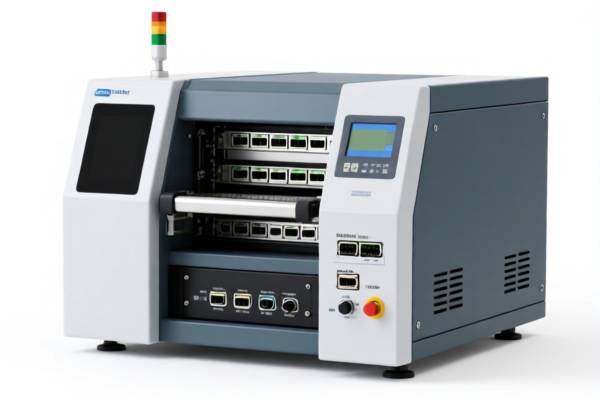
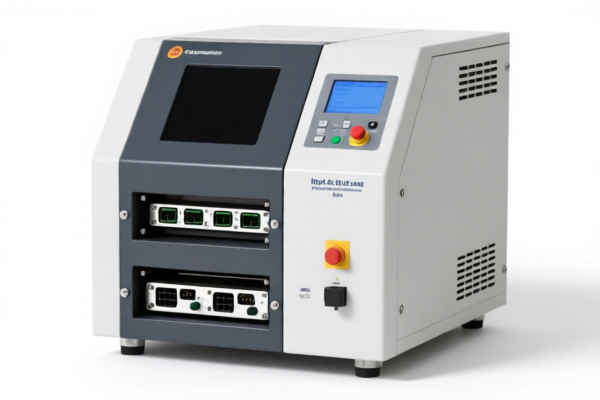

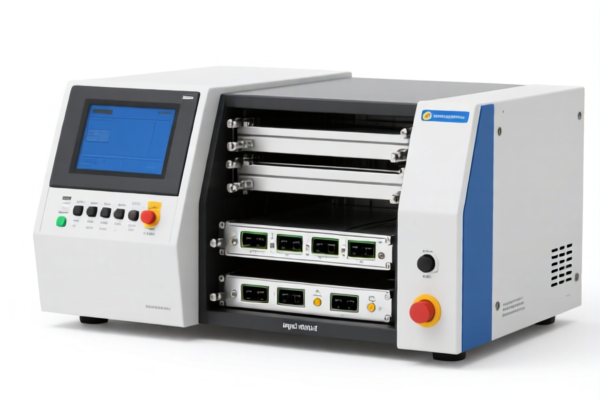
AI分析
🖥️ Input/Output Units for Automatic Data Processing Equipment (ADP)
🌐 HS Code Reference & Customs Clearance Guide | 2026 Latest Tariff Analysis | Professional Clearance Strategy
📌 I. Product Definition & Classification: Do You Really Understand "Input/Output Units"?
Input/Output (I/O) units are the critical interfaces between Automatic Data Processing (ADP) equipment and the external world. They handle the reception, conversion, and transmission of voice, image, or other data. In international trade, these devices are often misclassified, leading to significant tariff discrepancies.
To ensure accurate classification, we must distinguish between general-purpose ADP peripherals and specific electronic components or specialized processing units. The following analysis strictly adheres to the provided data for HS Codes 8517.62.00, 8542.39.00, and 8471.60.90.
⚠️ Key Classification Logic:
- If the device is a complete peripheral unit (e.g., keyboard, mouse, barcode scanner, specific ADP I/O terminal) intended for ADP machines, it generally falls under 8471.60 or 8517.62.
- If the device is primarily an integrated circuit or semiconductor component, it may fall under 8542.39.
- Crucial Distinction: The provided data indicates that certain "I/O units" are classified under 8517.62 (Telecommunications/Signal Transmission) vs. 8471.60 (ADP Peripherals) based on their specific functional attributes (voice/image/data conversion vs. direct ADP control).
📦 II. HS Code Classification Details (Based on Provided Data)
The following table outlines the specific HS Codes and their corresponding descriptions and tax rates as extracted from the source data.
| HS Code | Product Description | Summary & Functional Attributes | Total Tax Rate | Tax Breakdown |
|---|---|---|---|---|
8517.62.00.90 |
I/O Units for ADP | Voice/Image/Data I/O Units: Designed for the reception, conversion, and transmission of voice, images, or other data. Functions as a signal processing/transmission unit. | 35.0% | Base: 0.0% Additional (Sec 301): 25.0% Section 122: 10% |
8542.39.00.90 |
I/O Units for ADP | Electronic Integrated Circuits: Classified as electronic integrated circuits. Functionally matches ADP I/O requirements but categorized as a semiconductor component. | 60.0% | Base: 0.0% Additional (Sec 301): 50.0% Section 122: 10% |
8517.62.00.10 |
I/O Units for ADP | Core ADP Component: A core functional component of data processing equipment, focusing on data reception and transmission. | 35.0% | Base: 0.0% Additional (Sec 301): 25.0% Section 122: 10% |
8471.60.90.50 |
I/O Units for ADP | Direct ADP Peripheral: Use and classification explanation are completely consistent with ADP input/output units. | 35.0% | Base: 0.0% Additional (Sec 301): 25.0% Section 122: 10% |
8471.60.10.50 |
I/O Units for ADP | Reasonable ADP Peripheral: Use and classification explanation are completely consistent; falls within a reasonable category for ADP peripherals. | 35.0% | Base: 0.0% Additional (Sec 301): 25.0% Section 122: 10% |
🔍 Critical Insight:
- 8542.39.00.90 carries the highest tax burden (60%) because it is classified as an Integrated Circuit. Even if it serves as an I/O unit, its nature as a semiconductor component triggers higher additional duties.
- 8471.60 and 8517.62 categories are treated more favorably (35%) as they are viewed as complete peripheral units or signal transmission devices rather than raw components.
💰 III. Detailed 2026 Tariff Rate Breakdown
✅ Applicable Market: United States (US)
✅ Origin: China (CN) (Implied by the specific "Section 122" and "Additional 25%/50%" structure common in US-China trade contexts)
✅ Effective Time: Current applicable rates
🎯 1. The "35% Club": 8517.62.00.90, 8517.62.00.10, 8471.60.90.50, 8471.60.10.50
These HS Codes share an identical tax structure, resulting in a 35% total duty.
| Item | Content |
|---|---|
| Base Tariff | 0.0% (Ad Valorem) |
| Section 301 Additional Tariff | +25.0% |
| Section 122 Tariff | +10.0% |
| Total Effective Tax Rate | 35.0% |
| Tax Calculation | CIF Value × 35% |
| De Minimis Exemption | ❌ Not Applicable (Subject to full duties) |
| Legal Basis Path | Base Rate 0% → USITC Section 301: +25% → Section 122: +10% |
📌 Explanation:
- The 25% additional tariff is typically associated with Section 301 investigations on specific Chinese goods.
- The 10% "Section 122" tariff suggests a specific regulatory category (possibly related to national security or specific trade remedies).
- Combined Impact: Even though the base duty is 0%, the total cost increases by 35%. This is a significant cost factor that must be included in pricing strategies.
🎯 2. The "60% Burden": 8542.39.00.90
This HS Code carries the highest risk and cost due to its classification as an Integrated Circuit.
| Item | Content |
|---|---|
| Base Tariff | 0.0% |
| Section 301 Additional Tariff | +50.0% |
| Section 122 Tariff | +10.0% |
| Total Effective Tax Rate | 60.0% |
| Tax Calculation | CIF Value × 60% |
| De Minimis Exemption | ❌ Not Applicable |
| Legal Basis Path | Base Rate 0% → USITC Section 301 (High-End ICs): +50% → Section 122: +10% |
📌 Warning:
- Classifying an I/O unit as an Integrated Circuit (8542) doubles the additional tariff compared to classifying it as a Peripheral/Transmission Unit (8471/8517).
- This 60% rate can erode profit margins significantly. It is crucial to argue for the peripheral/unit classification if the product is a complete functional unit, not just a chip.
🛠️ IV. Customs Clearance Practical Advice
✅ 1. Documentation Checklist (Essential for Avoiding Delays)
| Document | Required | Purpose |
|---|---|---|
| Product Specification Sheet | ✔️ | Detail whether the device is a complete unit (with casing/interface) or a component (chip/module). |
| Functional Description | ✔️ | Explicitly state if it performs data conversion/transmission (leaning towards 8517) or data processing control (leaning towards 8471). |
| Circuit Diagrams | ✔️ | Critical for distinguishing between 8471/8517 (units) and 8542 (ICs). If the product contains a complex PCB with multiple functions, argue for unit status. |
| Commercial Invoice | ✔️ | Must clearly describe the product as "Input/Output Unit for ADP" or "Data Transmission Device," avoiding vague terms like "Processor Chip." |
| Packing List | ✔️ | Show that the item is shipped as a finished good, not in bulk components. |
| Test Reports (FCC/CE) | ✔️ | Prove electromagnetic compatibility, supporting the "finished unit" classification. |
✅ 2. Strategic Classification Tips
🔥 Golden Rule: "Unit vs. Component: Choose Wisely!"
| Scenario | Recommended HS Code | Tax Rate | Reasoning |
|---|---|---|---|
| Complete I/O Device (e.g., a specialized barcode scanner, voice recognition terminal with housing) | 8471.60.90.50 or 8517.62.00.90 |
35% | Classified as a peripheral or transmission unit. Lower duty. |
| Core ADP Interface (Directly controls ADP, standard peripheral form factor) | 8471.60.10.50 |
35% | Directly aligned with ADP machine usage. |
| IC/Module (Bare circuit board, chip, or non-encased component intended for integration) | 8542.39.00.90 |
60% | Classified as an Integrated Circuit. High duty. Avoid if possible. |
✅ 3. Risk Mitigation
- Misclassification Risk: If you declare an I/O unit as
8471.60(35%) but customs inspects it and determines it is primarily a semiconductor component, they may reclassify it to8542.39(60%), leading to back taxes, penalties, and delays. - Argument Strategy: To maintain the 35% rate, provide evidence that the product is a functional unit capable of standalone operation (receiving/converting/transmitting data) and is not merely a component for further assembly. Emphasize the "Input/Output" function over the "Processing" function.
🌍 V. Global Market Comparison (2026 Overview)
| Region | Key Consideration for I/O Units | Typical Duty Trend |
|---|---|---|
| 🇺🇸 USA | High Additional Duties: As shown above, Section 301 and Section 122 significantly impact costs. Classification between 35% and 60% is vital. | High (35%-60%) |
| 🇨🇳 China | Generally lower base rates for ADP peripherals. Check for recent changes in IC tariffs. | Low (0%-5%) |
| 🇪🇺 EU | Standard EU Common Customs Tariff applies. No Section 301/122 equivalents. | Moderate (0%-4%) |
| 🇯🇵 Japan | FTA benefits may apply if originating from partner countries. | Low (0%-8%) |
📌 Conclusion:
The US market presents the highest complexity and cost due to the 35% vs. 60% dichotomy. Accurate classification is not just a compliance issue but a financial imperative.
📌 VI. Common Mistakes & Pitfalls
❌ Mistake 1: Calling an integrated circuit module an "ADP Unit" to get the 35% rate.
👉 Consequence: Customs inspection reveals it's a component → Reclassified to 8542 → 25% extra tax + penalties.
❌ Mistake 2: Assuming all I/O devices fall under 8471.60.
👉 Consequence: Devices primarily designed for signal transmission/voice conversion may be correctly classified under 8517.62 (still 35%) or 8542 (60%) depending on technical specifics. Always check the primary function.
❌ Mistake 3: Ignoring the 10% Section 122 Tariff.
👉 Consequence: Underestimating landed cost. Even if base duty is 0%, the total 35% or 60% must be budgeted.
✅ Correct Approach:
"Specialized Input/Output Terminal for Data Processing, Includes Housing & Interface, FCC Certified" → Supports
8471.60or8517.62(35%).
"Semiconductor Integrated Circuit for Data Processing" → Supports8542.39(60%).
🎯 VII. Conclusion: Precision in Classification Saves Money
🎯 Key Takeaway:
🔹 35% vs. 60%: The difference is 25%. This is a massive margin impact.
🔹 Unit > Component: Always strive to classify complete functional devices as 8471.60 or 8517.62 rather than 8542.39.
🔹 Documentation is King: Provide clear technical descriptions to justify the "Peripheral/Unit" classification.
📌 Pro Tip:
If your product is borderline between a unit and an IC, consider:
1. Pre-Ruling: Apply for a binding tariff information ruling from customs.
2. Product Design: If possible, design the product as a complete, enclosed unit with clear I/O interfaces to support the 35% classification.
📣 Immediate Action:
📞 Consult a Customs Broker: Provide product specs for a preliminary classification review.
📄 Prepare Technical Datasheets: Highlight the "Input/Output" and "Transmission" functions.
💼 Budget for 35%: Plan your margins based on the lower (but still significant) 35% rate, and have a contingency for the 60% risk.
✨ Professional Customs Clearance Starts with Accurate Classification!
💼 Your Bottom Line Depends on These Details!
用户评价
关于 HS 编码归类
协调制度(HS)是由世界海关组织(WCO)制定的国际贸易商品分类标准。全球 200 多个国家采用 HS 系统作为海关关税、贸易统计和进出口监管的基础。
每个 HS 编码遵循以下层级结构:
- 章(2 位)——商品大类(例如:第 84 章:机器和机械设备)
- 品目(4 位)——章内的更具体分类
- 子目(6 位)——国际通用细分,所有 WCO 成员国统一使用
- 本国细分(8-10 位)——各国自行扩展的细分编码,如美国 HTSUS 10 位编码
正确的 HS 编码归类对于顺利通关、准确缴纳关税和遵守贸易法规至关重要。错误归类可能导致海关延误、多缴关税或罚款。
从CN进口到US时,适用的关税税率可能包括:
- 最惠国(MFN)税率——适用于 WTO 成员国的标准关税税率
- 普通税率——适用于无贸易协定国家
- 贸易救济关税——附加关税,如 301 条款(反倾销)、232 条款(国家安全)或反补贴税
本页内容仅供参考。如需正式归类,请咨询当地海关或持牌报关代理。