Integrated Circuit
CN → US| HS编码 | 关税税率 | 原产国 | 目的国 | 文档 |
|---|---|---|---|---|
| 8542390090 | 60.0% | CN | US | 官方文档 |
| 8541590080 | 60.0% | CN | US | 官方文档 |
| 8542310050 | 60.0% | CN | US | 官方文档 |
| 8542310045 | 60.0% | CN | US | 官方文档 |
商品图片
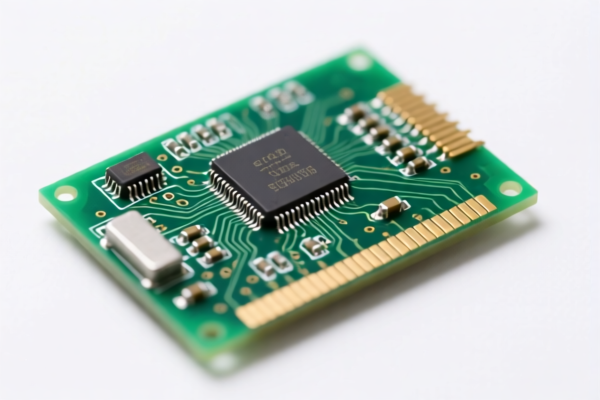
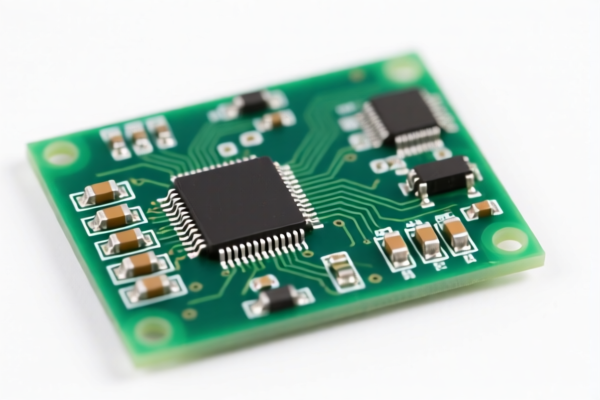
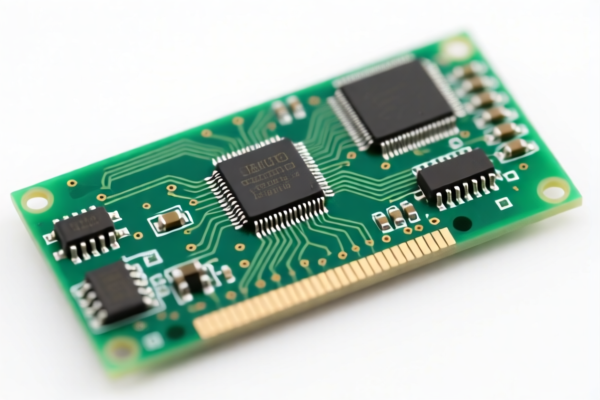
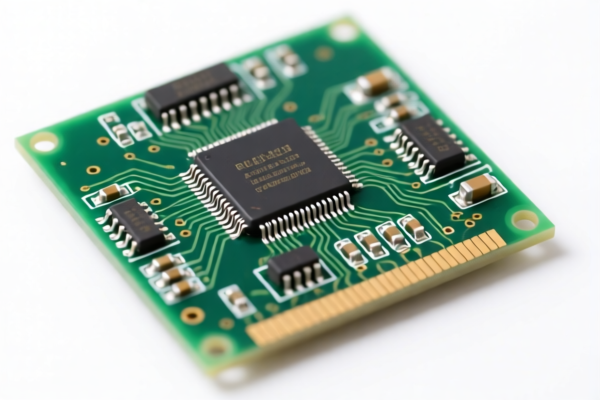
AI分析
⚡ Integrated Circuits (The Brains of Modern Electronics)
🌐 HS Code Reference & Customs Clearance Guide | 2026 Latest Tariff Analysis | Professional-Level Clearance Strategy
📌 I. Product Definition & Classification: Do You Really Understand "Integrated Circuits"?
Integrated Circuits (ICs), commonly known as chips or microchips, are the foundational components of modern electronics. They consist of miniaturized electronic circuits fabricated on a semiconductor material (usually silicon). In international trade, they are broadly classified based on their specific function and structural complexity:
- Microprocessors (Microcontrollers/CPUs): Specialized ICs designed for processing data and controlling system operations.
- General Digital/Analog ICs: Other electronic integrated circuits that do not fall under the specific "microprocessor" or "memory" subheadings, often categorized under "Other."
- Semiconductor Devices (Discrete): While some might argue for classification under semiconductor diodes/transistors (HS 8541), complex multi-function ICs are strictly categorized under HS 8542 due to their integrated nature.
⚠️ Key Distinction Point:
- If the item is explicitly a Microprocessor (processing unit), it falls under 8542.31.
- If it is a General IC (logic, analog, memory not specified elsewhere), it falls under 8542.39 ("Other").
- ⛔ Warning: Do not incorrectly classify complex ICs as simple "Semiconductor Devices" (HS 8541). While 8541 covers basic semiconductor devices (like diodes/transistors), ICs are governed by HS 8542. Misclassification can lead to severe customs penalties.
📦 II. HS Code Classification Details (2026 Latest Tariff Authoritative Comparison)
Based on the provided data, here are the applicable HS Codes for Integrated Circuits:
| HS Code | Product Description | Applicable Scenario | Classification Logic |
|---|---|---|---|
8542.39.00.90 |
Electronic Integrated Circuits, Other | General ICs, Logic Chips, Mixed Signal ICs | ✅ Catch-all Category: "Other" electronic integrated circuits. Matches the broad term "Integrated Circuit" when no specific function (like processor) is defined. |
8541.59.00.80 |
Semiconductor Devices, Other | ⚠️ Alternative/Debatable Classification: Basic semiconductor devices if interpreted as non-integrated or specific semiconductor materials. | ⚠️ Note: While the summary mentions "semiconductor material," complex ICs should primarily be 8542. This code applies if the item is strictly classified as a discrete semiconductor device rather than an integrated circuit. |
8542.31.00.50 |
Processors (Microprocessors) | CPUs, Microcontrollers, DSPs | ✅ Specific Function: Explicitly contains "Microprocessor." Fits the usage description for processing units. |
8542.31.00.45 |
Processors (Microprocessors) | CPUs, Microcontrollers, DSPs | ✅ Specific Function: Explicitly contains "Microprocessor." Material/形态 belongs to electronic IC category. |
🔍 Key Reminder:
- 8542.31 codes are for Processors/Microprocessors. If your chip is a CPU, use this.
- 8542.39 is for Other ICs (e.g., memory, logic gates, analog chips).
- 8541 codes are for Semiconductor Devices (like diodes/transistors). Using 8541 for a complex IC is technically incorrect under most interpretations but is listed here as a potential (risky) alternative classification based on material.
💰 III. 2026 Latest Tariff Rate Details (Including Additional Taxes & Policy Surcharges)
✅ Applicable Country: United States (US)
✅ Country of Origin: China (CN)
✅ Effective Time: Current rates apply (Subject to Trade Policy Changes)
All listed HS Codes in the provided data carry the same tax structure due to the current trade environment between the US and China.
🎯 1. 8542.39.00.90 —— Electronic Integrated Circuits, Other
| Item | Details |
|---|---|
| Base Tariff | 0.0% (ad valorem) |
| Section 301 Additional Tariff | 50.0% (High-tier surcharge for Chinese origin) |
| Section 122 Tariff | 10.0% (Additional punitive tariff) |
| Total Tax Rate | 60.0% |
| Tax Calculation | CIF Value × 60% |
| De Minimis Exemption | ❌ Not Applicable (High tariff items usually exclude 80-day de minimis benefits) |
| Legal Basis Path | Base: 0% → Section 301: 50% → Section 122: 10% |
📌 Explanation:
- The 50% is the standard Section 301 tariff for many Chinese electronics.
- The 10% is the specific "122 Clause" tariff, often added for strategic goods.
- Total 60% is a critical cost factor. Importers must budget heavily for these duties.
🎯 2. 8541.59.00.80 —— Semiconductor Devices, Other
| Item | Details |
|---|---|
| Base Tariff | 0.0% |
| Section 301 Additional Tariff | 50.0% |
| Section 122 Tariff | 10.0% |
| Total Tax Rate | 60.0% |
| Tax Calculation | CIF Value × 60% |
| De Minimis Exemption | ❌ Not Applicable |
| Legal Basis Path | Base: 0% → Section 301: 50% → Section 122: 10% |
📌 Note:
- Even if classified under 8541, the same punitive tariffs apply to Chinese-origin semiconductors.
- The material-based argument (semiconductor vs. integrated circuit) does not reduce the tax burden in the current US-China trade context.
🎯 3. 8542.31.00.50 & 8542.31.00.45 —— Microprocessors
| Item | Details |
|---|---|
| Base Tariff | 0.0% |
| Section 301 Additional Tariff | 50.0% |
| Section 122 Tariff | 10.0% |
| Total Tax Rate | 60.0% |
| Tax Calculation | CIF Value × 60% |
| De Minimis Exemption | ❌ Not Applicable |
| Legal Basis Path | Base: 0% → Section 301: 50% → Section 122: 10% |
📌 Explanation:
- Microprocessors are high-priority items in trade restrictions.
- Despite being "processed" goods, they face the maximum surcharge tier (50% + 10%).
- This reflects the strategic sensitivity of computing components.
🛠️ IV. Customs Clearance Practical Advice (Combat Pitfall Guide)
✅ 1. Required Documentation Checklist (Non-Negotiable)
| Document | Must Provide | Description |
|---|---|---|
| ✅ Product Datasheet | ✔️ | Technical specs: Clock speed, voltage, pin count, package type. |
| ✅ Technical Schematic | ✔️ | Essential to distinguish between a Microprocessor (8542.31) and a General IC (8542.39) or Discrete Device (8541). |
| ✅ Product Photos | ✔️ | Clear images of the chip marking, model number, and packaging. |
| ✅ Commercial Invoice | ✔️ | Must explicitly state "Integrated Circuit" or "Microprocessor" with model numbers. Avoid vague terms like "Chip" or "Electronic Part." |
| ✅ Packing List | ✔️ | Detail the quantity and weight. |
| ✅ Certificate of Origin | ✔️ | To verify Chinese origin (which triggers the 60% tax). |
| ✅ End-Use Declaration | ✔️ | Explain what the IC will be used in (e.g., "for use in industrial controllers"). |
✅ 2. Declaration Tips (Key Mnemonics)
🔥 "Be Specific: Processor vs. Other, Or Face the 60% Wall!"
| Scenario | Correct Declaration | Error to Avoid |
|---|---|---|
| CPU/Microcontroller | 8542.31.xxxx - "Microprocessor for Data Processing" |
Mislabeling as "General IC" → May trigger audit for incorrect classification. |
| General Logic/Analog IC | 8542.39.xxxx - "Electronic Integrated Circuit, Other" |
Mislabeling as "Semiconductor Diode" (8541) → Customs may reclassify and apply same tax, but delay shipment. |
| Basic Semiconductor (Diode/Transistor) | 8541.59.xxxx - "Semiconductor Device" |
Classifying a complex IC here → High risk of customs rejection due to functional mismatch. |
| Bundle of Chips | Declare each type correctly | Mixing codes on one invoice line → Customs will audit the whole batch. |
✅ 3. Special Case Handling
| Scenario | Handling Advice |
|---|---|
| OEM/ODM Chips | Provide the customer's design file or specification sheet. Proving it is a "Microprocessor" vs. "Memory" changes the code but not the tax rate (still 60%). |
| Repackaged/Refurbished ICs | Declare as "Used" or "Refurbished" if applicable. Some countries have different rules for used goods, but US tariffs on Chinese goods remain high. |
| Sample Shipments | Even samples of high-value ICs from China are subject to the 60% tariff unless specifically exempted (rare for 8542/8541). |
| Supply Chain Diversification | If possible, source from Vietnam, Malaysia, or Thailand to potentially avoid the China-specific 301/122 tariffs (requires genuine origin shift, not transshipment). |
🌍 V. Global Main Market Comparison (2026 Latest)
| Country/Region | Recommended HS Code | Tariff Rate (China Origin) | Certification Requirements | Notes |
|---|---|---|---|---|
| 🇺🇸 USA | 8542.31 / 8542.39 |
60% (50% Sec 301 + 10% Sec 122) | FCC (if wireless), UL (safety) | Highest barrier. Strict enforcement on classification. |
| 🇨🇳 China | 8542.31 / 8542.39 |
0% - 5% | CCC (if applicable) | No additional punitive tariffs. |
| 🇪🇺 EU | 8542.31 / 8542.39 |
0% - 4% | CE, RoHS, REACH | No major anti-dumping tariffs on general ICs. |
| 🇬🇧 UK | 8542.31 / 8542.39 |
0% - 4% | UKCA, CE | Similar to EU post-Brexit. |
| 🇦🇺 Australia | 8542.31 / 8542.39 |
0% - 5% | RCM | Free trade agreement benefits may apply. |
📌 Conclusion:
- The USA is the only major market imposing the 60% combined tariff on Chinese-origin Integrated Circuits.
- EU, UK, and Asia-Pacific markets remain relatively open with low tariffs (0-5%).
- Strategic Advice: If targeting the US market, cost-absorption or supply chain relocation is necessary. For other markets, standard clearance applies.
📌 VI. Common Mistakes & Pitfall Guide (Lessons Learned)
❌ Mistake 1: Labeling all chips as "Electronic Components" without specifying type.
👉 Consequence: Customs may detain the shipment to determine the correct HS Code, causing delays and storage fees.
❌ Mistake 2: Misclassifying Microprocessors (8542.31) as General ICs (8542.39) to simplify.
👉 Consequence: While the tax rate is the same (60%), it may trigger an audit for intellectual property or export control violations if the chip is on a restricted list.
❌ Mistake 3: Ignoring Section 122 Tariff.
👉 Consequence: Underestimating the landed cost. The 10% Section 122 is additional to the 301 tariff. Many importers forget this, leading to unexpected bills.
❌ Mistake 4: Using "Semiconductor" (8541) for complex ICs.
👉 Consequence: Customs may reject the classification because ICs are functionally distinct from discrete semiconductors. This leads to reclassification penalties.
✅ Correct Action:
"Microprocessor, Model XYZ, CMOS Technology, 45nm, for Industrial Control System. HS: 8542.31.00.50"
🎯 VII. Conclusion: Precision in Classification, Success in Clearance!
🎯 Remember the Mantra:
🔹 "Processor is 31, Other is 39, Semiconductor is 41, but ALL are 60% Tax from China!"
🔹 "HS Code defines the path, Tax Rate defines the cost, Accuracy defines your profit margin!"
📌 Pro Tip:
If your Integrated Circuits are original from Vietnam, Malaysia, or Singapore, you may avoid the Section 301 and Section 122 tariffs.
Recommendation: Apply for an Advance Ruling from US Customs (CBP) if you have a high-volume shipment. This provides legal certainty on the HS Code and tariff liability.
📣 Immediate Action:
📞 Contact a Licensed Customs Broker + Provide Technical Datasheets + Verify Origin
🚀 Ensure your ICs clear customs smoothly, minimize tax leakage, and maximize your global market share!
✨ Professional Clearance Starts with Accurate Classification!
💼 Every Penny Saved on Misclassification is Pure Profit!
用户评价
关于 HS 编码归类
协调制度(HS)是由世界海关组织(WCO)制定的国际贸易商品分类标准。全球 200 多个国家采用 HS 系统作为海关关税、贸易统计和进出口监管的基础。
每个 HS 编码遵循以下层级结构:
- 章(2 位)——商品大类(例如:第 84 章:机器和机械设备)
- 品目(4 位)——章内的更具体分类
- 子目(6 位)——国际通用细分,所有 WCO 成员国统一使用
- 本国细分(8-10 位)——各国自行扩展的细分编码,如美国 HTSUS 10 位编码
正确的 HS 编码归类对于顺利通关、准确缴纳关税和遵守贸易法规至关重要。错误归类可能导致海关延误、多缴关税或罚款。
从CN进口到US时,适用的关税税率可能包括:
- 最惠国(MFN)税率——适用于 WTO 成员国的标准关税税率
- 普通税率——适用于无贸易协定国家
- 贸易救济关税——附加关税,如 301 条款(反倾销)、232 条款(国家安全)或反补贴税
本页内容仅供参考。如需正式归类,请咨询当地海关或持牌报关代理。