Integrated Circuit Microprocessor
CN → US| HS编码 | 关税税率 | 原产国 | 目的国 | 文档 |
|---|---|---|---|---|
| 8542310050 | 60.0% | CN | US | 官方文档 |
| 8471500110 | 35.0% | CN | US | 官方文档 |
| 8542310045 | 60.0% | CN | US | 官方文档 |
| 8543906800 | 35.0% | CN | US | 官方文档 |
| 8543901500 | 35.0% | CN | US | 官方文档 |
| 8471500150 | 35.0% | CN | US | 官方文档 |
商品图片
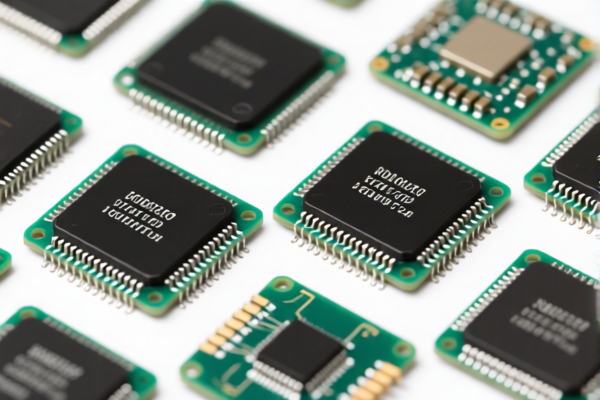
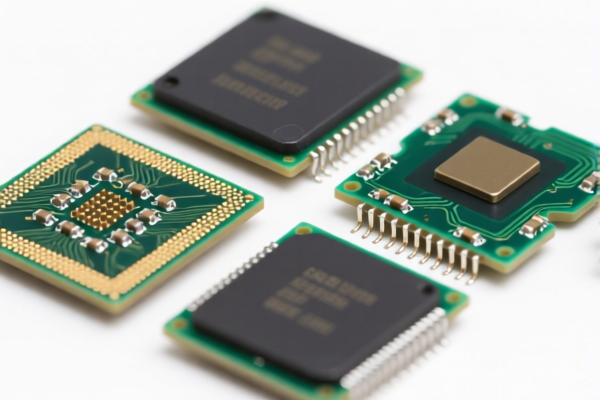


AI分析
🧠 Integrated Circuit Microprocessor (Microcontrollers & CPUs)
🌐 HS Code Reference & Customs Clearance Guide | 2026 Latest Tariff Analysis | Professional-Level Strategy for Semiconductor Imports
📌 I. Product Definition & Classification: What Exactly is a "Microprocessor"?
An Integrated Circuit Microprocessor is the central processing unit (CPU) of a computer or digital system. It is an electronic circuit manufactured on a semiconductor material (usually silicon) that performs the basic arithmetic, logic, controlling, and input/output (I/O) operations of a system.
In international trade, these chips are not all treated equally. The classification depends heavily on: 1. Function: Is it a general-purpose CPU or a specialized processor? 2. Integration: Does it include memory/storage, or is it just the logic core? 3. Application: Is it used in a general computer, a specific machine, or as a component?
⚠️ Key Distinction Points:
- Microprocessors (CPUs): General-purpose processors intended for data processing equipment → HS 8471.50 / 8542.31
- Specialized/Peripheral Chips: If the chip is primarily for signal processing, power management, or specific interface control, it may fall under HS 8543 or other 85xx categories.
- Assembly Status: Bare dies, packaged chips, or mounted on printed circuit boards (PCBs) affect the HS code choice.
📦 II. HS Code Classification Details (2026 Latest Tariff Authority Comparison)
Based on the provided data for Chinese-origin goods imported into the US (implied by the "Section 301/122" context), here is the breakdown:
| HS Code | Product Description | Application/Summary | Key Attribute |
|---|---|---|---|
| 8542.31.00.50 | Electronic Integrated Circuits: Microprocessors | Direct match for electronic ICs and processors. | High Risk/High Tax: Specific microprocessor classification. |
| 8471.50.01.10 | Units of Automatic Data Processing Machines (ADPM) | Core processing unit of ADPMs. | Core CPU: Treated as part of the computer system. |
| 8542.31.00.45 | Electronic ICs: Microprocessors | Corresponds to material; Microprocessor matches CPU usage. | High Risk/High Tax: Similar to .50, high scrutiny. |
| 8543.90.68.00 | Electrical Machines/Apparatus with Individual Functions | IC category, fits printed circuit assembly attributes. | Alternative: Used if not strictly a general-purpose CPU. |
| 8543.90.15.00 | Electrical Machines/Apparatus with Individual Functions | IC chip category, fits printed circuit assembly attributes. | Alternative: Another variant for specialized ICs. |
| 8471.50.01.50 | Units of ADPMs | Core processing unit, fits semiconductor chip attributes. | Core CPU: Similar to .10, part of the ADPM family. |
🔍 Critical Insight:
- 8542.31.xxxx codes are for Integrated Circuits (ICs) specifically designed as microprocessors. These are subject to the highest tariffs in this dataset (60%).
- 8471.50.xxxx codes are for Units of Automatic Data Processing Machines. If the microprocessor is sold with or as part of a computer system or is clearly defined as a "unit" of an ADPM, it may fall here (35% tax).
- 8543.90.xxxx codes are often used for specialized electronic machines or components that don't fit neatly into 8542 (ICs) or 8471 (ADPMs). These are also taxed at 35%.
💰 III. 2026 Latest Tariff Rate Breakdown (Including Surtaxes & Policy Add-ons)
✅ Applicable Country: United States (US)
✅ Country of Origin: China (CN)
✅ Effective Date: Ongoing (Current Trade War Rates)
🎯 1. 8542.31.00.50 & 8542.31.00.45 —— Microprocessors (Integrated Circuits)
| Item | Details |
|---|---|
| Base Tariff | 0.0% (Ad Valorem) |
| Section 301 Surcharge | 50.0% (Specific to these HS codes from China) |
| Section 122 Tariff | 10.0% (Additional surcharge for certain electronics) |
| Total Tariff Rate | 60.0% |
| Tax Calculation | CIF Value × 60% |
| De Minimis Eligibility | ❌ None (Deny De Minimis) |
| Legal Basis | Section 301 + Section 122 (US Trade Act) |
📌 Explanation:
- These are Microprocessors (CPUs) under Chapter 85 (Electrical Machinery).
- The 50% Section 301 tariff is the primary trade war penalty.
- The 10% Section 122 tariff is an additional layer for specific electronic components.
- Total Cost Impact: For every $10,000 of goods, you pay $6,000 in duties. This is extremely high and requires careful supply chain planning.
🎯 2. 8471.50.01.10 & 8471.50.01.50 —— ADPM Processing Units
| Item | Details |
|---|---|
| Base Tariff | 0.0% (Ad Valorem) |
| Section 301 Surcharge | 25.0% |
| Section 122 Tariff | 10.0% |
| Total Tariff Rate | 35.0% |
| Tax Calculation | CIF Value × 35% |
| De Minimis Eligibility | ❌ None (Deny De Minimis) |
| Legal Basis | Section 301 + Section 122 |
📌 Explanation:
- These codes classify the microprocessor as a unit of Automatic Data Processing Machines.
- While still high, the Section 301 rate is lower (25% vs 50%) compared to the 8542 codes.
- This classification is often preferred if the chip is marketed as part of a computer system or if the specific subheading allows for this broader interpretation.
🎯 3. 8543.90.68.00 & 8543.90.15.00 —— Other Electrical Machines/ICs
| Item | Details |
|---|---|
| Base Tariff | 0.0% (Ad Valorem) |
| Section 301 Surcharge | 25.0% |
| Section 122 Tariff | 10.0% |
| Total Tariff Rate | 35.0% |
| Tax Calculation | CIF Value × 35% |
| De Minimis Eligibility | ❌ None (Deny De Minimis) |
| Legal Basis | Section 301 + Section 122 |
📌 Explanation:
- These are fallback categories for ICs that may not fit strictly into "Microprocessors" (8542) but are still electronic assemblies.
- They benefit from the lower 25% Section 301 rate, resulting in the same 35% total tariff as the 8471 codes.
🛠️ IV. Customs Clearance Practical Advice (Avoid Pitfalls)
✅ 1. Preparation Checklist (Mandatory)
| Document | Required | Notes |
|---|---|---|
| ✅ Product Data Sheet | ✔️ | Must specify: Architecture (e.g., x86, ARM), Frequency, Pin count, Application. |
| ✅ Circuit Diagram/Schematic | ✔️ | Crucial to prove it's a CPU/Microprocessor vs. a simple logic gate or amplifier. |
| ✅ Photos (Bare & Packaged) | ✔️ | Show markings, part numbers, and packaging type. |
| ✅ Commercial Invoice | ✔️ | Clearly state "Microprocessor" or "CPU". Avoid vague terms like "Chip". |
| ✅ Packing List | ✔️ | Detail quantities and weights. |
| ✅ Origin Certificate | ✔️ | Confirm Country of Origin is China to apply correct tariffs. |
✅ 2. Declaration Strategy (Key Mantras)
🔥 "Function Defines Code, Document Defines Truth!"
| Scenario | Recommended HS Code | Reason |
|---|---|---|
| General Purpose CPU (e.g., Intel Core, AMD Ryzen chips sold loose) | 8542.31.00.50 or 8542.31.00.45 | Strictly classified as Microprocessors. High tax (60%). |
| CPU sold as part of a Computer System | 8471.50.01.10 or 8471.50.01.50 | Classified as ADPM Unit. Lower tax (35%). |
| Specialized Microcontroller/Processor (e.g., for IoT, Automotive) | 8543.90.68.00 or 8543.90.15.00 | Classified as other electrical machines. Lower tax (35%). |
| Bare Die / Unpackaged Wafer | Consult Legal | May require different classification (e.g., 8541.40). Not in provided data. |
⚠️ Warning:
- Do not misdeclare a 60% item as a 35% item. Customs will audit the technical specs.
- If the chip is a Microcontroller (CPU + RAM/ROM on one chip), it often falls under 8542.31 (Microprocessors) or 8542.39 (Controllers). The provided data groups them under 8542.31.
✅ 3. Special Cases & Mitigation
| Situation | Advice |
|---|---|
| Re-export from Third Country | If the chip is shipped from Vietnam/Malaysia, ensure substantial transformation occurred. Simple transshipment may still trigger Chinese origin rules. |
| R&D Samples | Still subject to duties unless declared as non-commercial samples (may still require duty payment, but allows faster clearance). |
| Kit/Assembly | If the CPU is mounted on a motherboard, the whole assembly might be classified as a motherboard or computer unit, potentially changing the HS code entirely. |
🌍 V. Global Market Comparison (2026)
| Market | Typical HS for CPU | Base Tariff | US Section 301 | Total (China Origin) | Notes |
|---|---|---|---|---|---|
| 🇺🇸 USA | 8542.31 / 8471.50 | 0% | 25% - 50% | 35% - 60% | Highest Risk. Section 122 adds 10%. |
| 🇨🇳 China | 8542.31 | 0% - 5% | N/A | 0% - 5% | No trade war tariffs. |
| 🇪🇺 EU | 8542.31 | 0% | N/A | 0% | No Section 301. GSP may apply. |
| 🇯🇵 Japan | 8542.31 | 0% | N/A | 0% | Favorable trade agreements. |
📌 Conclusion:
- The USA is the only major market with these punitive tariffs on Chinese semiconductors.
- 35% vs 60%: Choosing between 8542.31 (60%) and 8471.50/8543.90 (35%) can save $25,000 per $100,000 of goods.
- Legal Compliance is Key: Misclassification can lead to seizures, fines, and loss of import privileges.
📌 VI. Common Mistakes & Pitfalls (Blood Lessons)
❌ Mistake 1: Declaring a Microprocessor as "Electronic Component" (Generic)
👉 Consequence: Customs will reclassify to 8542.31. Back-taxes + Penalties!
❌ Mistake 2: Ignoring Section 122 Tariff
👉 Consequence: Even if you get Section 301 right, forgetting the 10% Section 122 tariff results in an underpayment of 10% on top of the base rates.
❌ Mistake 3: Using "CPU" in Description but Declaring under "Memory Chips"
👉 Consequence: Audit Trigger. Customs will compare technical specs. If it's a CPU, it must be 8542.31 or 8471.50.
❌ Mistake 4: Assuming De Minimis (Under $800) Applies
👉 Consequence: De Minimis is denied for these HS codes from China. You must pay duties even on small packages.
✅ Correct Approach:
"Microprocessor, Model XYZ, x86 Architecture, 3.5GHz, Surface Mount, No. 12345"
HS Code:8542.31.00.50(if strictly CPU) or8471.50.01.10(if ADPM unit).
🎯 VII. Conclusion: Precision Saves Money!
🎯 Remember the Golden Rule:
🔹 "60% for pure Microprocessors (8542.31)"
🔹 "35% for ADPM Units (8471) or Specialized ICs (8543)"
🔹 "No De Minimis! Pay Duties on Everything!"
📌 Pro Tip:
If your product is a Microcontroller (with integrated memory), check if it fits better under 8542.39 (not in data) or 8543.90. If it is a General Purpose CPU, you are stuck with the 60% rate under 8542.31 unless you can prove it is a "unit of ADPM."
📣 Immediate Action:
📞 Consult a Customs Broker: Provide your Datasheet and Application.
🚀 Get an Advance Ruling: Lock in your HS code with CBP before shipping to avoid surprise bills.
💡 Optimize Supply Chain: Consider shipping from non-China origins if tariffs are too high.
✨ Professional Clearance Starts with Precise Classification!
💼 Your Bottom Line Depends on These Digits!
用户评价
关于 HS 编码归类
协调制度(HS)是由世界海关组织(WCO)制定的国际贸易商品分类标准。全球 200 多个国家采用 HS 系统作为海关关税、贸易统计和进出口监管的基础。
每个 HS 编码遵循以下层级结构:
- 章(2 位)——商品大类(例如:第 84 章:机器和机械设备)
- 品目(4 位)——章内的更具体分类
- 子目(6 位)——国际通用细分,所有 WCO 成员国统一使用
- 本国细分(8-10 位)——各国自行扩展的细分编码,如美国 HTSUS 10 位编码
正确的 HS 编码归类对于顺利通关、准确缴纳关税和遵守贸易法规至关重要。错误归类可能导致海关延误、多缴关税或罚款。
从CN进口到US时,适用的关税税率可能包括:
- 最惠国(MFN)税率——适用于 WTO 成员国的标准关税税率
- 普通税率——适用于无贸易协定国家
- 贸易救济关税——附加关税,如 301 条款(反倾销)、232 条款(国家安全)或反补贴税
本页内容仅供参考。如需正式归类,请咨询当地海关或持牌报关代理。