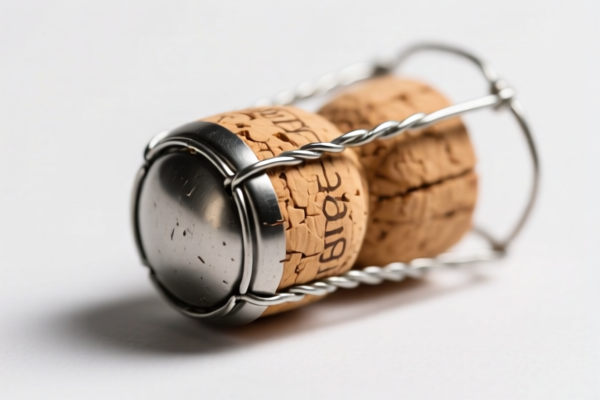
Irregular Cork Stopper
CN → US| HS编码 | 关税税率 | 原产国 | 目的国 | 文档 |
|---|---|---|---|---|
| 4503106000 | 35.0% | CN | US | 官方文档 |
| 3926909989 | 22.8% | CN | US | 官方文档 |
| 4504104700 | 35.0% | CN | US | 官方文档 |
商品图片



AI分析
🍷 Irregular Cork Stopper (Natural Cork Plugs)
🌐 HS Code Reference & Customs Clearance Guide | 2026 Latest Tariff Analysis | Professional Entry Strategy
📌 I. Product Definition & Classification: What is an "Irregular Cork Stopper"?
An Irregular Cork Stopper is a sealing device made primarily from natural cork (suber), typically characterized by non-uniform shapes or sizes, often used for bottling wine, spirits, or other beverages. In international trade, the classification hinges strictly on the material composition (Cork vs. Composite) and form.
Key Distinction Points: - 100% Natural Cork: If the stopper is made entirely of natural cork granules or blocks, it falls under Chapter 45. - Cork-Plastic Composite: If the stopper is a hybrid material (e.g., cork granules bound with food-grade plastic/polymer), it may be classified under Chapter 39 (Plastics) or Chapter 45 depending on the essential character. The data provided suggests a potential composite classification.
⚠️ Critical Note:
- "Irregular" implies non-standard shapes (e.g., agglomerated cork shapes), but if the base material is still cork, it generally remains in Chapter 45.
- However, the data provided includes a Plastic Composite option (3926.90.99.89), which suggests that if the stopper contains a significant amount of plastic binder or is predominantly plastic-coated, it might be misclassified if not carefully described.
📦 II. HS Code Classification Details (2026 Latest Tariff Authority Comparison)
Based on the provided dataset, here are the specific HS Codes and their rationales for "Irregular Cork Stopper":
| HS Code | Product Description | Rationale from Data | Applicable Material/Form |
|---|---|---|---|
4503.10.60.00 |
Cork Stoppers & Plugs | "Irregular Cork Stopper" fully matches the classification for cork stoppers and plugs in terms of material (cork) and purpose (stopping/sealing). | ✅ 100% Natural Cork or Agglomerated Cork without plastic binding that changes essential character. |
3926.90.99.89 |
Other Articles of Plastics and Articles of Other Materials | Infers material is a Cork/Plastic Composite, fitting the residual category for "other plastics and other material articles." | ⚠️ Composite Material (Cork granules bonded with plastic/resin) where plastic defines the essential character or it's a specific plastic article with cork elements. |
4504.10.47.00 |
Agglomerated Cork & Articles Thereof | The product name "Cork Stopper" fully conforms to the material cork and form stopper. This sub-heading specifically covers agglomerated cork (reconstituted cork from granules). | ✅ Agglomerated Cork (Recycled cork granules pressed together). |
4503.10.60.00 |
Cork Stoppers & Plugs | (Duplicate) Full match for material and purpose. | ✅ 100% Natural Cork |
4504.10.47.00 |
Agglomerated Cork & Articles Thereof | (Duplicate) Full match for material and form. | ✅ Agglomerated Cork |
🔍 Key Insight:
-4503.10.60.00is for natural cork stoppers.
-4504.10.47.00is for agglomerated (reconstituted) cork stoppers.
-3926.90.99.89is a fallback/residual category if the item is deemed a plastic composite or if the cork content is minimal/secondary to plastic.
- Warning: Misclassifying a composite stopper as pure cork (4503) can lead to severe penalties due to tariff differences.
💰 III. 2026 Latest Tariff Rate Breakdown (Including Additional Duties, Policy Add-ons)
✅ Applicable Country: United States (US)
✅ Origin: China (CN)
✅ Effective Date: 2025/2026 (Current Trade War Context)
🎯 1. 4503.10.60.00 & 4504.10.47.00 — Cork Stoppers & Agglomerated Cork Articles
| Item | Detail |
|---|---|
| Base Duty Rate | 0.0% (Ad Valorem) |
| Section 301 Duty (Additional) | +25.0% (From USITC Footnote 9903.88.01 / Trade Act Section 301) |
| Section 122 Duty (IEEPA) | +10.0% (Targeting China/Hong Kong products, effective from late 2025) |
| Total Duty Rate | 35.0% |
| Calculation Basis | CIF Value × 35% |
| De Minimis Exemption | ❌ Not Eligible (High duty rates exclude it from $800 de minimis relief in many practical scenarios; strict enforcement applies) |
| Legal Path | IEEPA:9903.01.25 → USITC:4503.10.60.00 / 4504.10.47.00 |
📌 Explanation:
- Despite having a 0% base duty, the 25% Section 301 and 10% Section 122 tariffs create a 35% total duty burden.
- This is a high-cost entry for Chinese-origin cork products.
- "Irregular" shape does not reduce the duty rate; it is still classified under these specific cork headings.
🎯 2. 3926.90.99.89 — Other Plastic/Composite Articles
| Item | Detail |
|---|---|
| Base Duty Rate | 5.3% (Ad Valorem) |
| Section 301 Duty (Additional) | +7.5% (Standard 301 rate for certain plastic articles, lower than the 25% tier) |
| Section 122 Duty (IEEPA) | +10.0% |
| Total Duty Rate | 22.8% |
| Calculation Basis | CIF Value × 22.8% |
| De Minimis Exemption | ❌ Not Eligible (Due to Section 122/301 applicability) |
| Legal Path | IEEPA:9903.01.24 → USITC:3926.90.99.89 |
📌 Strategic Insight:
- If your product can be legally justified as a plastic-composite article (e.g., high plastic binder content, plastic-coated), the total duty (22.8%) is significantly lower than pure cork (35.0%).
- Caution: Misclassification is a major fraud risk. You must provide material analysis reports to support a Chapter 39 classification if the cork content is secondary.
🛠️ IV. Customs Clearance Practical Advice (Combat Pitfalls Guide)
✅ 1. Document Checklist (Non-Negotiable)
| Document | Required? | Description |
|---|---|---|
| ✅ Product Specification Sheet | ✔️ | Must detail material composition: % Cork, % Plastic, % Glue. |
| ✅ Material Analysis Report | ✔️ | Third-party lab report proving if it’s 100% Cork or Composite. |
| ✅ Product Photos | ✔️ | Clear images showing cross-section (if composite) or texture (if natural). |
| ✅ Commercial Invoice | ✔️ | Must specify: "Cork Stopper, Model X, Material: [Natural/Agglomerated/Composite]". |
| ✅ Packing List | ✔️ | Standard packing details. |
| ✅ Certificate of Origin | ✔️ | Essential for determining origin (China vs. Non-China) to apply tariffs. |
✅ 2. Classification Strategy (Key Mnemonic)
🔥 "Material First, Shape Second, Composite vs. Pure, Tariff Differs!"
| Scenario | Correct HS Code | Total Tax | Why? |
|---|---|---|---|
| 100% Natural Cork (Pressed blocks) | 4503.10.60.00 |
35% | Pure cork, no plastic. |
| 100% Agglomerated Cork (Granules pressed) | 4504.10.47.00 |
35% | Recycled cork, still Chapter 45. |
| Composite (Cork + Plastic Binder > 50% plastic impact) | 3926.90.99.89 |
22.8% | Plastic defines character; lower duty. |
| Misclassified Composite as Pure Cork | 4503... |
35% | Risk: If audited, you may pay difference + penalties. |
| Misclassified Pure Cork as Composite | 3926... |
22.8% | Fraud Risk: If found pure cork, customs will reclassify and penalize. |
✅ 3. Special Cases & Handling
| Situation | Handling Advice |
|---|---|
| "Irregular" Shape Claims | Do not use "Irregular" to justify a lower duty. Shape is irrelevant to Chapter 45/39 classification. Focus on material. |
| Plastic-Coated Cork | If only a thin coating, likely still Chapter 45. If substantial plastic layer, argue for Chapter 39. |
| Origin Diversification | If shipped from Vietnam, Portugal, or Spain, Section 122/301 rates may not apply or be lower. Verify Country of Origin carefully. |
| De Minimis ($800) | ❌ Do Not Rely on de minimis for these HS codes. The 35% or 22.8% duty must be paid, and CBP is increasingly rejecting de minimis for Chinese-origin goods with high tariffs. |
🌍 V. Global Market Comparison (2026 Update)
| Country/Region | Recommended HS Code | Duty Rate (China Origin) | Certification Required | Note |
|---|---|---|---|---|
| 🇺🇸 USA | 4503.10.60.00 / 3926.90.99.89 |
35% / 22.8% | FDA (if food contact), CBP | Highest duty burden due to 301/122. |
| 🇨🇳 China | 4503.10.60.00 / 4504.10.47.00 |
5% (Import Duty) | None | No additional retaliatory tariffs. |
| 🇪🇺 EU | 4503.10 |
3.2% | None | No Section 301 equivalent. |
| 🇬🇧 UK | 4503.10 |
3.2% | None | Post-Brexit tariff alignment with EU. |
| 🇨🇦 Canada | 4503.10 |
0% (MFN) | None | CUSMA may apply if Canadian origin. |
📌 Conclusion:
- The USA is the most expensive market for cork stoppers due to the 35% combined duty.
- European markets offer a much more favorable duty environment (~3.2%).
- If selling to the US, consider supply chain diversification (e.g., Portugal, Spain, or Algeria) to avoid Section 301/122 tariffs.
📌 VI. Common Errors & Pitfalls (Lessons Learned)
❌ Error 1: Classifying Composite Cork as 100% Natural Cork (4503) to avoid plastic tariffs.
👉 Consequence: CBP may reclassify to 3926 and assess penalties for misdeclaration, though the duty difference is small (35% vs 22.8%), the compliance risk is high.
❌ Error 2: Claiming "Irregular Shape" qualifies for a different HS Code.
👉 Consequence: No such category exists. "Irregular" is a descriptive term, not a classifier. It will be rejected by CBP.
❌ Error 3: Ignoring Section 122 (10% additional tariff).
👉 Consequence: Underpaying duty by 10%. CBP audits often catch this, leading to back-taxes + interest.
❌ Error 4: Using De Minimis for shipments from China.
👉 Consequence: CBP has tightened enforcement. High-tariff items (301/122) are increasingly scrutinized even under $800.
✅ Correct Action:
"Cork Stopper, Agglomerated, Food-Grade, Model XYZ, 100% Cork or 60% Cork/40% Plastic, Origin: China"
🎯 VII. Conclusion: Precision Classification Saves Money!
🎯 Remember the Mnemonic:
🔹 "Cork is 35%, Composite is 22.8%, Shape Doesn't Matter, Material is Key!"
🔹 "Section 301 + 122 = 35%, Don't Get Caught in the Tariff Trap!"
📌 Pro Tip:
If your product is agglomerated cork (recycled), ensure it is classified under 4504.10.47.00, not 4503, as they are distinct sub-headings. While the duty is the same (35%), accurate classification is critical for compliance and future audits.
📣 Immediate Action:
📞 Verify Material Composition with your supplier.
📋 Apply for Advance Ruling from CBP if unsure about Composite vs. Pure Cork.
🚀 Optimize Supply Chain: Consider sourcing from non-China origins to mitigate 35% duty.
✨ Professional Customs Clearance Starts with Accurate Classification!
💼 Your Cost Efficiency Depends on the Right HS Code!
用户评价
关于 HS 编码归类
协调制度(HS)是由世界海关组织(WCO)制定的国际贸易商品分类标准。全球 200 多个国家采用 HS 系统作为海关关税、贸易统计和进出口监管的基础。
每个 HS 编码遵循以下层级结构:
- 章(2 位)——商品大类(例如:第 84 章:机器和机械设备)
- 品目(4 位)——章内的更具体分类
- 子目(6 位)——国际通用细分,所有 WCO 成员国统一使用
- 本国细分(8-10 位)——各国自行扩展的细分编码,如美国 HTSUS 10 位编码
正确的 HS 编码归类对于顺利通关、准确缴纳关税和遵守贸易法规至关重要。错误归类可能导致海关延误、多缴关税或罚款。
从CN进口到US时,适用的关税税率可能包括:
- 最惠国(MFN)税率——适用于 WTO 成员国的标准关税税率
- 普通税率——适用于无贸易协定国家
- 贸易救济关税——附加关税,如 301 条款(反倾销)、232 条款(国家安全)或反补贴税
本页内容仅供参考。如需正式归类,请咨询当地海关或持牌报关代理。