Isobutene Isoprene Butyl Rubber Sheets
CN → US| HS编码 | 关税税率 | 原产国 | 目的国 | 文档 |
|---|---|---|---|---|
| 4008210000 | 35.0% | CN | US | 官方文档 |
| 4005990000 | 35.0% | CN | US | 官方文档 |
| 3926909989 | 22.8% | CN | US | 官方文档 |
| 4008115000 | 38.3% | CN | US | 官方文档 |
| 4005910000 | 35.0% | CN | US | 官方文档 |
商品图片
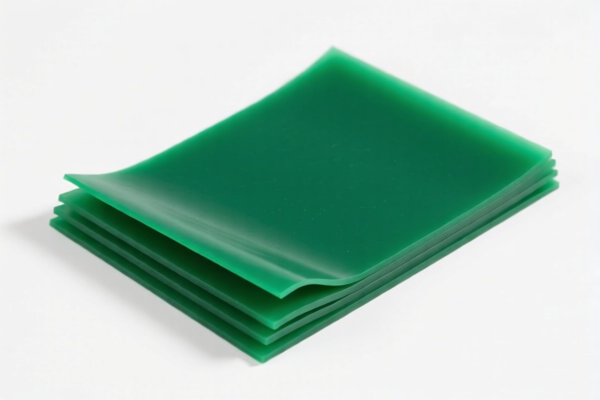
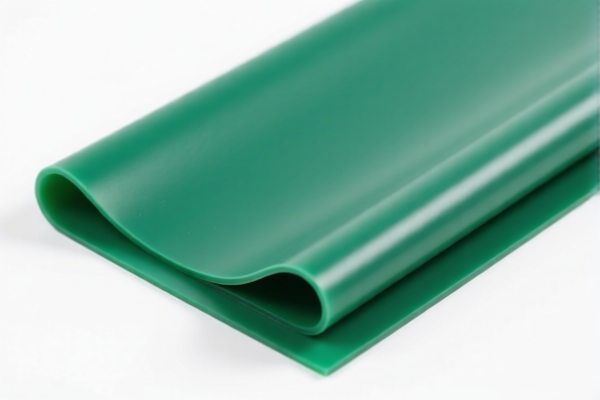
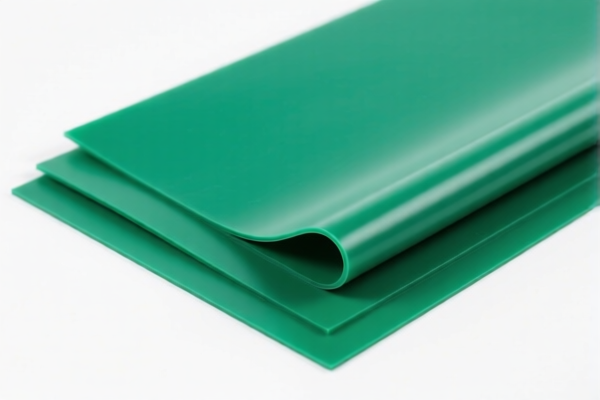
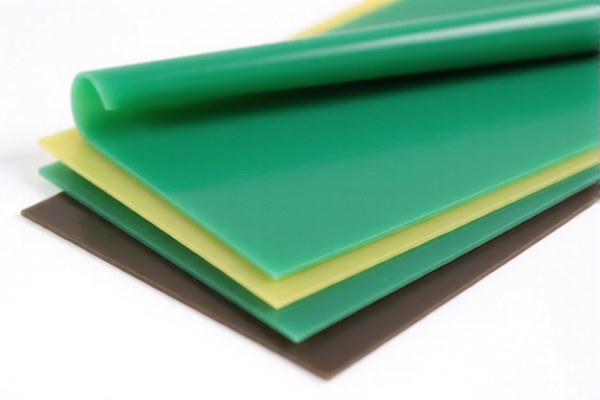
AI分析
🖥️ Isobutene-Isoprene Butyl Rubber Sheets (IIR)
🌐 HS Code Reference & Customs Clearance Guide | 2026 Latest Tariff Analysis | Professional-Level Entry Strategy
📌 One, Product Definition & Classification: Do You Truly Understand "Butyl Rubber Sheets"?
Isobutene-isoprene rubber (commonly known as Butyl Rubber or IIR) is a synthetic rubber characterized by its exceptional gas impermeability, high damping properties, and resistance to heat, ozone, and chemicals. In international trade, "Butyl Rubber Sheets" are strictly categorized based on their state of vulcanization (processed vs. unprocessed) and form (sheets, plates, or strips).
In the provided data, these products fall into two main categories: 1. Vulcanized Rubber Sheets (Processed): Hardened, stable, and ready for industrial use. 2. Unvulcanized Mixed Rubber (Unprocessed): Raw, pliable material requiring further processing before final use.
⚠️ Key Distinction Point: - If the rubber is cross-linked (vulcanized) and holds its shape permanently → Classified under Chapter 40.08 (Vulcanized Rubber). - If the rubber is raw, soft, and not yet cured → Classified under Chapter 40.05 (Unvulcanized Rubber). - Critical Error: Do not classify Butyl Rubber as a plastic product (e.g., HS 3926) unless it is explicitly a finished composite plastic-rubber article, which is rare for pure sheets. Misclassification leads to significant duty discrepancies.
📦 Two, HS Code Classification Details (2026 Latest Tariff Authority Comparison)
| HS Code | Product Description | Application Scenario | State of Rubber | Total Tax Rate (US/China Origin) |
|---|---|---|---|---|
4008.21.00.00 |
Vulcanized rubber in plates, sheets, or strip, non-foam, with hardness ≥ 60 Shore A | Industrial gaskets, vibration dampers, heavy-duty seals | ✅ Vulcanized (Hard) | 35.0% |
4005.99.00.00 |
Other unvulcanized rubber compounds (mixes), including butyl rubber, in plates/sheets | Raw material for injection molding, tire manufacturing | ❌ Unvulcanized | 35.0% |
3926.90.99.89 |
Other articles of plastics and articles of other materials of heading 3901 to 3914 | ❌ Incorrect Classification (See Warning Below) | N/A | 22.8% |
4008.11.50.00 |
Vulcanized rubber in plates, sheets, or strip, with hardness < 60 Shore A | Soft seals, medical tubing components, flexible gaskets | ✅ Vulcanized (Soft) | 38.3% |
4005.91.00.00 |
Unvulcanized rubber compounds based on styrene-butadiene or isoprene-butadiene rubber | Raw butyl rubber compound in sheet form | ❌ Unvulcanized | 35.0% |
🔍 Key Warning: - HS 3926.90.99.89 is highly risky. While the summary states it covers "synthetic rubber/plastic articles," Butyl Rubber is chemically defined as a rubber (Chapter 40), not a plastic (Chapter 39). Classifying it here may trigger customs audits for misdeclaration. The "correct" high-tax codes are in Chapter 40. - Hardness Matters: The split between
4008.21and4008.11depends strictly on Shore A hardness. ≥60 Shore A goes to.21; <60 Shore A goes to.11. - Vulcanization Matters: Once cured, it MUST be in Chapter 40.08. Raw material goes to 40.05.
💰 Three, 2026 Latest Tariff Rate Details (Including Additional Taxes & Policy Surcharges)
✅ Applicable Country: United States (US)
✅ Origin: China (CN)
✅ Effective Date: From November 10, 2025 (and subsequent imports)
🎯 1. 4008.21.00.00 —— Vulcanized Rubber Sheets (Hard, ≥60 Shore A)
| Item | Content |
|---|---|
| Base Tariff | 0.0% (ad valorem) |
| USITC Additional Tariff | +25.0% (Section 301 Duties) |
| 122 Clause Tariff | +10.0% (Specific to certain rubber/articles under Trade Act) |
| Total Tax Rate | 35.0% |
| Tax Calculation | CIF Value × 35% |
| De Minimis Eligibility | ❌ No (deny_de_minimis) |
| Legal Basis Path | USITC:4008.21.00.00 → FOOTNOTE:301.8 → SECTION:122 |
📌 Explanation: - The 0% base rate is typical for rubber sheets under normal trade. - The 25% Section 301 duty applies to most rubber products from China. - The 10% 122 Clause is an additional surcharge applicable to this specific subheading, often related to national security or specific trade remedy provisions. - Total 35% is a significant cost driver.
🎯 2. 4005.99.00.00 —— Unvulcanized Rubber Mixes (Raw Sheets)
| Item | Content |
|---|---|
| Base Tariff | 0.0% |
| USITC Additional Tariff | +25.0% |
| 122 Clause Tariff | +10.0% |
| Total Tax Rate | 35.0% |
| Tax Calculation | CIF Value × 35% |
| De Minimis Eligibility | ❌ No |
| Legal Basis Path | USITC:4005.99.00.00 → FOOTNOTE:301.8 → SECTION:122 |
📌 Note: - Unvulcanized rubber (raw material) carries the same total duty burden as vulcanized rubber in many cases due to the aggressive Section 301 and 122 Clause application. - Even though it is "raw," it is not exempt from additional tariffs.
🎯 3. 3926.90.99.89 —— Plastics/Other Materials (Misclassification Risk)
| Item | Content |
|---|---|
| Base Tariff | 5.3% |
| USITC Additional Tariff | +7.5% (Note: Lower than standard 301 for this specific code, but HIGH RISK) |
| 122 Clause Tariff | +10.0% |
| Total Tax Rate | 22.8% |
| Tax Calculation | CIF Value × 22.8% |
| De Minimis Eligibility | ❌ No |
📌 Critical Warning: - This code shows a lower rate (22.8%) but is incorrect for pure Butyl Rubber sheets. - Butyl Rubber is defined in Chapter 40. Using Chapter 39 (Plastics) is a misdeclaration. - Consequence: If customs detects the misclassification, you face penalties, back taxes (difference between 22.8% and 35%), and potential seizure. Do not use this code unless the product is a true plastic-rubber composite article as defined by USITC.
🎯 4. 4008.11.50.00 —— Vulcanized Rubber Sheets (Soft, <60 Shore A)
| Item | Content |
|---|---|
| Base Tariff | 3.3% |
| USITC Additional Tariff | +25.0% |
| 122 Clause Tariff | +10.0% |
| Total Tax Rate | 38.3% |
| Tax Calculation | CIF Value × 38.3% |
| De Minimis Eligibility | ❌ No |
| Legal Basis Path | USITC:4008.11.50.00 → FOOTNOTE:301.8 → SECTION:122 |
📌 Note: - Soft vulcanized rubber incurs a higher total tax (38.3%) because the base tariff is higher (3.3% vs 0.0%). - This is often the case for medical-grade or highly flexible butyl seals.
🎯 5. 4005.91.00.00 —— Unvulcanized Rubber (Styrene-Butadiene or Isoprene-Butadiene)
| Item | Content |
|---|---|
| Base Tariff | 0.0% |
| USITC Additional Tariff | +25.0% |
| 122 Clause Tariff | +10.0% |
| Total Tax Rate | 35.0% |
| Tax Calculation | CIF Value × 35% |
| De Minimis Eligibility | ❌ No |
📌 Note: - Isobutene-isoprene (Butyl) rubber falls under "isoprene-butadiene" types for tax classification purposes in some contexts, or broadly under "other unvulcanized." - Tax rate remains 35.0%.
🛠️ Four, Customs Clearance Practical Advice (Battle-Tested Pitfall Guide)
✅ 1. Required Documentation Checklist (Non-negotiable)
| Document | Required | Explanation |
|---|---|---|
| ✅ Material Safety Data Sheet (MSDS) | ✔️ | Proves chemical composition; confirms it is Butyl Rubber (IIR). |
| ✅ Certificate of Analysis (COA) | ✔️ | Specifies Hardness (Shore A) to determine between 4008.21 and 4008.11. |
| ✅ Production Process Description | ✔️ | Must explicitly state: Vulcanized vs. Unvulcanized. |
| ✅ Product Photos | ✔️ | Show texture, cut edges, and any labeling indicating "Vulcanized" or "Raw." |
| ✅ Commercial Invoice | ✔️ | Clearly describe as "Butyl Rubber Sheets, Vulcanized/Unvulcanized, HS Code XXXX." |
| ✅ Bill of Lading | ✔️ | Match weight and quantity with invoice. |
✅ 2. Declaration Tips (Key Mnemonics)
🔥 "Hardness Determines Code, Vulcanization Defines Chapter, Mislabeling Means Penalty!"
| Scenario | Correct Declaration | Wrong Action |
|---|---|---|
| Soft Butyl Sheets (Shore A < 60) | 4008.11.50.00 (Vulcanized) |
Use 4008.21.00.00 → Overpay 3.3% |
| Hard Butyl Sheets (Shore A ≥ 60) | 4008.21.00.00 (Vulcanized) |
Use 4008.11.50.00 → Underpay, Risk Audit |
| Raw Butyl Sheets (Unvulcanized) | 4005.99.00.00 or 4005.91.00.00 |
Use 3926.90.99.89 → High Penalty Risk |
| Finished Rubber Gaskets | Check if considered "Article" vs "Sheet"; usually 4016 or 4008 depending on shape |
Over-generalize as "Plastic Parts" |
✅ 3. Special Handling
| Scenario | Recommendation |
|---|---|
| Customs Audit Trigger | If declared under 3926, provide MSDS immediately to prove it is rubber, not plastic. |
| Mixed Shipment | Separate shipments: One box for Raw Rubber (4005), one for Vulcanized (4008). Do not mix in one HS Code. |
| Origin Declaration | Ensure Certificate of Origin states China. US/China trade war tariffs (Section 301 + 122 Clause) apply heavily. |
| Pre-Ruling | For high-volume imports, apply for a US CBP Ruling to confirm whether specific Butyl sheets are 4008.21 or 4008.11 based on your exact hardness test. |
🌍 Five, Global Market Comparison (2026 Latest)
| Country/Region | Recommended HS Code | Tariff (China Origin) | Certification Requirements | Notes |
|---|---|---|---|---|
| 🇺🇸 USA | 4008.21.00.00 / 4008.11.50.00 |
35% - 38.3% | None specific for rubber sheets | High tariffs due to Section 301 + 122 Clause. |
| 🇨🇳 China | 4008.21.00.00 |
5% | None | Low base tariff, no US-style add-ons. |
| 🇪🇺 EU | 4008.29.10 |
0% (Most) | REACH Compliance | No Section 301 equivalent. |
| 🇯🇵 Japan | 4008.29.00 |
5% | JIS Standards | Moderate tariff. |
📌 Conclusion: - USA is the most expensive market for Butyl Rubber sheets due to the layered tariff structure (Base + 301 + 122). - Accuracy is critical: Using
3926might look cheaper (22.8%) but is illegal for pure rubber. The cost of compliance (35%) is unavoidable if the product is authentic Butyl Rubber.
📌 Six, Common Errors & Pitfall Guide (Lessons Learned)
❌ Error 1: Classifying Butyl Rubber as "Plastic Sheets" (HS 3926) to save taxes. 👉 Consequence: Customs rejection, penalty of 25-50% of declared value, and potential seizure. The chemical nature of IIR is rubber, not plastic.
❌ Error 2: Ignoring Hardness (Shore A) for Vulcanized Sheets.
👉 Consequence: If you declare 4008.21 (Hard) but the product is Soft (<60 Shore A), you underpay tax. If you declare 4008.11 (Soft) but it is Hard, you overpay tax. Correct classification saves money and avoids audits.
❌ Error 3: Confusing Unvulcanized and Vulcanized States.
👉 Consequence: Raw rubber (4005) cannot be shipped as if it were ready-to-use (4008). Documentation mismatch leads to delays.
❌ Error 4: Not Accounting for the 122 Clause. 👉 Consequence: Many traders only look at the 25% Section 301 duty and forget the additional 10% 122 Clause, leading to unexpected cash flow issues.
✅ Correct Practice:
"Vulcanized Butyl Rubber Sheets, Hardness 70 Shore A, Non-Foam, Model XYZ, USITC Code 4008.21.00.00"
🎯 Seven, Conclusion: Precision Classification, Cost Control!
🎯 Remember the Mnemonic:
🔹 "Vulcanized = 4008, Unvulcanized = 4005. Hardness < 60 is .11, Hardness ≥ 60 is .21. Raw Material is 4005. Plastic is 3926 (Danger!)"
🔹 "Tariff = Base + 25% + 10%. Total is 35% or 38.3%. Don't ignore the 122 Clause!"
📌 Pro Tip:
If your Butyl Rubber sheets are imported in large quantities, consider Applying for a US CBP Advance Ruling. Provide samples and test reports (Hardness + Composition). This ensures your HS Code is legally binding and prevents future disputes.
📣 Immediate Action:
📞 Contact your customs broker with the Hardness Value and Vulcanization Status. 🚀 Declare Accurately: Avoid the 22.8% Trap. Pay the correct 35-38.3% to ensure smooth clearance!
✨ Professional Clearance Starts with Precise Classification!
💼 Every Percentage Point of Tariff Matters! Know Your Code!
用户评价
关于 HS 编码归类
协调制度(HS)是由世界海关组织(WCO)制定的国际贸易商品分类标准。全球 200 多个国家采用 HS 系统作为海关关税、贸易统计和进出口监管的基础。
每个 HS 编码遵循以下层级结构:
- 章(2 位)——商品大类(例如:第 84 章:机器和机械设备)
- 品目(4 位)——章内的更具体分类
- 子目(6 位)——国际通用细分,所有 WCO 成员国统一使用
- 本国细分(8-10 位)——各国自行扩展的细分编码,如美国 HTSUS 10 位编码
正确的 HS 编码归类对于顺利通关、准确缴纳关税和遵守贸易法规至关重要。错误归类可能导致海关延误、多缴关税或罚款。
从CN进口到US时,适用的关税税率可能包括:
- 最惠国(MFN)税率——适用于 WTO 成员国的标准关税税率
- 普通税率——适用于无贸易协定国家
- 贸易救济关税——附加关税,如 301 条款(反倾销)、232 条款(国家安全)或反补贴税
本页内容仅供参考。如需正式归类,请咨询当地海关或持牌报关代理。