Isopropyl Rosin Ester
CN → US| HS编码 | 关税税率 | 原产国 | 目的国 | 文档 |
|---|---|---|---|---|
| 3824994140 | 39.6% | CN | US | 官方文档 |
| 3824994190 | 39.6% | CN | US | 官方文档 |
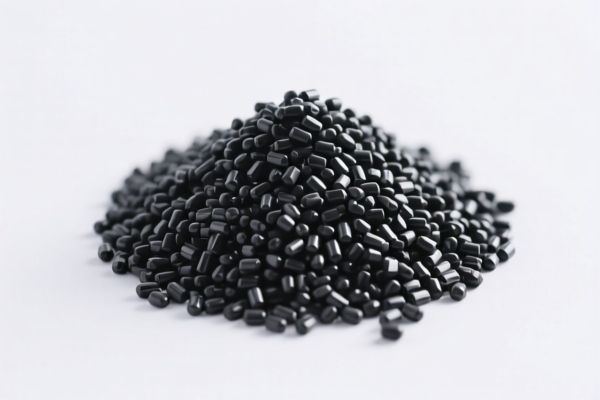
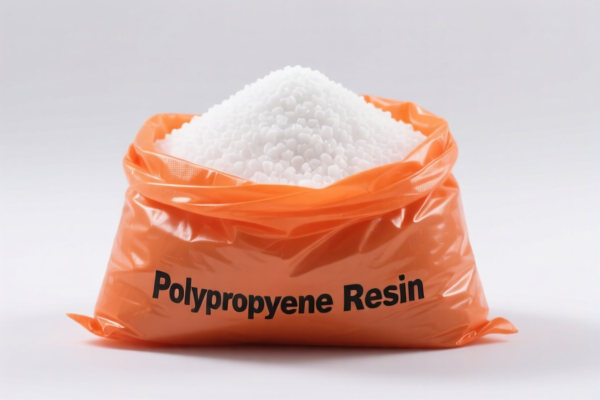
商品图片

AI分析
🧪 Isopropyl Rosin Ester (Isopropyl Palmitate/Rosinate)
🌐 HS Code Reference & Customs Clearance Guide | 2026 Latest Tariff Analysis | Professional Clearance Strategy
📌 I. Product Definition & Classification: Do You Really Understand "Isopropyl Rosin Ester"?
Isopropyl Rosin Ester is a chemical derivative produced by esterifying rosin (resin acid) with isopropyl alcohol. It is widely used as a binder, fluxing agent, tackifier, and adhesive in industries such as foundry molds, coatings, printing inks, and adhesives.
In international trade, it falls under Chapter 38: Miscellaneous Chemical Products, specifically prepared binders and chemical preparations. The classification depends on its precise chemical composition and application, primarily distinguishing between fatty acid ester mixtures and general fatty substances.
⚠️ Key Distinction:
- If the product is defined as a mixture of fatty acid esters derived from natural sources (rosin/animal/vegetable origin) used as prepared binders → It falls under 3824.99.41.40.
- If it is classified as a general other fatty substance of animal or vegetable origin without the specific "mixture of esters" descriptor → It falls under 3824.99.41.90.
- Note: Both codes share the same tax structure in this dataset, but precise naming matters for customs scrutiny.
📦 II. HS Code Classification Details (2026 Latest Tariff Authority Comparison)
Based on the provided , the product is classified under two potential subheadings within 3824.99.41 (Prepared binders for foundry molds or cores; other chemical preparations):
| HS Code | Product Description (from Data) | Applicable Scenario | Chemical Nature |
|---|---|---|---|
3824.99.41.40 |
Fatty substances... Mixtures of fatty acid esters | Prepared binders, rosin derivatives, specific ester mixtures | ✅ Mixture of Fatty Acid Esters |
3824.99.41.90 |
Fatty substances... Other | General fatty substances, non-specific rosin esters, other mixtures | ❌ General Fatty Substance |
🔍 Key Reminder:
- Both codes fall under the parent heading 3824.99.41, which covers "Prepared binders for foundry molds or cores" and "Chemical products... not elsewhere specified."
- Isopropyl Rosin Ester is typically considered a prepared binder or chemical preparation.
- If your product is explicitly a mixture of fatty acid esters (common in rosin ester chemistry), 3824.99.41.40 is more precise.
- If it is a broader fatty substance category, 3824.99.41.90 applies.
- Both codes have identical tax rates in this dataset.
💰 III. 2026 Latest Tariff Rate Details (Detailed Tax Breakdown)
✅ Applicable Country: United States (US)
✅ Origin: China (CN) (Assumed based on typical 301/IEEPA context in examples, but verify origin)
✅ Effective Time: Current rates apply as per
🎯 1. 3824.99.41.40 & 3824.99.41.90 – Isopropyl Rosin Ester
| Item | Content |
|---|---|
| Base Tariff Rate | 4.6% (Ad Valorem) |
| Additional Tariff (Section 301) | +25.0% (Specific to Chinese origin products under USITC Footnote 9903.88.01 or similar) |
| Total Tariff Rate | 29.6% |
| Tax Calculation | CIF Value × 29.6% |
| De Minimis Exemption | ❌ Not Applicable (De Minimis value is $800, but chemical preparations of this type often require full declaration and tax payment. Verify if specific IEEPA exemptions apply, but shows total 29.6%, implying no exemption) |
| Legal Basis Path | USITC:3824.99.41.40/90 → Footnote:301 Section → IEEPA (if applicable) |
📌 Explanation:
- Base Rate (4.6%): Standard MFN (Most Favored Nation) rate for miscellaneous chemical products.
- Additional Tariff (25.0%): This is the critical Section 301 tariff imposed on many Chinese-manufactured chemical products.
- Total (29.6%): A significant cost burden. Isopropyl Rosin Ester is NOT exempt from these additional duties under the provided data.
- No IEEPA 10% mentioned in : Unlike the monitor example, only specifies "基础关税: 4.6%, 加征关税: 25.0%" resulting in "29.6%". Do not assume an additional 10% IEEPA unless confirmed by latest USITC rulings. Stick to 29.6% as per .
🛠️ IV. Customs Clearance Practical Advice (Real-World Pitfall Guide)
✅ 1. Preparation Checklist (Essential Documents)
| Document | Required | Description |
|---|---|---|
| ✅ Product Specification Sheet | ✔️ | Must detail chemical composition, purity, and primary use (e.g., "Foundry Binder"). |
| ✅ Formula/Composition | ✔️ | Confirm if it is a "mixture of fatty acid esters" to justify 3824.99.41.40. |
| ✅ Safety Data Sheet (SDS) | ✔️ | Required for chemical import; classifies hazardous nature (if any). |
| ✅ Commercial Invoice | ✔️ | Must clearly state: "Isopropyl Rosin Ester" and "Prepared Binder for Foundry Molds". Avoid vague terms like "Chemical Additive." |
| ✅ Certificate of Origin (CO) | ✔️ | Essential for determining eligibility for Section 301 exemptions (if any apply to your specific country of origin). |
| ✅ Binding Sample | ✔️ | If used as a binder, provide a sample showing its adhesion properties. |
✅ 2. Declaration Tips (Critical Keywords)
🔥 “Specify Use, Clarify Composition, Avoid ‘Other’ if Possible!”
| Scenario | Correct Declaration | Incorrect Declaration |
|---|---|---|
| Specific Mixture | "Isopropyl Rosin Ester, Mixture of Fatty Acid Esters, Used as Foundry Binder" → 3824.99.41.40 |
"Chemical Substance" → Risk of misclassification |
| General Fatty Substance | "Isopropyl Rosin Ester, Other Fatty Substance" → 3824.99.41.90 |
"Adhesive" → Could be misclassified under 3506 (different tax) |
| Foundry Binder Use | Highlight "Prepared Binder for Foundry Molds" in description | Hide use case → Customs may reclassify |
✅ 3. Special Handling
| Situation | Advice |
|---|---|
| OEM/Private Label | Ensure the chemical composition matches the declaration. Do not change the core chemical identity. |
| Mixed Shipments | If shipped with other chemicals, declare separately. Mixing may trigger detailed chemical analysis. |
| Hazardous Classification | Check if Isopropyl Rosin Ester is classified as hazardous under DOT/IMDG. If yes, additional fees apply. |
| Section 301 Exclusions | Check USITC Exclusion Lists: Some rosin esters may have been excluded from the 25% tariff. Verify if your specific HS Code has an active exclusion number. If excluded, tax drops to 4.6%. |
🌍 V. Global Market Comparison (2026)
| Country/Region | Recommended HS Code | Tariff Rate | Certification | Notes |
|---|---|---|---|---|
| 🇺🇸 USA | 3824.99.41.40 / .90 |
29.6% (China Origin) | None specific, but SDS required | High tariff! Check for Section 301 exclusions. |
| 🇨🇳 China | 3824.99.41.40 / .90 |
5.0% (Import Duty) | None | Lower tax, no additional tariffs. |
| 🇪🇺 EU | 3824.99.90 |
6.5% | REACH Registration Required | REACH compliance is critical. |
| 🇯🇵 Japan | 3824.99.90 |
7.0% | None | Standard rate. |
📌 Conclusion:
- USA has the highest cost due to the 25% additional tariff.
- EU requires REACH registration, which is a significant barrier to entry.
- China has the lowest duty, but exports from China to the US face the 29.6% burden.
📌 VI. Common Mistakes & Pitfalls (Lessons Learned)
❌ Mistake 1: Declaring as "General Chemical" without specifying use
👉 Consequence: Customs may reclassify to a higher duty or demand detailed chemical analysis → Delays & Penalties.
❌ Mistake 2: Ignoring Section 301 Exclusions
👉 Consequence: Paying 29.6% when an exclusion might reduce it to 4.6%. Always check the USITC Exclusion List for HS 3824.99.41.
❌ Mistake 3: Using vague descriptions like "Adhesive"
👉 Consequence: May be classified under Chapter 35 (Albuminoidal substances), which has different tax rates. Be specific: "Isopropyl Rosin Ester."
❌ Mistake 4: Assuming De Minimis ($800) applies
👉 Consequence: Chemicals are often scrutinized. Even small shipments may require full commercial entry and tax payment.
✅ Correct Approach:
"Isopropyl Rosin Ester, CAS No. [Insert CAS], Used as Prepared Binder for Foundry Molds, Mixture of Fatty Acid Esters, HS 3824.99.41.40"
🎯 VII. Conclusion: Professional Declaration Saves Money!
🎯 Remember the Key Points:
🔹 HS Code:
3824.99.41.40(Mixture of Esters) or3824.99.41.90(Other)
🔹 Total Tax: 29.6% (4.6% Base + 25% Additional)
🔹 Action: Check for Section 301 Exclusions! If your product is excluded, tax is only 4.6%.
🔹 Documentation: Specify "Foundry Binder" and "Mixture of Fatty Acid Esters."
📌 Pro Tip:
- Request a Binding Ruling from US Customs and Border Protection (CBP) if your shipment volume is large. This locks in the classification and tax rate.
- Verify REACH (EU) and SDS (US) compliance before shipping.
- Negotiate Incoterms: If DDP (Delivered Duty Paid), ensure your supplier accounts for the 29.6% tariff in the price.
📣 Immediate Action:
📞 Contact your freight forwarder to confirm if your specific Isopropyl Rosin Ester product is excluded from Section 301 tariffs.
🚀 Optimize your supply chain by considering alternative sourcing if the 29.6% tariff impacts your margins significantly.
✨ Precision in Classification, Savings in Customs!
💼 Your Chemical Products Deserve Accurate Tariff Treatment!
用户评价
关于 HS 编码归类
协调制度(HS)是由世界海关组织(WCO)制定的国际贸易商品分类标准。全球 200 多个国家采用 HS 系统作为海关关税、贸易统计和进出口监管的基础。
每个 HS 编码遵循以下层级结构:
- 章(2 位)——商品大类(例如:第 84 章:机器和机械设备)
- 品目(4 位)——章内的更具体分类
- 子目(6 位)——国际通用细分,所有 WCO 成员国统一使用
- 本国细分(8-10 位)——各国自行扩展的细分编码,如美国 HTSUS 10 位编码
正确的 HS 编码归类对于顺利通关、准确缴纳关税和遵守贸易法规至关重要。错误归类可能导致海关延误、多缴关税或罚款。
从CN进口到US时,适用的关税税率可能包括:
- 最惠国(MFN)税率——适用于 WTO 成员国的标准关税税率
- 普通税率——适用于无贸易协定国家
- 贸易救济关税——附加关税,如 301 条款(反倾销)、232 条款(国家安全)或反补贴税
本页内容仅供参考。如需正式归类,请咨询当地海关或持牌报关代理。