Juicer Blade
CN → US| HS编码 | 关税税率 | 原产国 | 目的国 | 文档 |
|---|---|---|---|---|
| 8438800000 | 35.0% | CN | US | 官方文档 |
| 8208300060 | 35.0% | CN | US | 官方文档 |
| 8438909090 | 37.8% | CN | US | 官方文档 |
| 8208906000 | 35.0% | CN | US | 官方文档 |
| 8438600000 | 35.0% | CN | US | 官方文档 |
商品图片
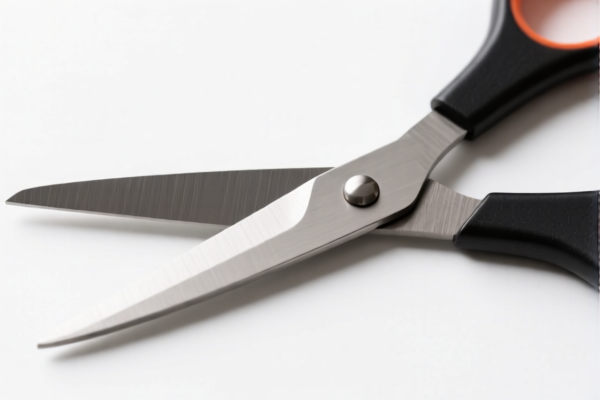
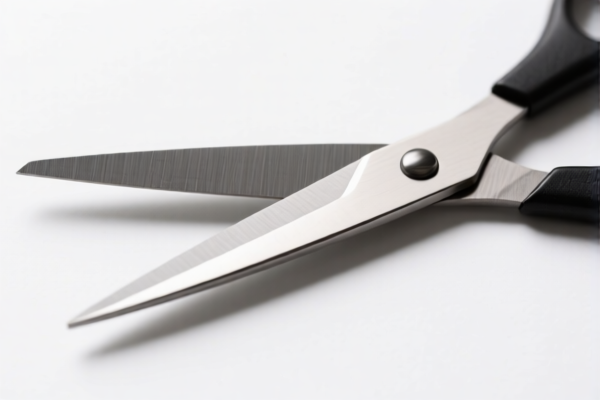
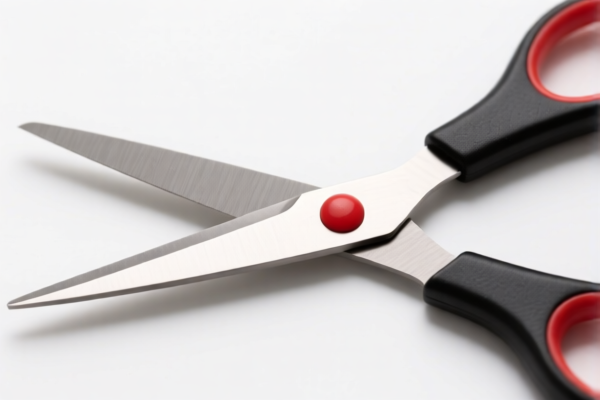
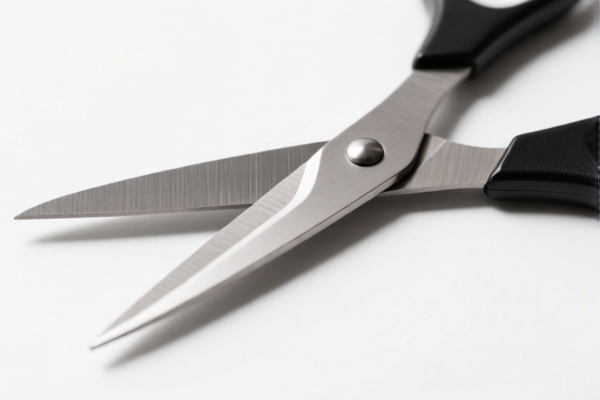
AI分析
🔪 Juicer Blade (Juzhiji Blades)
🌐 HS Code Reference & Customs Clearance Guide | 2026 Latest Tariff Analysis | Professional Clearance Strategy
📌 I. Product Definition and Classification: Do You Really Understand "Juicer Blades"?
Juicer blades are the core cutting components of food preparation machinery, designed to crush, slice, or puree fruits, nuts, and vegetables. In international trade, the classification depends heavily on whether the blade is considered a machine part or a cutting tool, and its material composition.
⚠️ Key Distinction Point:
- If the blade is treated as a part of the food preparation machine (functional assembly) → Likely Chapter 84 (Machinery)
- If the blade is treated as a metal cutting tool (independent functional item) → Likely Chapter 82 (Tools)Note on Material: Most modern juicer blades are made of stainless steel (ferrous metal) or high-grade alloy steel. This influences whether they fall under base metals (Ch 82) or machinery parts (Ch 84).
📦 II. HS Code Classification Details (2026 Latest Tariff Authority对照)
Based on the provided data, here are the five most relevant HS Codes for Juicer Blades, with their summaries and tax implications.
| HS Code | Product Description | Summary from Data | Total Tax Rate |
|---|---|---|---|
8438.80.00.00 |
Parts of other food/drink prep machinery | "Juicer blade as a mechanical part, fits 'other mechanical parts' definition. No material conflict." | 35.0% |
8208.30.00.60 |
Cutting blades for industrial machines | "Juicer blade belongs to 'cutting leaves', used in food industry machines. Material inferred as base metal." | 35.0% |
8438.90.90.90 |
Other parts of food/drink prep machinery | "Juicer blade is a mechanical spare part. Juicers fall under food/drink prep machinery. Fits 'other industrial food prep machine parts'." | 37.8% |
8208.90.60.00 |
Other metal cutting/cutting tools | "Juicer blade belongs to metal cutting/cutting shapes. Fits tool requirements. Material inferred as metal, no conflict." | 35.0% |
8438.60.00.00 |
Juice extractors (Whole Machine Logic) | "Juicer whole machine prepares fruit/nuts/veg. Fits functional definition. Related accessories can reference this logic." | 35.0% |
🔍 重点提醒 (Key Reminders):
- 8438.80/90.90: These are the most "standard" classifications for accessories/parts of a juicer. If you are importing just the blade as a spare part for an existing machine, 8438.90.90.90 is often the safest bet for "parts," though 8438.80.00.00 is also strong.
- 8208.30/90.60: These classify the blade as a cutting tool rather than a machine part. This is valid if the blade is sold independently as a generic cutting insert.
- 8438.60.00.00: This is for the whole machine. Only use this if you are importing the entire juicer. If importing just the blade, do NOT use this code, as it may lead to classification errors for parts.
💰 III. 2026 Latest Tariff Rate Breakdown (Including Additional Taxes, Policy Add-ons)
✅ Applicable Country: United States (US)
✅ Origin: China (CN)
✅ Effective Date: November 10, 2025 onwards (including subsequent imports)
🎯 1. 8438.80.00.00 & 8208.30.00.60 & 8208.90.60.00 —— Common Classification Cluster
These three codes share the same tax structure in the provided data.
| Item | Detail |
|---|---|
| Base Tariff | 0.0% (ad valorem) |
| USITC Additional Tariff (Section 301) | +25.0% |
| IEEPA Additional Tariff (Section 122/301 related) | +10.0% |
| Total Tax Rate | 35.0% |
| Tax Calculation | CIF Value × 35% |
| De Minimis Exemption | ❌ Not Eligible (deny_de_minimis) |
| Legal Basis Path | USITC:8438.80.00.00 → FOOTNOTE:301.9903.88.01 + IEEPA:9903.01.25 |
📌 Explanation:
- The 0% base tariff suggests these goods are not heavily taxed under normal MFN rates.
- However, the +25% Section 301 tariff and +10% IEEPA tariff add up to a massive 35% effective rate.
- Crucial: There is no de minimis exemption for these HS codes from China. Small shipments are not exempt.
🎯 2. 8438.90.90.90 —— "Other Parts" Category
| Item | Detail |
|---|---|
| Base Tariff | 2.8% |
| USITC Additional Tariff (Section 301) | +25.0% |
| IEEPA Additional Tariff | +10.0% |
| Total Tax Rate | 37.8% |
| Tax Calculation | CIF Value × 37.8% |
| De Minimis Exemption | ❌ Not Eligible |
| Legal Basis Path | USITC:8438.90.90.90 → FOOTNOTE:301.9903.88.01 + IEEPA:9903.01.25 |
📌 Note:
- This code has a 2.8% base tariff, making the total rate slightly higher (37.8%) than the 35% cluster.
- Choose this code only if the blade is clearly defined as a "part" of a specific food preparation machine and not a general cutting tool.
🎯 3. 8438.60.00.00 —— Whole Machine Logic (For Reference)
| Item | Detail |
|---|---|
| Base Tariff | 0.0% |
| USITC Additional Tariff | +25.0% |
| IEEPA Additional Tariff | +10.0% |
| Total Tax Rate | 35.0% |
| Tax Calculation | CIF Value × 35% |
| De Minimis Exemption | ❌ Not Eligible |
📌 Warning: This code is for the juicer unit itself. If you import only blades, misclassifying them as the whole machine is risky. However, the tax rate is the same as the blade-as-part/tools codes.
🛠️ IV. Customs Clearance Practical Advice (Real-World Pitfall Avoidance Guide)
✅ 1. Required Documentation Checklist (All are Mandatory)
| Document | Required | Notes |
|---|---|---|
| ✅ Product Specification Sheet | ✔️ | Must include material (e.g., Stainless Steel 420/440), dimensions, blade shape. |
| ✅ Product Photos | ✔️ | Clear photos of the blade, packaging, and any branding. |
| ✅ Commercial Invoice | ✔️ | Must clearly state "Juicer Blade" or "Spare Part for Juicer," not vague terms like "Metal Tool." |
| ✅ Packing List | ✔️ | Detail quantity and weight. |
| ✅ Certificate of Origin (CO) | ✔️ | Essential for proving CN origin to apply/add tariffs correctly. |
| ✅ Declaration of Function | ✔️ | Explain if it is a standalone cutting tool or a specific part for a machine. |
✅ 2. Declaration Tips (Key Mnemonic)
🔥 "Parts vs. Tools: Define Function, Avoid Penalty!"
| Situation | Correct Declaration | Wrong Practice |
|---|---|---|
| Blade sold as spare part | 8438.90.90.90 or 8438.80.00.00 |
Declare as "Cutting Tool" → Risk of audit |
| Blade sold as generic tool | 8208.30.00.60 or 8208.90.60.00 |
Declare as "Machine Part" → Potential mismatch |
| Whole Juicer | 8438.60.00.00 |
Declare only blades for a whole machine → High Risk of Misclassification |
| Blade + Housing as Set | 8438.60.00.00 (if intended as complete unit) |
Split declaration → Penalty Risk |
📌 Advice:
- If you are a retailer selling replacement blades, 8438.90.90.90 is often the most defensible as a "part."
- If you are a manufacturer importing bulk blades for assembly, 8208.30.00.60 (as cutting inserts) might be preferred if the HS Code committee supports it.
- Consistency is Key: Ensure your invoice description matches the HS Code definition.
✅ 3. Special Circumstances Handling
| Situation | Handling Advice |
|---|---|
| OEM Custom Blades | Provide design drawings and client POs to prove they are specific parts. |
| Stainless Steel Content | High-quality steel may require additional material certification to avoid misclassification as "base metal" (Ch 73) if not clear. |
| Small Quantity Samples | Still subject to 35-37.8% tax. No de minimis exemption. Budget accordingly. |
| Multiple HS Codes Used | If importing both whole juicers and blades, use separate HS Codes for each. Do not lump them. |
🌍 V. Global Market Comparison (2026 Latest)
| Country/Region | Recommended HS Code | Tariff (CN Origin) | Certification | Notes |
|---|---|---|---|---|
| 🇺🇸 USA | 8438.90.90.90 |
37.8% | FCC/UL (if electrical), FDA (food contact) | High tariff due to Section 301 + IEEPA. No de minimis. |
| 🇨🇳 China | 8438.90.90.90 |
5-8% (Est.) | CCC (if electrical) | Lower base tariff, no Section 301. |
| 🇪🇺 EU | 8438.90.90.90 |
0-3% (Est.) | CE, LFGB/FDA (food contact) | Generally lower tariffs for machine parts. |
| 🇬🇧 UK | 8438.90.90.90 |
0-5% (Est.) | UKCA | Post-Brexit tariffs vary, but generally competitive. |
📌 Conclusion:
- The USA is the most challenging market for Juicer Blades due to the 35-37.8% effective tax rate.
- EU/UK/China are significantly more cost-effective.
- If targeting the US, consider supply chain diversification (e.g., manufacturing in Vietnam or Mexico) to potentially qualify for lower tariffs, though origin rules are strict.
📌 VI. Common Errors & Pitfall Guide (Blood & Tears Lessons)
❌ Error 1: Declaring "Juicer Blade" as "Kitchen Utensil" (HS 82.15)
👉 Consequence: HS Code mismatch, audit, penalty, and retroactive tax application.
✅ Fix: Use 8208 or 8438 as per the functional definition.
❌ Error 2: Assuming small shipments are tax-free (De Minimis)
👉 Consequence: Customs will assess 35-37.8% tax on every package.
✅ Fix: Factor in the 35%+ cost for all US-bound shipments.
❌ Error 3: Using 8438.60.00.00 (Whole Machine) for blades
👉 Consequence: Declaration mismatch. Customs may suspect undervaluation or misclassification.
✅ Fix: Use 8438.90.90.90 or 8438.80.00.00 for parts.
❌ Error 4: Vague Description "Metal Part"
👉 Consequence: Delays in clearance, requests for additional info.
✅ Fix: Use precise terms: "Stainless Steel Juicer Blade, Replacement Part for Model XYZ."
🎯 VII. Conclusion: Professional Declaration, Save Time, Reduce Costs!
🎯 Remember the Mnemonic:
🔹 "Blade is Part or Tool, Choose Right, Tax is Controlled!"
🔹 "USA Tariff is 35%+, De Minimis is Gone, Plan Ahead, Avoid Pain!"
📌 Pro Tip:
- For US Imports: Calculate the landed cost with 35-37.8% tax. If margins are thin, consider Pre-Ruling (Advance Ruling) to confirm the exact HS Code and avoid surprise liabilities.
- For Food Contact: Ensure materials meet FDA standards (for US) or EU 1935/2004 (for EU). Non-compliance can lead to rejection at border regardless of HS Code.
📣 Immediate Action:
📞 Contact a Customs Broker + Provide Product Photos + Request HS Code Pre-Ruling for the US.
🚀 Ensure your Juicer Blades pass customs smoothly, avoid penalties, and maximize your profit!
✨ Professional Clearance Starts with Precise Classification!
💼 Every cent of your cost deserves precise calculation!
用户评价
关于 HS 编码归类
协调制度(HS)是由世界海关组织(WCO)制定的国际贸易商品分类标准。全球 200 多个国家采用 HS 系统作为海关关税、贸易统计和进出口监管的基础。
每个 HS 编码遵循以下层级结构:
- 章(2 位)——商品大类(例如:第 84 章:机器和机械设备)
- 品目(4 位)——章内的更具体分类
- 子目(6 位)——国际通用细分,所有 WCO 成员国统一使用
- 本国细分(8-10 位)——各国自行扩展的细分编码,如美国 HTSUS 10 位编码
正确的 HS 编码归类对于顺利通关、准确缴纳关税和遵守贸易法规至关重要。错误归类可能导致海关延误、多缴关税或罚款。
从CN进口到US时,适用的关税税率可能包括:
- 最惠国(MFN)税率——适用于 WTO 成员国的标准关税税率
- 普通税率——适用于无贸易协定国家
- 贸易救济关税——附加关税,如 301 条款(反倾销)、232 条款(国家安全)或反补贴税
本页内容仅供参考。如需正式归类,请咨询当地海关或持牌报关代理。