Juicer Blender Accessories
CN → US| HS编码 | 关税税率 | 原产国 | 目的国 | 文档 |
|---|---|---|---|---|
| 8509905500 | 39.2% | CN | US | 官方文档 |
| 8509904500 | 39.2% | CN | US | 官方文档 |
| 8436990090 | 35.0% | CN | US | 官方文档 |
| 8436990070 | 35.0% | CN | US | 官方文档 |
| 8419908500 | 35.0% | CN | US | 官方文档 |
商品图片
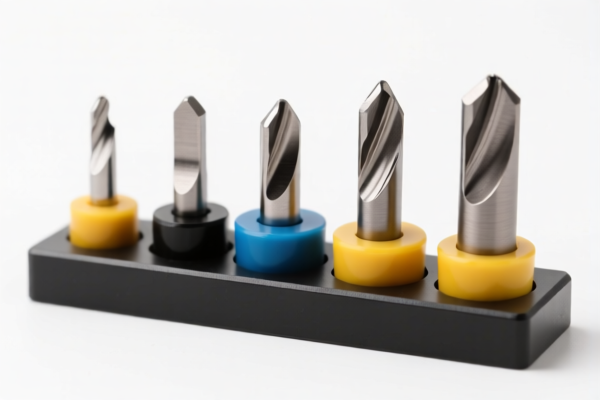
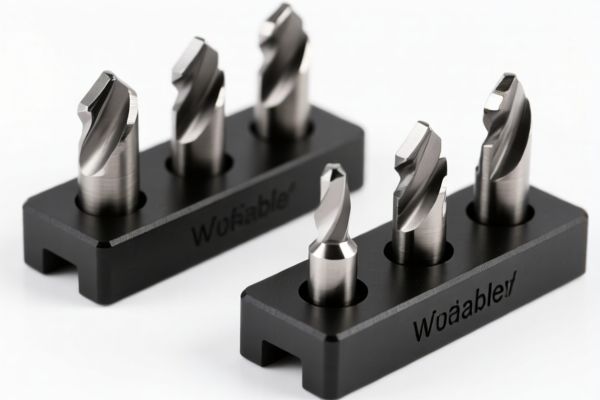
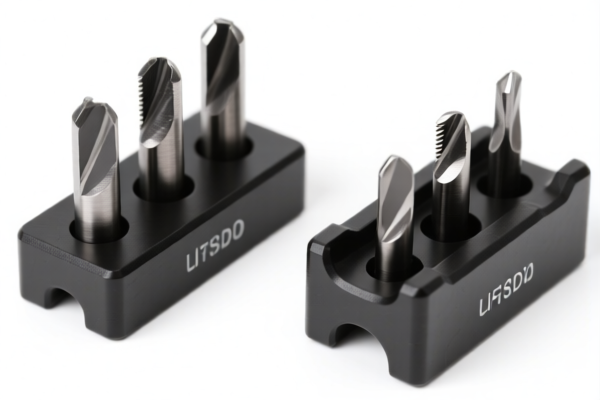
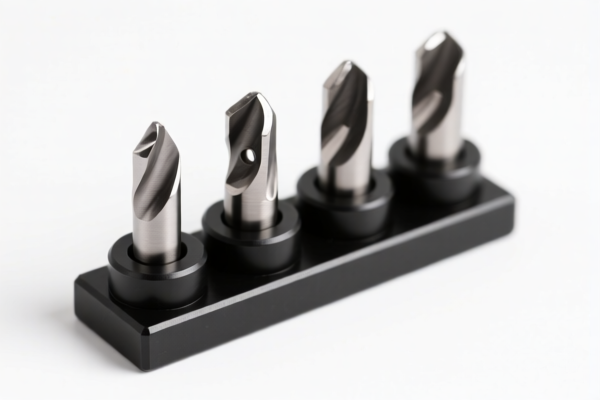
AI分析
🍊 Juicer & Blender Accessories (Blenders/Mixers Parts)
🌐 HS Code Reference & Customs Clearance Guide | 2026 Latest Tariff Analysis | Professional Strategy for US Import
📌 I. Product Definition & Classification: What Exactly Are These "Accessories"?
In the international trade of household appliances, "Juicer/Blender Accessories" primarily refer to the rotor blades, blending jars, or mixing cups that are detachable parts of electric juicers, blenders, or food mixers. These are not standalone machines but parts designed specifically for machines of heading 8509 (domestic electric appliances).
However, customs classification often varies based on the intended specific use and construction details: 1. Standard Appliance Parts: Parts for household electric juicers/blenders → Generally classified under 8509.90. 2. Industrial/Food Processing Parts: If used as parts for industrial food mixers or agricultural processing machinery → May fall under 8436.99 or 8419.90.
⚠️ Key Distinction Point:
- If the item is explicitly designed for a household electric juicer/blender (HS 8509.01) → Use 8509.90.xxxx.
- If the item is a generic "blender" used in food processing plants or agricultural processing (not electric domestic) → Use 8436.99 or 8419.90.
- Note: Most consumer-grade "blender blades" for home use are strictly 8509.90.
📦 II. HS Code Classification Details (2026 Latest Tariff Authority Comparison)
| HS Code | Product Description | Applicable Scenario | Material/Conflict Check | Total Tax Rate* |
|---|---|---|---|---|
8509.90.55.00 |
Parts of domestic electric appliances (Juicer/Blender accessories) | Standard household juicer blades/cups | No material conflict | 39.2% |
8509.90.45.00 |
Parts of other domestic electric appliances (Juicer/Blender parts) | Generic blender parts for home use | No material conflict | 39.2% |
8436.99.00.90 |
Parts of agricultural/horticultural/food processing machinery | Industrial blenders, crop preparation equipment | Metal/Plastic compatible | 35.0% |
8436.99.00.70 |
Parts of juice pressing machines (crop preparation) | Juicer parts for agricultural processing | Metal/Plastic compatible | 35.0% |
8419.90.85.00 |
Parts of mechanical handling equipment or machinery | Generic machinery parts (broad classification) | Plastic/Metal inferred | 35.0% |
🔍 Key Reminder:
- 8509.90 series is the most accurate for typical consumer electric juicers and blenders.
- 8436.99 and 8419.90 are used when the equipment is classified as industrial food processing or agricultural machinery rather than domestic appliances.
- Material Conflict: None of the above HS codes have material restrictions for plastic/metal parts, but correct usage must be declared.
💰 III. 2026 Latest Tariff Rate Breakdown (Including Additional Taxes & Policy Surcharges)
✅ Applicable Country: United States (US)
✅ Origin: China (CN)
✅ Effective Date: November 10, 2025 (and subsequent imports)
🎯 1. 8509.90.55.00 & 8509.90.45.00 —— Parts of Domestic Electric Appliances
| Item | Detail |
|---|---|
| Base Duty Rate | 4.2% (Ad Valorem) |
| Section 301 Duty | +25.0% (USITC Footnote: Additional duties on Chinese goods) |
| 122 Clause Duty | +10.0% (Specific clause related to trade enforcement) |
| Total Tax Rate | 39.2% |
| Tax Calculation | CIF Value × 39.2% |
| De Minimis Eligibility | ❌ No (High duty rates typically exclude de minimis benefits for this category) |
| Legal Basis Path | USITC:8509.90.55.00 → SECTION301:25% → CLAUSE122:10% → BASE:4.2% |
📌 Explanation:
- The 4.2% base rate is the standard MFN duty for parts of electric household appliances.
- The +25% is the standard Section 301 tariff on Chinese goods.
- The +10% is the 122 Clause tariff, often applied to specific product lists related to trade violations.
- Total: 39.2%. This is a high-cost category for importers.
🎯 2. 8436.99.00.90 & 8436.99.00.70 —— Parts of Agricultural/Food Processing Machinery
| Item | Detail |
|---|---|
| Base Duty Rate | 0.0% (Ad Valorem) |
| Section 301 Duty | +25.0% |
| 122 Clause Duty | +10.0% |
| Total Tax Rate | 35.0% |
| Tax Calculation | CIF Value × 35.0% |
| De Minimis Eligibility | ❌ No |
| Legal Basis Path | USITC:8436.99.00.90 → SECTION301:25% → CLAUSE122:10% → BASE:0.0% |
📌 Explanation:
- The 0% base rate makes these codes attractive for industrial or agricultural parts.
- However, if CBP determines the goods are for domestic use (household blenders), they will reclassify to 8509.90, increasing the base rate from 0% to 4.2%, resulting in a 4.2% higher total tax.
- Risk: Misclassification from 8436 to 8509 can lead to penalties and back duties.
🎯 3. 8419.90.85.00 —— Parts of Mechanical Handling Machinery
| Item | Detail |
|---|---|
| Base Duty Rate | 0.0% (Ad Valorem) |
| Section 301 Duty | +25.0% |
| 122 Clause Duty | +10.0% |
| Total Tax Rate | 35.0% |
| Tax Calculation | CIF Value × 35.0% |
| De Minimis Eligibility | ❌ No |
| Legal Basis Path | USITC:8419.90.85.00 → SECTION301:25% → CLAUSE122:10% → BASE:0.0% |
📌 Explanation:
- This is a broad "other machinery" category.
- Using this for juicer parts is risky unless the machine is clearly industrial-grade food processing equipment.
- Total: 35.0%, which is 4.2% lower than the domestic appliance classification, but carries higher classification risk.
🛠️ IV. Customs Clearance Practical Advice (Avoiding Pitfalls)
✅ 1. Documentation Checklist (Non-Negotiable)
| Document | Required | Purpose |
|---|---|---|
| ✅ Product Specification Sheet | ✔️ | Must state: "Part for Electric Juicer/Blender, Model XYZ" |
| ✅ Use Declaration | ✔️ | Specify: "For Domestic Household Use" OR "For Industrial Food Processing" |
| ✅ Material Composition | ✔️ | e.g., "Stainless Steel Blades, BPA-Free Plastic Jar" |
| ✅ Commercial Invoice | ✔️ | Clearly describe as "Blender Parts" not "Blender" |
| ✅ Packing List | ✔️ | Separate accessories from main machines if shipped together |
| ✅ OEM/ODM Agreement | ✔️ | If applicable, prove design origin |
✅ 2. Declaration Strategy (Critical Tips)
🔥 "Match Use, Not Just Name: Domestic vs. Industrial!"
| Scenario | Recommended HS Code | Risk Level | Notes |
|---|---|---|---|
| Household Juicer Blades | 8509.90.55.00 |
⚠️ Medium | High tax (39.2%), but most accurate. |
| Industrial Food Mixer Parts | 8436.99.00.90 |
⚠️ High | Lower tax (35.0%), but requires proof of industrial use. |
| Generic "Blender" Shipment | ❌ Avoid | 🚫 Critical | Never ship as "Blender" if it's a part. Must declare as "Part." |
| Mixed Shipment (Parts + Main Unit) | 🚫 Split Declaration | ⚠️ High | Main unit (8509.01) + Parts (8509.90). Do not combine. |
✅ 3. Special Cases
| Situation | Advice |
|---|---|
| OEM for Brand X | Provide Brand X’s authorization letter to prove it’s a legitimate part. |
| Used Parts | Must declare as "Used Parts." Additional inspection may occur. |
| High-Value Precision Parts | Consider Advance Ruling (Ruling Letter) from CBP to lock in the HS Code. |
| Plastic vs. Metal | Material does not change HS Code for these categories, but must be declared for customs valuation. |
🌍 V. Global Market Comparison (2026)
| Country/Region | Recommended HS Code | Duty Rate (China Origin) | Certifications | Notes |
|---|---|---|---|---|
| 🇺🇸 USA | 8509.90.55.00 |
39.2% | None specific | Highest duty due to 301 + 122 clauses. |
| 🇨🇳 China | 8509.90.55.00 |
5-8% (Approx.) | CCC | Lower duty, but focus on domestic sales. |
| 🇪🇺 EU | 8509.90.90 |
0% | CE + RoHS | No anti-dumping duties on these parts. |
| 🇯🇵 Japan | 8509.90.00 |
0-5% | PSE | Low duty, but strict safety standards. |
📌 Conclusion:
- USA is the most expensive market for these parts due to Section 301 and 122 Clause tariffs.
- EU and Japan offer lower duty rates, making them more cost-effective for re-export or local sales.
📌 VI. Common Mistakes & Pitfalls (Lessons Learned)
❌ Mistake 1: Declaring "Blender Parts" as "Juicer" (Main Product)
👉 Consequence: Incorrect HS Code, potential fraud investigation, high fines.
❌ Mistake 2: Using 8436.99 for Household Parts to Save 4.2%
👉 Consequence: CBP reclassification upon arrival, back taxes + penalties.
❌ Mistake 3: Ignoring the "122 Clause"
👉 Consequence: Unexpected 10% additional duty if not accounted for in pricing.
✅ Correct Practice:
"Electric Juicer Blades, Stainless Steel & BPA-Free Plastic, Part for Model ABC, Domestic Use Only"
🎯 VII. Conclusion: Precision in Classification Saves Money!
🎯 Remember the Golden Rule:
🔹 "Domestic Use = 8509.90 (39.2%) | Industrial Use = 8436.99 (35.0%)"
🔹 "3.5% Difference? Not Worth the Audit Risk if Misclassified!"
🔹 "Always Declare 'Parts', Never 'Machine'!"
📌 Pro Tip:
If your shipment volume is high, apply for a CBP Advance Ruling to fix the HS Code before shipping. This provides legal certainty and avoids surprise duties.
📣 Act Now:
📞 Contact a Licensed Customs Broker
📤 Provide Detailed Product Specs + Usage Declaration
🚀 Ensure Smooth Clearance, Maximize Profit, Minimize Risk!
✨ Professional Customs Clearance Starts with Accurate Classification!
💼 Every Dollar in Duty Saved is a Dollar in Profit Gained!
用户评价
关于 HS 编码归类
协调制度(HS)是由世界海关组织(WCO)制定的国际贸易商品分类标准。全球 200 多个国家采用 HS 系统作为海关关税、贸易统计和进出口监管的基础。
每个 HS 编码遵循以下层级结构:
- 章(2 位)——商品大类(例如:第 84 章:机器和机械设备)
- 品目(4 位)——章内的更具体分类
- 子目(6 位)——国际通用细分,所有 WCO 成员国统一使用
- 本国细分(8-10 位)——各国自行扩展的细分编码,如美国 HTSUS 10 位编码
正确的 HS 编码归类对于顺利通关、准确缴纳关税和遵守贸易法规至关重要。错误归类可能导致海关延误、多缴关税或罚款。
从CN进口到US时,适用的关税税率可能包括:
- 最惠国(MFN)税率——适用于 WTO 成员国的标准关税税率
- 普通税率——适用于无贸易协定国家
- 贸易救济关税——附加关税,如 301 条款(反倾销)、232 条款(国家安全)或反补贴税
本页内容仅供参考。如需正式归类,请咨询当地海关或持牌报关代理。