Kip Patent Laminated Leather
CN → US| HS编码 | 关税税率 | 原产国 | 目的国 | 文档 |
|---|---|---|---|---|
| 5903202000 | 35.0% | CN | US | 官方文档 |
| 3921131500 | 41.5% | CN | US | 官方文档 |
| 4114207000 | 36.6% | CN | US | 官方文档 |
| 4114203000 | 37.3% | CN | US | 官方文档 |
| 5903202500 | 42.5% | CN | US | 官方文档 |
商品图片
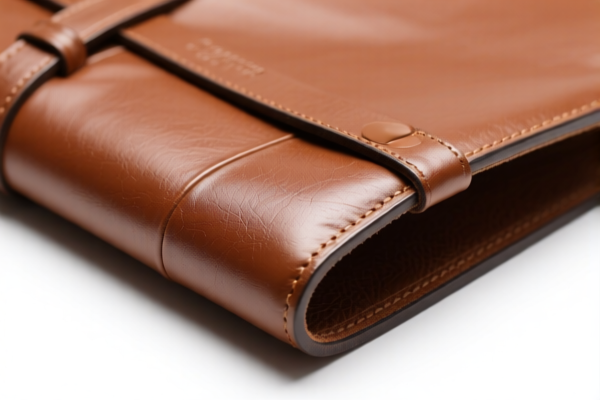
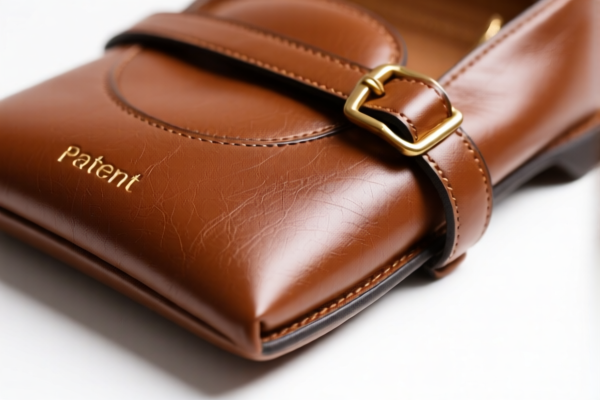
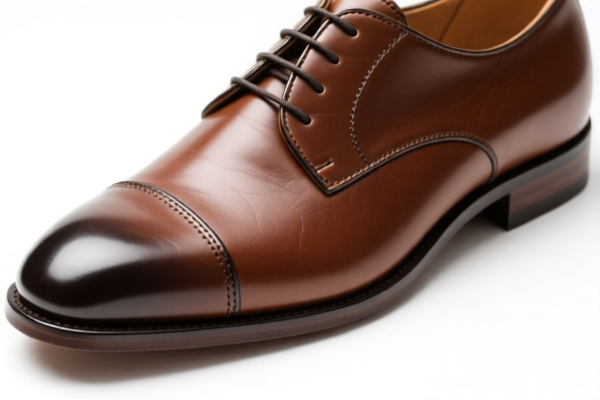
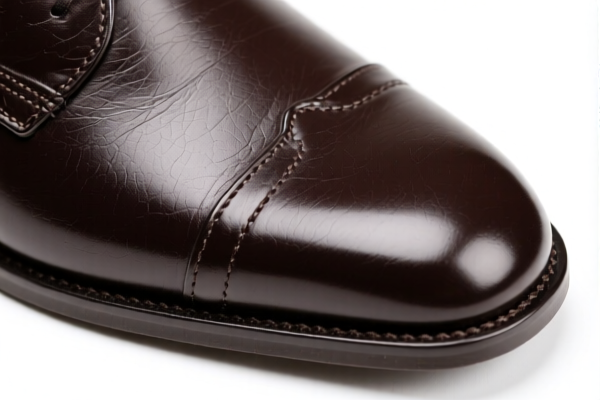
AI分析
🧥 Kip Patent Laminated Leather (PU)
🌐 HS Code Reference & Customs Clearance Guide | 2026 Latest Tariff Analysis | Professional-Level Compliance Strategy
📌 I. Product Definition & Classification: What Exactly is "Kip Patent Laminated Leather"?
Kip Patent Laminated Leather (PU) is a composite material widely used in footwear, bags, and accessories. It consists of a base layer (often textile or leather substrate) impregnated, coated, or covered with Polyurethane (PU). Despite the name "leather," its international trade classification depends heavily on its structural composition and surface treatment.
In international trade, it is generally categorized into three distinct logical paths: 1. Textile-Based: If the base is a fabric/textile coated with PU → Chapter 59. 2. Plastic/Synthetic Sheet: If viewed as a flat sheet of synthetic plastic material → Chapter 39. 3. Treated Leather: If considered a type of patent/enameled leather → Chapter 41.
⚠️ Critical Distinction:
- If the substrate is textile/fabric and coated with PU → It is treated as an impregnated textile.
- If the substrate is non-woven and heavily coated to resemble leather → It may fall under synthetic plastic sheets.
- If classified under leather provisions (less common for pure PU) → It falls under patent leather categories.
- Risk: Misclassification can lead to significant tax discrepancies (ranging from 35% to 42.5%) and customs delays.
📦 II. HS Code Classification Details (2026 Latest Tariff Authority Cross-Reference)
| HS Code | Product Description | Application Scenario | Logic/Basis |
|---|---|---|---|
5903.20.20.00 |
Textile fabric impregnated, coated, covered or laminated with polyurethane | PU leather with textile base, common in fashion goods | ✅ Textile Base |
3921.13.15.00 |
Plates, sheets, film, foil and strip, of plastics: Of polyurethane, cellular | PU patent leather classified as synthetic plastic sheet/material | ✅ Plastic/Synthetic Form |
4114.20.70.00 |
Other patent leather and patent laminating leather; chamois leather | Classified as "Patent Leather" category due to surface finish | ✅ Patent/Enamel Logic |
4114.20.30.00 |
Patent leather and patent laminating leather | Classified as patent leather based on layering/coating logic | ✅ Layering Logic |
5903.20.25.00 |
Textile fabric impregnated, coated, covered or laminated with polyurethane | Another specific subheading for PU-coated textile fabrics | ✅ Textile Base (Variant) |
🔍 Key Reminder:
- Chapter 59 applies when the textile structure remains dominant.
- Chapter 39 applies when it is viewed as a plastic sheet/film.
- Chapter 41 is risky; it applies only if the product is specifically recognized as leather substitute with patent finish, but PU is often excluded from pure "leather" definitions unless specified by local customs rulings.
- Tax Variance: The difference between5903.20.20.00(35.0%) and5903.20.25.00(42.5%) is 7.5%. This is a critical cost driver.
💰 III. 2026 Latest Tariff Rate Breakdown (Including Surtaxes, Policy Add-ons)
✅ Applicable Country: United States (US)
✅ Origin: China (CN)
✅ Effective Date: November 10, 2025 onwards (including subsequent imports)
🎯 1. 5903.20.20.00 —— Textile Fabric Coated with Polyurethane (Most Common)
| Item | Details |
|---|---|
| Base Tariff | 0.0% |
| USITC Surtax | +25.0% (Section 301 Tariff) |
| IEEPA Surcharge | +10.0% (China-specific, effective Nov 10, 2025) |
| Total Tariff Rate | 35.0% |
| Tax Calculation | CIF Value × 35% |
| De Minimis Eligibility | ❌ Not Eligible (deny_de_minimis) |
| Legal Path | IEEPA:9903.01.25 → USITC:5903.20.20.00 |
📌 Explanation:
- The 0% base rate might look attractive, but the 25% Section 301 tariff and 10% IEEPA surcharge apply due to the Chinese origin.
- Total 35% is standard for PU-coated textiles from China.
🎯 2. 3921.13.15.00 —— Polyurethane Plates/Sheets (Synthetic Plastic)
| Item | Details |
|---|---|
| Base Tariff | 6.5% |
| USITC Surtax | +25.0% (Section 301 Tariff) |
| IEEPA Surcharge | +10.0% (China-specific) |
| Total Tariff Rate | 41.5% |
| Tax Calculation | CIF Value × 41.5% |
| De Minimis Eligibility | ❌ Not Eligible |
| Legal Path | IEEPA:9903.01.25 → USITC:3921.13.15.00 |
📌 Note:
- This classification carries a higher base tariff (6.5%) compared to textile-based PU.
- Total 41.5% is significantly more expensive than Chapter 59 options.
- Used when the material is considered a plastic sheet rather than a textile fabric.
🎯 3. 4114.20.70.00 —— Other Patent Leather (Enamel/Patent Category)
| Item | Details |
|---|---|
| Base Tariff | 1.6% |
| USITC Surtax | +25.0% (Section 301 Tariff) |
| IEEPA Surcharge | +10.0% (China-specific) |
| Total Tariff Rate | 36.6% |
| Tax Calculation | CIF Value × 36.6% |
| De Minimis Eligibility | ❌ Not Eligible |
| Legal Path | IEEPA:9903.01.25 → USITC:4114.20.70.00 |
📌 Note:
- Total 36.6% is a middle-ground option.
- However, this classification is legally contentious for PU leather. US Customs often requires proof that the material is "leather-like" but not textile-based. Misclassification here can lead to audits.
🎯 4. 4114.20.30.00 —— Patent Laminating Leather
| Item | Details |
|---|---|
| Base Tariff | 2.3% |
| USITC Surtax | +25.0% (Section 301 Tariff) |
| IEEPA Surcharge | +10.0% (China-specific) |
| Total Tariff Rate | 37.3% |
| Tax Calculation | CIF Value × 37.3% |
| De Minimis Eligibility | ❌ Not Eligible |
| Legal Path | IEEPA:9903.01.25 → USITC:4114.20.30.00 |
📌 Note:
- Total 37.3%. Similar to the above, this requires strict adherence to "laminated leather" definitions.
- Often used for higher-quality synthetic leathers with specific coating processes.
🎯 5. 5903.20.25.00 —— Textile Fabric Coated with PU (Specific Subheading)
| Item | Details |
|---|---|
| Base Tariff | 7.5% |
| USITC Surtax | +25.0% (Section 301 Tariff) |
| IEEPA Surcharge | +10.0% (China-specific) |
| Total Tariff Rate | 42.5% |
| Tax Calculation | CIF Value × 42.5% |
| De Minimis Eligibility | ❌ Not Eligible |
| Legal Path | IEEPA:9903.01.25 → USITC:5903.20.25.00 |
📌 Note:
- Total 42.5% is the highest tariff among the options.
- This subheading is often applied to specific types of PU-coated textiles (e.g., heavier coatings, specific weave structures).
- Avoid this code unless your product specifically matches the technical definition, as it is the most expensive.
🛠️ IV. Customs Clearance Practical Advice (Battle-Tested Pitfall Guide)
✅ 1. Documentation Checklist (Mandatory)
| Document | Required | Explanation |
|---|---|---|
| ✅ Product Spec Sheet | ✔️ | Must detail: Base material (textile/non-woven/leather), coating % (PU), thickness, width. |
| ✅ Composition Statement | ✔️ | Clearly state: "Polyurethane (PU) coated on [Textile/Non-woven] substrate." |
| ✅ Product Photos | ✔️ | Close-ups of the surface (patent shine) and the cross-section (showing layers). |
| ✅ Commercial Invoice | ✔️ | Description must match HS Code logic (e.g., "PU Coated Textile Fabric" vs "Synthetic Leather Sheet"). |
| ✅ Packing List | ✔️ | Consistent with invoice. |
| ✅ Origin Certificate | ✔️ | If non-China origin, may qualify for lower tariffs. |
✅ 2. Declaration Tips (Key Mantras)
🔥 "Material Determines Chapter, Coating Determines Tax!"
| Scenario | Correct HS Code | Incorrect Action | Consequence |
|---|---|---|---|
| Textile base + PU coating | 5903.20.20.00 (35%) |
Declare as Plastic Sheet (3921) |
Overpay tax (41.5%) |
| Textile base + Heavy PU | 5903.20.25.00 (42.5%) |
Declare as Leather (4114) |
Audit risk, possible back taxes |
| Non-woven + PU (Sheet-like) | 3921.13.15.00 (41.5%) |
Declare as Textile (5903) |
Underpayment if deemed plastic |
| "Patent Leather" (Synthetic) | 4114.20.70.00 (36.6%) |
Declare as 5903 |
Potential misclassification if base is not textile |
📌 Critical Tip:
- Be Precise in Description: Use "Polyurethane Coated Textile Fabric" for Chapter 59. Use "Polyurethane Sheets" for Chapter 39.
- Avoid Ambiguity: Do not just write "PU Leather." Always specify the base material.
✅ 3. Special Cases Handling
| Situation | Handling Advice |
|---|---|
| Mixed Materials | If the base is 50% cotton/50% polyester, it is still textile-based → Chapter 59. |
| Lamination vs. Coating | If PU is laminated as a separate film, it may be Chapter 39. If impregnated/coated, it is Chapter 59. |
| OEM Custom Orders | Provide customer specifications to justify the specific HS code (especially for 4114). |
| Small Shipments (De Minimis) | ❌ No Exemption. All PU leather from China is subject to full tariffs. |
🌍 V. Global Customs Comparison (2026 Latest)
| Country/Region | Recommended HS Code | Tariff (China Origin) | Certification | Notes |
|---|---|---|---|---|
| 🇺🇸 USA | 5903.20.20.00 |
35.0% | No specific certs | Highest risk of misclassification |
| 🇨🇳 China | 5903.20.20.00 |
~5-7% | RoHS (if electrical) | Lower tariffs, no surtaxes |
| 🇪🇺 EU | 5903.20.20.00 |
~0-6% | REACH + CE | No Section 301 equivalent |
| 🇬🇧 UK | 5903.20.20.00 |
~0-6% | UKCA | Post-Brexit tariffs apply |
| 🇦🇺 Australia | 5903.20.20.00 |
~5% | No special certs | Moderate tariffs |
📌 Conclusion:
- USA is the most expensive market due to 35%–42.5% total tariffs.
- China/EU/UK offer significantly lower costs.
- Supply Chain Strategy: Consider sourcing PU leather from Vietnam, Indonesia, or Mexico to avoid China-specific surcharges (IEEPA/Section 301).
📌 VI. Common Errors & Pitfall Guide (Blood-Learn Lessons)
❌ Error 1: Declaring PU Leather as "Leather" (4101-4106)
👉 Consequence: PU is not animal leather. Misclassification leads to penalties and back taxes.
❌ Error 2: Ignoring the Base Material
👉 Consequence: Declaring 5903 (Textile) when it is 3921 (Plastic) → Underpayment of 6.5% base tariff + penalties.
❌ Error 3: Not Applying IEEPA 10% Surcharge
👉 Consequence: Customs will assess additional 10% + interest upon audit.
❌ Error 4: Using "Leather" in Product Name without Context
👉 Consequence: Customs officers may assume animal leather, leading to incorrect HS Code assignment.
✅ Correct Practice:
"Polyurethane (PU) Coated Textile Fabric, Patent Finish, Width 1.5m, Base: Polyester, Used for Footwear Uppers, Model XYZ, China Origin"
🎯 VII. Conclusion: Professional Declaration Saves Money!
🎯 Remember the Mantras:
🔹 "Textile Base = Chapter 59 (35%) – Cheapest"
🔹 "Plastic Sheet = Chapter 39 (41.5%) – Middle"
🔹 "Patent Leather = Chapter 41 (36.6%) – Risky"
🔹 "Heavy Coating = Chapter 59 (42.5%) – Most Expensive"
🔹 "No De Minimis for China Origin!"
📌 Pro Tip:
If your product is borderline between 5903.20.20.00 and 5903.20.25.00, consult a customs broker before shipment. The 7.5% difference can wipe out margins.
Request an Advance Ruling (ACE) from US Customs if possible.
📣 Immediate Action:
📞 Contact a licensed customs broker.
📄 Provide cross-section photos and composition details.
🚀 Clear Customs Smoothly, Maximize Profit!
✨ Professional Clearance Starts with Accurate Classification!
💼 Every Percentage Point of Tariff Matters!
用户评价
关于 HS 编码归类
协调制度(HS)是由世界海关组织(WCO)制定的国际贸易商品分类标准。全球 200 多个国家采用 HS 系统作为海关关税、贸易统计和进出口监管的基础。
每个 HS 编码遵循以下层级结构:
- 章(2 位)——商品大类(例如:第 84 章:机器和机械设备)
- 品目(4 位)——章内的更具体分类
- 子目(6 位)——国际通用细分,所有 WCO 成员国统一使用
- 本国细分(8-10 位)——各国自行扩展的细分编码,如美国 HTSUS 10 位编码
正确的 HS 编码归类对于顺利通关、准确缴纳关税和遵守贸易法规至关重要。错误归类可能导致海关延误、多缴关税或罚款。
从CN进口到US时,适用的关税税率可能包括:
- 最惠国(MFN)税率——适用于 WTO 成员国的标准关税税率
- 普通税率——适用于无贸易协定国家
- 贸易救济关税——附加关税,如 301 条款(反倾销)、232 条款(国家安全)或反补贴税
本页内容仅供参考。如需正式归类,请咨询当地海关或持牌报关代理。