Kitchen Food Waste Container
CN → US| HS编码 | 关税税率 | 原产国 | 目的国 | 文档 |
|---|---|---|---|---|
| 8509802000 | 35.0% | CN | US | 官方文档 |
| 8509905500 | 39.2% | CN | US | 官方文档 |
| 8438800000 | 35.0% | CN | US | 官方文档 |
| 8479820080 | 35.0% | CN | US | 官方文档 |
商品图片
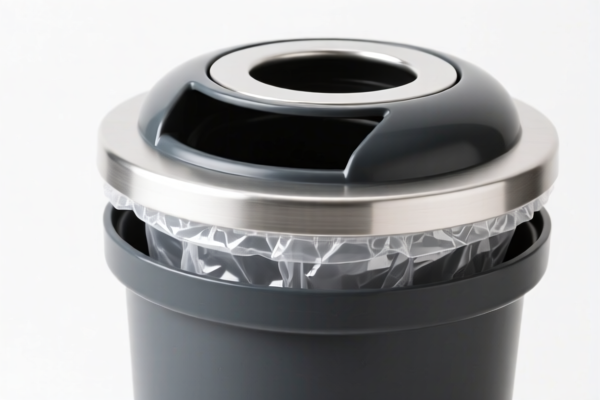
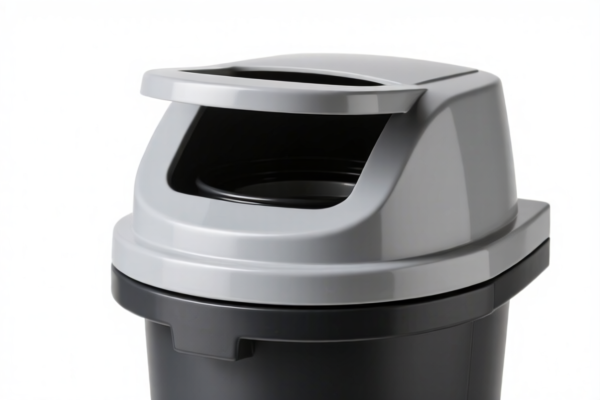
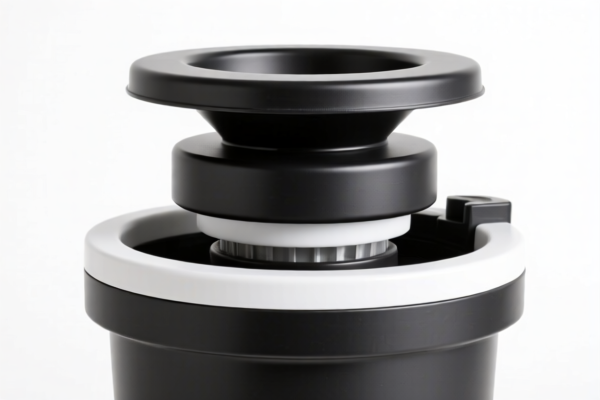
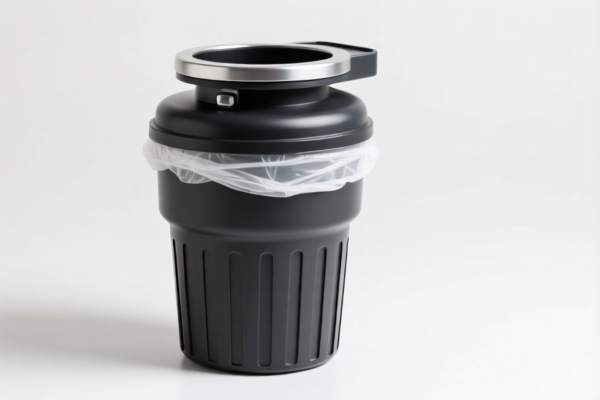
AI分析
🍽️ Kitchen Food Waste Container (Garbage Disposers)
🌐 HS Code Reference & Customs Clearance Guide | 2026 Tariff Analysis | Professional Compliance Strategy
📌 Part I: Product Definition & Classification: What Exactly Is a "Food Waste Container"?
A Kitchen Food Waste Container, commonly known as a Garbage Disposer or Waste Disposal Unit, is an electrically operated device installed under a kitchen sink. Its primary function is to grind food waste into small particles so it can be flushed down the drain.
In international trade, this product is often misclassified due to its dual nature: it is both a home appliance and a food processing machine. The correct HS Code depends entirely on its technical construction and intended legal classification by customs authorities.
⚠️ Key Classification Distinction:
- If it is viewed primarily as a home electrical appliance with its own motor → It falls under Heading 8509.
- If it is viewed as a machinery for food preparation/processing → It falls under Heading 8438 or 8479.
📦 Part II: HS Code Classification Details (2026 Authorized Tariff Codes)
Below are the four specific HS Codes derived from the provided data, along with their logical justifications for importing Kitchen Food Waste Containers.
| HS Code | Product Description / Summary | Logical Justification for Classification |
|---|---|---|
| 8509.80.20.00 | Garbage Disposer, purpose is exactly consistent | Classified based on end-use definition. The description explicitly states "purpose completely consistent," indicating a direct match for household waste disposal units in this specific subheading. |
| 8509.90.55.00 | Garbage Disposer, belongs to electromechanical home appliances with self-contained electric motor | Classified based on technical structure. Heading 8509 covers "Electromechanical domestic appliances, with self-contained electric motor." This code is used when the device is legally categorized strictly as a home appliance. |
| 8438.80.00.00 | Garbage Disposer, belongs to machinery used for food processing/treatment | Classified based on industrial function. If customs views the grinding process as "food processing" (even for waste), it may fall under Heading 8438 ("Machinery for the preparation of animal or vegetable substances"). |
| 8479.82.00.80 | Kitchen Garbage Processor, mechanical device with mixing/crushing functions | Classified based on mechanical action. Heading 8479 covers "Machines and mechanical appliances... with self-contained motor." This code captures devices whose primary feature is mixing or crushing functionality, distinguishing it from standard appliances. |
🔍 Critical Note:
- All four codes apply to the same physical product.
- The difference lies in the legal argument used during customs clearance.
- Misclassification Risk: Declaring a machine as "8509" when it is deemed "8438" (or vice versa) can lead to disputes over tariff rates and regulatory requirements.
💰 Part III: 2026 Detailed Tariff Rate Breakdown (Including Surcharges)
✅ Applicable Country: United States (US)
✅ Origin: China (CN)
✅ Effective Date: 2025/2026 (Current Trade War Context)
🎯 1. Code 8509.80.20.00 & 8438.80.00.00 & 8479.82.00.80
(Note: These three codes share the same tax structure in the provided data)
| Item | Detail |
|---|---|
| Base Tariff (MFN) | 0.0% |
| Section 301 Additional Tariff | +25.0% (USITC Footnote for China-origin goods) |
| Section 122 Tariff | +10.0% (Specific provision for certain Chinese goods) |
| Total Effective Tax Rate | 35.0% |
| Calculation Basis | CIF Value (Cost + Insurance + Freight) × 35% |
| De Minimis Exemption | ❌ Not Applicable (Cannot use $800 de minimis rule for Section 301/122 goods) |
| Legal Reference Chain | Base: 0.0% → Sec 301: 25.0% → Sec 122: 10.0% |
📌 Explanation:
- The base rate is 0%, meaning normally these goods are duty-free.
- However, due to US-China trade tensions, two heavy surcharges apply:
1. 25% Section 301 Tariff: A broad tariff on Chinese industrial and consumer goods.
2. 10% Section 122 Tariff: A specific additional duty often applied to goods that compete with US domestic industries.
- Total Impact: The importer pays 35% of the CIF value. This is a significant cost increase that must be priced into the product.
🎯 2. Code 8509.90.55.00
| Item | Detail |
|---|---|
| Base Tariff (MFN) | 4.2% |
| Section 301 Additional Tariff | +25.0% |
| Section 122 Tariff | +10.0% |
| Total Effective Tax Rate | 39.2% |
| Calculation Basis | CIF Value × 39.2% |
| De Minimis Exemption | ❌ Not Applicable |
| Legal Reference Chain | Base: 4.2% → Sec 301: 25.0% → Sec 122: 10.0% |
📌 Explanation:
- This code has a non-zero base rate (4.2%) because it is classified under "parts/accessories" or specific home appliance subheadings that carry a baseline duty.
- When combined with the same 25% + 10% surcharges, the total burden is 39.2%.
- Risk: This is the most expensive classification among the four options. Importers should avoid this code unless legally required, as it costs 4.2% more than the other three options.
🛠️ Part IV: Customs Clearance Practical Advice (Avoiding Pitfalls)
✅ 1. Documentation Checklist (Must-Have)
| Document | Requirement | Why It Matters |
|---|---|---|
| ✅ Product Specifications Sheet | ✔️ Must detail motor power (Watts/Volts), grinding chamber capacity, and material (e.g., stainless steel). | Proves whether it is an "appliance" (8509) or "machine" (84xx). |
| ✅ Circuit Diagram / Structure Chart | ✔️ Essential to show if the motor is self-contained (built-in). | Heading 8509/8479 require a "self-contained electric motor." |
| ✅ Commercial Invoice | ✔️ Description must match the HS Code logic. Example: "Electric Food Waste Disposer, Model X" vs. "Food Processing Machine." |
Inconsistent descriptions lead to audits and delays. |
| ✅ US Patent Declaration | ✔️ Confirm no IP infringement on US patents (e.g., InSinkErator patents). | Customs checks IP rights; infringement leads to seizure. |
| ✅ FCC Certification | ✔️ Required for all electrical devices with motors. | Electrical safety compliance for US market entry. |
✅ 2. Strategic Classification Advice
| Scenario | Recommended HS Code | Reason |
|---|---|---|
| Standard Home Model (Under-sink, standard motor) | 8509.80.20.00 | Lowest risk, lowest tax (35%). "Purpose consistent" is a strong legal argument. |
| Industrial/Heavy-Duty Model | 8438.80.00.00 | If used in commercial kitchens, frame it as "food processing machinery." Tax remains 35%. |
| Generic/Cross-Category Model | 8479.82.00.80 | If the "crushing/mixing" function is the primary selling point. Tax remains 35%. |
| ❌ Avoid | 8509.90.55.00 | Highest tax (39.2%). Only use if forced by specific customs rulings. |
🔥 Pro Tip:
Aim for the 35% rate.
By arguing that the device is a specialized machine (8438/8479) or a purpose-built appliance (8509.80), you avoid the 4.2% base duty of8509.90.55.00.
Difference: Saving 4.2% on a $10,000 shipment = $420 saved.
✅ 3. Common Mistakes & How to Avoid Them
| Mistake | Consequence | Solution |
|---|---|---|
| Describing as "Kitchen Appliance" only | May trigger 8509.90.55.00 (39.2%) |
Be specific: "Electric Food Waste Disposal Unit with Self-Contained Motor." |
| Ignoring Section 122 | Unexpected 10% bill at port | Check if the specific HTS is on the Section 122 list. All provided codes are. |
| Using De Minimis ($800) | Package seized & destroyed | Do not use postal/courier de minimis for these HS codes. Use formal customs entry (Form 7501). |
| Vague Invoice Description | Customs holds cargo for inspection | Invoice must state: "Brand, Model, Voltage, Power, Material, and Function: Grinding food waste." |
🌍 Part V: Global Market Comparison (2026 Context)
| Market | Recommended HS Code | Est. Total Duty | Notes |
|---|---|---|---|
| 🇺🇸 USA | 8509.80.20.00 / 8438.80.00.00 / 8479.82.00.80 |
35% | High due to Sec 301 + 122. Avoid 8509.90.55.00 (39.2%). |
| 🇨🇳 China (Export) | Varies | 0% - 5% | China usually has low export duties or rebates for high-tech appliances. |
| 🇪🇺 EU | 8509.80 / 8479 |
~0% - 4% | No Section 301/122 equivalents. Much lower barrier. |
| 🇬🇧 UK | 8509.80 / 8479 |
~0% - 4% | Post-Brexit tariffs may vary, but generally lower than US surcharges. |
📌 Conclusion:
The US market is the most expensive for Chinese-made food waste disposers due to layered tariffs.
Strategy: If targeting the US, ensure your commercial invoice and marketing materials support the 35% tax bracket (Codes8509.80.20.00,8438.80.00.00, or8479.82.00.80).
Never voluntarily accept the 39.2% rate unless legally compelled.
📌 Part VI: Final Checklist for Importers
- Pre-Commitment: Submit an Advance Ruling Request to US CBP if the classification is ambiguous.
- Invoice Wording: Use precise language: "Electric Kitchen Waste Disposer" rather than just "Garbage Bin."
- Costing: Build 35% (or 39.2% if forced) into your landed cost calculation.
- Compliance: Ensure FCC labeling is on the unit body, not just the box.
🎯 Final Takeaway:
"Classify for Function, Not Just Form.
35% is the goal. 39.2% is the penalty.
Avoid De Minimis. Protect Your Margin."
✨ Professional Customs Clearance Starts with Precision!
💼 Every Percentage Point Saved is Profit Recovered!
用户评价
关于 HS 编码归类
协调制度(HS)是由世界海关组织(WCO)制定的国际贸易商品分类标准。全球 200 多个国家采用 HS 系统作为海关关税、贸易统计和进出口监管的基础。
每个 HS 编码遵循以下层级结构:
- 章(2 位)——商品大类(例如:第 84 章:机器和机械设备)
- 品目(4 位)——章内的更具体分类
- 子目(6 位)——国际通用细分,所有 WCO 成员国统一使用
- 本国细分(8-10 位)——各国自行扩展的细分编码,如美国 HTSUS 10 位编码
正确的 HS 编码归类对于顺利通关、准确缴纳关税和遵守贸易法规至关重要。错误归类可能导致海关延误、多缴关税或罚款。
从CN进口到US时,适用的关税税率可能包括:
- 最惠国(MFN)税率——适用于 WTO 成员国的标准关税税率
- 普通税率——适用于无贸易协定国家
- 贸易救济关税——附加关税,如 301 条款(反倾销)、232 条款(国家安全)或反补贴税
本页内容仅供参考。如需正式归类,请咨询当地海关或持牌报关代理。