Kitchen Slicer
CN → US| HS编码 | 关税税率 | 原产国 | 目的国 | 文档 |
|---|---|---|---|---|
| 8438600000 | 35.0% | CN | US | 官方文档 |
| 8210000000 | 38.7% | CN | US | 官方文档 |
| 8438800000 | 35.0% | CN | US | 官方文档 |
商品图片
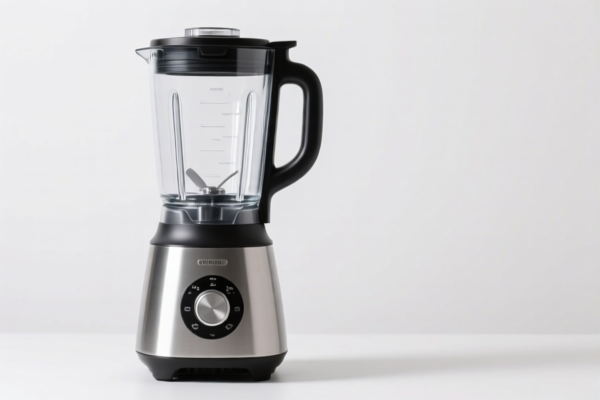
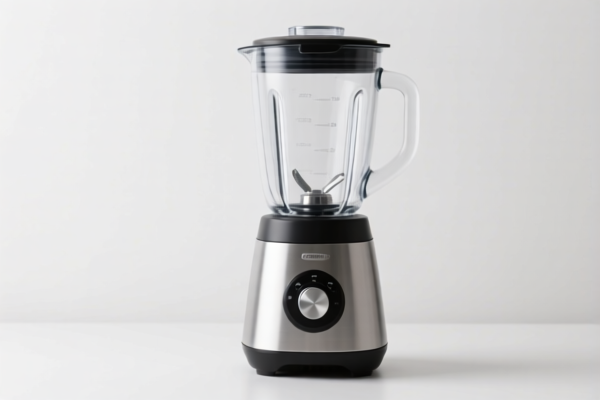
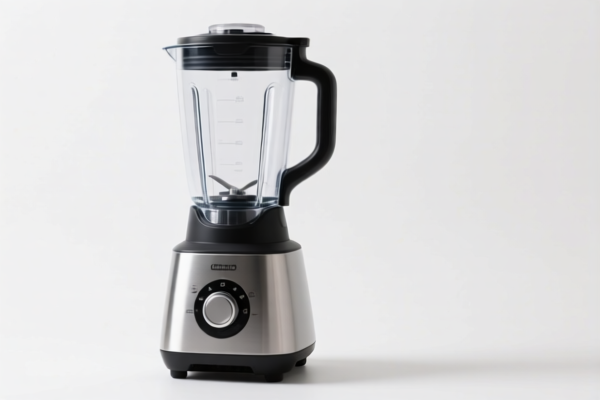

AI分析
🍎 Kitchen Slicer (Fruit, Nut, or Vegetable Preparation Machinery)
🌐 HS Code Reference & Customs Clearance Guide | 2026 Latest Tariff Analysis | Professional Clearance Strategy
📌 1. Product Definition: What is a "Kitchen Slicer"?
A Kitchen Slicer is a general term for devices used to cut, slice, chop, or prepare fruits, nuts, and vegetables. However, in international trade and customs classification (HS Code), not all slicers are created equal. The classification depends entirely on: 1. Operation Method: Manual vs. Mechanical/Electric. 2. Scale: Household/Manual vs. Industrial.
⚠️ Key Classification Trap:
- If it is a hand-held tool (like a mandoline or simple rotary slicer), it falls under Chapter 82 (Articles of Iron/Steel).
- If it is a mechanical/electric appliance (even for home use), it falls under Chapter 84 (Machinery).
- If it is for industrial-scale continuous processing, it definitely falls under Chapter 84.
📦 2. HS Code Classification Details (2026 Tariff Reference)
Based on the provided data, the following HS Codes apply to different types of slicers:
| HS Code | Product Description | Scenario | Classification Logic |
|---|---|---|---|
8438.60.00.00 |
Mechanical appliances for preparing fruit, nuts, or vegetables | Electric slicers, commercial choppers, food processors with slicing attachments | Mechanical/Electric: Includes any device with a motor or mechanical drive, even if for home use. |
8210.00.00.00 |
Hand-operated mechanical appliances for preparing food or beverages | Manual mandolines, hand-crank slicers, simple knife blades | Manual: No motor. Purely mechanical action by hand. |
8438.80.00.00 |
Other machinery for the industrial preparation or manufacture of food or beverages | Large-scale industrial slicing lines, automated vegetable processing plants | Industrial: High-volume, continuous operation machinery not covered by other specific chapters. |
🔍 Crucial Distinction:
- Do NOT classify an electric kitchen slicer under8210.00.00.00just because it "slices." If it has a motor, it must go to8438.60.00.00.
- Do NOT classify a manual mandoline under8438. If it is hand-operated, it belongs to8210.00.00.00.
💰 3. 2026 Latest Tariff Rate Breakdown (USA Origin: China)
✅ Applicable Country: United States (US)
✅ Origin: China (CN)
✅ Effective Date: Current ongoing tariffs (Section 301 & IEEPA)
🎯 1. 8438.60.00.00 —— Mechanical Appliances for Preparing Fruit/Nuts/Vegetables
| Item | Content |
|---|---|
| Base Tariff | 0.0% |
| Section 301 Additional Tariff | +25.0% |
| IEEPA Tariff (Section 122) | +10.0% |
| Total Tariff Rate | 35.0% |
| Tax Calculation | CIF Value × 35% |
| De Minimis Exemption | ❌ Not Applicable |
| Legal Basis Path | IEEPA:9903.01.25 → USITC:8438.60.00.00 → SECTION 301 |
📌 Explanation:
- "Base 0%": Food processing machinery generally has low base duties.
- "+25% Section 301": Standard retaliation tariff on Chinese machinery imports.
- "+10% IEEPA": Additional tariff under the International Emergency Economic Powers Act for specific Chinese goods.
- Total 35%: This is a high-cost category for electric slicers.
🎯 2. 8210.00.00.00 —— Hand-operated Mechanical Appliances for Food Preparation
| Item | Content |
|---|---|
| Base Tariff | 3.7% |
| Section 301 Additional Tariff | +25.0% |
| IEEPA Tariff (Section 122) | +10.0% |
| Total Tariff Rate | 38.7% |
| Tax Calculation | CIF Value × 38.7% |
| De Minimis Exemption | ❌ Not Applicable |
| Legal Basis Path | IEEPA:9901.25 → USITC:8210.00.00.00 → SECTION 301 |
📌 Note:
- Even though it is "manual," it still incurs Section 301 and IEEPA tariffs.
- The base rate is slightly higher (3.7%) than mechanical appliances, but the total impact is similar (~35-39%).
- Warning: Many sellers mistakenly think "manual = cheaper duty," but US import taxes on Chinese goods are heavily burdened regardless of automation.
🎯 3. 8438.80.00.00 —— Other Industrial Food Preparation Machinery
| Item | Content |
|---|---|
| Base Tariff | 0.0% |
| Section 301 Additional Tariff | +25.0% |
| IEEPA Tariff (Section 122) | +10.0% |
| Total Tariff Rate | 35.0% |
| Tax Calculation | CIF Value × 35% |
| De Minimis Exemption | ❌ Not Applicable |
| Legal Basis Path | IEEPA:9903.01.25 → USITC:8438.80.00.00 → SECTION 301 |
📌 Note:
- Industrial machinery follows the same tariff structure as home-use mechanical slicers (8438.60.00.00) in terms of total burden if not specified otherwise.
- 35% Total is the standard for industrial food prep machinery from China.
🛠️ 4. Customs Clearance Practical Advice (Real-World Pitfall Guide)
✅ 1. Preparation Checklist (Must-Have Documents)
| Document | Required? | Notes |
|---|---|---|
| ✅ Product Specifications | ✔️ | Must specify: Power (Watts), Voltage, Frequency, Material (Stainless Steel vs. Plastic), Capacity. |
| ✅ Operational Method | ✔️ | Critical: Clearly state "Electric/Mechanical" OR "Hand-operated." Misstatement leads to misclassification. |
| ✅ Product Photos | ✔️ | Show the motor (if any), blades, and safety guards. |
| ✅ Technical Drawings | ✔️ | Especially for industrial models (8438.80.00.00) to prove scale and capacity. |
| ✅ Commercial Invoice | ✔️ | Description must be precise: e.g., "Electric Vegetable Slicer, Model X" or "Manual Mandoline Slicer, Model Y." |
| ✅ Certificate of Origin (CO) | ✔️ | To prove origin (China). |
| ✅ Safety Certifications | ✔️ | UL/ETL (US) or CE (if transshipped). |
✅ 2. Declaration Tips (Key Mnemonics)
🔥 "Motor = 84, Hand = 82; Industrial = 80, Home = 60!"
| Situation | Correct HS Code | Incorrect Approach | Result |
|---|---|---|---|
| Electric slicer with plug/cord | 8438.60.00.00 |
Declare as "Kitchen Tool" | 35% Duty + Risk of Penalty |
| Manual mandoline (no motor) | 8210.00.00.00 |
Declare as "Electric" | Over-declaration issues |
| Large industrial slicer | 8438.80.00.00 |
Declare as 8438.60.00.00 |
Possible scrutiny if capacity exceeds "home use" |
| Slicer with detachable blade only | 8210.00.00.00 (if manual) |
Declare as full machine | Undervaluation risk |
📌 Pro Tip:
If your product is both manual and has an optional electric adapter, declare it as Electric (8438.60.00.00) unless the electric part is truly negligible. Customs often treats "hybrid" as the more complex category.
✅ 3. Special Case Handling
| Scenario | Advice |
|---|---|
| OEM Custom Slicers | Provide design specs to prove if it's "hand" or "mechanical." |
| Slicer + Chopper Combo | If electric, classify as 8438.60.00.00. Do not split if sold as one unit. |
| Industrial Line vs. Single Unit | Single large unit might still be 8438.60.00.00. Only use 8438.80.00.00 for specialized, large-scale processing lines. |
| Parts (Blades Only) | If blades are sold separately, check if they are "parts of machines" (8438.90.00.00) or "articles of steel" (8208.90.00.00). Different tariffs! |
🌍 5. Global Market Comparison (2026 Latest)
| Country/Region | Recommended HS Code | Base Duty | Additional (China) | Total Estimate | Notes |
|---|---|---|---|---|---|
| 🇺🇸 USA | 8438.60.00.00 |
0% | +35% (301+IEEPA) | 35% | High barrier for electric slicers. |
| 🇺🇸 USA | 8210.00.00.00 |
3.7% | +35% (301+IEEPA) | 38.7% | Slightly higher base, same附加税. |
| 🇪🇺 EU | 8438.60.00.00 |
4.0% | 0% | ~4% | No Section 301 in EU. |
| 🇨🇳 China | 8438.60.00.00 |
0% | 0% | 0% | Domestic trade friendly. |
| 🇬🇧 UK | 8438.60.00.00 |
4.0% | 0% | ~4% | Post-Brexit tariffs. |
📌 Conclusion:
- USA is the hardest market for Kitchen Slicers from China due to the 35-38.7% combined tariff.
- EU/UK are significantly cheaper (~4%) if the tariff structure remains unchanged.
- Strategic Advice: For US-bound electric slicers, consider transshipment (with caution on origin rules) or supplier diversification to non-tariffed countries if volume is high.
📌 6. Common Errors & Pitfalls (Lessons from the Field)
❌ Error 1: Declaring an electric slicer as a "Kitchen Utensil" (General Purpose)
👉 Consequence: Customs may reclassify it, leading to backdated duties + penalties.
👉 Fix: Always use specific HS codes (8438 or 8210).
❌ Error 2: Mixing Manual and Electric items in one shipment without clear labeling
👉 Consequence: Confusion at border, leading to hold-ups.
👉 Fix: Separate shipments or clearly distinguish in the Packing List.
❌ Error 3: Ignoring IEEPA (10% Extra)
👉 Consequence: Underestimating landing costs.
👉 Fix: Always include +10% in cost calculations for Chinese-origin goods entering the US.
❌ Error 4: Claiming "Kitchen Tool" for Industrial Equipment
👉 Consequence: Misdeclaration of scale/capacity.
👉 Fix: Use 8438.80.00.00 for industrial-grade machines.
✅ Correct Declaration Example:
"Electric Vegetable Slicer, Stainless Steel Blades, 500W, 110V, Model SLS-100, Origin: China" → HS: 8438.60.00.00
🎯 7. Conclusion: Precision Classification Saves Money!
🎯 Remember the Mantra:
🔹 "Electric = 84 (35%), Manual = 82 (38.7%), Industrial = 80 (35%)"
🔹 "Motor makes it Chapter 84, Hand makes it Chapter 82"
🔹 "USA Tariffs are High: Budget for 35%+!"
📌 Pro Tip:
If you are importing large volumes of electric slicers to the US, consider applying for an Exclusion under Section 301 if available, or consult a customs broker for pre-classification rulings.
📣 Take Action Now:
📞 Contact a licensed customs broker + Provide product specs + Verify HS Code
🚀 Clear goods smoothly, avoid delays, and maximize profit margins!
✨ Professional clearance starts with precise classification!
💼 Your every cent counts – know your tariffs!
用户评价
关于 HS 编码归类
协调制度(HS)是由世界海关组织(WCO)制定的国际贸易商品分类标准。全球 200 多个国家采用 HS 系统作为海关关税、贸易统计和进出口监管的基础。
每个 HS 编码遵循以下层级结构:
- 章(2 位)——商品大类(例如:第 84 章:机器和机械设备)
- 品目(4 位)——章内的更具体分类
- 子目(6 位)——国际通用细分,所有 WCO 成员国统一使用
- 本国细分(8-10 位)——各国自行扩展的细分编码,如美国 HTSUS 10 位编码
正确的 HS 编码归类对于顺利通关、准确缴纳关税和遵守贸易法规至关重要。错误归类可能导致海关延误、多缴关税或罚款。
从CN进口到US时,适用的关税税率可能包括:
- 最惠国(MFN)税率——适用于 WTO 成员国的标准关税税率
- 普通税率——适用于无贸易协定国家
- 贸易救济关税——附加关税,如 301 条款(反倾销)、232 条款(国家安全)或反补贴税
本页内容仅供参考。如需正式归类,请咨询当地海关或持牌报关代理。