Kitchen Waste Disposal Residue
CN → US| HS编码 | 关税税率 | 原产国 | 目的国 | 文档 |
|---|---|---|---|---|
| 8509905500 | 39.2% | CN | US | 官方文档 |
| 8438800000 | 35.0% | CN | US | 官方文档 |
| 8509802000 | 35.0% | CN | US | 官方文档 |
| 8479820080 | 35.0% | CN | US | 官方文档 |
| 8438800000 | 35.0% | CN | US | 官方文档 |
商品图片
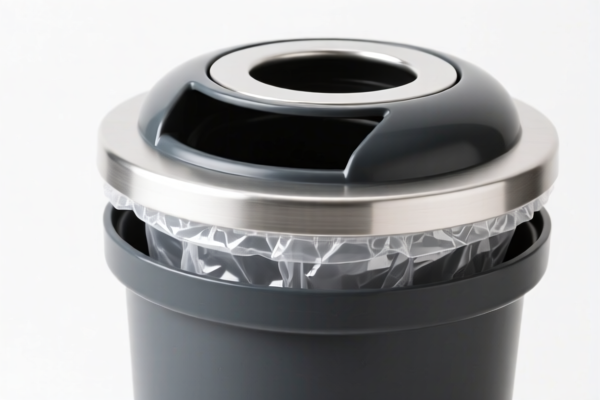
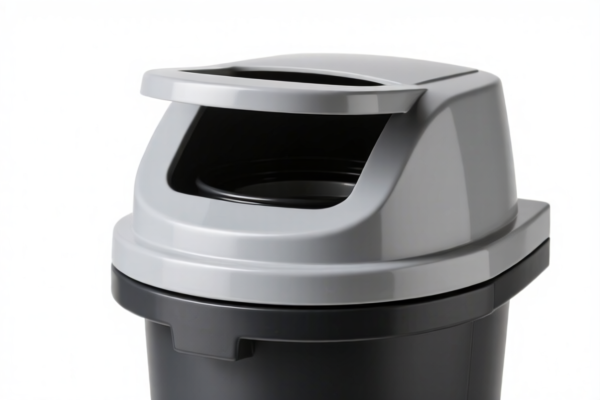
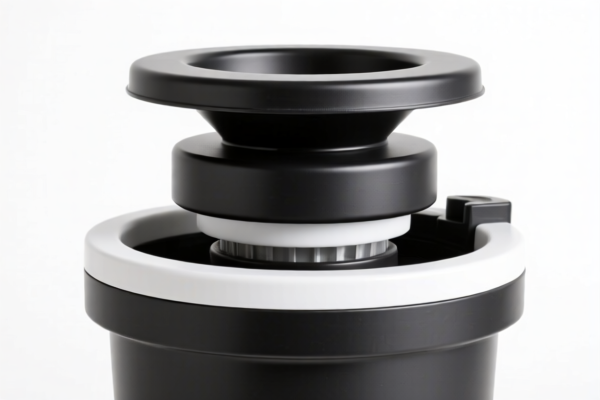
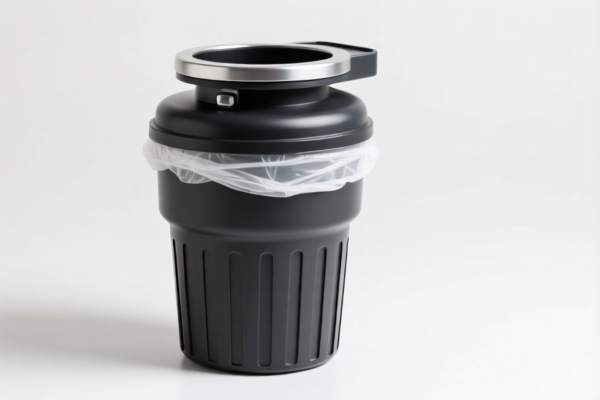
AI分析
🗑️ Kitchen Waste Disposal Residue (Garbage Disposal Units)
🌐 HS Code Classification & Customs Clearance Guide | 2026 Tax Analysis | Professional Compliance Strategy
📌 One Product, Multiple Classifications: Why Does the HS Code Matter?
"Kitchen Waste Disposal Residue" is a generic term that often leads to significant tax discrepancies. In international trade, a Kitchen Waste Disposer is not just one item; it is classified differently based on its structural integrity, motorization, and functional intent.
Under US Customs regulations (HTSUS), the distinction between a "motorized household appliance" and a "processing machine" can change your total tax rate from 35% to 39.2% or vice versa. Incorrect classification leads to audits, delays, and unexpected costs.
📦 Part 1: HS Code Classification Matrix (Based on Provided Data)
Based on the input data, there are 5 specific classification scenarios for Kitchen Waste Disposers. Here is the breakdown:
| HS Code | Product Description / Summary | Total Tax Rate | Tax Breakdown Details |
|---|---|---|---|
| 8509.80.20.00 | Kitchen waste processor, purpose identical to general disposers | 35.0% | Base Tariff: 0.0% + Section 301: 25.0% + Section 122: 10% |
| 8509.90.55.00 | Kitchen waste processor, considered a mechanical/electrical household appliance with self-contained motor | 39.2% | Base Tariff: 4.2% + Section 301: 25.0% + Section 122: 10% |
| 8438.80.00.00 | Kitchen waste processor, machinery for food processing/handling | 35.0% | Base Tariff: 0.0% + Section 301: 25.0% + Section 122: 10% |
| 8479.82.00.80 | Kitchen garbage processor, mechanical device with mixing/crushing functions | 35.0% | Base Tariff: 0.0% + Section 301: 25.0% + Section 122: 10% |
| 8438.80.00.00 | Kitchen garbage processor, mechanical equipment for food handling | 35.0% | Base Tariff: 0.0% + Section 301: 25.0% + Section 122: 10% |
⚠️ Key Observation:
- Most classifications result in a 35.0% total tax rate.
- Exception: Classification 8509.90.55.00 results in 39.2% due to a 4.2% Base Tariff. This classification treats the unit strictly as a "household appliance with a self-contained motor."
- If your product is designed as a home under-sink unit, you risk the higher 39.2% rate unless you can prove it falls under industrial/commercial food processing machinery (8438) or general crushing machinery (8479).
💰 Part 2: Tax Clause Detailed Explanation
🎯 Applicable Market: United States (US)
🌏 Origin: China (CN)
📅 Effective Time: Current US Trade Policy (Section 301 & Section 122)
1. Base Tariff (Most Favored Nation - MFN)
- 0.0%: Applies to HS Codes
8509.80.20.00,8438.80.00.00, and8479.82.00.80. - Reason: These headings typically cover machinery or appliances that are not subject to standard ad valorem duties on finished goods.
- 4.2%: Applies to HS Code
8509.90.55.00. - Reason: This code specifically captures "Other mechanical appliances with self-contained electric motor" for household use. The US General Trade Act assigns a duty to this specific category of household electromechanical devices.
2. Section 301 Tariffs (USITC Footnote 9903.88.01 / 9903.88.02)
- Rate: +25.0%
- Source: Trade Act of 1974, Section 301.
- Scope: Applied to all Chinese-origin goods in these specific HTSUS subheadings as part of the ongoing trade measures. This is a mandatory additional duty.
3. Section 122 Tariffs (IEEPA Authority)
- Rate: +10.0%
- Source: International Emergency Economic Powers Act (IEEPA).
- Scope: Specifically targets imports from China under recent executive orders regarding national security and economic stability.
- Note: This 10% is applied on top of the Base Tariff and Section 301 Tariff.
📊 Total Tax Calculation Example
For a shipment valued at $10,000 CIF:
- Scenario A (35% Rate):
$10,000 × (0% Base + 25% Sec 301 + 10% Sec 122) = $3,500 Tax
- Scenario B (39.2% Rate - 8509.90.55.00):
$10,000 × (4.2% Base + 25% Sec 301 + 10% Sec 122) = $3,920 Tax
→ Extra Cost: $420 per $10k shipment.
🛠️ Part 3: Customs Clearance Practical Advice
✅ 1. Classification Strategy: How to Avoid the 39.2% Pitfall
| Scenario | Recommended HS Code | Why? |
|---|---|---|
| Home Under-Sink Unit | Risk Zone: 8509.90.55.00 (39.2%)Alternative: 8509.80.20.00 (35%) |
If the product is marketed strictly as a "household appliance," Customs may default to 8509.90.55. To qualify for 8509.80.20, emphasize the specific purpose (waste disposal) rather than just the motorization. |
| Commercial/Industrial Unit | 8438.80.00.00 (35%) |
If the unit is intended for restaurants, hotels, or large-scale food processing facilities, classify it as "Machinery for food processing." This avoids the "household appliance" base tariff. |
| Generic Crushing/Mixing | 8479.82.00.80 (35%) |
If the primary function is crushing or mixing organic waste (not just grinding food), and it is not exclusively for kitchen sink use, this code may apply. Emphasize the mechanical action in your product description. |
✅ 2. Documentation Requirements
| Document | Requirement | Purpose |
|---|---|---|
| Product Description | Must specify: "Kitchen Waste Disposer," "Motorized," "Voltage," "Wattage." | Clear identification to prevent misclassification. |
| Technical Manual | Include wiring diagram and block diagram. | Prove if it has a "self-contained motor" (key for 8509 vs. 8438/8479). |
| Marketing Brochure | Show intended use: "Home Kitchen" vs. "Commercial Restaurant." | Critical for distinguishing between Household (8509) and Industrial (8438/8479). |
| Bill of Lading / Invoice | List HS Code explicitly. | Avoids Customs queries and delays. |
✅ 3. Common Pitfalls & Solutions
-
❌ Pitfall: Using vague terms like "Garbage Disposal Machine" without specifying voltage or motor type.
✅ Solution: Always include "Electric Motor, [Voltage]V, [Wattage]W" in the description. -
❌ Pitfall: Assuming all disposers are "Household Appliances."
✅ Solution: If your product is sold to B2B clients (restaurants), argue for 8438.80.00.00 by providing commercial use cases. -
❌ Pitfall: Ignoring Section 122 Tariffs.
✅ Solution: Even if you have a good Base Tariff, 10% is mandatory. Factor this into your pricing strategy.
🌍 Part 4: Global Market Comparison (Quick Reference)
| Market | Typical HS Code | Est. Total Tax Rate | Notes |
|---|---|---|---|
| 🇺🇸 USA | 8509/8438/8479 series | 35.0% - 39.2% | High due to Sec 301 + Sec 122. |
| 🇨🇳 China | 8438.80.00.00 | ~5-10% | Lower base tariffs; no US-style附加 taxes. |
| 🇪🇺 EU | 8509.80.00 | 0-4.2% | No Section 301/122 equivalents. |
| 🇯🇵 Japan | 8509.80.00 | ~0-5% | Competitive rates; focus on quality certs. |
📌 Conclusion:
The US market is the most challenging for Kitchen Waste Disposers due to layered tariffs.
- Optimal Strategy: Aim for HS Code 8438.80.00.00 or 8509.80.20.00 (35%) by carefully crafting product descriptions and target market positioning.
- Avoid:8509.90.55.00(39.2%) unless your product is strictly defined as a generic household electromechanical appliance with no specific "waste disposal" functional claim.
📌 Final Checklist for Exporters
- Verify Motorization: Does it have a self-contained motor? → Yes → Risk of 8509.90.55.00.
- Define End-Use: Is it for Home (Kitchen Sink) or Business (Restaurant)?
- Home →
8509.80.20.00(Preferable over 8509.90.55.00 if possible). - Business →
8438.80.00.00. - Calculate Total Landed Cost: Include 35% or 39.2% tax + freight + insurance.
- Pre-Alert Customs: Use Advance Ruling if available to lock in the HS Code before shipment.
🎯 Remember:
"One Line on Invoice, One Tax Rate, One Risk.
Choose HS Code Wisely, Save Thousands in Tariffs."
✨ Professional Classification, Efficient Clearance, Maximized Profit!
💼 Your Supply Chain Deserves Precision.
用户评价
关于 HS 编码归类
协调制度(HS)是由世界海关组织(WCO)制定的国际贸易商品分类标准。全球 200 多个国家采用 HS 系统作为海关关税、贸易统计和进出口监管的基础。
每个 HS 编码遵循以下层级结构:
- 章(2 位)——商品大类(例如:第 84 章:机器和机械设备)
- 品目(4 位)——章内的更具体分类
- 子目(6 位)——国际通用细分,所有 WCO 成员国统一使用
- 本国细分(8-10 位)——各国自行扩展的细分编码,如美国 HTSUS 10 位编码
正确的 HS 编码归类对于顺利通关、准确缴纳关税和遵守贸易法规至关重要。错误归类可能导致海关延误、多缴关税或罚款。
从CN进口到US时,适用的关税税率可能包括:
- 最惠国(MFN)税率——适用于 WTO 成员国的标准关税税率
- 普通税率——适用于无贸易协定国家
- 贸易救济关税——附加关税,如 301 条款(反倾销)、232 条款(国家安全)或反补贴税
本页内容仅供参考。如需正式归类,请咨询当地海关或持牌报关代理。