Kitchen Waste Disposer
CN → US| HS编码 | 关税税率 | 原产国 | 目的国 | 文档 |
|---|---|---|---|---|
| 8509802000 | 35.0% | CN | US | 官方文档 |
| 8509905500 | 39.2% | CN | US | 官方文档 |
| 8438800000 | 35.0% | CN | US | 官方文档 |
| 8479820080 | 35.0% | CN | US | 官方文档 |
| 8438800000 | 35.0% | CN | US | 官方文档 |
商品图片
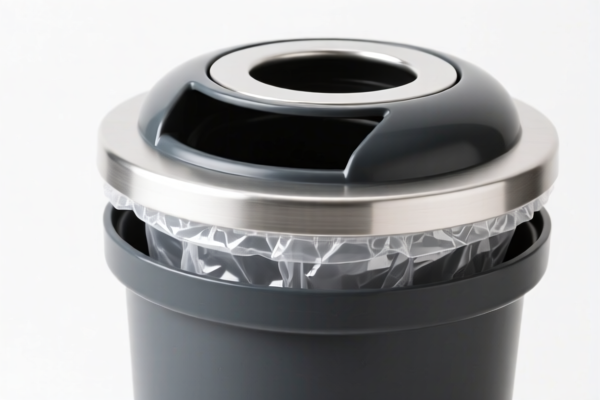
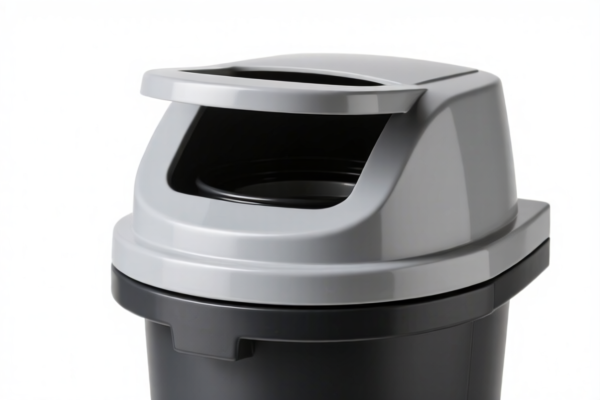
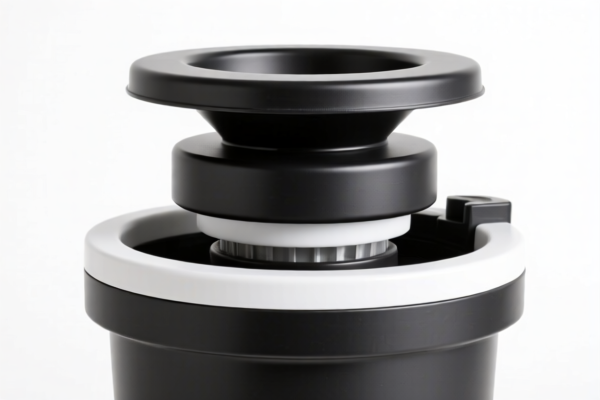
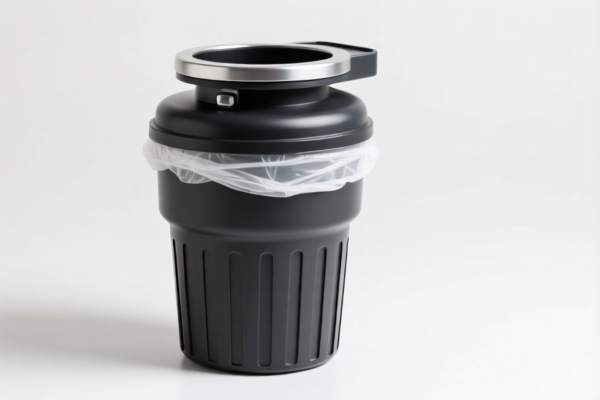
AI分析
🗑️ Kitchen Waste Disposer (Garbage Disposal Unit)
🌐 HS Code Reference & Clearance Guide | 2026 Latest Tariff Analysis | Professional Customs Strategy
📌 1. Product Definition & Classification: What Exactly is a "Kitchen Waste Disposer"?
A Kitchen Waste Disposer (also known as a garbage disposal unit) is an electric device permanently installed under a kitchen sink, connected to the waste drain, to grind food waste into small particles to facilitate drainage.
In international trade, the classification depends heavily on whether the motor is integrated and the specific function described in customs documentation. There are three primary classification paths, leading to significantly different tax implications.
📦 2. HS Code Classification Details (2026 Latest Tariff Authority Comparison)
| HS Code | Product Description | Application Scenario | Motor Integration | Total Tax Rate |
|---|---|---|---|---|
8509.80.20.00 |
Kitchen Waste Disposer; purpose is exactly consistent | Standard residential unit; classified as other electro-mechanical household appliances | ✅ Yes (Integrated) | 35.0% |
8509.90.55.00 |
Kitchen Waste Disposer; classified as electro-mechanical household appliances with self-contained motor | Broad category for electro-mechanical household appliances with their own motor | ✅ Yes (Self-contained) | 39.2% |
8438.80.00.00 |
Kitchen Waste Disposer; mechanical equipment for food processing/handling | Classified strictly as "machinery for the preparation or manufacturing of food or drink" | ✅ Yes (but treated as machinery) | 35.0% |
8479.82.00.80 |
Kitchen Waste Disposer; mechanical器具 with mixing/crushing functions | Classified as "machines and mechanical appliances having individual functions" (mixing/crushing) | ✅ Yes (treated as crusher/mixer) | 35.0% |
8438.80.00.00 |
Kitchen Waste Disposer; mechanical equipment for food handling | Similar to above; emphasized on "food handling" aspect | ✅ Yes (treated as food machinery) | 35.0% |
🔍 Key Distinction Logic: - Path A (8509): Focuses on the "Household Appliance" nature. If classified as a generic household electrical appliance, it falls under 8509. However, due to specific subheading nuances (8509.90.55 vs 8509.80.20), the base tariff differs slightly. - Path B (8438/8479): Focuses on the "Mechanical Processing" nature. If the description emphasizes "food processing," "crushing," or "mixing machinery," customs may classify it under Chapter 84 (Machinery), which typically has a 0% base tariff but still incurs additional duties.
💰 3. 2026 Latest Tariff Rate Breakdown (Including Surcharges & Policy Add-ons)
✅ Applicable Country: United States (US)
✅ Country of Origin: China (CN)
✅ Effective Date: From November 10, 2025 (including subsequent imports)
🎯 1. Scenario A: Household Appliance Classification (HS 8509 Series)
Option A1: 8509.80.20.00
| Item | Content |
|---|---|
| Base Tariff | 0.0% (Ad Valorem) |
| Section 301 Surcharge | +25.0% (USITC Footnote) |
| Section 122 Surcharge | +10.0% (Specific to this HS code or policy context) |
| Total Tax Rate | 35.0% |
| Calculation Basis | CIF Value × 35% |
| De Minimis Exemption | ❌ Not Eligible (deny_de_minimis) |
| Legal Authority Path | USITC:8509.80.20.00 → Section 301: 25% → Section 122: 10% |
📌 Explanation:
- This classification treats the unit as a specific electro-mechanical household appliance. - Despite a 0% base tariff, the heavy surcharges make the total cost high.
Option A2: 8509.90.55.00
| Item | Content |
|---|---|
| Base Tariff | 4.2% (Ad Valorem) |
| Section 301 Surcharge | +25.0% |
| Section 122 Surcharge | +10.0% |
| Total Tax Rate | 39.2% |
| Calculation Basis | CIF Value × 39.2% |
| De Minimis Exemption | ❌ Not Eligible (deny_de_minimis) |
| Legal Authority Path | USITC:8509.90.55.00 → Section 301: 25% → Section 122: 10% |
📌 Explanation:
- This is a broader category for "other electro-mechanical household appliances." - The 4.2% base tariff makes this option 4.2% more expensive than Option A1. - Strategy: Avoid this if possible; strive for8509.80.20.00or Chapter 84 codes to lower the base.
🎯 2. Scenario B: Machinery Classification (HS 8438 / 8479 Series)
Option B1: 8438.80.00.00 (Food Processing Machinery)
| Item | Content |
|---|---|
| Base Tariff | 0.0% (Ad Valorem) |
| Section 301 Surcharge | +25.0% |
| Section 122 Surcharge | +10.0% |
| Total Tax Rate | 35.0% |
| Calculation Basis | CIF Value × 35% |
| De Minimis Exemption | ❌ Not Eligible (deny_de_minimis) |
| Legal Authority Path | USITC:8438.80.00.00 → Section 301: 25% → Section 122: 10% |
📌 Explanation:
- Classifies the unit as machinery for food preparation. - Same effective tax rate as8509.80.20.00, but different legal justification.
Option B2: 8479.82.00.80 (Mixing/Crushing Machinery)
| Item | Content |
|---|---|
| Base Tariff | 0.0% (Ad Valorem) |
| Section 301 Surcharge | +25.0% |
| Section 122 Surcharge | +10.0% |
| Total Tax Rate | 35.0% |
| Calculation Basis | CIF Value × 35% |
| De Minimis Exemption | ❌ Not Eligible (deny_de_minimis) |
| Legal Authority Path | USITC:8479.82.00.80 → Section 301: 25% → Section 122: 10% |
📌 Explanation:
- Classifies the unit based on its mechanical function (crushing/mixing waste). - Often preferred if the product description emphasizes "industrial-grade crushing" or "mechanical processing" rather than "household use."
🛠️ 4. Clearance Practical Advice (Avoiding Pitfalls)
✅ 1. Documentation Checklist (Non-negotiable)
| Document | Required | Description |
|---|---|---|
| ✅ Product Specification Sheet | ✔️ | Must clearly state: Voltage, Power (Watts), Motor Type, Crushing Capacity (kg/h), Material (Stainless Steel/Plastic). |
| ✅ Circuit Diagram / Structure Diagram | ✔️ | Critical to prove motor integration or lack thereof for Chapter 85 vs 84 classification. |
| ✅ Product Photos (with Nameplate) | ✔️ | Clear view of model number, input/output specs, and branding. |
| ✅ Third-party Test Reports | ✔️ | UL, ETL, FCC (for electrical components), NSF (for food contact safety). |
| ✅ Commercial Invoice | ✔️ | Crucial: Description must match the chosen HS Code rationale. e.g., "Food Waste Grinding Machine" vs. "Household Electric Appliance." |
| ✅ Certificate of Origin (CO) | ✔️ | Required for origin verification; no preferential tariff applies for China origin. |
| ✅ Packing List | ✔️ | Details packing dimensions and weight. |
✅ 2. Declaration Strategies (Key Rules)
🔥 "Function Defines Chapter, Motor Defines Heading!"
| Scenario | Correct Declaration Approach | Risk if Incorrect |
|---|---|---|
| Standard Home Unit | Declare as 8509.80.20.00 (Household Appliance) |
Misdeclaring as machinery might trigger higher scrutiny; misdeclaring as 8509.90.55.00 adds 4.2% tax. |
| Emphasize "Food Processing" | Declare as 8438.80.00.00 |
Must provide evidence of "food handling" function; otherwise, customs may revert to 8509. |
| Emphasize "Crushing/Mixing" | Declare as 8479.82.00.80 |
Must describe the mechanical action (grinding/crushing); avoid overly "domestic" language if using this code. |
| Any Scenario | DO NOT claim De Minimis | All listed codes are explicitly deny_de_minimis. Small shipments will still be taxed. |
✅ 3. Special Handling Tips
| Situation | Advice |
|---|---|
| OEM/White Label Products | Ensure the invoice clearly identifies the model and technical specs. Avoid vague terms like "Kitchen Gadget." Use "Electric Food Waste Disposer." |
| Partial Disassembly | If shipping parts (motor vs. grinding chamber separately), each part may be classified differently, potentially increasing total tax. Ship as a complete unit to simplify classification. |
| Certification | Ensure UL/ETL certification is present. Without it, customs may delay clearance for safety verification, even if the HS code is correct. |
| Marketing Copy | If the product is marketed as "Commercial Grade," it strengthens the case for 8438 or 8479. If "Residential," 8509 is safer. |
🌍 5. Global Market Comparison (2026 Update)
| Country/Region | Recommended HS Code | Estimated Tax (China Origin) | Key Certification | Remarks |
|---|---|---|---|---|
| 🇺🇸 USA | 8509.80.20.00 / 8438.80.00.00 |
35.0% (incl. 301 & 122) | UL, FCC, NSF | High tax burden; avoid 8509.90.55.00 (39.2%). |
| 🇨🇳 China | 8509.80.20.00 |
10-15% (Varies) | CCC (if applicable) | Domestic market different tariffs apply. |
| 🇪🇺 EU | 8438.80.00 / 8509.80.91 |
0-4.5% (Usually 0% for machinery) | CE, WEEE, RoHS | EU may classify as machinery (8438) for lower base duty, but VAT applies. |
| 🇨🇦 Canada | 8438.80.00.00 |
0-10% + GST/HST | CSA (Electrical Safety) | Similar to US but generally lower surcharges. |
| 🇬🇧 UK | 8438.80.00.00 |
0-5% + VAT | UKCA, RoHS | Post-Brexit regulations apply. |
📌 Conclusion for US Market:
- The 35% total tax rate is fixed across the most viable HS codes due to Section 301 and Section 122 tariffs. - The only way to reduce cost is to avoid the8509.90.55.00code (39.2%) and ensure precise documentation to justify8509.80.20.00or8438.80.00.00. - No duty-free exemptions are available for China-origin kitchen waste disposers.
📌 6. Common Errors & Pitfalls (Lessons Learned)
❌ Error 1: Using vague descriptions like "Kitchen Gadget" or "Sink Accessory"
👉 Consequence: Customs may classify under highest duty rate or hold shipment for inspection.
Fix: Use precise technical terms: "Electric Kitchen Waste Disposer, 1/2 HP, Stainless Steel Grinding Chamber."
❌ Error 2: Misclassifying as a general "Appliance" without distinguishing subheadings
👉 Consequence: Accidental classification under 8509.90.55.00 results in 39.2% tax instead of 35.0%.
Fix: Verify the specific subheading for "Electro-mechanical household appliances" in the US HTSUS.
❌ Error 3: Ignoring Section 122 Tariff
👉 Consequence: Failing to account for the 10% additional tariff leads to budgeting errors.
Fix: Always include Section 122 in total landed cost calculations for China-origin goods.
❌ Error 4: Claiming De Minimis for small samples
👉 Consequence: All listed HS codes are denied de minimis exemption.
Fix: Prepare for full duty payment on all shipments.
✅ Correct Declaration Example:
"Kitchen Waste Disposer, Electric, 120V, 1/2 HP Motor, Stainless Steel Grinding Chamber, for Residential Use, Model XYZ, UL Listed"
→ Recommended HS:8509.80.20.00(Total Tax: 35%)
🎯 7. Conclusion: Professional Clearance, Cost Optimization
🎯 Key Takeaway:
🔹 "35% is the Floor, 39% is the Trap!"
Avoid8509.90.55.00. Aim for8509.80.20.00or8438.80.00.00for a 35% total rate.
🔹 "Documentation is Defense." Clear specs prevent reclassification penalties.
🔹 "No Free Luggage." De minimis does not apply. Plan cash flow for duties.
📌 Pro Tip:
If you are exporting to the US, apply for an Advance Ruling (CBP Ruling) before shipping. This provides legal certainty on your HS Code and protects against retroactive duty adjustments.
📣 Immediate Action:
📞 Consult your customs broker with technical specs and photos.
📄 Prepare UL/ETL certificates and detailed invoices.
📉 Calculate landed cost including the 35% tariff + freight + insurance.
✨ Precision in Classification, Precision in Cost!
💼 Don’t let tariff errors eat your margin!
用户评价
关于 HS 编码归类
协调制度(HS)是由世界海关组织(WCO)制定的国际贸易商品分类标准。全球 200 多个国家采用 HS 系统作为海关关税、贸易统计和进出口监管的基础。
每个 HS 编码遵循以下层级结构:
- 章(2 位)——商品大类(例如:第 84 章:机器和机械设备)
- 品目(4 位)——章内的更具体分类
- 子目(6 位)——国际通用细分,所有 WCO 成员国统一使用
- 本国细分(8-10 位)——各国自行扩展的细分编码,如美国 HTSUS 10 位编码
正确的 HS 编码归类对于顺利通关、准确缴纳关税和遵守贸易法规至关重要。错误归类可能导致海关延误、多缴关税或罚款。
从CN进口到US时,适用的关税税率可能包括:
- 最惠国(MFN)税率——适用于 WTO 成员国的标准关税税率
- 普通税率——适用于无贸易协定国家
- 贸易救济关税——附加关税,如 301 条款(反倾销)、232 条款(国家安全)或反补贴税
本页内容仅供参考。如需正式归类,请咨询当地海关或持牌报关代理。