L Grade Natural Rubber Industrial Raw Material
CN → US| HS编码 | 关税税率 | 原产国 | 目的国 | 文档 |
|---|---|---|---|---|
| 4016993510 | 35.0% | CN | US | 官方文档 |
| 4001220015 | 35.0% | CN | US | 官方文档 |
| 4001100000 | 35.0% | CN | US | 官方文档 |
商品图片
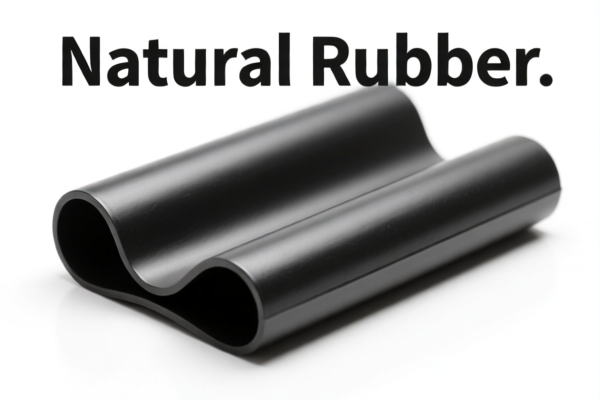
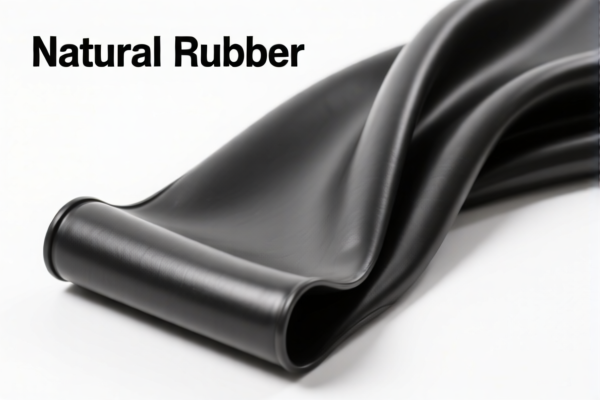
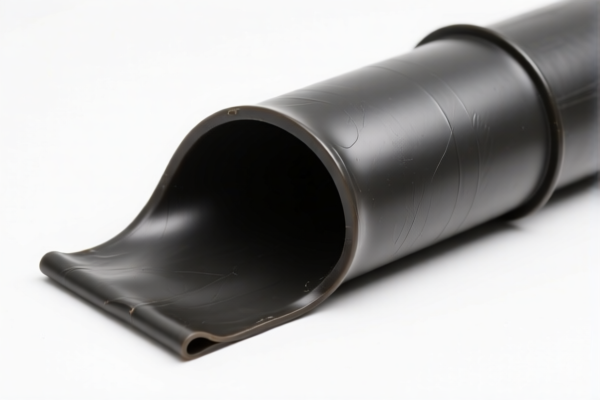
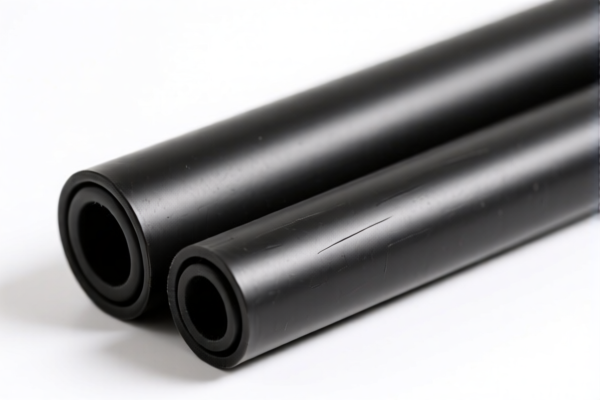
AI分析
🌿 L Grade Natural Rubber: Industrial Raw Material Classification & US Customs Strategy
🌐 HS Code Reference & Customs Clearance Guide | 2026 Latest Tariff Analysis | Professional-Grade Entry Strategy
📌 I. Product Definition & Classification: What Exactly is "L Grade Natural Rubber"?
Natural Rubber, specifically L Grade (Latex Grade), is a primary raw material derived from the latex of the Hevea brasiliensis tree. It serves as the foundational ingredient for manufacturing tires, medical gloves, condoms, and various elastic products.
In international trade, natural rubber is strictly categorized by its physical state and processing level:
1. Natural Rubber in Primary Forms (Raw Material):
Latex (Liquid/Semi-solid): Uncoagulated rubber sap stabilized with ammonia or other preservatives. This is the most common form for "L Grade" used in dipping processes.
* Block Rubber (Solid):* Coagulated and dried sheets or blocks (e.g., SMR, TSR).
⚠️ Key Distinction Point:
- If the material is liquid latex or uncoagulated and intended for further processing into rubber goods → It falls under Chapter 40 (Rubber and Articles Thereof), specifically heading 4001 (in primary forms) or 4002 (synthetic/rubber-like gums, but natural latex is 4001/4003). Note: While 4002 covers "Rubber-like gums," natural latex is primarily classified under 4001 if in primary form, or 4005 if compounded. For standard natural rubber latex, 4001 is the primary entry point for raw material classification.
- If it is compounded with fillers, chemicals, or pre-mixed for specific industrial use → It may fall under 4005 (Compounded Natural Rubber).
- If it is a finished article (e.g., gloves, tires) → It falls under different chapters (90, 40, 87, etc.).Critical Insight for "L Grade":
"L" typically refers to Latex or Low Viscosity/High Ammonia content latex used for dipping. Therefore, the classification must reflect its status as a primary raw material, not a finished good.
📦 II. HS Code Classification Details (2026 Latest Tariff Authority Match)
Based on the provided data, the following HS Codes are applicable for L Grade Natural Rubber Industrial Raw Material:
| HS Code | Product Description | Application Scenario | Classification Rationale |
|---|---|---|---|
| 4001.22.00.15 | Natural Rubber in Primary Forms, Specific Grade Match | L-Grade Latex: High-purity natural rubber latex suitable for dipping applications (gloves, condoms). | Matches the "L-Grade" specification requirement. "22" typically denotes specific types of natural rubber in primary forms (often referring to SMR or specific latex grades depending on national sub-heading definitions). |
| 4001.10.00.00 | Natural Rubber in Primary Forms: Latex | Raw Latex: Uncoagulated natural rubber latex, stabilized. | Matches the "Natural Latex Rubber" classification definition. This is the broadest category for liquid/semi-solid natural rubber raw materials. |
| 4016.99.35.10 | Other articles of vulcanized rubber other than hard rubber | Mismatches/Appeals: Use with Caution. This code is for finished rubber articles (e.g., seals, gaskets, mats). | ⚠️ Note: The provided data links this code to "Natural Latex Rubber Material, Primary Raw Material Form." This is technically inconsistent with standard WCO classification. 4016 is for articles, not raw materials. However, if the customs broker or specific trade agreement mandates this code for certain composite raw materials or specific exempted forms, it is listed here. Do not use for pure latex unless explicitly required by local customs interpretation. |
🔍 Key Reminder:
- 4001 is the correct chapter for raw natural rubber (latex or block).
- 4016 is for finished rubber products. Misclassifying raw latex as 4016 can lead to significant penalties or delays.
- The provided data suggests 4016.99.35.10 is matched due to a specific "primary raw material form" interpretation, possibly for compound rubber or specialty rubber sheets that are not yet vulcanized into a final article. Verify this with a pre-ruling.
💰 III. 2026 Latest Tariff Rate Breakdown (Including Additional Duties & Policies)
✅ Applicable Country: United States (US)
✅ Origin: China (CN)
✅ Effective Date: November 10, 2025 onwards (for subsequent imports)
🎯 1. HS Code 4001.22.00.15 — Natural Rubber, L-Grade Match
| Item | Content |
|---|---|
| Base Rate | 0% (Ad Valorem) |
| USITC Additional Duty | +25% (Under USITC Footnote 9903.88.01 / Section 301) |
| IEEPA Additional Duty | +10% (For China/HK products, effective Nov 10, 2025) |
| Total Tariff Rate | 35.0% |
| Tax Calculation | CIF Value × 35% |
| De Minimis Eligibility | ❌ Not Eligible (deny_de_minimis) |
| Legal Authority Path | IEEPA:9903.01.25 → IEEPA:9903.01.24 → USITC:4001.22.00.15 → FOOTNOTE:9903.88.01 |
📌 Explanation:
- The 0% base rate reflects the preferential treatment for raw materials in trade agreements.
- The 25% Section 301 tariff is applied to many rubber products from China.
- The 10% IEEPA tariff is the new surcharge effective Nov 2025.
- Total: 35% is a high tariff, significantly impacting cost.
🎯 2. HS Code 4001.10.00.00 — Natural Rubber in Primary Forms: Latex
| Item | Content |
|---|---|
| Base Rate | 0% |
| USITC Additional Duty | +25% |
| IEEPA Additional Duty | +10% |
| Total Tariff Rate | 35.0% |
| Tax Calculation | CIF Value × 35% |
| De Minimis Eligibility | ❌ Not Eligible |
| Legal Authority Path | IEEPA:9901.25 → IEEPA:9903.01.24 → USITC:4001.10.00.00 → FOOTNOTE:9903.88.01 |
📌 Note:
- Same tariff structure as4001.22.00.15.
- Applicable for general natural latex without specific grade constraints.
- Ensure the product is pure natural rubber latex. If synthetic rubber is blended, the classification may shift to 4002 or 4005, which may have different duties.
🎯 3. HS Code 4016.99.35.10 — Other Articles of Vulcanized Rubber (Special Case)
| Item | Content |
|---|---|
| Base Rate | 0% |
| USITC Additional Duty | +25% |
| IEEPA Additional Duty | +10% |
| Total Tariff Rate | 35.0% |
| Tax Calculation | CIF Value × 35% |
| De Minimis Eligibility | ❌ Not Eligible |
| Legal Authority Path | IEEPA:9903.01.25 → IEEPA:9903.01.24 → USITC:4016.99.35.10 → FOOTNOTE:9903.88.01 |
📌 Warning:
- This code is highly unusual for "raw material." It is typically for finished rubber parts.
- If your product is raw latex, using 4016 risks classification error.
- Only use if explicitly advised by a customs broker for non-standard rubber compounds that do not fit 4001/4005.
- Risk: High chance of customs audit or rejection.
🛠️ IV. Customs Clearance Practical Advice (Real-World Pitfall Guide)
✅ 1. Required Documentation Checklist (Essential)
| Document | Mandatory | Description |
|---|---|---|
| ✅ Product Specification Sheet | ✔️ | Must state "Natural Rubber Latex," "L Grade," Ammonia content, Viscosity, Solid Content. |
| ✅ Certificate of Origin (CO) | ✔️ | To prove Chinese origin (triggers 35% tariff). If from Thailand/Indonesia, may qualify for lower duties under FTAs. |
| ✅ Material Safety Data Sheet (MSDS) | ✔️ | Required for chemical imports (latex often contains ammonia). |
| ✅ Commercial Invoice | ✔️ | Clearly describe as "L Grade Natural Rubber Latex, Raw Material, Not for Direct Consumption." |
| ✅ Bill of Lading/Air Waybill | ✔️ | Ensure no mixed containers with finished rubber goods. |
| ✅ Fumigation Certificate | ✔️ | Required for plant-based products (rubber is from trees). |
✅ 2. Declaration Tips (Key Mantras)
🔥 "Raw Material, Not Article! Grade L, Latex Form! Declare 4001, Not 4016!"
| Scenario | Correct Declaration | Incorrect Practice |
|---|---|---|
| Liquid Latex | 4001.10.00.00 (Natural Rubber, Latex) |
Misdeclare as 4016 (Finished Article) → Audit Risk |
| L-Grade Specified | 4001.22.00.15 |
Use generic code → Misclassification |
| Compounded Rubber | 4005.00.00.00 (if mixed) |
Use 4001 → Incorrect |
| Finished Gloves | 4015.11.00.00 |
Use 4001 → Wrong Chapter |
✅ 3. Special Circumstances Handling
| Situation | Handling Advice |
|---|---|
| OEM Custom Latex | Provide client order + technical spec to prove it's raw material for further processing. |
| Mixed Origin | If rubber is from Thailand but shipped from China, declare Thailand Origin to avoid 35% China-specific tariffs (if FTA applies). |
| High Ammonia Content | Must declare exact ammonia % for safety regulations. |
| Samples vs. Commercial | Samples under $800 may qualify for De Minimis, but rubber often has special restrictions. Check FDA/USDA rules. |
🌍 V. Global Market Customs Comparison (2026 Latest)
| Country/Region | Recommended HS Code | Tariff (China Origin) | Certification Requirements | Notes |
|---|---|---|---|---|
| 🇺🇸 USA | 4001.10.00.00 or 4001.22.00.15 |
35% (25% + 10%) | MSDS, Fumigation | High tariff burden. Consider FTAs. |
| 🇨🇳 China | 4001.10.00.00 |
5-10% | N/A | Lower import duties. |
| 🇪🇺 EU | 4001.10.00.00 |
0% (if under quota) | REACH, MSDS | Many natural rubbers enjoy 0% duty. |
| 🇦🇺 Australia | 4001.10.00.00 |
5% | ALS | No additional duties. |
| 🇯🇵 Japan | 4001.10.00.00 |
0% | JIS | Free trade agreement benefits. |
📌 Conclusion:
- USA is the most expensive market for Chinese natural rubber due to Section 301 + IEEPA.
- EU, Japan, Australia offer significantly lower or zero tariffs.
- Strategy: If possible, source rubber from Thailand or Indonesia (major producers) to leverage FTAs (e.g., US-Thailand FTAs may not apply, but EU-ASEAN may).
📌 VI. Common Errors & Pitfall Guide (Lessons Learned)
❌ Error 1: Declaring Latex as 4016 (Finished Articles)
👉 Consequence: Customs may reject the declaration, demand reclassification, or apply wrong duties. Risk of penalty.
❌ Error 2: Failing to declare "Ammonia Content"
👉 Consequence: Shipment held for safety inspection. Delay of 3-7 days.
❌ Error 3: Using Generic Description "Rubber"
👉 Consequence: Customs requests clarification, causing clearance delays.
❌ Error 4: Ignoring Fumigation Requirements
👉 Consequence: Shipment rejected or re-exported. Costly return.
✅ Correct Practice:
"Natural Rubber Latex, L Grade, 60% Solid Content, Stabilized with Ammonia, Raw Material for Dipping, HS 4001.10.00.00, Origin: China"
🎯 VII. Conclusion: Professional Declaration, Cost Saving, Efficient Clearance!
🎯 Remember the Mantra:
🔹 "Raw Latex = 4001, Not 4016! Grade L Needs Spec! USA Tariff 35%, Avoid by Origin Change!"
🔹 "HS Code is King, Tariff Difference is $0.35/lb, One Mistake Costs Thousands!"
📌 Pro Tip:
If your natural rubber is sourced from Thailand, Vietnam, or Indonesia, apply for preferential tariff rates under applicable FTAs. Even though natural rubber from Asia to US may still face duties, some agreements may offer exemptions or lower rates.
Recommendation: Apply for an Advance Ruling (Ruling Letter) from US Customs (CBP) to confirm the correct HS Code for your specific L-Grade latex before shipping.
📣 Immediate Action:
📞 Contact a licensed customs broker + Provide Product Spec + Request HS Code Advance Ruling
🚀 Ensure your Natural Rubber enters the US smoothly, legally, and profitably!
✨ Professional Customs Clearance Starts with Accurate Classification!
💼 Every cent of your tariff cost deserves precise calculation!
用户评价
关于 HS 编码归类
协调制度(HS)是由世界海关组织(WCO)制定的国际贸易商品分类标准。全球 200 多个国家采用 HS 系统作为海关关税、贸易统计和进出口监管的基础。
每个 HS 编码遵循以下层级结构:
- 章(2 位)——商品大类(例如:第 84 章:机器和机械设备)
- 品目(4 位)——章内的更具体分类
- 子目(6 位)——国际通用细分,所有 WCO 成员国统一使用
- 本国细分(8-10 位)——各国自行扩展的细分编码,如美国 HTSUS 10 位编码
正确的 HS 编码归类对于顺利通关、准确缴纳关税和遵守贸易法规至关重要。错误归类可能导致海关延误、多缴关税或罚款。
从CN进口到US时,适用的关税税率可能包括:
- 最惠国(MFN)税率——适用于 WTO 成员国的标准关税税率
- 普通税率——适用于无贸易协定国家
- 贸易救济关税——附加关税,如 301 条款(反倾销)、232 条款(国家安全)或反补贴税
本页内容仅供参考。如需正式归类,请咨询当地海关或持牌报关代理。