LDPE Processing Scrap Waste
CN → US| HS编码 | 关税税率 | 原产国 | 目的国 | 文档 |
|---|---|---|---|---|
| 3902900050 | 41.5% | CN | US | 官方文档 |
| 3902100000 | 41.5% | CN | US | 官方文档 |
| 3901105020 | 41.5% | CN | US | 官方文档 |
| 3901105010 | 41.5% | CN | US | 官方文档 |
| 3902900050 | 41.5% | CN | US | 官方文档 |
商品图片

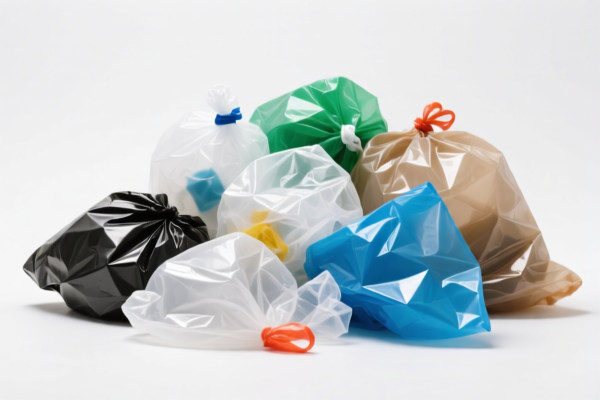
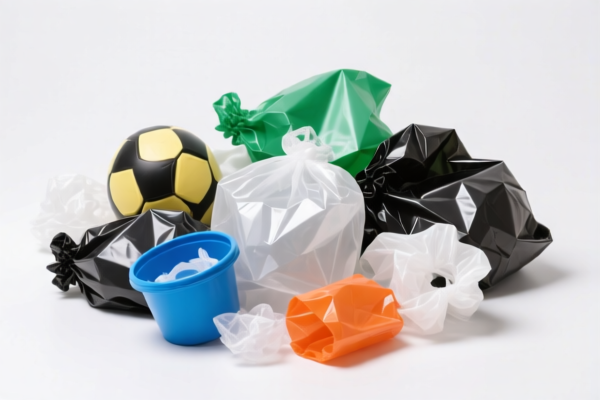

AI分析
🔄 LDPE Processing Scrap Waste (Low-Density Polyethylene)
🌐 HS Code Reference & Customs Clearance Guide | 2026 Latest Tariff Analysis | Professional Clearance Strategy
📌 Part 1: Product Definition & Classification: What Exactly Is "LDPE Scrap"?
Low-Density Polyethylene (LDPE) is a thermoplastic made from the monomer ethylene. In international trade, LDPE Processing Scrap Waste refers to industrial off-cuts, trimmings, sprues, runners, and rejected pellets generated during the manufacturing or conversion of LDPE products. It is distinct from post-consumer waste and is considered a valuable raw material for recycling.
In the Harmonized System (HS), these materials fall under Chapter 39: Plastics and Articles Thereof. The classification hinges on two critical factors: 1. Density/Resin Type: Is it true Low-Density Polyethylene (LDPE) or Linear Low-Density Polyethylene (LLDPE)? 2. State of Material: Is it in its primary form (resin/pellet) or in a waste/scrap form?
⚠️ Key Distinction:
- If the material is waste/scrap (used, off-cut, or non-conforming), it is classified under Heading 3902 (Polymers of ethylene).
- If the material is virgin resin/pellet, it is classified under Heading 3901.
- Misclassification Risk: Declaring waste as virgin resin to avoid anti-dumping or "122 Clause" tariffs will lead to severe penalties.
📦 Part 2: HS Code Classification Matrix (2026 Authorized Data)
Based on the provided data, there are five specific HS Codes relevant to LDPE materials (both waste and virgin). Note that three of these codes correspond to Waste/Scrap, and two correspond to Virgin Resin.
| HS Code | Product Description | Material Type | State/Form | Tax Rate (China→US) |
|---|---|---|---|---|
3902.90.00.50 |
LLDPE Scrap/Waste | Olefin Polymer | Waste/Scrap | 41.5% |
3902.10.00.00 |
LDPE Scrap/Waste | Olefin Polymer | Waste/Scrap | 41.5% |
3901.10.50.20 |
LDPE Virgin Resin | Polyethylene | Resin/Primary Form | 41.5% |
3901.10.50.10 |
LDPE Virgin Resin | Ethylene Polymer | Primary Form (<0.94 density) | 41.5% |
3902.90.00.50 |
LLDPE Scrap (General) | Olefin Polymer | Waste/Other | 41.5% |
🔍 Critical Clarification:
- HS3902.10.00.00: Specifically for Low-Density Polyethylene (LDPE) in waste form.
- HS3902.90.00.50: Specifically for Linear Low-Density Polyethylene (LLDPE) in waste form.
- HS3901.10.50.x0: Specifically for Virgin LDPE Resin/Pellets (not scrap).
- Why the confusion? Many traders confuse LDPE and LLDPE. They are both polymers of ethylene, but LLDPE has short-chain branches, giving it different physical properties. Customs requires precise chemical identification.
💰 Part 3: 2026 Tariff Structure Breakdown (Detailed Explanation)
✅ Applicable Country: United States (US)
✅ Origin: China (CN)
✅ Effective Date: Current rates apply (Note: These rates reflect the "Section 301" and "Section 122" tariff environment described in the data).
🎯 1. Common Tax Breakdown for All Listed HS Codes
All five HS codes provided in the data share the same total tax burden due to current trade policies affecting Chinese polymer imports.
| Tax Component | Rate | Legal Basis / Explanation |
|---|---|---|
| Base Tariff (MFN) | 6.5% | Standard Most Favored Nation duty for plastics/polyethylene. |
| Section 301 Tariff ("25%") | 25.0% | Additional duty imposed under the Trade Promotion Authority Act, targeting specific Chinese industrial goods, including plastics. |
| Section 122 Tariff | 10.0% | Additional duty under Section 122 of the Trade Act of 1974 (often used for emergency balance-of-payments measures). |
| TOTAL TAX RATE | 41.5% | Sum of Base + Section 301 + Section 122. |
📌 Important Note on "Total Tax":
The data explicitly statestotal_tax: 41.5%for all entries. This means whether you import LDPE scrap (3902.10.00.00) or LLDPE scrap (3902.90.00.50), the tax is identical at 41.5%. There is no tax advantage to mislabeling LLDPE as LDPE.
🎯 2. Specific Application to "LDPE Processing Scrap Waste"
If your product is LDPE Scrap:
- Correct HS Code: 3902.10.00.00
- Summary: "Low-density polyethylene waste, belongs to olefin polymers, form is waste, fits olefin polymer category."
- Tax: 6.5% (Base) + 25% (Sec 301) + 10% (Sec 122) = 41.5%
If your product is actually LLDPE Scrap (common confusion):
- Correct HS Code: 3902.90.00.50
- Summary: "Linear low-density polyethylene waste, belongs to olefin polymer waste category, fits primary form remaining category."
- Tax: 6.5% (Base) + 25% (Sec 301) + 10% (Sec 122) = 41.5%
⚠️ Warning: Do not declare Scrap as Resin (
3901.10.50.20). While the tax rate is the same (41.5%), the legal classification is different. Scrap is subject to stricter environmental and customs controls. Misdeclaration is fraud.
🛠️ Part 4: Customs Clearance Practical Advice (Avoiding Pitfalls)
✅ 1. Required Documentation List
| Document | Mandatory? | Purpose |
|---|---|---|
| Certificate of Composition | ✔️ | Must specify LDPE vs. LLDPE, density (<0.94 for LDPE), and melt flow index. |
| Material Safety Data Sheet (MSDS) | ✔️ | To confirm chemical safety and recycling compatibility. |
| Photos of Scrap | ✔️ | Must show the physical form (flakes, pellets, loose waste). Proves it is "Waste" not "Virgin Resin". |
| Commercial Invoice | ✔️ | Must clearly state "LDPE Processing Scrap Waste" or "LLDPE Scrap". Avoid vague terms like "Plastic Pellets". |
| Packing List | ✔️ | Net weight and gross weight are critical for duty calculation. |
| Proof of Origin | ✔️ | Required to verify Chinese origin for Section 301/122 tariffs. |
✅ 2. Declaration Strategy
| Scenario | Correct Declaration | Risk of Error |
|---|---|---|
| Industrial LDPE Off-cuts | HS 3902.10.00.00 + Description: "LDPE Waste/Scrap" |
If labeled "Resin", Customs may reject as fraud. |
| Industrial LLDPE Off-cuts | HS 3902.90.00.50 + Description: "LLDPE Waste/Scrap" |
If labeled "LDPE", Customs may demand re-classification. |
| Virgin LDPE Pellets | HS 3901.10.50.20 or .10 |
Must NOT be called "Scrap". |
| Mixed LDPE/LLDPE Scrap | Consult a broker; likely classified as "Other Plastics Waste" or split by weight. | Mixed waste can delay clearance. |
✅ 3. Key Clearance Tips
-
Distinguish "Waste" from "Resin":
- Resin (
3901): Unused, manufactured for sale. - Waste/Scrap (
3902): By-products, trimmings, rejected goods. - Customs Tip: Provide photos of the material before it is cleaned/pelletized for recycling. If it looks like uniform, branded pellets, it will be classified as resin, even if you claim it's scrap.
- Resin (
-
Verify Density:
- LDPE typically has a density < 0.94 g/cm³.
- LLDPE density varies but is also often < 0.94 g/cm³.
- The HS Code
3901.10.50.10explicitly mentions "Specific Gravity < 0.94". Ensure your technical data sheet confirms this.
-
Section 122 & 301 Compliance:
- Both Section 301 (25%) and Section 122 (10%) are additional tariffs on top of the base rate.
- No De Minimis Exemption: Unlike small packages, industrial shipments of scrap are fully subject to these duties.
- Total Cost Impact: For a $10,000 shipment, expect $4,150 in duties alone. Factor this into your pricing.
-
Environmental Regulations:
- Plastic scrap is subject to EPA regulations. Ensure the scrap is clean and free of contamination (food, metal, other plastics) to avoid rejection under the Solid Waste definitions.
🌍 Part 5: Global Market Comparison (2026)
| Country | HS Code (LDPE Scrap) | Base Duty | Additional Tariffs | Total Est. Duty | Notes |
|---|---|---|---|---|---|
| 🇺🇸 USA | 3902.10.00.00 |
6.5% | +25% (Sec 301) +10% (Sec 122) | 41.5% | High barrier. Check for exclusion lists. |
| 🇨🇳 China | 3902.10.00.00 |
0-5% | None | ~5% | Importing scrap is heavily regulated/banned in many cases. |
| 🇪🇺 EU | 3902.10.00.00 |
0-6.5% | None | ~0-6.5% | Strict Basel Convention controls on plastic waste. |
| 🇻🇳 Vietnam | 3902.10.00.00 |
0-10% | None | ~5% | Often used as re-export hub, but scrutiny is increasing. |
📌 Conclusion for US Imports:
The 41.5% total tariff is a significant cost driver. Many companies are now sourcing recycled LDPE from countries with free trade agreements (FTAs) or lower tariff structures, such as Mexico (USMCA) or Canada, to mitigate these duties.
📌 Part 6: Common Mistakes & How to Avoid Them
❌ Mistake 1: Declaring "LDPE Scrap" as "LDPE Pellets" (HS 3901).
👉 Consequence: While the tax rate is the same (41.5%), if the material is physically scrap and labeled as virgin resin, Customs may classify it as fraud, leading to seizure and fines.
❌ Mistake 2: Confusing LDPE and LLDPE.
👉 Consequence: Both have the same tax rate in this dataset, but incorrect classification can lead to delays. Always provide a Certificate of Analysis to prove the polymer type.
❌ Mistake 3: Ignoring the "122 Clause" tariff.
👉 Consequence: Many brokers forget the 10% Section 122 tariff. If not included, the importer will be billed the difference + penalties later.
❌ Mistake 4: Importing contaminated scrap.
👉 Consequence: EPA may classify it as "Solid Waste" if not properly cleaned, leading to rejection at the port.
✅ Best Practice Declaration:
"LDPE Processing Scrap Waste, Industrial Off-cuts, Density <0.94 g/cm³, Unwashed/Pre-cleaned, For Recycling, HS Code: 3902.10.00.00, Origin: China"
🎯 Part 7: Conclusion
🎯 Key Takeaway:
For LDPE Processing Scrap Waste, the correct HS Code is 3902.10.00.00.
The total tariff burden is 41.5% (6.5% Base + 25% Sec 301 + 10% Sec 122).
🔹 "Don't guess the polymer; test it. Don't hide the waste; declare it."
🔹 "Tax is 41.5% for all listed codes. Accuracy saves time, not just money."
📌 Pro Tip:
If you are importing large volumes, consider applying for a Section 301 Exclusion if applicable, or explore sourcing from USMCA countries (Mexico/Canada) to potentially reduce the 25% Section 301 duty. Always consult a licensed customs broker before shipment.
📣 Immediate Action:
📞 Get a Pre-Shipment Consultation: Provide your MSDS and photos to your broker.
📄 Verify HS Code: Confirm3902.10.00.00for LDPE Scrap.
💰 Budget for 41.5% Duty: Ensure your CIF value accounts for this significant tax burden.
✨ Professional Clearance Starts with Accurate Classification!
💼 Every Dollar Saved in Tariffs is Pure Profit!
用户评价
关于 HS 编码归类
协调制度(HS)是由世界海关组织(WCO)制定的国际贸易商品分类标准。全球 200 多个国家采用 HS 系统作为海关关税、贸易统计和进出口监管的基础。
每个 HS 编码遵循以下层级结构:
- 章(2 位)——商品大类(例如:第 84 章:机器和机械设备)
- 品目(4 位)——章内的更具体分类
- 子目(6 位)——国际通用细分,所有 WCO 成员国统一使用
- 本国细分(8-10 位)——各国自行扩展的细分编码,如美国 HTSUS 10 位编码
正确的 HS 编码归类对于顺利通关、准确缴纳关税和遵守贸易法规至关重要。错误归类可能导致海关延误、多缴关税或罚款。
从CN进口到US时,适用的关税税率可能包括:
- 最惠国(MFN)税率——适用于 WTO 成员国的标准关税税率
- 普通税率——适用于无贸易协定国家
- 贸易救济关税——附加关税,如 301 条款(反倾销)、232 条款(国家安全)或反补贴税
本页内容仅供参考。如需正式归类,请咨询当地海关或持牌报关代理。