Label Bottle
CN → US| HS编码 | 关税税率 | 原产国 | 目的国 | 文档 |
|---|---|---|---|---|
| 7323999080 | 88.4% | CN | US | 官方文档 |
| 3926901000 | 20.9% | CN | US | 官方文档 |
| 3926904800 | 13.4% | CN | US | 官方文档 |
| 7013993000 | 26.5% | CN | US | 官方文档 |
| 7013496090 | 24.7% | CN | US | 官方文档 |
商品图片
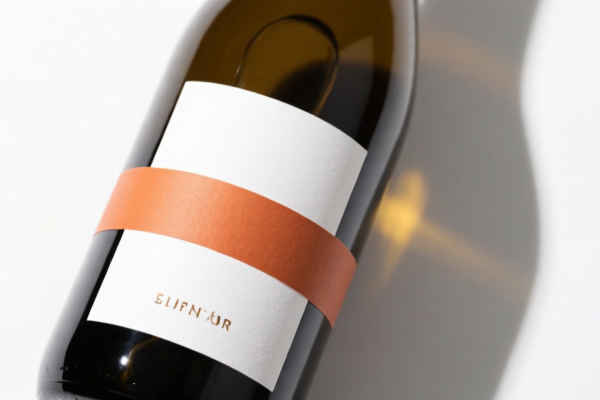
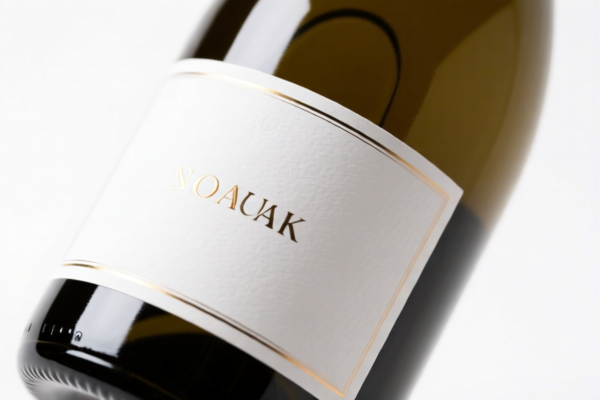
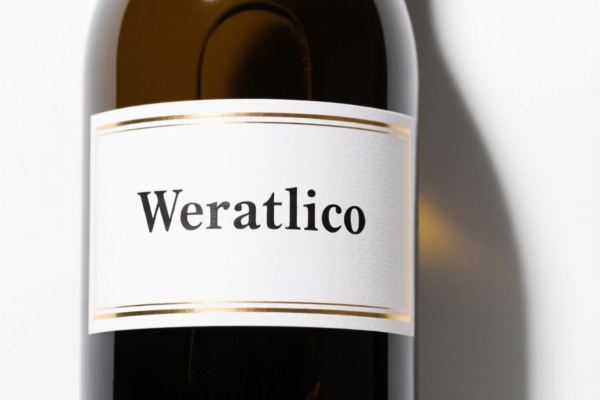

AI分析
🏷️ Label Bottles: The Ultimate Import Classification Guide
🌐 HS Code Reference & Customs Clearance Guide | 2026 Latest Tariff Analysis | Professional Clearance Strategy
📌 I. Product Definition & Classification: What Exactly is a "Label Bottle"?
A "Label Bottle" is not a single, standardized commodity in international trade. It is a functional description, not a material or structural definition. Therefore, its Harmonized System (HS) Code depends entirely on its material composition and intended primary use.
In customs practice, "Label Bottles" are generally categorized into three main material types: 1. Metal Bottles: Usually made of steel, iron, aluminum, or tinplate. 2. Plastic Bottles: Usually made of PET, HDPE, PP, or other polymers. 3. Glass Bottles: Usually used for fragrances, high-end cosmetics, or pharmaceuticals.
⚠️ Key Distinction:
- If the bottle is made of Iron/Steel, it falls under Chapter 73 (Articles of Iron or Steel).
- If the bottle is made of Plastic, it falls under Chapter 39 (Plastics and Articles Thereof).
- If the bottle is made of Glass, it falls under Chapter 70 (Glass and Glassware).
- The word "Label" itself does not change the HS Code. It is merely a functional attribute.
📦 II. HS Code Classification Matrix (Based on Provided Data)
Based on the provided dataset, here are the specific HS Codes, classifications, and tax implications for Label Bottles by material:
| HS Code | Material | Classification Summary | Primary Usage Context |
|---|---|---|---|
| 7323.99.90.80 | Metal | Other articles of iron or steel (household/kitchenware) | Metal storage bottles, industrial steel containers with labels. |
| 3926.90.10.00 | Plastic | Plastic bottles, oil drums, and similar containers | Standard plastic packaging bottles, chemical containers. |
| 3926.90.48.00 | Plastic | Other plastic articles (general) | Plastic bottles not specifically classified as containers/drums. |
| 7013.99.30.00 | Glass | Glassware (perfume bottles, etc.) | Fragrance bottles, cosmetic glass jars with labels. |
| 7013.49.60.90 | Glass | Other glass articles | General glass containers, decorative glass bottles with labels. |
💰 III. Detailed Tax Rate Analysis (US Market Context)
✅ Applicable Country: United States (US)
✅ Origin: China (CN)
✅ Note: All rates below include Base Duty, Section 301 Additional Duty, and Section 232/122 Additional Duties as specified in the data.
🎯 1. Metal Label Bottles
HS Code: 7323.99.90.80
Classification: Other articles of iron or steel (household/kitchenware)
| Tax Component | Rate | Description |
|---|---|---|
| Base Duty | 3.4% | Standard Most Favored Nation (MFN) rate. |
| Section 301 Duty | 25.0% | Additional duty on Chinese goods (List 3/4A). |
| Section 232/122 Duty | 50.0% | 122 Clause: Additional duty on Steel, Aluminum, and Copper products. |
| Total Effective Rate | 78.4% | 3.4% + 25.0% + 50.0% |
📌 Critical Insight:
- Metal bottles are subject to the highest effective tariff (78.4%).
- The 50% Section 232/122 duty is specifically triggered by the "Steel/Aluminum/Copper" clause.
- Risk: High cost impact. Consider supply chain diversification if possible.
🎯 2. Plastic Label Bottles (Container Type)
HS Code: 3926.90.10.00
Classification: Plastic bottles, oil drums, and similar containers
| Tax Component | Rate | Description |
|---|---|---|
| Base Duty | 3.4% | Standard MFN rate. |
| Section 301 Duty | 7.5% | Reduced additional duty rate for certain plastic articles. |
| Section 122 Duty | 10.0% | 122 Clause: Additional duty on specific plastic items (if applicable per current enforcement). |
| Total Effective Rate | 20.9% | 3.4% + 7.5% + 10.0% |
📌 Critical Insight:
- This classification is for specific containers/drums.
- The total tax burden is moderate (20.9%).
- Ensure the product description explicitly mentions "bottle," "drum," or "container" to match this code.
🎯 3. Plastic Label Bottles (General Article)
HS Code: 3926.90.48.00
Classification: Other plastic articles
| Tax Component | Rate | Description |
|---|---|---|
| Base Duty | 3.4% | Standard MFN rate. |
| Section 301 Duty | 0.0% | Exempt or lower rate for this specific subcategory. |
| Section 122 Duty | 10.0% | 122 Clause: Additional duty on specific plastic items. |
| Total Effective Rate | 13.4% | 3.4% + 0.0% + 10.0% |
📌 Critical Insight:
- Lowest Plastic Tax Rate (13.4%).
- Strategy: If your plastic bottle does not strictly fall under "bottles/drums" (e.g., it is a unique shape or non-container use), attempting to classify under3926.90.48.00could save 7.5% in Section 301 duties.
- Warning: Misclassification risk is high. Must justify why it is not a "bottle/container."
🎯 4. Glass Label Bottles (Perfume/Cosmetic)
HS Code: 7013.99.30.00
Classification: Glassware (perfume bottles, etc.)
| Tax Component | Rate | Description |
|---|---|---|
| Base Duty | 9.0% | Standard MFN rate for glassware. |
| Section 301 Duty | 7.5% | Additional duty on Chinese goods. |
| Section 122 Duty | 10.0% | 122 Clause: Additional duty. |
| Total Effective Rate | 26.5% | 9.0% + 7.5% + 10.0% |
📌 Critical Insight:
- Common for fragrance and cosmetic industries.
- Base duty is higher (9.0%) compared to plastics, but Section 301 is lower than metals.
🎯 5. Glass Label Bottles (General)
HS Code: 7013.49.60.90
Classification: Other glass articles
| Tax Component | Rate | Description |
|---|---|---|
| Base Duty | 7.2% | Standard MFN rate for other glass. |
| Section 301 Duty | 7.5% | Additional duty on Chinese goods. |
| Section 122 Duty | 10.0% | 122 Clause: Additional duty. |
| Total Effective Rate | 24.7% | 7.2% + 7.5% + 10.0% |
📌 Critical Insight:
- Slightly lower total rate (24.7%) than perfume bottles.
- Suitable for general-purpose glass bottles (e.g., food, beverages, or industrial use) that are not specifically "perfume" bottles.
🛠️ IV. Customs Clearance Practical Advice
✅ 1. Documentation Requirements
| Document | Requirement | Notes |
|---|---|---|
| Commercial Invoice | ✅ Mandatory | Must clearly state Material (e.g., "HDPE Plastic Bottle," "Steel Metal Bottle," "Soda-Lime Glass Bottle"). Do not just write "Label Bottle." |
| Product Description | ✅ Mandatory | Include intended use (e.g., "for packaging cosmetics," "for chemical storage"). |
| Material Certificate | ✅ Recommended | Especially for Metal (7323) and Glass (7013) to prove origin and material composition. |
| Photos | ✅ Mandatory | Clear photos showing the bottle, label, and any distinctive features. |
| HS Code Justification | ✅ Recommended | Provide a brief memo explaining why the specific HS Code was chosen (e.g., "This is a general plastic article, not a standard container, hence 3926.90.48.00"). |
✅ 2. Classification Strategy & Risk Mitigation
| Scenario | Recommended HS Code | Risk Level | Strategy |
|---|---|---|---|
| Standard Plastic Bottle | 3926.90.10.00 |
Low | Accurate description as "plastic bottle." Tax: 20.9%. |
| Unique/Niche Plastic Container | 3926.90.48.00 |
Medium-High | Attempt to classify here to save 7.5%. Requires strong justification that it is not a standard "bottle/drums." Tax: 13.4%. |
| Metal Bottle/Can | 7323.99.90.80 |
Low | High tax burden (78.4%). No easy avoidance. Ensure correct material declaration. |
| Perfume/Cosmetic Glass | 7013.99.30.00 |
Low | If used for perfumes/cosmetics. Tax: 26.5%. |
| General Glass Bottle | 7013.49.60.90 |
Low | If not specifically for perfumes. Tax: 24.7%. |
🔍 Key Tip:
- For Plastic, the difference between3926.90.10.00(20.9%) and3926.90.48.00(13.4%) is significant.
- Can you justify3926.90.48.00? Only if the bottle is not a "standard container" (e.g., unusual shape, non-packaging use, or specific industrial component). Misclassification can lead to penalties.
✅ 3. Special Considerations for Section 232/122 Duties
- Metal Bottles (7323.99.90.80):
- The 50% Section 232/122 duty is critical. This duty applies to steel and aluminum products.
- Ensure your supplier provides a material declaration confirming the type of metal. If it is not steel/aluminum (e.g., tinplate, stainless steel), verify if exemptions apply.
-
Warning: This duty is very high. Consider sourcing from non-China countries if possible.
-
Plastic & Glass Bottles:
- The 10% Section 122 duty applies.
- Verify if the current enforcement of Section 122 covers your specific plastic/glass item. Some exclusions may exist.
🌍 V. Global Market Comparison (Simplified)
| Country/Region | Preferred HS Code (Plastic) | Tax Rate (Approx.) | Notes |
|---|---|---|---|
| 🇺🇸 USA | 3926.90.10.00 or 3926.90.48.00 |
13.4% - 20.9% | High additional duties apply. |
| 🇪🇺 EU | 3926.90 | 6.5% | No Section 301/232 duties. |
| 🇨🇳 China | 3926.90 | 6.5% | Import duty from non-FTA countries. |
| 🇬🇧 UK | 3926.90 | 6.5% | Post-Brexit tariff regime. |
📌 Conclusion:
- USA is the most challenging market due to Section 301, 232, and 122 duties.
- Plastic bottles offer more optimization opportunities (13.4% vs 20.9%) than metal or glass.
- Metal bottles are the most expensive to import into the US (78.4%).
📌 VI. Common Errors & Pitfalls
❌ Error 1: Using only "Label Bottle" in the commercial invoice.
👉 Consequence: Customs may classify it under a default high-duty category or request additional information, causing delays.
❌ Error 2: Misclassifying a Plastic Bottle as 3926.90.48.00 without justification.
👉 Consequence: If customs determines it is a standard container, they will reclassify to 3926.90.10.00 and charge the difference (7.5% + penalties).
❌ Error 3: Ignoring Section 232/122 Duties for Metal Bottles.
👉 Consequence: Unexpected 50% additional duty, wiping out profit margins.
✅ Correct Practice:
"Plastic Label Bottle, HDPE Material, 500ml Capacity, for Cosmetics Packaging, HS Code: 3926.90.10.00"
🎯 VII. Conclusion: Optimize Your Classification
🎯 Remember:
🔹 Material is Key: Metal, Plastic, or Glass?
🔹 Function Matters: Bottle, Drum, or General Article?
🔹 Tax Impact: Metal (78.4%) > Glass (~26%) > Plastic (13-21%).
📌 Pro Tip:
If you are importing Plastic Label Bottles, consult with a customs broker to see if 3926.90.48.00 (13.4%) is a viable alternative to 3926.90.10.00 (20.9%). The 7.5% savings is significant.
📣 Action Item:
📞 Review your product specifications.
📄 Update your commercial invoice with precise material and use descriptions.
🚀 Secure your HS Code classification before shipment to avoid clearance delays.
✨ Precise Classification = Lower Costs = Faster Clearance!
💼 Don't let "Label Bottle" ambiguity cost you money!
用户评价
关于 HS 编码归类
协调制度(HS)是由世界海关组织(WCO)制定的国际贸易商品分类标准。全球 200 多个国家采用 HS 系统作为海关关税、贸易统计和进出口监管的基础。
每个 HS 编码遵循以下层级结构:
- 章(2 位)——商品大类(例如:第 84 章:机器和机械设备)
- 品目(4 位)——章内的更具体分类
- 子目(6 位)——国际通用细分,所有 WCO 成员国统一使用
- 本国细分(8-10 位)——各国自行扩展的细分编码,如美国 HTSUS 10 位编码
正确的 HS 编码归类对于顺利通关、准确缴纳关税和遵守贸易法规至关重要。错误归类可能导致海关延误、多缴关税或罚款。
从CN进口到US时,适用的关税税率可能包括:
- 最惠国(MFN)税率——适用于 WTO 成员国的标准关税税率
- 普通税率——适用于无贸易协定国家
- 贸易救济关税——附加关税,如 301 条款(反倾销)、232 条款(国家安全)或反补贴税
本页内容仅供参考。如需正式归类,请咨询当地海关或持牌报关代理。