Laser Pointer
CN → US| HS编码 | 关税税率 | 原产国 | 目的国 | 文档 |
|---|---|---|---|---|
| 9013200000 | 35.0% | CN | US | 官方文档 |
| 9013809100 | 22.0% | CN | US | 官方文档 |
商品图片
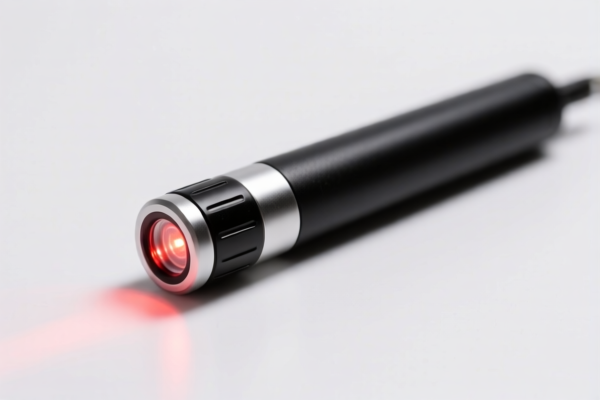
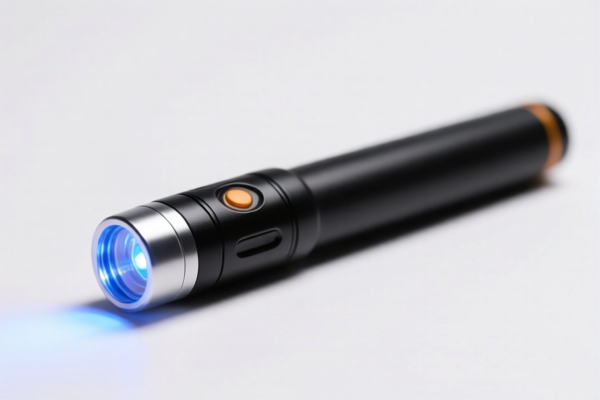
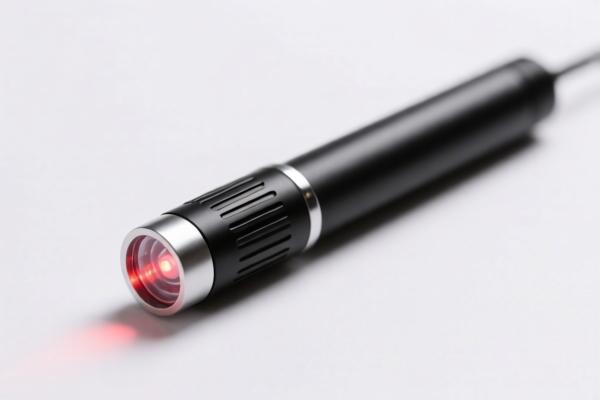
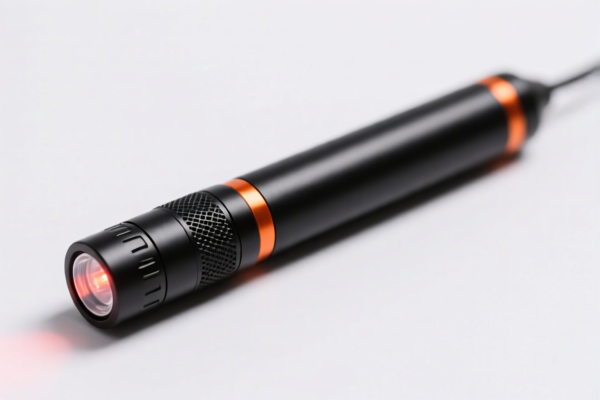
AI分析
🔦 Laser Pointer (Lasers, other than laser diodes; Other optical appliances)
🌐 HS Code Reference & Clearance Guide | 2026 Latest Tariff Analysis | Strategic Import Strategy
📌 I. Product Definition & Classification: Do You Truly Understand "Laser Pointer"?
In international trade, the classification of a "laser pointer" depends strictly on its internal technology. While consumer laser pointers often contain laser diodes (which fall under Chapter 85), the specific items listed in the reference data refer to solid-state, gas, or fiber lasers (non-diode lasers) and other optical instruments.
These are generally used in professional, industrial, scientific, or high-power applications, rather than simple presentation pointers.
⚠️ Key Distinction Point:
- If the device uses a Laser Diode (common cheap green/red pointers) → It typically falls under HS 8543 or 9013.20 only if specifically exempted, but the provided data explicitly excludes laser diodes from9013.20.
- If the device is a Non-Diode Laser (e.g., DPSS, Gas, Fiber) or a generic Optical Instrument not elsewhere specified → It falls under Chapter 90.
📦 II. HS Code Classification Details (Based on Provided Data)
| HS Code | Product Description | Applicable Scenario | Tax Rate |
|---|---|---|---|
9013.20.00.00 |
Lasers, other than laser diodes | Professional laser pointers, scientific alignment lasers, medical lasers, industrial marking pointers | 25.0% |
9013.80.91.00 |
Other devices, appliances and instruments | Generic optical instruments, non-laser pointing devices, or optical tools not specified elsewhere | 12.0% |
🔍 Critical Reminder:
-9013.20.00.00is for pure laser sources that are not diodes. If your "pointer" is a high-power DPSS (Diode-Pumped Solid-State) laser, it likely falls here.
-9013.80.91.00is a "catch-all" for optical instruments. If the device is an optical sight, a collimator, or a laser system that includes mounting/structuring but isn't defined as a standalone non-diode laser source, it may fall here.
- Do NOT use these codes for standard cheap laser diode pens, as they are often classified under 8543.70 or 9013.20 only if specifically interpreted as non-diode by customs, but the data explicitly says "Lasers, other than laser diodes" for9013.20.
💰 III. 2026 Latest Tariff Rate Breakdown (Including Surtaxes)
✅ Applicable Country: United States (US)
✅ Country of Origin: China (CN)
✅ Effective Time: 2025 onwards (Subject to current 301 Tariff list)
🎯 1. 9013.20.00.00 —— Lasers, Other Than Laser Diodes
| Item | Content |
|---|---|
| Base Tariff | 0.0% (Ad Valorem) |
| Additional Tariff (Section 301) | +25.0% |
| Total Tax Rate | 25.0% |
| Tax Calculation | CIF Value × 25.0% |
| De Minimis Exemption | ❌ Not Applicable (Value typically exceeds $800 for professional equipment) |
| Legal Basis Path | HTSUS:9013.20.00.00 → Section 301 Footnote 9903.88.01 |
📌 Explanation:
- Although the base tariff is 0%, the 25% Section 301 surtax applies to most Chinese-made optical and laser equipment.
- This is a high-cost category for importers. The "0% base" is misleading; the effective cost is 25%.
- Note: If the product is confirmed to be a laser diode, it might be classified differently (often 301 applies to many 8543/9013 codes). However, based on the provided data,9013.20.00.00is explicitly "Non-diode lasers."
🎯 2. 9013.80.91.00 —— Other Optical Appliances and Instruments
| Item | Content |
|---|---|
| Base Tariff | 4.5% |
| Additional Tariff (Section 301) | +7.5% |
| Total Tax Rate | 12.0% |
| Tax Calculation | CIF Value × 12.0% |
| De Minimis Exemption | ❌ Not Applicable (for commercial imports) |
| Legal Basis Path | HTSUS:9013.80.91.00 → Section 301 Footnote 9903.88.01 |
📌 Explanation:
- This category is more favorable than9013.20.00.00.
- It applies to "Other" optical instruments not specified elsewhere. If your "laser pointer" is part of a larger optical assembly or an instrument not defined as a primary laser source, this lower rate may apply.
- Savings Potential: Choosing the correct classification between9013.20(25%) and9013.80(12%) can save 13% of the CIF value.
🛠️ IV. Clearance Practical Advice (Avoid Pitfalls)
✅ 1. Documentation Checklist (Mandatory)
| Document | Required | Notes |
|---|---|---|
| ✅ Technical Specifications | ✔️ | Must explicitly state Laser Type (Diode vs. DPSS/Gas/Fiber). Crucial for distinguishing 9013.20 from 9013.80. |
| ✅ Laser Safety Classification | ✔️ | IEC 60825-1 Class (e.g., Class 2, 3R, 3B, 4). High-class lasers face stricter scrutiny. |
| ✅ Product Photos | ✔️ | Show internal components if possible (to prove non-diode nature). |
| ✅ Commercial Invoice | ✔️ | Clearly describe as "Laser Instrument" not "Toy" or "Diode Pen". |
| ✅ FDA Laser Product Notice | ✔️ | Required for import into the US (21 CFR Part 1040). |
| ✅ Certificate of Origin | ✔️ | For origin determination (China = 301 Tariffs apply). |
✅ 2. Classification Strategy (Key Tips)
🔥 "Diode vs. Non-Diode: The 13% Difference!"
| Scenario | Correct HS Code | Tax Rate | Risk |
|---|---|---|---|
| High-Power DPSS Pointer (Green beam, boxy) | 9013.20.00.00 |
25.0% | Low (if truly non-diode) |
| Standard Green Pointer (Internal diode-pumped crystal) | 9013.20.00.00 |
25.0% | Medium (Customs may dispute if diode is primary) |
| Optical Sight/Aiming Device (Non-laser source) | 9013.80.91.00 |
12.0% | Low |
| Generic Optical Tool | 9013.80.91.00 |
12.0% | Low |
| Laser Diode Pen (Cheap, small) | NOT in Data | Likely 301+ | High (Misclassification risk) |
📌 Important:
- If the device is a standard cheap laser pointer with a laser diode, it may NOT fall under9013.20.00.00as per the data description ("Lasers, other than laser diodes").
- Misclassifying a diode laser as a non-diode laser can lead to penalties, back taxes, and seizure.
- If unsure, consult a customs broker for Advance Ruling.
✅ 3. Special Handling
| Situation | Recommendation |
|---|---|
| FDA Registration | All laser products imported into the US must have an FDA-established registration. Ensure the manufacturer is registered. |
| Class 4 Lasers | If the pointer emits >500mW, it is Class 4. Requires additional safety documentation and may be restricted. |
| Branded vs. Unbranded | Branded products (e.g., Ophir, Coherent) are easier to classify. Unbranded "white label" lasers face higher scrutiny for origin and technical specs. |
| Kit Assembly | If the laser diode is sold separately from the laser head, declare separately to avoid "laser system" classification issues. |
🌍 V. Global Market Comparison (2026 Context)
| Country/Region | Recommended HS Code | Tariff (China Origin) | Notes |
|---|---|---|---|
| 🇺🇸 USA | 9013.20.00.00 / 9013.80.91.00 |
25% / 12% | Section 301 Surtax applies. FDA required. |
| 🇨🇳 China | 9013.20.00.00 |
0% - 5% | Import duty low; VAT 13%. |
| 🇪🇺 EU | 9013.20.00 |
0% - 4.5% | CE Marking required. No Section 301. |
| 🇯🇵 Japan | 9013.20.00 |
0% - 5.5% | PSE Certification required for lasers. |
| 🇦🇺 Australia | 9013.20.00 |
5% | RCM marking may be required. |
📌 Conclusion:
- The USA is the most expensive market due to the 301 Tariffs.
- EU/Japan/Australia have lower base tariffs but strict safety certifications (CE/PSE/RCM).
- China Origin adds significant cost to the US market (12% - 25%).
📌 VI. Common Mistakes & Pitfalls (Lessons Learned)
❌ Mistake 1: Classifying a laser diode pointer as 9013.20.00.00
👉 Result: Customs rejects because the code explicitly excludes laser diodes. Delays + Penalties.
❌ Mistake 2: Ignoring FDA Registration
👉 Result: Shipment held at US port until FDA paperwork is provided. Storage fees apply.
❌ Mistake 3: Under-declaring power (e.g., saying 1mW when it's 50mW)
👉 Result: Re-classification as Class 3B/4, triggering stricter safety regulations and potential seizure.
❌ Mistake 4: Confusing 9013.80.91.00 (12%) with 9013.20.00.00 (25%) without technical proof
👉 Result: If customs proves it is a non-diode laser, they will assess the higher 25% rate + back taxes.
✅ Correct Action:
"Solid State Laser Pointer, 532nm, Green, Class 3R, Non-Diode Source, FDA Registered, Model XYZ"
🎯 VII. Conclusion: Precision Saves Money
🎯 Remember:
🔹 "Diode? No? Then it's 25%. Optical Tool? Maybe 12%. Don't Guess!"
🔹 "FDA First, Docs Second, Tariff Last."
📌 Pro Tip:
If you are importing high-volume non-diode lasers, consider applying for a Tariff Classification Advance Ruling from US Customs and Border Protection (CBP) to lock in the 12% or 25% rate and avoid disputes.
📣 Immediate Action:
📞 Contact a Licensed Customs Broker
📄 Provide Technical Specs (Laser Type & Power)
🚀 Ensure FDA Registration is Valid
✨ Professional Clearance Starts with Accurate Classification!
💼 Every Percent of Tax Saved is Profit Gained!
用户评价
关于 HS 编码归类
协调制度(HS)是由世界海关组织(WCO)制定的国际贸易商品分类标准。全球 200 多个国家采用 HS 系统作为海关关税、贸易统计和进出口监管的基础。
每个 HS 编码遵循以下层级结构:
- 章(2 位)——商品大类(例如:第 84 章:机器和机械设备)
- 品目(4 位)——章内的更具体分类
- 子目(6 位)——国际通用细分,所有 WCO 成员国统一使用
- 本国细分(8-10 位)——各国自行扩展的细分编码,如美国 HTSUS 10 位编码
正确的 HS 编码归类对于顺利通关、准确缴纳关税和遵守贸易法规至关重要。错误归类可能导致海关延误、多缴关税或罚款。
从CN进口到US时,适用的关税税率可能包括:
- 最惠国(MFN)税率——适用于 WTO 成员国的标准关税税率
- 普通税率——适用于无贸易协定国家
- 贸易救济关税——附加关税,如 301 条款(反倾销)、232 条款(国家安全)或反补贴税
本页内容仅供参考。如需正式归类,请咨询当地海关或持牌报关代理。